What is personally identifiable information (PII)?
Updated · By Robert Breen
Personally identifiable information (PII) is any information that can identify a specific person, alone or combined with other details. Examples include names with contact details, Social Security and driver's license numbers, dates of birth, account and card numbers, and medical details.
Why it matters for a small business
Small businesses handle PII constantly: customer emails, claim files, tax documents, job applications. When you paste that material into an AI tool, you are sharing it with another company's service. Depending on your plan and settings, it may be stored or used to improve models, and your industry may have specific rules about where client data can go.
The practical habit is simple: send the AI only what the task needs. A reply to a customer rarely needs their ID number or date of birth. Removing those details first lowers the risk of a leak and makes it easier to show you handled client information carefully.
In a real lesson: Reply Faster to Claim-Status Emails: ChatGPT for Independent Insurance Agencies
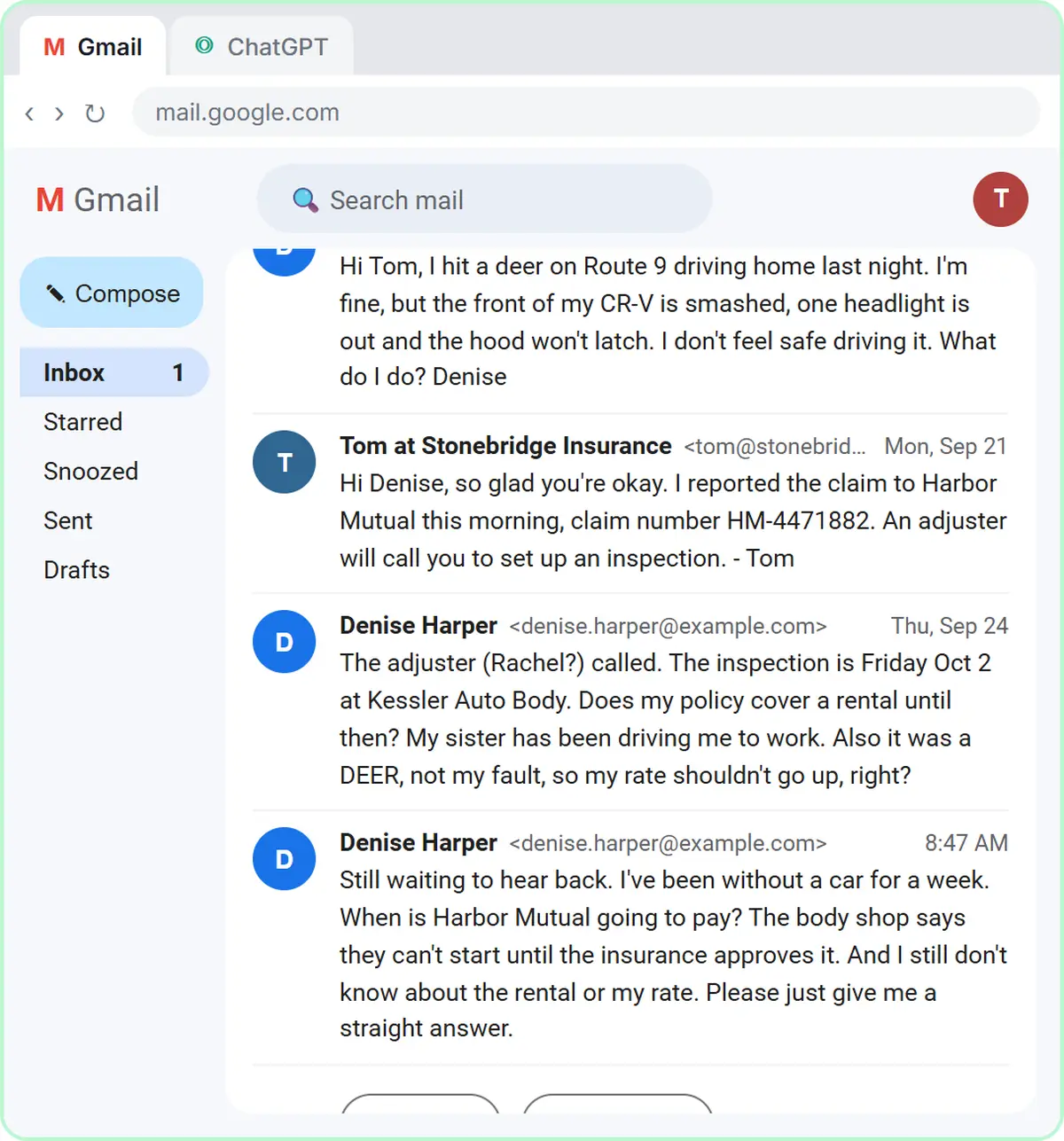
In the insurance claim reply lesson, you work at Stonebridge Insurance Agency, a made-up independent agency, answering Denise Harper about her deer collision claim. Before you paste her thread into ChatGPT, the copy step says it plainly: if there is anything private in the messages, like a driver's license number or a date of birth, leave it out.
Look at what does get pasted, because it shows the judgment involved. Your numbered facts include her claim number, HM-4471882, the $500 comprehensive deductible and adjuster Rachel Moore's phone number. Those details appear in the final reply because Denise needs them to call about a rental. The test is not "no personal details ever", it is "only the details this reply needs".
The same rule appears across the reply lessons: Cedar Lane Bakery's lesson says to leave out a card number, and the tax firm lesson names Social Security and account numbers.
Try this lesson free or read the step-by-step guide.
Common confusions
PII vs sensitive personal information
All PII can identify someone, but some is more harmful if exposed: Social Security numbers, financial account numbers, health details, and in many places race or religion. Treat these as never-paste unless your policy and plan clearly allow it.
Does a business ChatGPT plan make PII safe to paste?
It can reduce risk, for example when the plan does not train on your data, but it does not override your industry rules or client agreements. Check your AI acceptable use policy and leave out what the task does not need.
Tips
- Before pasting, scan for ID numbers, birth dates, account and card numbers, and health details.
- Write a short facts list yourself instead of pasting whole records.
- Use a plan and settings that do not train on your chats, and follow your company's rules; this is general guidance, not legal advice.
Related terms
Where you use it: free lessons
- Reply Faster to Claim-Status Emails: ChatGPT for Independent Insurance Agencies (ChatGPT, 10 min)
- Reply Faster: Turn a Messy Customer Email Thread into a Clear, Friendly Reply (ChatGPT, 9 min)
- Reply Faster to Clients Chasing Their Refund: ChatGPT for Tax and Bookkeeping Firms (ChatGPT, 10 min)
Prompt templates that use it
Visual guides
Personally identifiable information (PII) in a few slides, with the same guide written out as text.
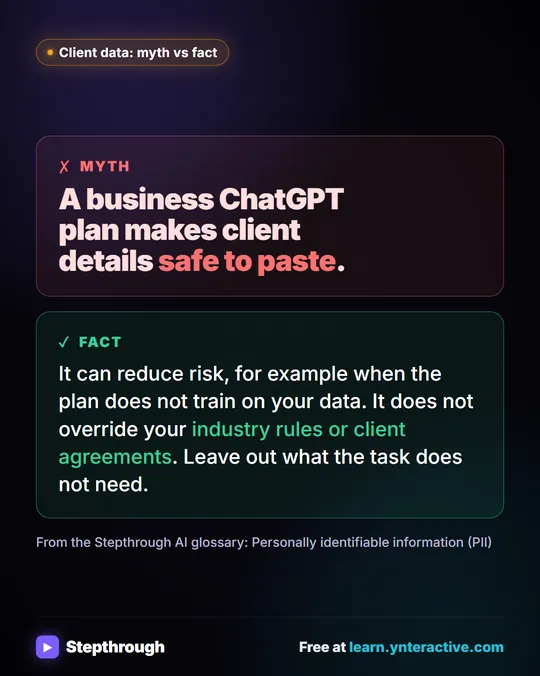 Myth: A Business ChatGPT Plan Makes PII Safe to Paste
Myth vs fact: a business plan can reduce risk, but it doesn't override industry rules or client agreements. Leave out what the task doesn't need.
Myth vs fact One graphic
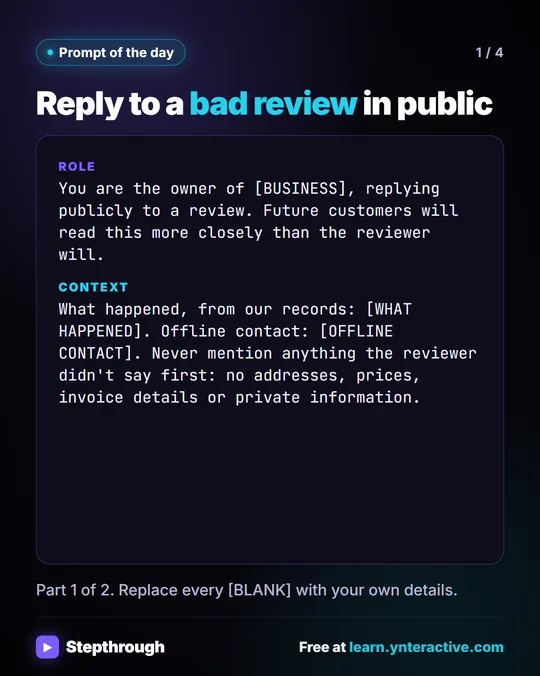 Prompt of the Day: Reply to a Bad Review in Public
A visual prompt card for a public reply to a bad review: calm and specific, no private details, no arguing, and an easy way to talk offline.
Prompt to copy 4 slides
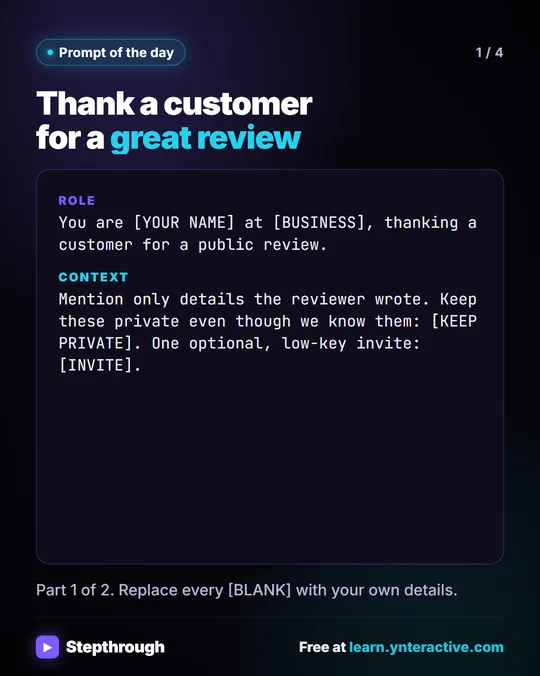 Prompt of the Day: Thank a Customer for a Review
A visual prompt card: three short, specific thank-you replies to a good review, using only what the reviewer wrote and nothing private you know.
Prompt to copy 4 slides
Frequently asked questions
- Is a customer's name PII?
- A name alone is weak, but combined with an email address, phone number or account details it clearly identifies someone. Include names only when the task needs them, like addressing a reply.
- Can I paste client emails into ChatGPT?
- Often, if you remove details the reply does not need, use a plan that does not train on your chats, and your company's policy allows it. When in doubt, ask whoever owns data security at your business.