Updated . Built against the tool’s current screens and checked step by step. How we check this lesson
"How much more will my return cost this year?" arrives in every accounting firm's inbox, usually from a client whose life just got more complicated. Answering it well means the right fees, the terms from the engagement letter, and not a word of tax advice in an email. In this free, interactive lesson you set up a Claude project that already knows all three: your firm's tone and policies as project instructions, and your fee schedule and engagement letter terms as project knowledge. Then a chat inside the project writes the client's fee quote without you explaining anything.
At a glance
| Question | Answer |
|---|---|
| What you build | Create a Claude project for your accounting firm, give it your tone and client policies, add your fee schedule and engagement letter terms as project knowledge, and get a client fee quote that uses all of it. |
| Tools | Claude |
| Time | About 9 minutes, 22 steps in 5 parts |
| Level | Beginner, no coding needed |
| Cost | Free |
| Ways to learn it | Practice it step by step |
The 5 parts, in short
- Create the project: Open Projects, Start a new project, Name it, Describe it, and 1 more step.
- Set the instructions: Add instructions, Write your tone and policies, Save them.
- Add project knowledge: Add files, Upload from your computer, Pick the fee schedule, Add the engagement letter terms, and 1 more step.
- Get a quote: Start a chat in the project, Ask for a fee quote, Send it, See where the numbers came from, and 1 more step.
- Improve it as you go: Go back to the project, Edit the instructions, Add a rule, Save the change.
Start here first: Claude Projects for Your Business: Instructions, Knowledge and Quotes. This Accounting & Bookkeeping Firms version follows the same build with its own example business, Millbrook Accounting.
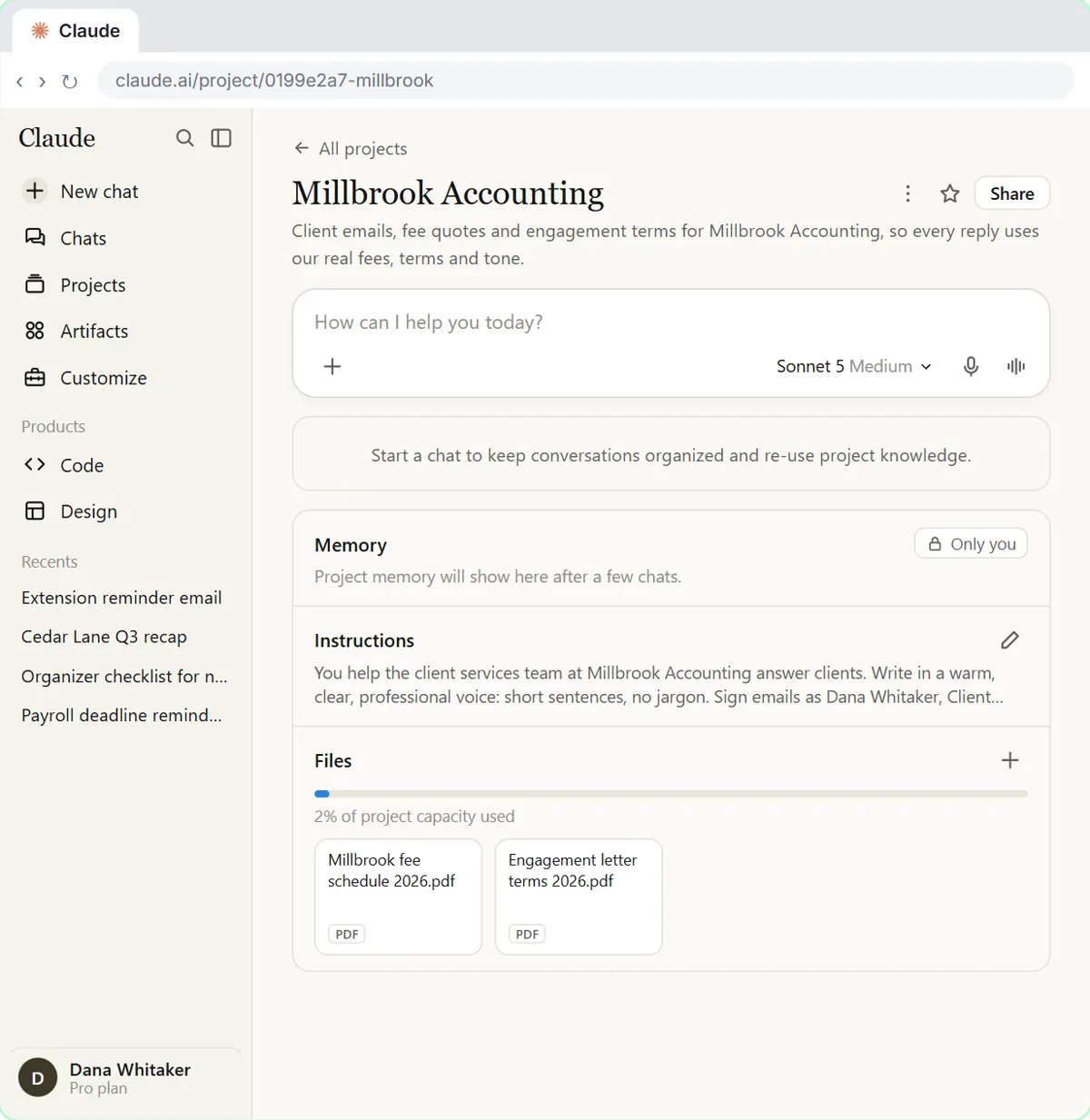
The example: a client with a new rental and a side business
Millbrook Accounting is a made-up small firm, and Dana handles client services. Kevin Park, a made-up client, emails: he and his wife bought a rental condo in May, she started selling candles on Etsy, and he wants to know how much more his taxes will cost this year, whether the firm can handle quarterly estimated payments, and whether the rental will lower their taxes.
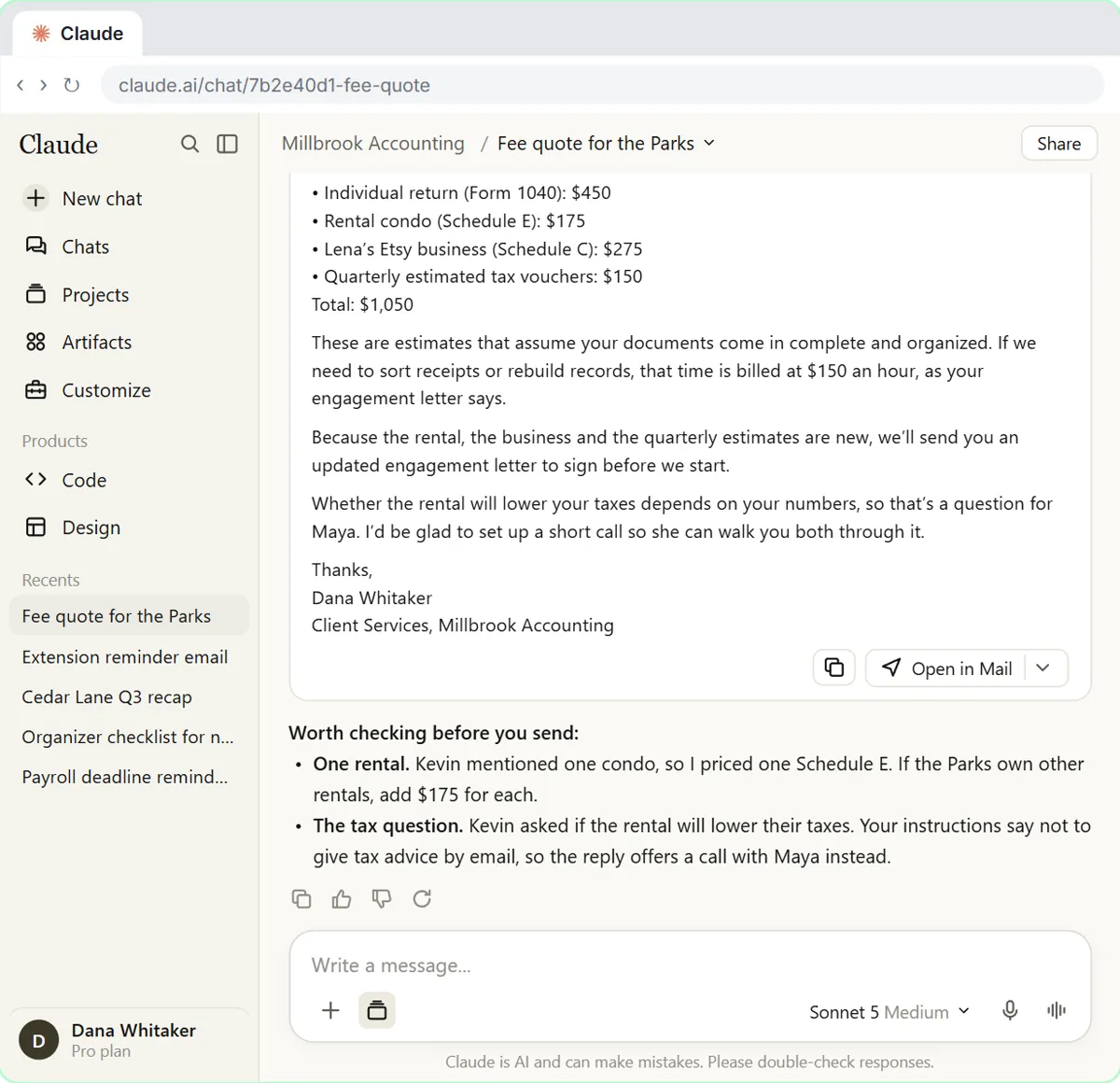
The project's fee schedule prices an individual return at $450, a rental property on Schedule E at $175, a side business on Schedule C at $275 and quarterly estimate vouchers at $150 a year. The engagement letter terms say fees assume organized documents, extra time is $150 an hour, and new services need an updated engagement letter before work starts. Claude pulls it together into a $1,050 quote, and because the instructions say never to give tax advice by email, it answers the rental question with an offer of a call with Maya, the CPA.
Who this lesson is for
Client service staff, office managers, bookkeepers, enrolled agents and CPAs at small firms who answer the same fee and process questions all season. If you have a fee schedule and an engagement letter, you have everything this lesson needs. No technical skills, and no Claude account to practice here.
It is the fourth module in the AI Automation for Accounting & Bookkeeping Firms block.
Why a project beats pasting the fee schedule every time
Without a project, every chat starts from zero: you paste the fee schedule, retype the rules, and hope you didn't leave one out. A project keeps the instructions and files in one place, and every chat started inside it uses them. When a fee changes or a new policy starts, you update it once.
Instructions and knowledge do different jobs. Instructions are how Claude should act: your tone, what it may quote, and what it must never do. Files are what it should know: the fees and the engagement terms. Keeping them apart makes each easy to update, and it's why the reply in the lesson quotes the right fees and still refuses to guess about the client's taxes.
What to put in the project, and what to keep out
- Good project knowledge: fee schedules, engagement letter terms, the document checklist you send new clients, your busy-season deadlines, email templates.
- Keep out: client tax returns, Social Security numbers, bank statements and anything else a fee or process email doesn't need. A project is for how your firm works, not for client files.
- Follow your firm's policy on AI tools. On Team and Enterprise plans you can share a project with the office and choose Can view or Can edit.
- Projects are on every Claude plan; the Free plan allows up to five, and paid plans hold more knowledge because Claude searches it once it gets large.
Ways to use it after the lesson
- Fee questions from new and existing clients, quoted from the current schedule.
- Document reminders that point clients to the portal instead of email.
- Extension and deadline emails that follow the engagement letter's dates.
- A second project for bookkeeping clients, with its own monthly fee tiers and close calendar.
Try it yourself, free
Reading the steps is a start. Doing them is how it sticks. The interactive module walks you through every click in a practice copy of Claude, checks each step, and never touches your real accounts.
Start “A Claude Project for Your Accounting Firm: Fee Schedule, Engagement Terms and Tone”Step by step: A Claude Project for Your Accounting Firm: Fee Schedule, Engagement Terms and Tone
All 22 steps of the interactive module, in order. In the module you watch each one, then do it yourself in a practice copy that checks your work.
1. Create the project
- Open Projects. Right now Claude starts every chat knowing nothing about your business. A project fixes that. Click Projects in the sidebar.
Right now, every new chat starts from scratch, so you'd have to explain your prices and policies every time. A project fixes that.
- Start a new project. This page lists all your projects. You may see an example project from Anthropic here. Click New project at the top right.
This page lists all your projects. You might also see an example project from Anthropic here.
- Name it. Under What are you working on?, type Millbrook Accounting.
Under What are you working on, give the project a name.
- Describe it. Under What are you trying to achieve?, say what the project is for. Paste in the description.
Under What are you trying to achieve, say what the project is for. The description shows under the project's name, so it's easy to tell your projects apart.
- Create it. Click Create project.
2. Set the instructions
- Add instructions. This is the project's page. Next to the message box are Instructions, Context, Memory and Scheduled (in a narrow window they sit below it). Instructions tell Claude how to behave in every chat here. Click Add next to Instructions.
This is your project's page. Next to the message box are Instructions, Context, Memory and Scheduled. Instructions tell Claude how to behave in every chat in this project: your tone, and your rules.
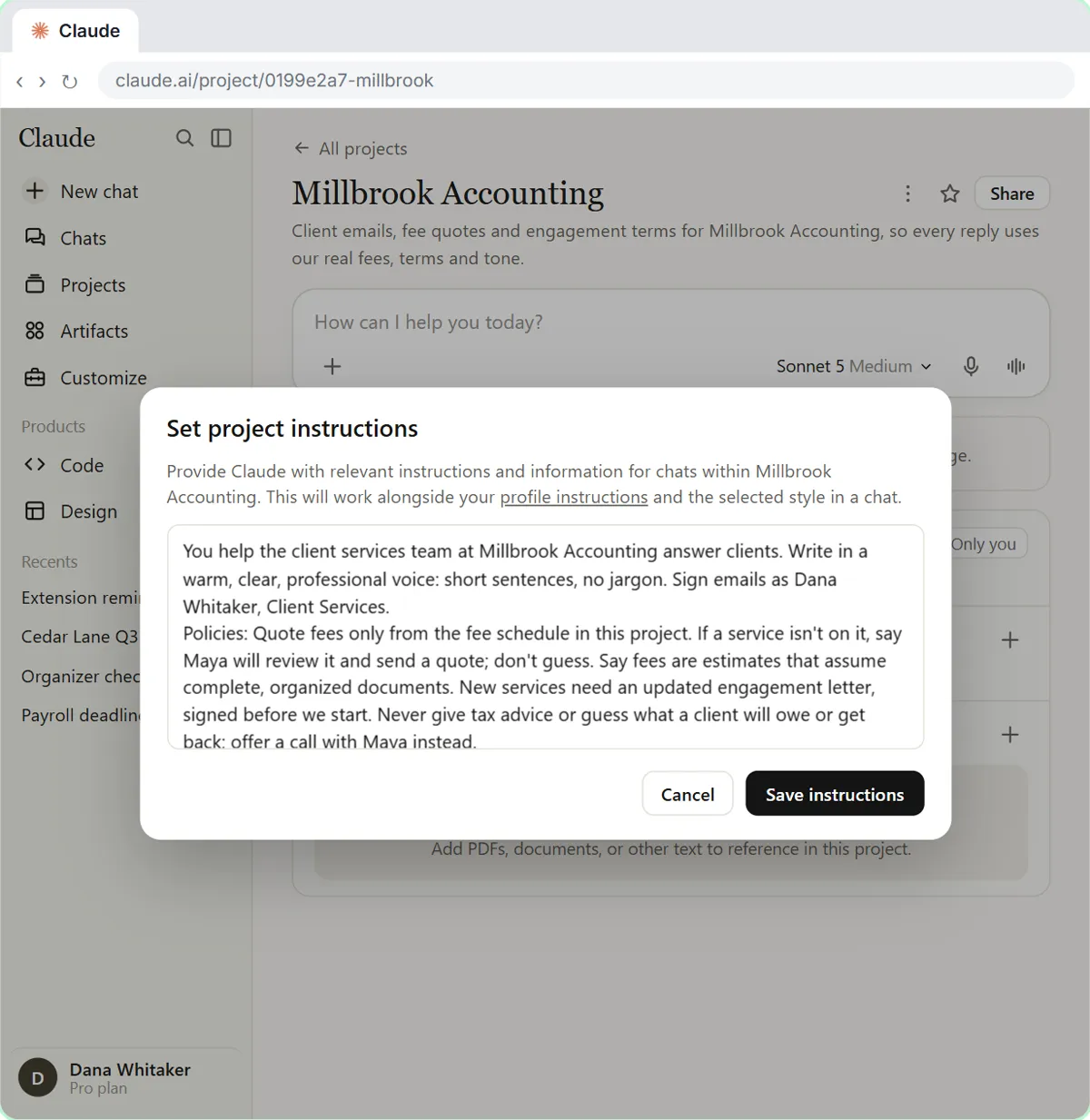
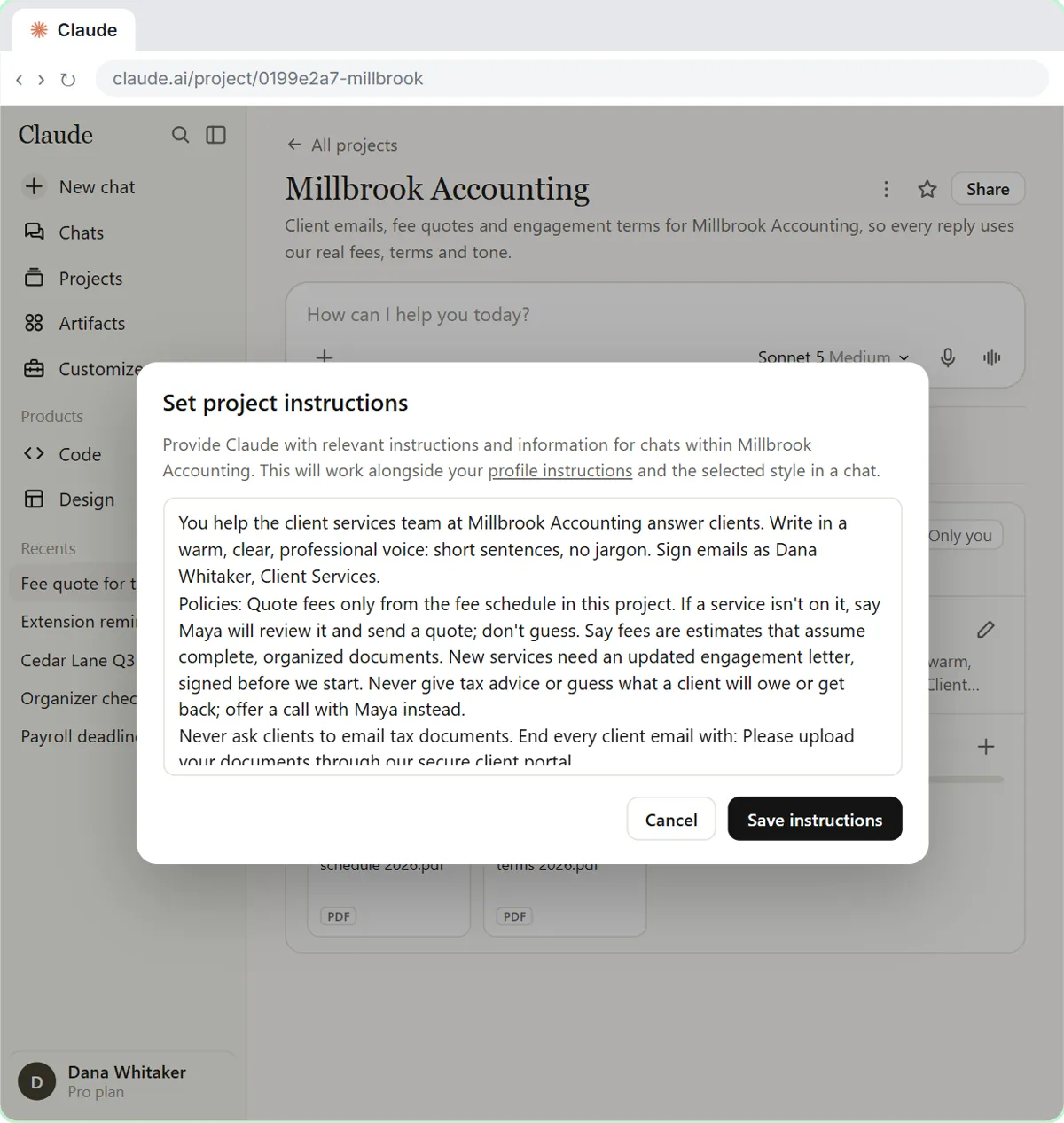
- Write your tone and policies. Say who Claude is helping, the tone you want, and your policies: fees only from the fee schedule, fees are estimates, new services need an updated engagement letter, and no tax advice by email. Paste in the instructions.
Write down how your firm talks to clients, and the rules you always follow. Quote fees only from the fee schedule, say fees are estimates, new services need an updated engagement letter, and never give tax advice by email: offer a call instead.
You help the client services team at Millbrook Accounting answer clients. Write in a warm, clear, professional voice: short sentences, no jargon. Sign emails as Dana Whitaker, Client Services.
Policies: Quote fees only from the fee schedule in this project. If a service isn't on it, say Maya will review it and send a quote; don't guess. Say fees are estimates that assume complete, organized documents. New services need an updated engagement letter, signed before we start. Never give tax advice or guess what a client will owe or get back; offer a call with Maya instead.
- Save them. These work alongside your own profile instructions in Settings, but only inside this project. Click Save instructions.
As the window says, these work alongside the instructions in your own profile, but they only apply inside this project.
3. Add project knowledge
- Add files. Now the facts Claude should work from: your project knowledge, under Context. Click Add next to Context.
Now give Claude the facts it should work from. That's your project knowledge. Instructions are how Claude should act, and context is what it should know.
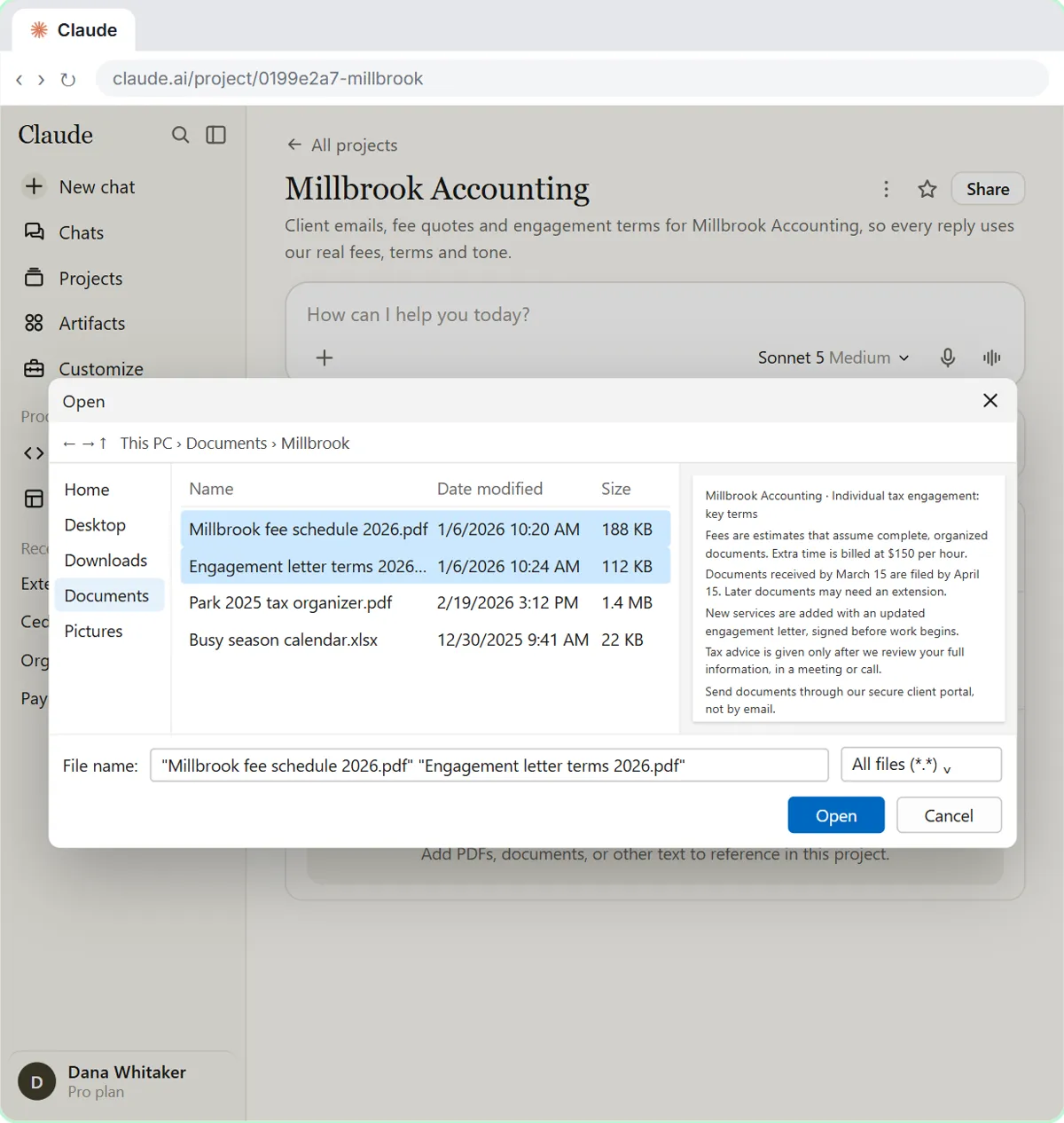
- Upload from your computer. You can upload files, add text you paste in, or connect GitHub or Google Drive. Point at Upload from device, then click Files.
You can upload files, paste in text, or connect GitHub or Google Drive. Point at Upload from device, then click Files.
- Pick the fee schedule. Click Millbrook fee schedule 2026.pdf.
Your computer’s file window opens.
- Add the engagement letter terms. Hold Ctrl (Cmd on a Mac) and click Engagement letter terms 2026.pdf to select it too.
Hold Control, or Command on a Mac, and click the engagement letter terms, so both files are selected.
- Upload them. Click Open.
4. Get a quote
- Start a chat in the project. Both files are now project knowledge: Context says 2 files. Every chat in this project can use them. Click the message box at the top.
Both files are now in the project. Context says two files. Every chat you start here can use them, so you never attach them again.
- Ask for a fee quote. Paste in a client’s email and ask for a reply with a fee quote. Notice you don’t mention fees, the engagement terms or your tone. Paste in the request.
A client wants to know what this year's return will cost. Notice you don't mention fees, the engagement terms or your tone. The project already knows.
A client, Kevin Park, emailed: "Hi! We bought a rental condo in May, and my wife Lena started selling candles on Etsy. How much more will you charge for our taxes this year? Can you also handle our quarterly estimated payments? And will the rental lower our taxes?" Write my reply with a fee quote.
- Send it. Click the send arrow.
- See where the numbers came from. The top bar shows the project name, then the chat. Click Pricing the return from the fee schedule and engagement terms to see how Claude worked it out. (Claude writes this line itself, so yours will differ.)
Look at the top: this chat lives inside your project.
- Check the quote and copy it. The fees match your fee schedule, the $150 an hour comes from your engagement terms, and the updated engagement letter and the call with Maya come from your instructions. Check the math, then click the copy button on the email box.
Every fee came from your fee schedule, the hourly rate came from your engagement terms, and the updated engagement letter came from your instructions. Kevin also asked whether the rental will lower his taxes, and Claude offered a call with Maya instead of guessing, just as your instructions say. Check the math, then click the copy button on the email box.
5. Improve it as you go
- Go back to the project. Click Millbrook Accounting at the top to go back to the project page.
- Edit the instructions. The chat is saved in the project. After a few chats, Memory (click View) fills in with what Claude learns about this work, for this project only. When a reply misses something, fix the instructions rather than the chat. Click Edit next to Instructions.
Your chat is saved in the project. After a few chats, the Memory section fills in with what Claude has learned about this work. It stays in this project, and only you can see it. When a reply keeps missing something, don't just fix that one chat. Fix the instructions.
- Add a rule. Add one line at the end: never ask clients to email tax documents, and point them to the secure client portal. Paste in the new rule.
Add one more rule at the end: never ask clients to email tax documents, and end every email by pointing them to your secure client portal.
- Save the change. Click Save instructions. Every new chat in the project follows the new rule.
From now on, every new chat in this project follows the new rule, and you never have to say it again.
Screenshots
Frequently asked questions
- What is a Claude project?
- A workspace in Claude with its own instructions and files. Every chat you start inside it uses them, so you don't paste your fee schedule or rules again.
- Can Claude quote fees from my fee schedule?
- Yes, if the fee schedule is in the project's files and the instructions say to quote only from it. Tell it to flag services that aren't on the schedule instead of guessing, and check the math before you send.
- How do I stop Claude from giving clients tax advice?
- Put the rule in the project instructions: never give tax advice or guess what a client will owe; offer a call instead. In the lesson, the client asks whether his rental will lower his taxes and the reply offers a call with the CPA.
- Should I upload client tax documents to a project?
- Keep client files out of it. Use the project for firm documents like fee schedules, engagement terms and templates, and follow your firm's policy on AI tools.
- Is this lesson free?
- Yes. Stepthrough is completely free and the practice copy needs no accounts. To do it for real you need a Claude account; projects are on every plan, including Free, with limits.
More in AI Automation for Accounting & Bookkeeping Firms
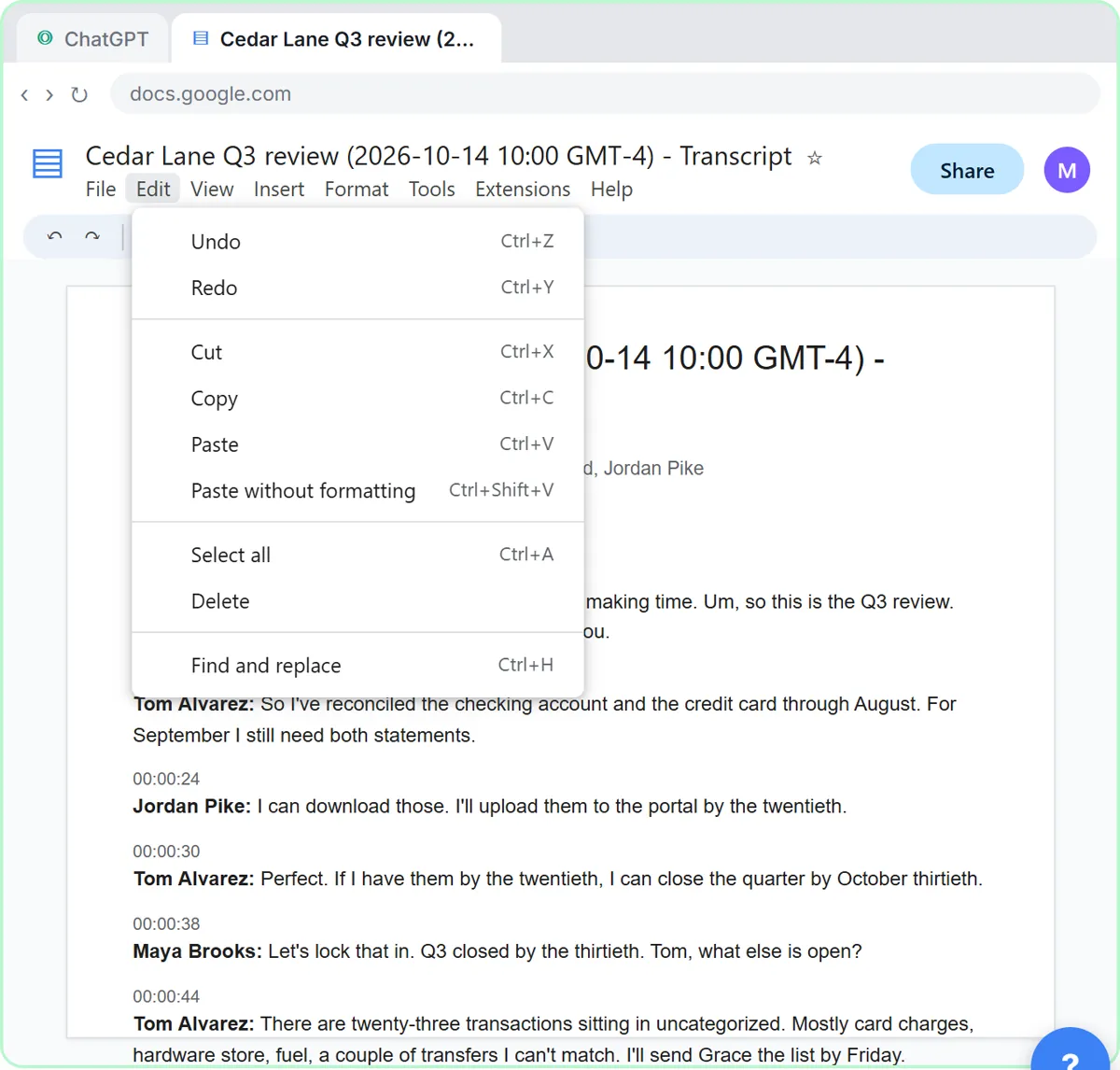 Turn a Client Meeting into Action Items and a Follow-Up Email (Accounting Firms)
Turn the transcript of a client's quarterly review into the decisions, an action items table with owners and due dates, and a follow-up email to the client.
Free · Live ~9 min
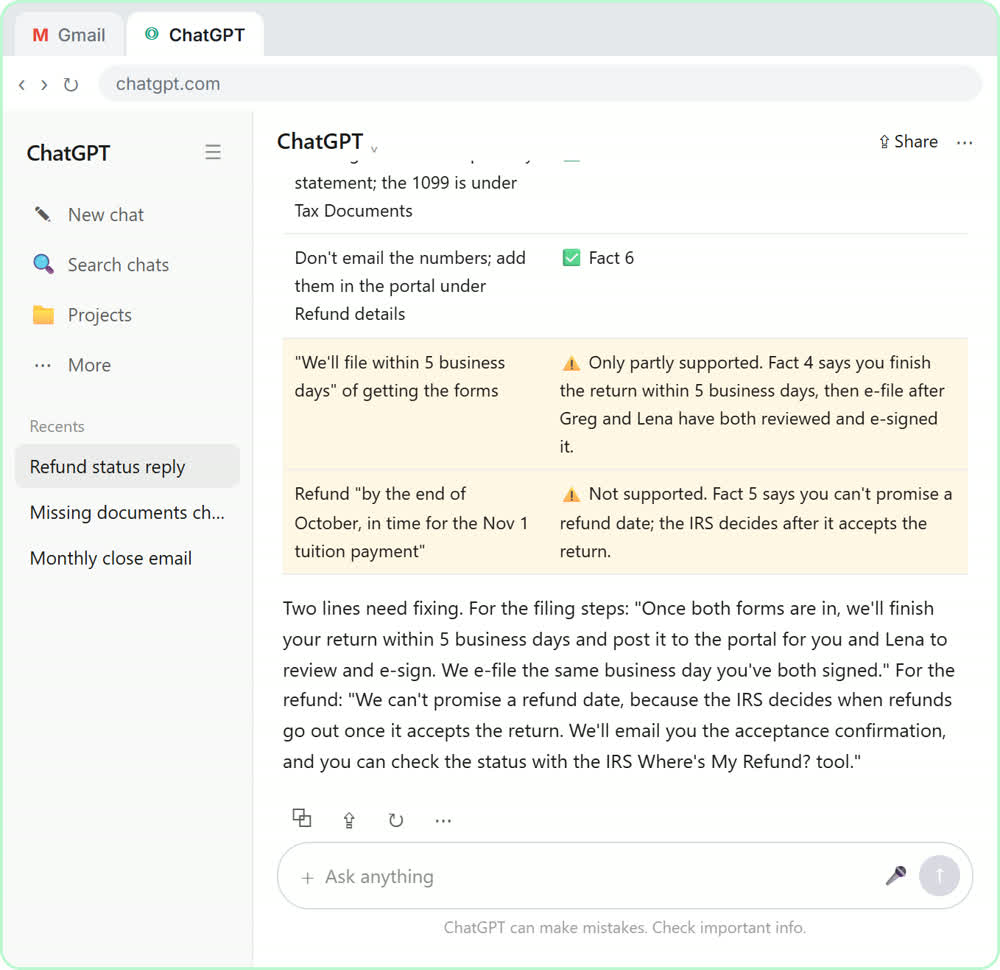 Reply Faster to Clients Chasing Their Refund: ChatGPT for Tax and Bookkeeping Firms
A client wants a refund date while two tax forms are still missing. Give ChatGPT the thread and your firm's facts, catch the date it shouldn't promise, and send a calm…
Free · Live ~10 min
All 5 modules in AI Automation for Accounting & Bookkeeping Firms
More Claude tutorials
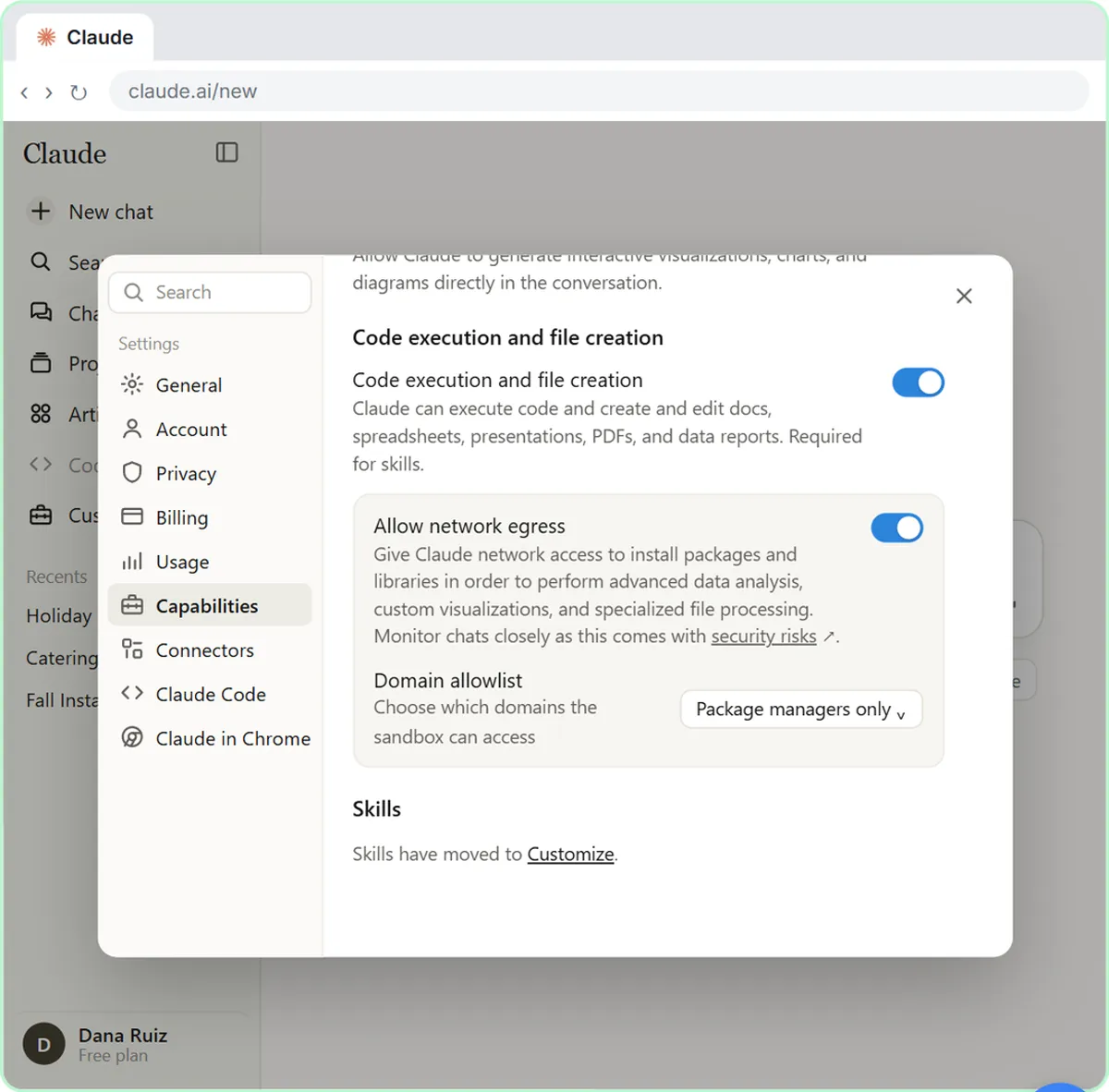 What Are Claude Skills? Turn One On and Watch It Work
Learn what a Claude skill is, switch on the setting skills need, turn on an example skill in Customize, and watch Claude use its Excel and Word skills on its own.
Free · Live ~7 min
◷Your First Chat with Claude: Models, Files and a Great First PromptPick a model, attach a customer's complaint email with the + menu, write a four-part prompt, read Claude's reply, ask a follow-up, then star and rename the chat.
Free · Live ~7 min
 Claude Artifacts: Build a Price Calculator You Can Try, Change and Share
Have Claude build an interactive lawn price calculator, try it in the artifact panel, ask for a change, and share it with a link.
Free · Live ~7 min
 Claude Research: Get a Cited Competitor Price Scan, Then Check It
Turn on Research, have Claude check what nearby competitors charge, read the cited report, check a source and ask a follow-up.
Free · Live ~7 min
 Connect Claude to Google Drive, Gmail and Google Calendar
Connect Google Drive, Gmail and Google Calendar to Claude, then find your price sheet, summarize a customer's email thread and check your week, approving each tool as…
Free · Live ~8 min
 Check a Contract for Red Flags with Claude
Upload a vendor contract, get it in plain English, find the risky clauses with the exact words quoted, draft questions for the vendor, and save the review as a project…
Free · Live ~11 min
Terms in this lesson
Plain-English definitions, each with an example from a free lesson.