What is a follow-up email?
Updated · By Robert Breen
A follow-up email is a message you send after a conversation, demo, job or meeting to recap what was said and move things forward with one clear next step. A good one is short, specific to that person, and easy to reply to.
Why it matters for a small business
Follow-ups are where small businesses quietly lose money. The demo went well, the job was finished, the meeting ended with good intentions, and then nobody wrote. A prompt, specific follow-up wins deals, earns reviews and repeat work, and keeps a team's promises from slipping.
They are also where generic AI writing shows most. Ask for "a follow-up email" and you get pressure words, emojis and nothing the prospect actually said. AI writes good follow-ups when it has three things: the facts of this conversation, your rules for tone and length, and the one next step you want.
In a real lesson: Build a Custom GPT That Writes Sales Follow-Up Emails
In Build a Custom GPT That Writes Sales Follow-Up Emails, you first send ChatGPT a bare prompt: "Write a follow-up email to a prospect after our sales demo." The reply has emojis, all caps, a limited time offer nobody made, and not one detail from the demo.
Then you build a Custom GPT called Sales Follow-Up Writer for Northwind Scheduling Software, a made-up company. The instructions read like a checklist for any good follow-up: a subject line under 8 words, one line of thanks with no small talk, a recap in 2 to 3 bullets of features that match what the prospect needs, the price only if they asked, exactly one next step with a clear ask, and under 150 words. A content rule keeps it honest: "If a detail is missing (first name, team size, what they said), use a [bracket] so the rep can fill it in."
You upload Northwind-Sales-Playbook.pdf as knowledge and send the same prompt again. This time the email has a plain subject, a short recap and one ask, with brackets where the rep's notes need to go.
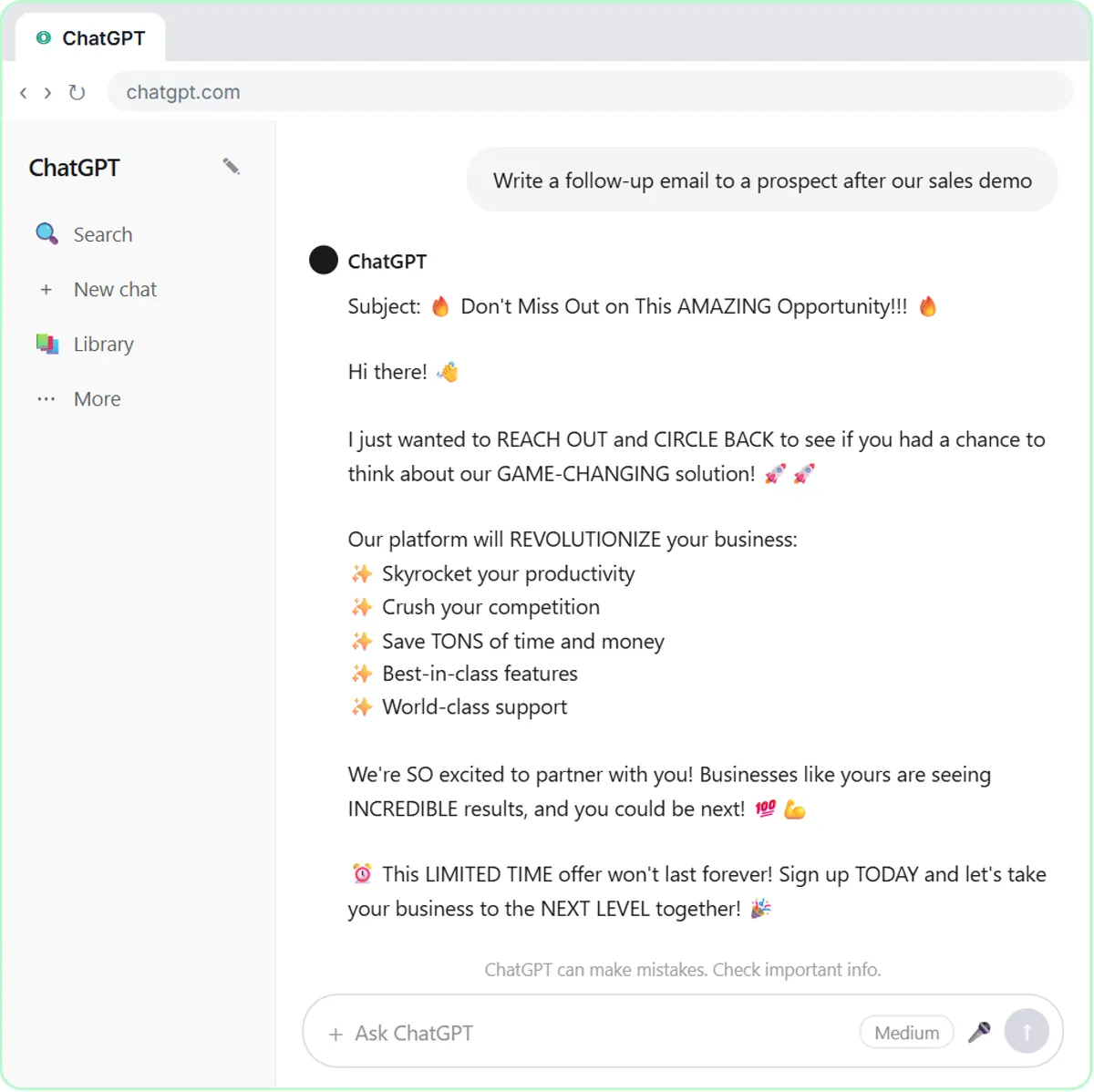
Try this lesson free or read the step-by-step guide.
Common confusions
Follow-up email vs recap email
A recap goes to the people who were in the meeting and lists decisions and action items. A follow-up usually goes to a customer or prospect and asks them to take one step. One email can do both, as long as the ask is clear.
Follow-up vs reminder
A follow-up continues a conversation. A payment reminder asks someone to do something they already agreed to, which is dunning. Tone and rules differ, so keep separate instructions for each.
Tips
- End with exactly one ask. Two asks usually get neither.
- Use brackets for facts the AI doesn't have, and fill them before sending.
- Send it the same day. A great follow-up a week late reads as an afterthought.
Related terms
Where you use it: free lessons
- Build a Custom GPT That Writes Sales Follow-Up Emails (ChatGPT, 8 min)
- Build an n8n AI Agent That Writes Deal Follow-Ups (n8n, 12 min)
- Build an AI Follow-Up Agent for HVAC Service Calls (n8n, 12 min)
Prompt templates that use it
Visual guides
Follow-up email in a few slides, with the same guide written out as text.
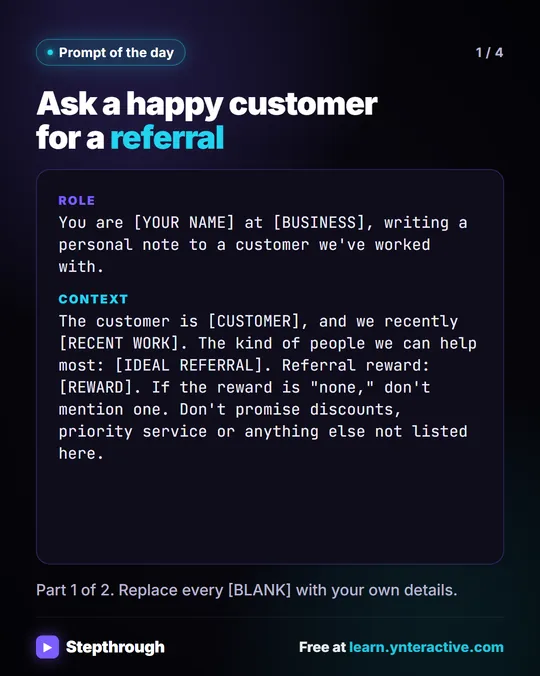 Prompt of the Day: Ask a Happy Customer for a Referral
A visual prompt card for a short, personal referral ask: thank the customer for real work, describe who you help, and no reward you haven't decided on.
Prompt to copy 4 slides
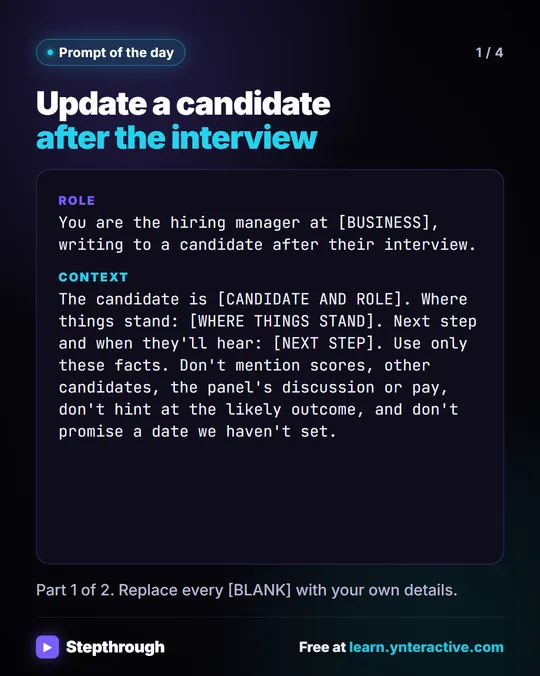 Prompt of the Day: Update a Candidate After an Interview
A visual prompt card: the email a candidate gets after an interview, with thanks, where things stand, the next step and no hint of the decision.
Prompt to copy 4 slides
Frequently asked questions
- How long should a follow-up email be?
- Short enough to read on a phone. The sales lesson caps them at 150 words, and the n8n follow-up agents go shorter, under 80 words.
- Should AI send follow-ups automatically?
- Start with AI drafting and a person sending. Once the drafts are reliably right for one kind of follow-up, you can consider automating that one.