What is an invoice?
Quick answer
An invoice is a dated document a business sends to a customer asking to be paid for goods or services already delivered. It lists who is billing whom, what was provided, the amount owed, the due date and how to pay, and it carries a unique invoice number.
Last updated
Updated · By Robert Breen
Why it matters for a small business
The invoice is where earned money becomes collectable money. Until one goes out, the work you finished doesn't show up as accounts receivable, and the customer's clock for paying hasn't started. A late or vague invoice almost always means a late payment.
Every field has a job. The invoice number lets both sides talk about the same bill. The due date, set by your payment terms such as Net 30, tells the customer when it is late. A clear description of the work prevents the "what is this for?" email that delays payment by a week. AI helps most after the invoice is sent: drafting reminders that quote those exact fields, in your tone, so following up takes a minute instead of an afternoon.
In a real lesson: Build a Custom GPT That Writes Overdue Invoice Reminders
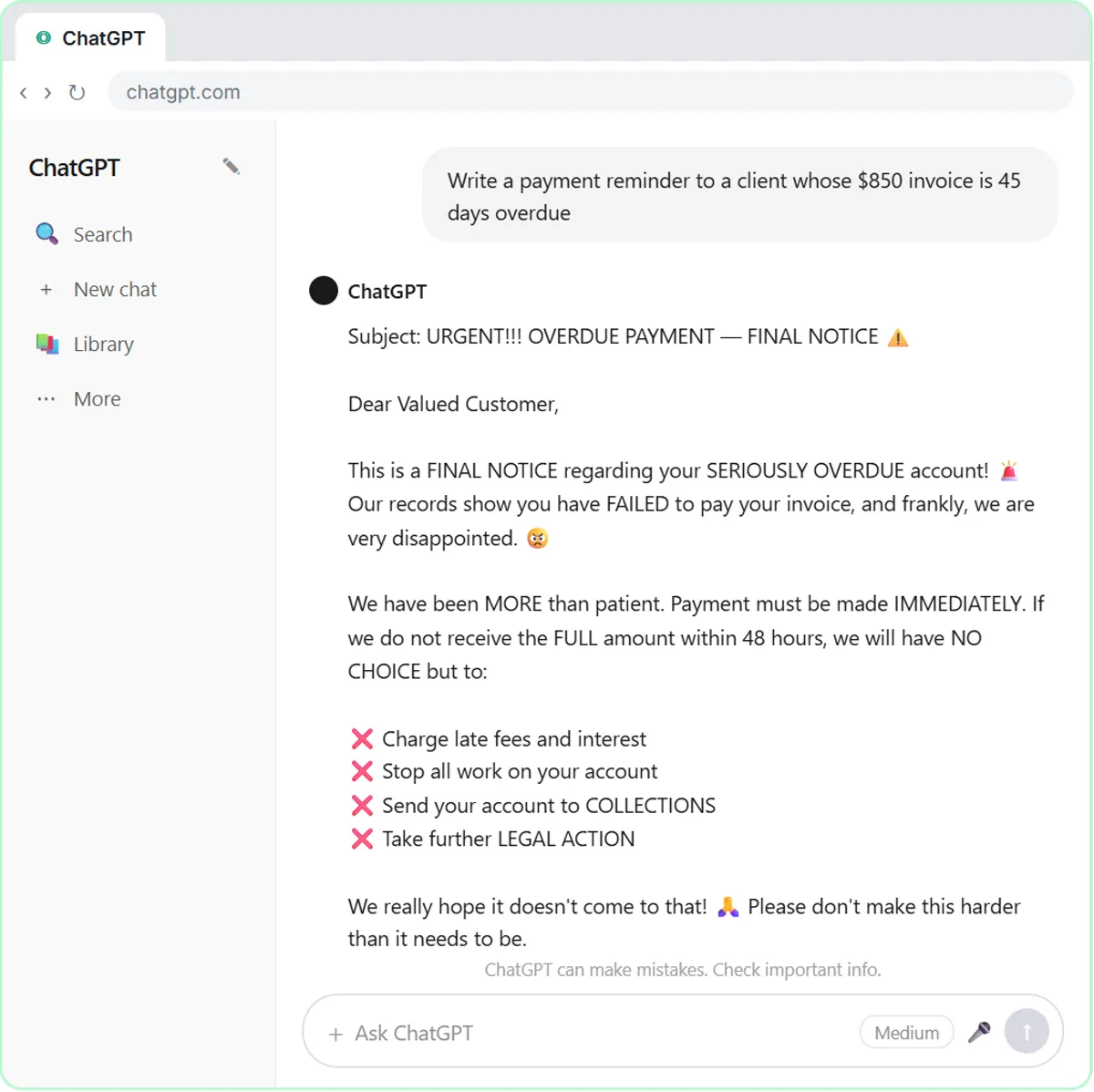
In Build a Custom GPT That Writes Overdue Invoice Reminders, you set up a GPT for Maple Street Bookkeeping, a made-up firm with 4 people and about 60 small-business clients. Its instructions state the rule behind every invoice the firm sends: "Invoices are due 30 days after the invoice date."
The test request is about one invoice: "Write a payment reminder to a client whose $850 invoice is 45 days overdue." The instructions tell the GPT what to pull from it: a subject line with the invoice number, then "the invoice number, amount, original due date and days overdue," the ways to pay and one clear next step, all under 150 words.
That list is a good checklist for the invoice itself. If your invoices don't show a number, an amount, a due date and payment options, a reminder can't quote them, and the customer has to write back and ask.
Try this lesson free or read the step-by-step guide.
Common confusions
Invoice vs receipt
An invoice asks for payment. A receipt confirms that payment was made. One bill can produce both: the invoice when you bill, the receipt when the money arrives.
Invoice vs pro forma invoice
A pro forma invoice is a preview sent before the work or shipment, so the buyer can approve the cost. A real invoice comes after delivery and is the one that is due.
Tips
- Give every invoice a unique number and put it in the email subject line.
- Send the invoice the day the work is done. Every day you wait is a day added to the payment.
- Ask AI to check a draft invoice email for a missing amount, due date or payment link before you send it.
Related terms
More Business terms
Where you use it: free lessons
- AI Receipt Extractor: Receipts to Google Sheets with n8n (n8n, 12 min)
Frequently asked questions
- What must an invoice include?
- Your business name and contact details, the customer's name, a unique invoice number, the invoice date, a description of the work, the amount, the due date and how to pay. Tax rules for your area may add more, so check with your accountant.
- Can AI write invoices?
- It can draft the wording and the email that goes with one. The amounts and line items should come from your accounting or billing software, so the numbers match your books.