What is an interview scorecard?
Updated · By Robert Breen
An interview scorecard is a short form that rates a job candidate against the same list of requirements used for every candidate, with evidence for each rating. It keeps hiring discussions on the job and makes candidates easier to compare fairly.
Why it matters for a small business
Without a scorecard, interview debriefs drift toward gut feel: "I liked her," "he seemed nervous." That makes decisions harder to compare and easier for bias to creep in. Agreeing the must-haves before interviews, then rating each one with a quote or example, keeps everyone talking about the same things.
AI can turn a messy debrief into a draft scorecard quickly, but this is hiring, so the guardrails matter. Tell it to stick to job-related points, to mark a requirement as not discussed instead of guessing, and to leave out anything personal. The decision stays with people. This page is general guidance, not legal or HR advice: follow your company's hiring policy and the law where you hire.
In a real lesson: Turn an Interview Debrief into a Scorecard and a Candidate Follow-Up (Recruiting & HR)
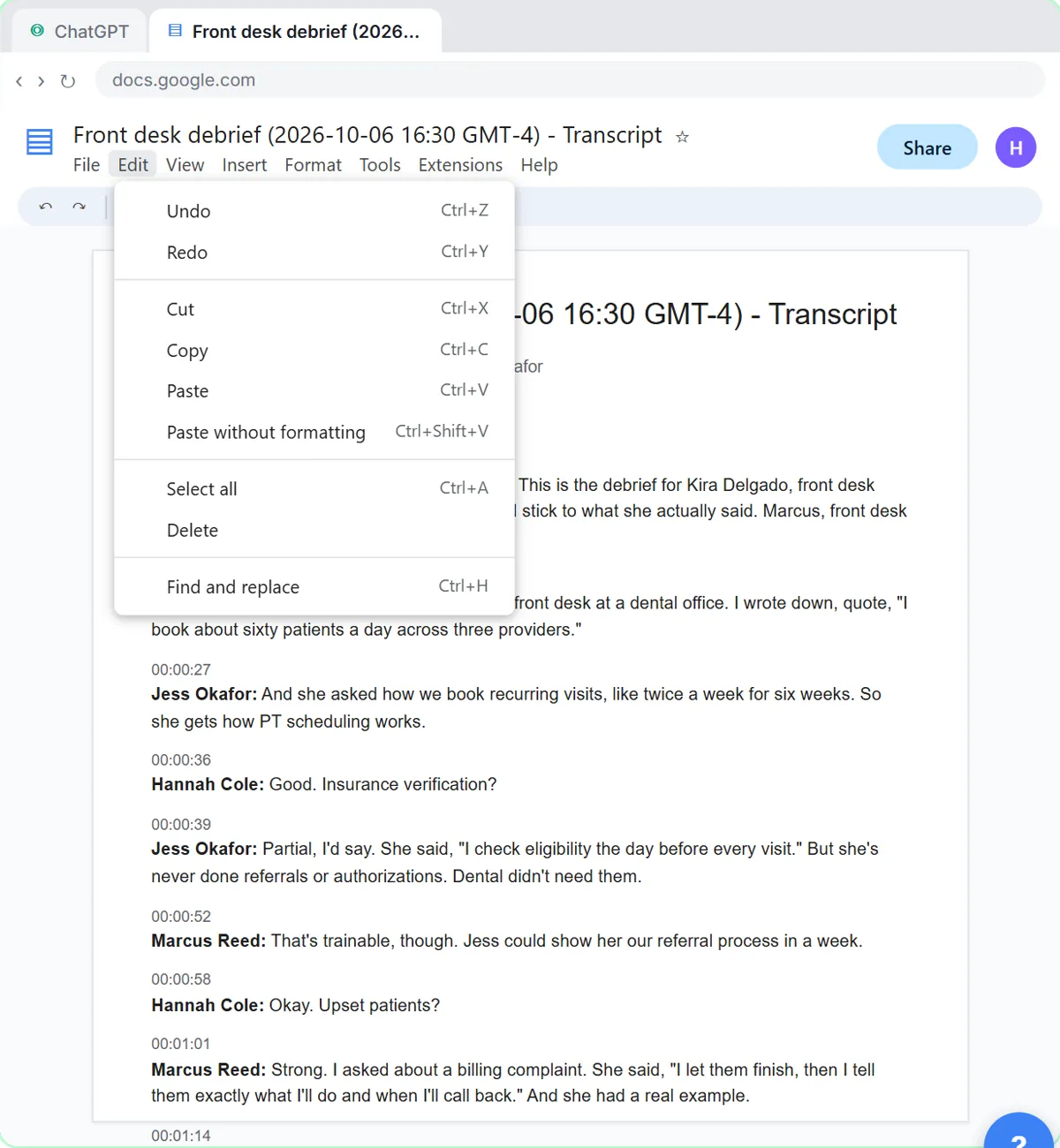
In the Interview Debrief to Scorecard lesson, you work as Hannah, the HR manager at Willow Bend Physical Therapy, a made-up practice. The transcript is a panel debrief on Kira Delgado for Front Desk Lead, and the request lists the role's four must-haves: two or more years running a front desk, insurance verification, calming upset patients, and training other staff.
It asks ChatGPT to score each one Strong, Partial or Not discussed "with a short quote from the interview as evidence," and adds: "Only use what's in the transcript, and only what's about the job's must-haves. Don't guess at age, family, health, religion or anything else that isn't job-related."
The result shows why that wording matters. Front desk experience is Strong, backed by her quote about booking about sixty patients a day. Insurance verification is Partial. Training other staff is Not discussed, because the panel ran out of time. An interviewer's comment about her kids is not in the scorecard. The candidate email you ask for afterwards includes only next steps, leaving out the scores and the pay question.
Try this lesson free or read the step-by-step guide.
Common confusions
Scorecard vs interview notes
Notes are whatever each interviewer wrote down. A scorecard is structured: the same requirements for every candidate, one rating each, and evidence. Notes feed the scorecard.
Not discussed vs weak
If nobody asked about a requirement, the candidate didn't fail it. "Not discussed" flags a gap for the next round, as the lesson's final interview does for training staff.
Tips
- Write the must-haves before the first interview, not after.
- Require a quote or example for every rating.
- Candidate details are personal data. Use a business AI account that doesn't train on your data and include only what the scorecard needs.
Related terms
Where you use it: free lessons
- Turn an Interview Debrief into a Scorecard and a Candidate Follow-Up (Recruiting & HR) (ChatGPT, 9 min)
Prompt templates that use it
Visual guide
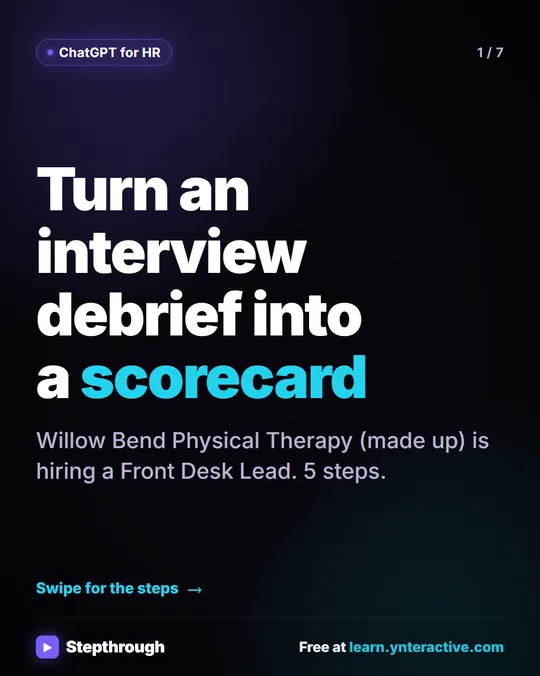
Interview scorecard in a few slides, with the same guide written out as text.
Frequently asked questions
- Can AI decide which candidate to hire?
- It shouldn't. Use it to organize evidence against your requirements, and keep the decision with the people who interviewed.
- What rating scale should a scorecard use?
- Simple is fine. The lesson uses Strong, Partial and Not discussed, which is easy to apply consistently and shows gaps clearly.