What is AI bias?
Updated · By Robert Breen
AI bias is when an AI system produces unfair or skewed results for certain people or situations, usually because of patterns in its training data, the way a task was framed, or information it should not have been given. It can show up in hiring, lending, customer service and marketing.
Why it matters for a small business
A model learns from human-written data, and human data carries human assumptions. If an AI helping with hiring notes sees a remark about a candidate's family or age, it may weigh it, repeat it or let it color the summary, even when no one intended that. In a small business, that can mean unfair decisions and notes you would not want anyone to read later.
You cannot inspect a model's training data, but you control the task. Defining what counts (the actual job requirements), asking for evidence for each judgment, and keeping irrelevant personal details out of both the input and the output make results fairer and easier to stand behind. A person still owns the decision.
In a real lesson: Turn an Interview Debrief into a Scorecard and a Candidate Follow-Up (Recruiting & HR)
The interview scorecard lesson builds bias control into the request. You are Hannah, HR manager at Willow Bend Physical Therapy, a made-up practice, turning a panel debrief on Kira Delgado for Front Desk Lead into a scorecard. During the debrief, one interviewer mentions that Kira has two little kids and wonders about early shifts; Hannah stops that line on the spot.
The request you send with Paste request names the four must-haves (two or more years running a front desk, insurance verification, calming upset patients, training other staff), asks for a Strong, Partial or Not discussed score on each with a short quote as evidence, and says: "Don't guess at age, family, health, religion or anything else that isn't job-related."
The scorecard comes back with a quote for each scored must-have, Not discussed for training because nobody asked, and no mention of her children. The lesson's closing note is the general rule: notes about the job's requirements are fairer to every candidate, and the decision stays with people, not ChatGPT.
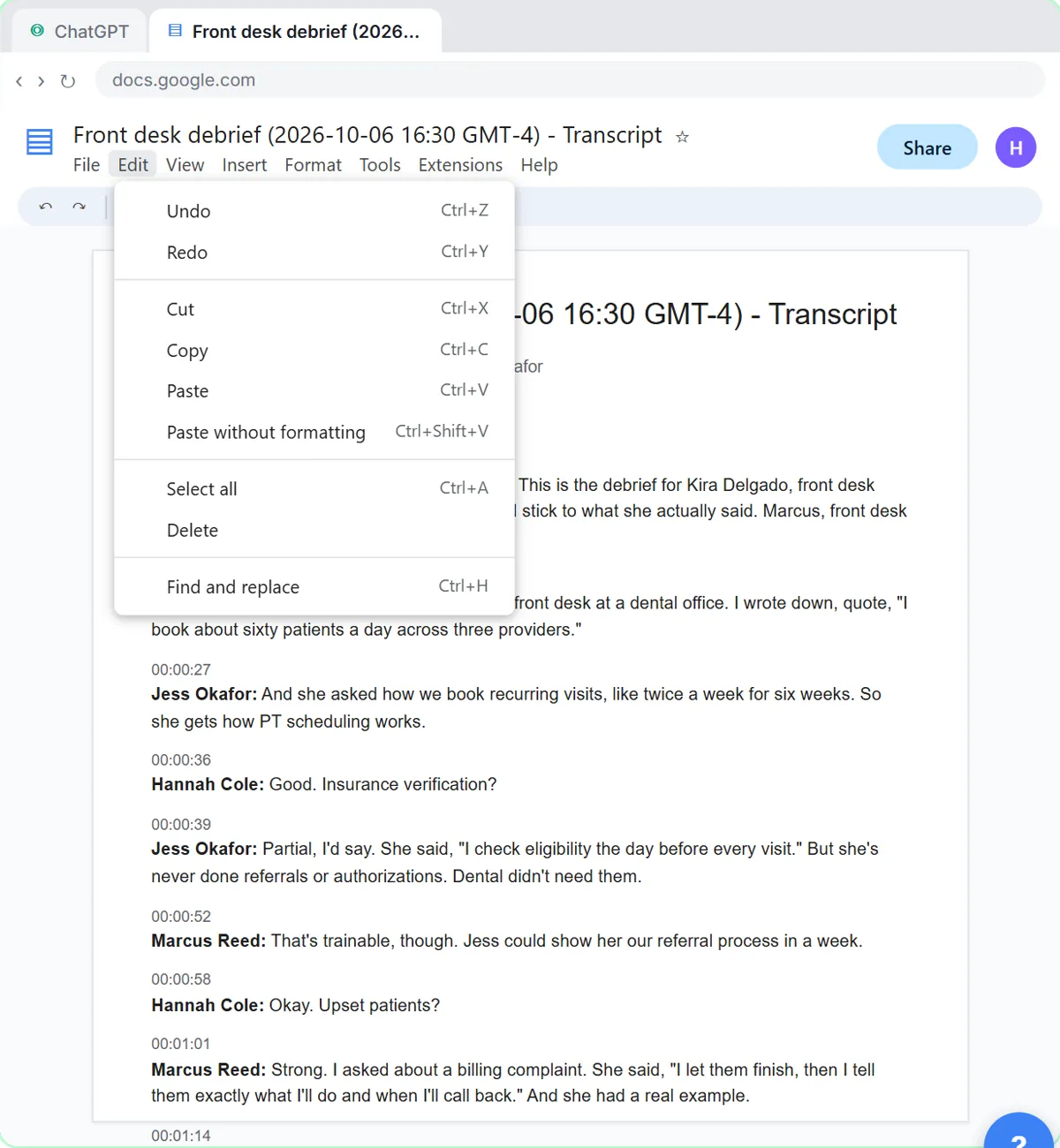
Try this lesson free or read the step-by-step guide.
Common confusions
AI bias vs a wrong answer
A wrong answer is a one-off error. Bias is a pattern: results that consistently lean against a group or toward an assumption. You spot it by comparing many outputs, not one.
Is removing names enough?
It helps, but bias can come through other details, like gaps in work history, schools or phrasing. Defining job-related criteria and requiring evidence for each score does more than hiding a name.
Tips
- Score against written, job-related criteria, and ask for a quote or fact as evidence for each score.
- Tell the AI which personal details to ignore, and leave them out of the input where you can.
- Keep people responsible for hiring and other decisions about individuals; this is not legal advice, so follow your company's policy and local law.
Related terms
Where you use it: free lessons
- Turn an Interview Debrief into a Scorecard and a Candidate Follow-Up (Recruiting & HR) (ChatGPT, 9 min)
Prompt templates that use it
Visual guides
AI bias in a few slides, with the same guide written out as text.
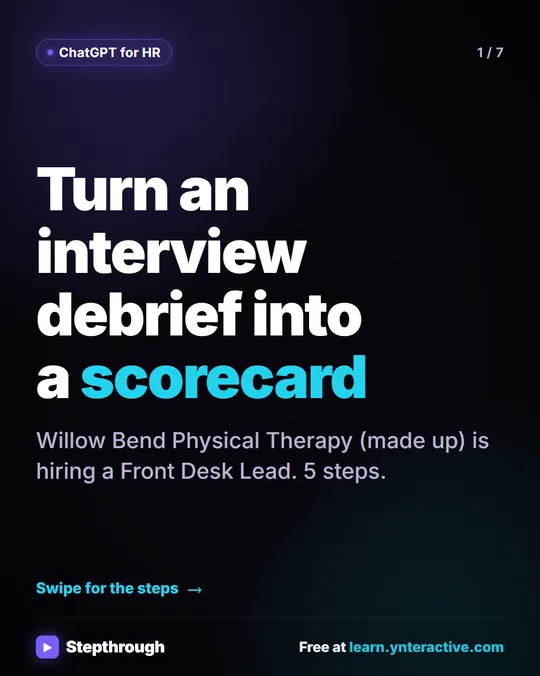 5 Steps to Turn an Interview Debrief into a Scorecard
A visual guide: turn an interview panel's debrief transcript into a ChatGPT scorecard with evidence for each must-have, then a candidate follow-up.
Step-by-step guide 7 slides
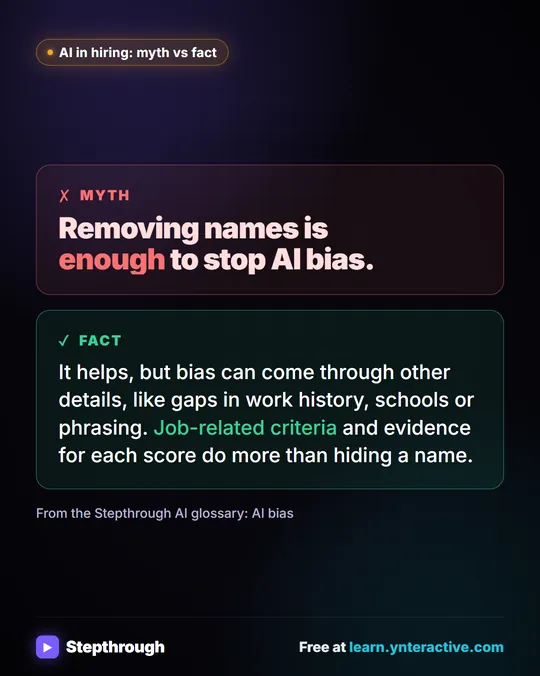 Myth: Removing Names Is Enough to Stop AI Bias
Myth vs fact: hiding names helps, but bias comes through other details. Job-related criteria and evidence for each score do more.
Myth vs fact One graphic
Frequently asked questions
- Can AI be used fairly in hiring?
- It can help organize notes against job requirements, as in the scorecard lesson, but people should make the decisions. Follow your company's hiring policy and the law where you hire, and get professional advice when unsure.
- Where does AI bias come from?
- Mostly from patterns in the data a model learned from, plus how the task is framed and what information it is given. You cannot change the training, but you can control the criteria and inputs.