What is ad copy?
Updated · By Robert Breen
Ad copy is the written text of an advertisement: the headlines, descriptions and short body text people read in a search ad or social ad. It has to grab attention, say why someone should click and fit tight character limits set by each ad platform.
Why it matters for a small business
In paid ads, every word costs money. Copy that is vague, too long or makes a claim you can't back up either wastes the budget or gets the ad rejected. Small businesses usually need several variations to test, which is a lot of short, careful writing.
AI can produce variations fast, but generic AI ad copy has three predictable problems: it runs past character limits, it invents discounts and urgency, and it drifts into claims you shouldn't make. Each one has a simple fix in the instructions: state the limits and ask for counts, list your real offers, and list the claims that are off limits.
In a real lesson: Build a Custom GPT Ad Copy Writer for Search and Social Ads
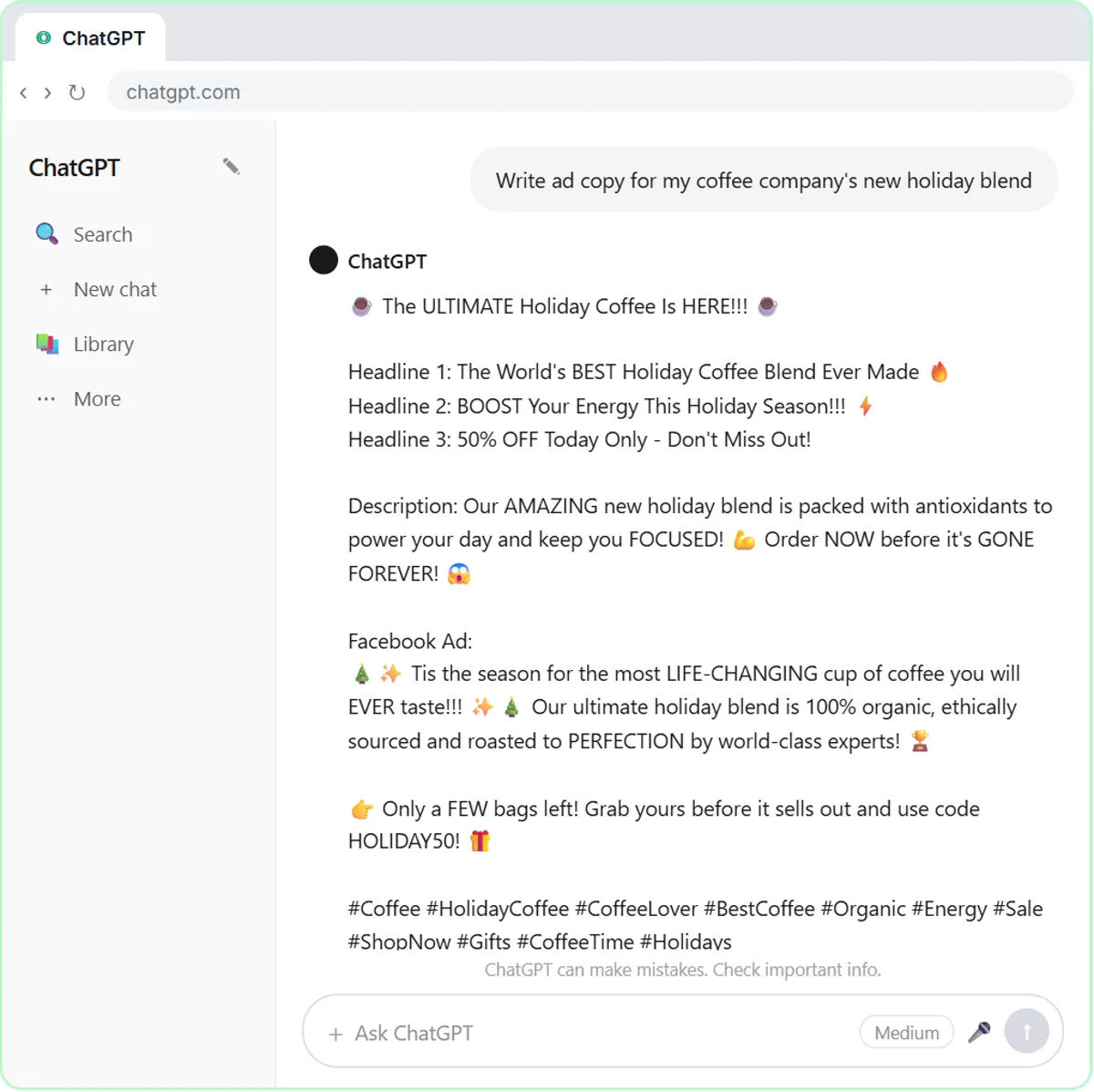
In Build a Custom GPT Ad Copy Writer, the bare prompt "Write ad copy for my coffee company's new holiday blend" comes back with emojis, all caps, a health claim, a discount nobody offered, and headlines too long to fit a search ad.
You then build an Ad Copy Writer GPT for Harbor & Pine Coffee Roasters, a made-up coffee brand. Its Instructions spell out character limits, "count every character, including spaces": Google search headline 30 characters max (write 3), Google search description 90 max (write 2), Facebook and Instagram primary text 125 max (write 2), Facebook and Instagram headline 40 max (write 2), and "Show the character count after every line."
The content rules close the other gaps: only use products, prices and offers from the Brand Voice & Ad Guide, never make health claims, never create fake urgency like "only 2 left," and only call a coffee organic or Fair Trade if the guide says it is. You attach Harbor-Pine-Brand-Voice.pdf and send the same prompt again.
Try this lesson free or read the step-by-step guide.
Common confusions
Ad copy vs content
Content (posts, emails, guides) earns attention over time and can be longer. Ad copy is paid, short and built to get one click. They share a brand voice but follow different rules.
Character limits vs word limits
Ad platforms count characters, including spaces, not words. AI models often miscount, which is why the lesson asks for a count after every line, and why you should still check before you paste.
Tips
- Check the current limits in the ad platform itself. They can change, and they differ by ad type.
- Count characters yourself or with a tool before you publish. Trust the AI's counts only after checking.
- Ask for several variations with different angles so you have something real to test.
Related terms
Where you use it: free lessons
- Build a Custom GPT Ad Copy Writer for Search and Social Ads (ChatGPT, 8 min)
More free tutorials
Prompt templates that use it
Frequently asked questions
- Can ChatGPT write Google Ads copy?
- Yes, if you give it the character limits, your real offers and the claims to avoid. Check every line's length before you paste it into the ad platform.
- Why does AI ad copy include discounts I never offered?
- Because ads often mention deals, so the model fills one in. List your real offers and tell it never to invent one.