AI helps an insurance agency most with client email: claim-status replies, coverage questions, renewal reminders and document requests. It drafts from facts you give it, and a licensed person checks anything about coverage before it goes out. Start with the free Reply Faster to Claim-Status Emails lesson, which takes about 10 minutes.
This playbook is for owners, producers, account managers and customer service reps at independent and captive agencies. For a learning path in order, see AI for insurance agents: where to start.
What can AI do for an insurance agency?
AI is most useful on the messages an agency sends every day from facts it already has. The free lessons cover:
| Job | What AI does | Lesson |
|---|---|---|
| Claim-status emails | Drafts a reply from numbered facts, lists every promise against its fact and fixes what overpromises | Reply Faster to Claim-Status Emails |
| Request templates | Turns repeat emails into a saved four-part prompt | Prompt Writing 101 |
| Review meetings | Pulls decisions, an action items table and open questions from a transcript | Summarize a Meeting Transcript |
| Routine inbox questions | Saves a reply draft under each new email | AI Email Responder |
| Quote and renewal follow-ups | Writes a follow-up for each open item and logs it in a sheet for review | Build an n8n AI Agent That Writes Deal Follow-Ups |
How do you answer a client who asks when the carrier will pay?
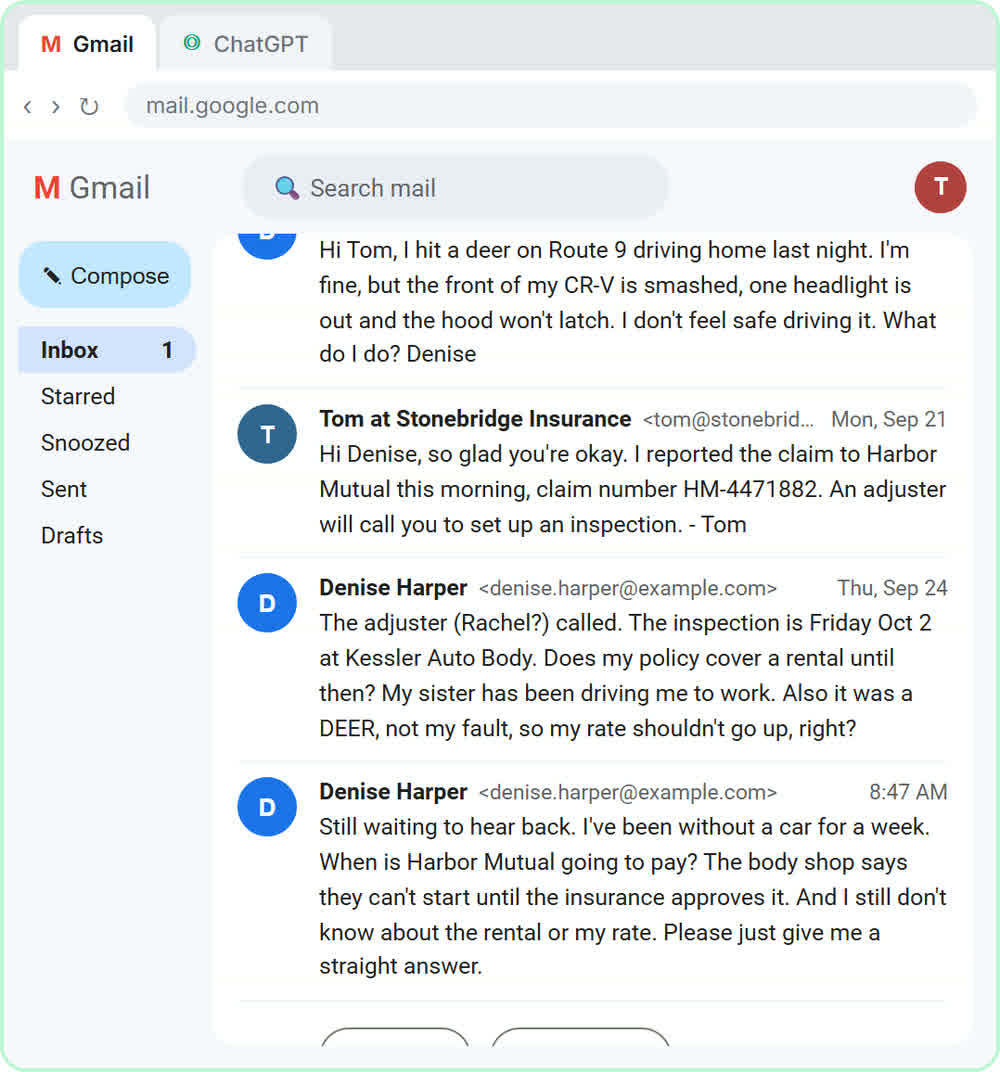
You answer what the agency knows and point the rest to the carrier. In the claim-status lesson, Denise, a client of Stonebridge Insurance Agency, a made-up agency, hit a deer and asks when the carrier will pay, whether her rental is covered and whether her rate will go up.
You paste her thread and eight numbered facts, including the claim number and deductible, the adjuster and inspection, who decides payment and what the declarations page says about rental reimbursement. ChatGPT drafts, then lists each promise next to its fact. Lines that promise a payment date or a rate outcome get fixed before the reply goes out from Gmail.
Which other lessons help an agency?
- Prompt Writing 101: save templates for certificate requests, renewal reminders and coverage review invites. 8 minutes.
- Summarize a Meeting Transcript: annual reviews and commercial account meetings into owners and due dates. 9 minutes.
- AI Email Responder: reply drafts in Gmail for routine questions, never coverage decisions. 12 minutes.
- Build an n8n AI Agent That Writes Deal Follow-Ups: the example is a software company's open deals; for an agency, the list is open quotes and upcoming renewals. 12 minutes.
Try it free, step by step
Reply Faster to Claim-Status Emails: ChatGPT for Independent Insurance Agencies. A client with an open auto claim wants a payment date, a rental and a promise about her rate. Give ChatGPT the thread and your agency's facts, catch what it shouldn't promise, and send an honest… You do every step yourself in a practice copy of ChatGPT, it checks your work as you go, and “Do it for me” finishes any step you get stuck on. Free, and nothing touches your real accounts.
Start the free lessonWhich three prompts can an agency copy today?
Three prompts to paste into a ChatGPT, Claude, Gemini or Copilot workspace your agency has approved. Fill in the parts in brackets. The first two are the routine from the claim-status lesson.
You work at [AGENCY], an insurance agency. Here is a client's email thread, oldest message first: [PASTE THREAD]. Here are the only facts the reply may use, numbered: [FACTS]. Write a calm, kind reply under 200 words that answers each of the client's questions from the facts. Never promise payment dates, amounts, coverage decisions or rates on the carrier's behalf, and don't invent anything.
Check that reply against my facts. Make a table of every promise or claim in it and the fact that backs it up. Flag anything the facts don't support.
You are an account manager at [AGENCY]. Write a short renewal reminder to [CLIENT] for their [POLICY TYPE] policy, which renews on [DATE]. Use only these facts: [FACTS]. Invite them to a review call at one of these times: [TIMES]. Don't state or estimate a new premium, don't describe coverage beyond the facts, and keep it under 150 words.
A licensed person checks anything about coverage before it is sent.
Where should an agency start this week?
Start with the emails that take the most time and carry the most risk: claim-status questions.
- Day 1: take the claim-status lesson (10 minutes) and run its routine on one real thread, with client details trimmed to what the reply needs.
- Day 2: take Prompt Writing 101 and save templates for certificate requests and renewal reminders.
- Day 3: use the meeting summary routine on an annual review or a commercial account meeting.
- Later: if quotes and renewals slip through the cracks, build the follow-up agent so drafts wait in a sheet for review.
Agree as a team on the agency rule from the lesson: explain what the policy shows and who decides, and never promise what only the carrier can.
Which insurance prompts are in the prompt library?
The prompt library has insurance prompts with filled-in examples and checks:
- Claim status update email
- Coverage question reply
- Claim documents request
- Claim intake questions
- Certificate of insurance request reply
- Policy renewal reminder
- Renewal premium change explanation
- Annual coverage review invite
Terms to know: deductible, declarations page, claims adjuster, first notice of loss, subrogation, policy endorsement and certificate of insurance.
What should an agency never let AI decide?
Never let AI interpret coverage or promise a claim outcome.
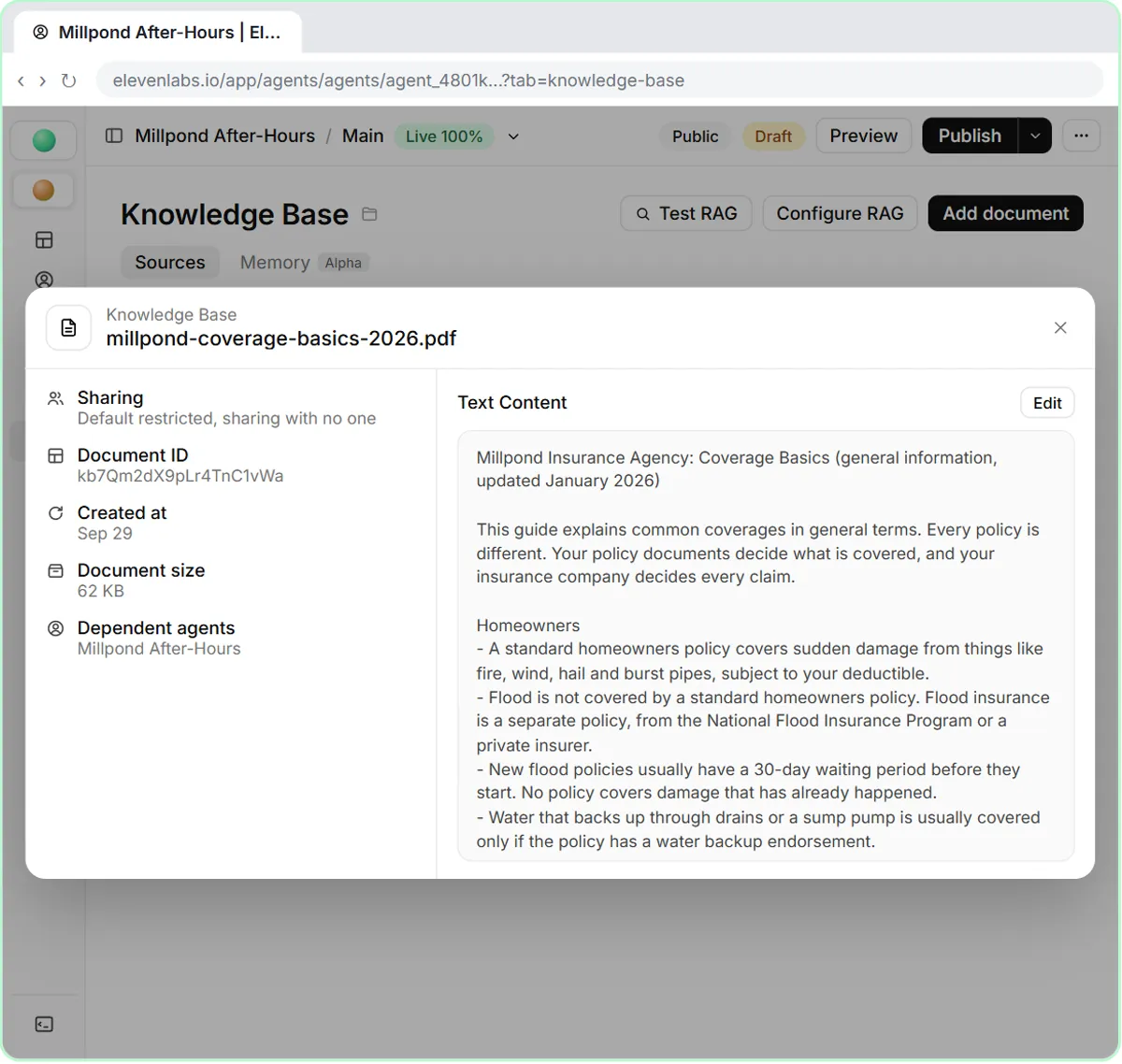
- Coverage is in the policy. AI can summarize a declarations page you paste; a licensed person confirms what is covered.
- Payments and rates belong to the carrier. The promise check exists to catch those lines.
- Protect client data. Leave out license numbers, dates of birth and anything the reply doesn't need, and follow your agency's and carriers' rules on client information.
Key takeaways
- AI helps agencies with claim-status replies, coverage questions, renewals and document requests, drafted from facts the agency supplies.
- Start with the claim-status lesson, which stops promises only the carrier can make.
- The prompt library has insurance prompts with filled-in examples.
- A licensed person confirms anything about coverage, and client data stays in approved tools.
Frequently asked questions
- Can AI answer insurance coverage questions?
It can draft a reply from the policy facts you paste. A licensed person should check it against the actual policy before it is sent.
- Does this work for captive agencies?
Yes. The example agency is independent, but the email routine is the same for captive agencies and carrier service teams.
- Do I need n8n?
No. The first three lessons use only ChatGPT. The n8n lessons are for agencies that want drafts and follow-ups prepared automatically for review.