What is a certificate of insurance?
Quick answer
A certificate of insurance, or COI, is a standard one-page document issued by an agent or carrier that summarizes a business's coverage: who is insured, which policies exist, their limits and dates, and who asked for proof. It confirms a policy exists but does not change it.
Last updated
Updated · By Robert Breen
Why it matters for a small business
Clients, landlords and general contractors often require a COI before work begins, because it shows you can cover a loss and not leave them exposed. Agencies field these requests constantly, and a fast, correct turnaround is part of good service.
The certificate is a summary, not the policy. It generally can't add coverage, extend it or override the policy's terms, and the wording is usually written to say so. If a customer needs to be named as an additional insured, that is a change to the policy, not a line on the certificate. Ask your agent how it works for your policies.
In a real lesson: Reply Faster to Claim-Status Emails: ChatGPT for Independent Insurance Agencies
The Reply Faster: Claim-Status Emails lesson is about a personal auto claim, not certificates, so no COI appears in it. It does show the small-agency setting where certificate requests arrive. Tom works at Stonebridge Insurance Agency, a made-up independent agency, and writes to a client, Denise, about her claim with the carrier, Harbor Mutual.
The agency's own rule in the lesson is a good model for answering certificate requests too: it explains what the policy shows and who decides, and never promises payment dates, amounts, coverage decisions or rates on the carrier's behalf. A COI request should be handled the same way, showing what the policy says and leaving coverage decisions to the carrier.
Use the lesson's habit: gather the facts first, then draft, then check each statement against them. For a certificate, the facts would be the policy details, which only a licensed professional can confirm.
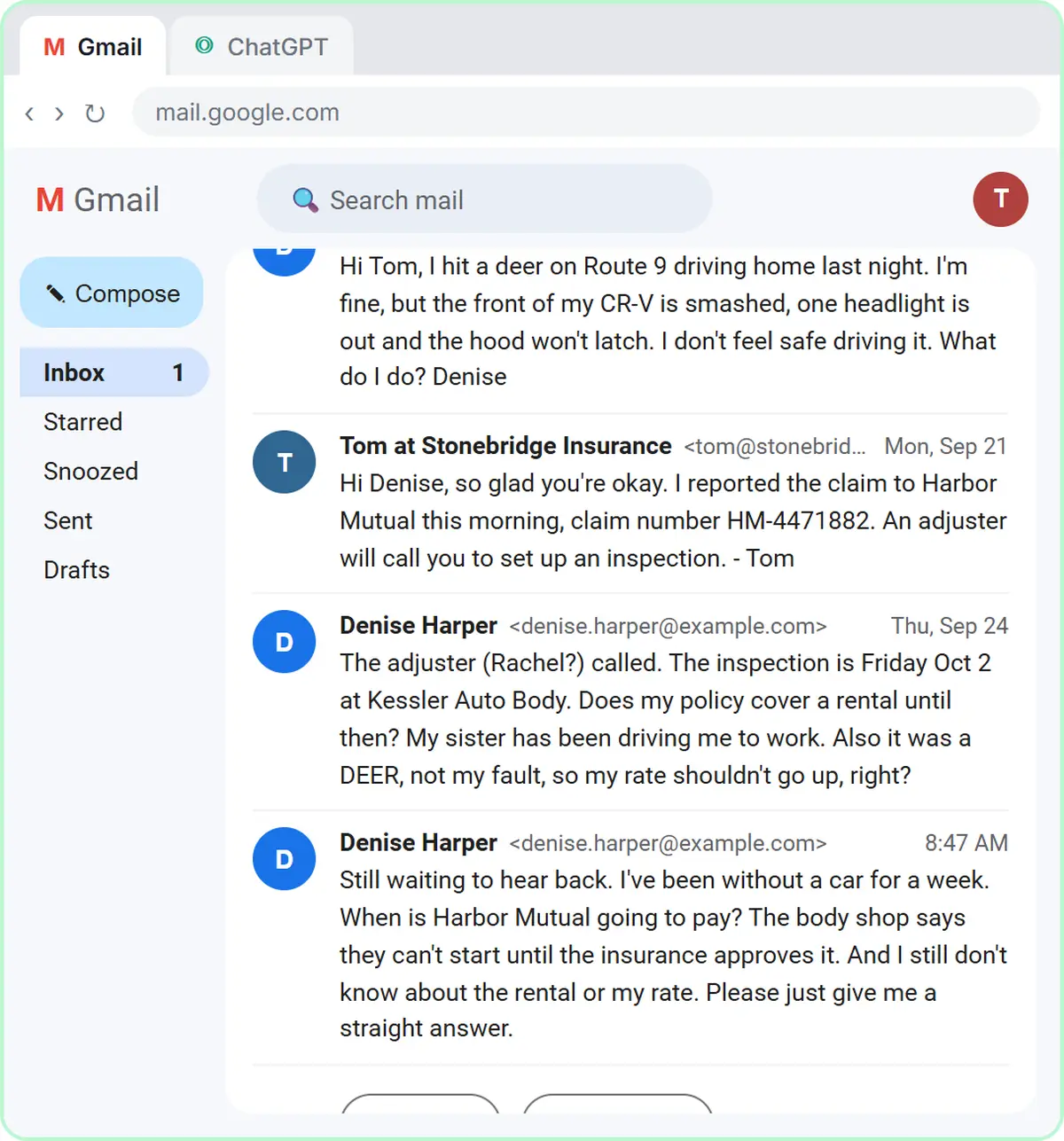
Try this lesson free or read the step-by-step guide.
Common confusions
Certificate vs policy
The policy is the contract. The certificate is a snapshot of it, handy for sharing. If the two ever differ, the policy controls.
Certificate vs declarations page
The declarations page belongs to the policyholder and lists the details of one policy. A certificate goes to a third party and summarizes coverage for them.
Tips
- Ask the requester for the exact wording they need, such as the names and limits, before you order the certificate.
- Check the policy dates. An expired certificate is worse than none.
- Have a licensed agent issue and review certificates. AI can help draft the request email, not the certificate.
Related terms
More Business terms
Where you use it: free lessons
- Reply Faster to Claim-Status Emails: ChatGPT for Independent Insurance Agencies (ChatGPT, 10 min)
- Reply Faster: Turn a Messy Customer Email Thread into a Clear, Friendly Reply (ChatGPT, 9 min)
Frequently asked questions
- Does a certificate prove I am covered for a loss?
- It proves a policy was in force when issued. Whether a particular loss is covered is decided under the policy by the carrier.
- How long does a certificate take?
- Often the same day for a standard one, but timing depends on the agency and the carrier. Ask your agent.