What is liability coverage?
Quick answer
Liability coverage is insurance that pays for injuries or property damage you are legally responsible for causing to other people, up to the policy's limits. On an auto policy it pays the other driver's repairs and medical bills, not your own. Businesses carry general liability for similar claims from customers and the public.
Last updated
Updated · By Robert Breen
Why it matters for a small business
Liability is the coverage most people are required to have and the one most often misunderstood. A driver with liability only may believe their own car is covered after a crash. It isn't: liability protects other people from you, and your own damage needs collision coverage or comprehensive. Limits matter too, because anything above them can fall on the policyholder.
For a small business, general liability is often the first policy a landlord or client asks to see, usually through a certificate of insurance. Staff who answer coverage questions should explain what the policy shows and leave the decisions to the carrier. This is general information, not insurance or legal advice. Only the policy, the carrier and a licensed agent can confirm coverage.
In a real lesson: Reply Faster to Claim-Status Emails: ChatGPT for Independent Insurance Agencies
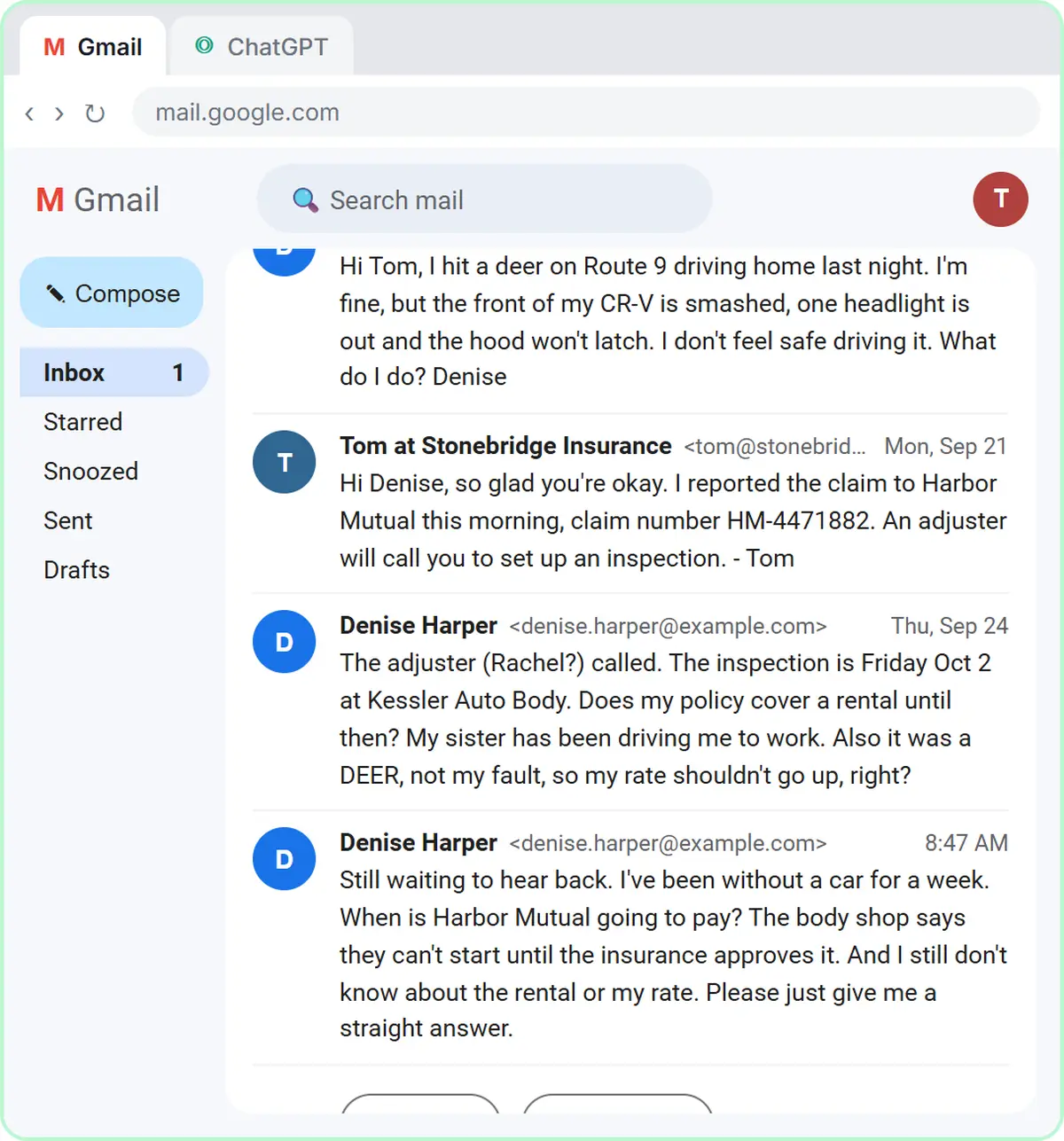
Stepthrough has no lesson about a liability claim. The closest is Reply Faster: Claim-Status Emails, and it shows the other side of the line. Denise Harper hit a deer, writing to the made-up Stonebridge Insurance Agency, "I'm fine, but the front of my CR-V is smashed." No other person or property was involved, so liability coverage has nothing to pay. Her claim is comprehensive.
What carries over is the agency rule in Fact 6: "We never promise payment dates, amounts, coverage decisions or rates on the carrier's behalf." Liability questions test that rule hard, because the client usually wants to hear the other party will be paid in full.
Use the same routine: put the policy's real liability limits in numbered facts and have ChatGPT flag any line in the draft that promises more than those facts support.
Try this lesson free or read the step-by-step guide.
Common confusions
Liability vs collision
Liability pays for damage you cause to others. Collision pays for damage to your own car. A liability-only policy leaves your own repairs to you.
Liability limits vs deductible
A liability limit is the most the insurer pays for a covered claim, often written per person and per accident. A deductible is your share of your own covered loss. Auto liability usually has no deductible.
Tips
- Quote liability limits exactly as the declarations page writes them, such as per person and per accident.
- Never tell a client the other party will be paid in full; the carrier decides.
- Keep injury details and names out of anything you paste into AI.
Related terms
More Business terms
Where you use it: free lessons
Frequently asked questions
- Does liability insurance cover my own car?
- No. Auto liability pays for injuries and damage you cause to other people and their property. Damage to your own car is covered by collision or comprehensive, if the policy includes them.
- What do liability numbers like 100/300/100 mean?
- They are limits in thousands of dollars: $100,000 per person for injuries, $300,000 per accident for injuries, and $100,000 for property damage. Your declarations page shows your actual limits.
- Do small businesses need general liability insurance?
- Many do, and landlords and clients often require it before signing a contract. It covers claims like a customer injured at your office. A licensed agent can say what limits fit your business.