What is comprehensive coverage?
Quick answer
Comprehensive coverage is the part of an auto policy that pays for damage to your own vehicle from causes other than a collision, such as theft, vandalism, fire, hail, flooding, falling objects and hitting an animal. It is sometimes called other than collision coverage, and the payment is reduced by the comprehensive deductible.
Last updated
Updated · By Robert Breen
Why it matters for a small business
Many of the claims an agency hears about are comprehensive ones: a cracked windshield, a stolen catalytic converter, a hailstorm, a deer on a dark road. Clients often don't know the coverage by name, so they ask whether "insurance" covers it. The honest answer starts with whether comprehensive is on their policy and what its deductible is.
Comprehensive claims are often treated differently from at-fault crashes when the carrier sets rates, but that is the carrier's call, not the agency's. This is general information, not insurance advice. Only the policy, the carrier and a licensed agent can confirm coverage, so have a licensed professional review any reply that says what is covered or what a rate will do.
In a real lesson: Reply Faster to Claim-Status Emails: ChatGPT for Independent Insurance Agencies
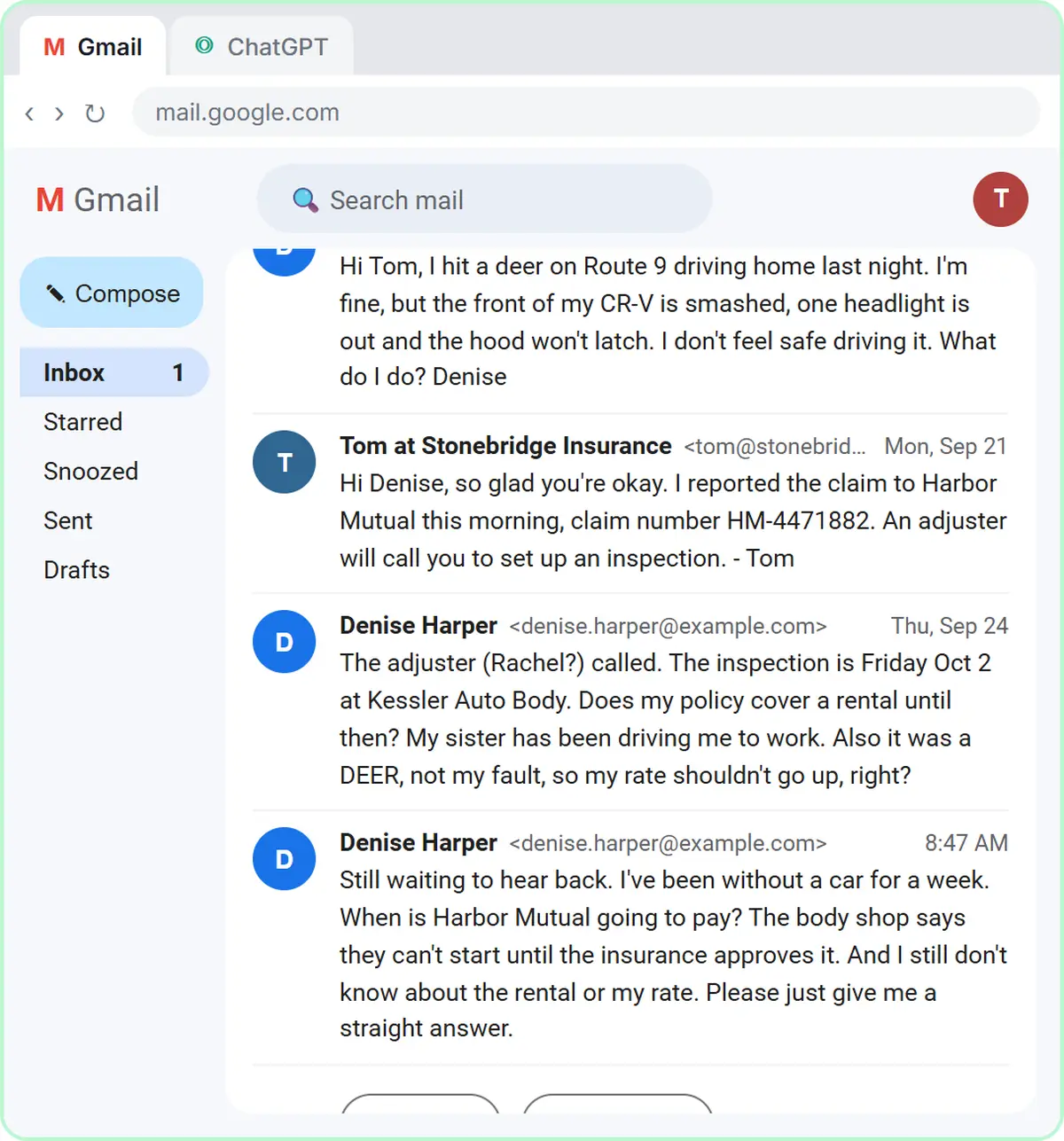
The Reply Faster: Claim-Status Emails lesson is built on a comprehensive claim. Denise Harper hit a deer, and the made-up Stonebridge Insurance Agency's first fact names the coverage before anything else: "Hitting a deer is a comprehensive claim. Her comprehensive deductible is $500."
The coverage comes up again in her rate question. ChatGPT's first draft told her the rate wouldn't go up, and the check table flagged that promise as unsupported. Fact 5 is more careful: "Deer hits are usually comprehensive claims, which often don't raise rates, but we can't promise hers won't change."
The final reply keeps that hedge and adds who decides: Harbor Mutual sets the rate at her Jan 15 renewal. Knowing the coverage type helps explain what is likely, but the reply never turns likely into a promise.
Try this lesson free or read the step-by-step guide.
Common confusions
Comprehensive vs collision
Collision coverage pays when your car hits a vehicle or object. Comprehensive pays for most other physical damage. Swerving around a deer and hitting a tree may be collision; hitting the deer is usually comprehensive.
Comprehensive vs full coverage
"Full coverage" isn't a policy type. People usually mean liability plus comprehensive plus collision. Check the declarations page for what is really there.
Tips
- Name the coverage and its deductible in the first fact you give AI.
- Never let a draft promise that a comprehensive claim won't affect a rate.
- Some policies have a separate glass deductible; check before you quote one.
Related terms
More Business terms
Where you use it: free lessons
Frequently asked questions
- Does comprehensive coverage cover theft?
- Theft of the vehicle is usually covered under comprehensive. Personal items stolen from inside the car are often handled by a homeowners or renters policy instead. Confirm with the carrier or a licensed agent.
- Will a comprehensive claim raise my rates?
- It may or may not. Comprehensive claims often affect rates less than at-fault accidents, but the carrier decides at renewal. No agency should promise a rate won't change.
- Is comprehensive coverage worth it on an older car?
- It depends on the car's value, the deductible and the premium. If the car is worth little more than the deductible, the coverage may pay little. A licensed agent can help weigh it.