What is a policy exclusion?
Quick answer
A policy exclusion is a provision in an insurance policy that names a type of loss, cause, person or property the policy will not cover. Common examples include wear and tear, intentional damage and, on many property policies, flood. Exclusions are written in the full policy, not usually on the declarations page.
Last updated
Updated · By Robert Breen
Why it matters for a small business
Exclusions are where "but I have insurance" turns into a denied claim. A client sees the coverage listed and assumes everything related is included. The exclusions section, often pages into the policy, is what narrows it. Explaining a likely exclusion before a client counts on coverage is kinder than letting the denial letter do it.
They also matter when buying coverage. A small business may need a separate policy or a policy endorsement to add back something a standard policy excludes. This is general information, not insurance or legal advice. Exclusion wording varies, and only the policy, the carrier and a licensed agent can say whether one applies to a claim.
In a real lesson: Reply Faster to Claim-Status Emails: ChatGPT for Independent Insurance Agencies
Stepthrough has no lesson where an exclusion decides a claim. The closest is Reply Faster: Claim-Status Emails, at the made-up Stonebridge Insurance Agency, which shows how easily a draft overstates coverage. ChatGPT's first reply tells Denise Harper she is covered for a rental "the whole time your CR-V is in the shop." The facts allow $40 a day, up to $1,200 per claim.
That is a limit, not an exclusion, but the risk is the same: a reassuring sentence that the policy doesn't back up. The fix is the lesson's check step, where you ask ChatGPT to "Flag anything the facts don't support," and then compare its table with what you know about the policy.
The lesson's closing advice names what to paste: the claim facts, "what the declarations page actually shows and who decides what." For a possible exclusion, add the exact policy wording to those facts, and leave the coverage decision to the carrier.
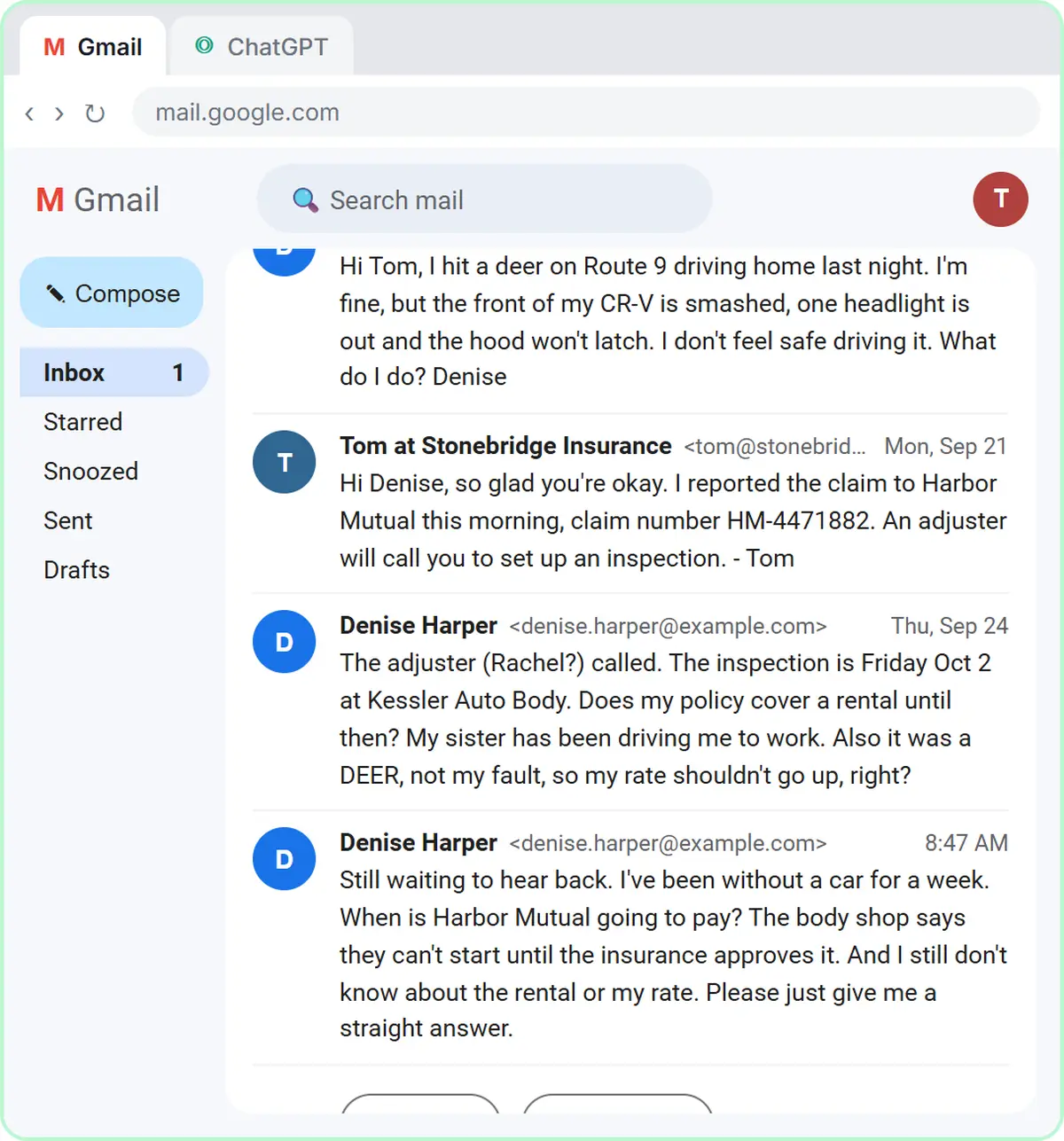
Try this lesson free or read the step-by-step guide.
Common confusions
Exclusion vs policy limit
An exclusion means no coverage for that kind of loss at all. A policy limit means coverage up to a set amount. A rental capped at $1,200 is limited, not excluded.
Exclusion vs endorsement
An exclusion takes coverage out. An endorsement changes the policy, and it can add coverage back, remove more or change terms.
Tips
- Quote the exclusion's exact wording rather than paraphrasing it in a client email.
- Check the declarations page for endorsements that change an exclusion.
- Let the carrier make the final coverage call.
Related terms
More Business terms
Where you use it: free lessons
Frequently asked questions
- What are common insurance exclusions?
- Common ones include normal wear and tear, intentional damage, and on many homeowners and business property policies, flood and earthquake. Business policies often exclude professional mistakes, which need separate coverage. The policy itself lists the exact exclusions.
- Where do I find exclusions in my policy?
- In the full policy document, usually in a section titled Exclusions, and sometimes inside the definitions or in endorsements. The declarations page summarizes coverage but rarely lists exclusions. Your agent can point you to the right pages.
- Can an exclusion be removed?
- Sometimes. Some exclusions can be bought back with an endorsement, and some risks need a separate policy, like flood insurance. Others can't be changed. A licensed agent can say what is available.