What is procure-to-pay (P2P)?
Quick answer
Procure-to-pay (P2P) is the end-to-end process a business follows to buy something: someone requests it, it is approved, a purchase order goes to the supplier, the goods are received, the invoice is checked and the supplier is paid. Each step leaves a record the next one depends on.
Last updated
Updated · By Robert Breen
Why it matters for a small business
Looking at buying as one cycle shows where things break. A missing purchase requisition means spending nobody approved. A missing goods receipt means paying for things that never arrived. A slow invoice step means late fees and annoyed suppliers. Fixing the weakest link usually saves more than squeezing a supplier on price.
Most P2P steps are routine paperwork, which is where AI and automation help: reading invoices and receipts into a sheet, sorting requests by approval rule and drafting vendor follow-ups. The judgment calls, such as approving spend and releasing payments, should stay with people, with the AI preparing everything they need to decide quickly.
In a real lesson: Build an AI Vendor Follow-Up Agent in n8n
Two Stepthrough lessons each cover one slice of P2P. The AI Vendor Follow-Up Agent lesson sits in the middle of the cycle: Ridgeline Supply Co., a made-up warehouse business, has three open purchase orders with problems, and the agent drafts follow-ups and saves them to a Vendor Follow-Ups sheet.
The AI Receipt Extractor lesson sits near the end. An n8n agent reads a photo of a receipt and adds a row to a sheet called Invoices with Date, Category, Vendor and Amount, which removes the retyping before a bill is recorded.
Neither lesson approves anything or pays anyone, and that is the right boundary. Put the two together and you can see the shape of P2P: documents flow in, AI turns them into clean rows, and people make the approval and payment decisions.
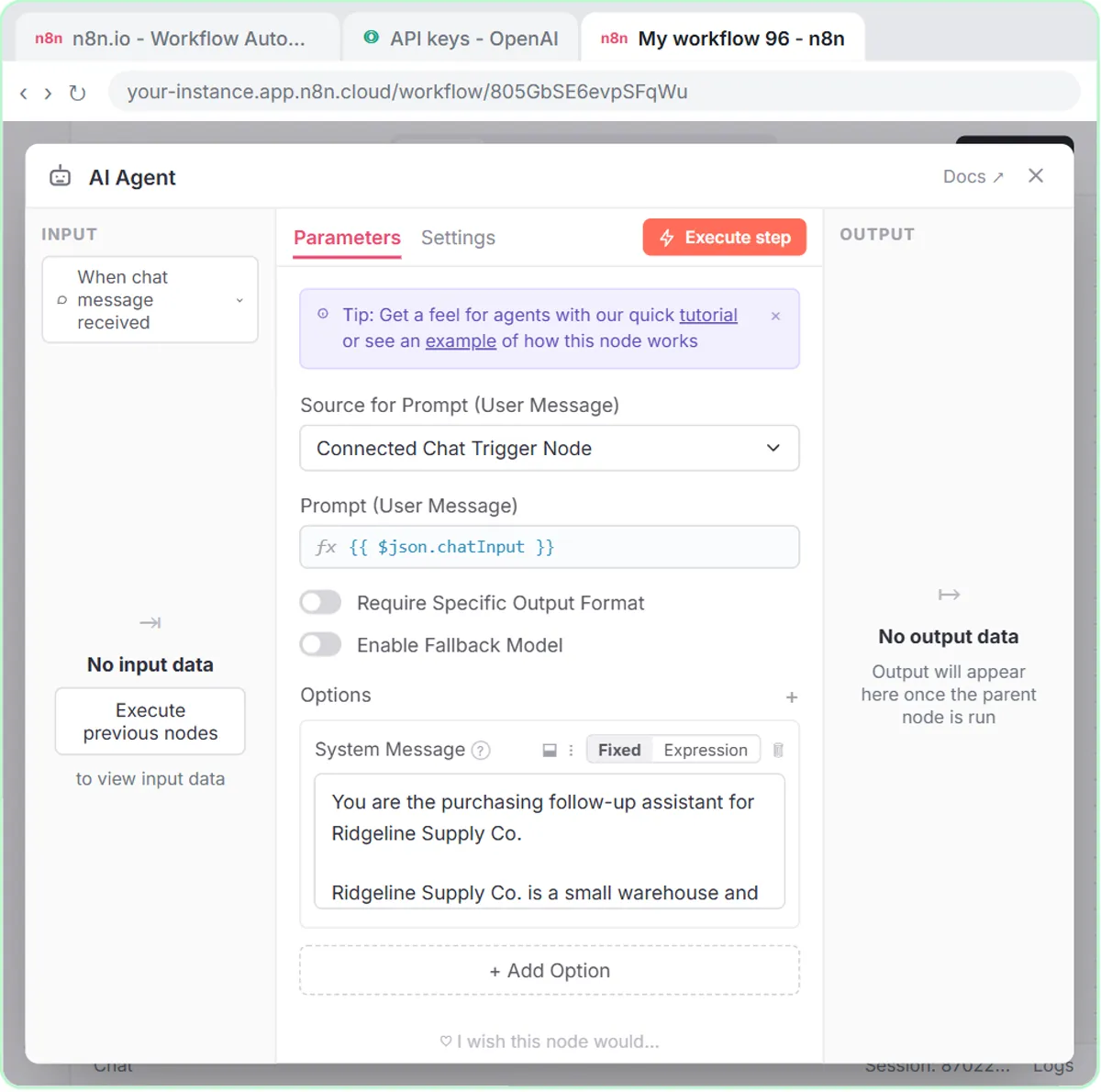
Try this lesson free or read the step-by-step guide.
Common confusions
Procure-to-pay vs order-to-cash
P2P is the buyer's cycle, ending in paying a supplier. Order-to-cash is the seller's cycle, ending in getting paid by a customer.
Procure-to-pay vs accounts payable
Accounts payable is the last stretch of P2P: recording and paying bills. P2P also includes the requesting, ordering and receiving that come first.
Tips
- Draw your current buying steps on one page and mark where paperwork gets stuck.
- Automate data entry first; it is the safest place to start.
- Keep approvals and payment releases with named people.
Related terms
More Business terms
Where you use it: free lessons
- Build an AI Vendor Follow-Up Agent in n8n (n8n, 12 min)
- AI Receipt Extractor: Receipts to Google Sheets with n8n (n8n, 12 min)
Frequently asked questions
- What are the main steps of procure-to-pay?
- Request, approval, purchase order, receiving, invoice check and payment. Small businesses may combine some steps, but each one should still leave a record.
- Do small businesses need a P2P system?
- Not necessarily a dedicated one. A clear approval rule, numbered purchase orders and a shared sheet can cover the basics until purchasing volume grows.