What is a first notice of loss (FNOL)?
Quick answer
First notice of loss, or FNOL, is the first report to an insurance company that a loss has happened, such as a collision, a theft or water damage. It usually records who, what, when and where, and it starts the claim by producing a claim number and an assigned adjuster.
Last updated
Updated · By Robert Breen
Why it matters for a small business
Policies often require prompt notice, and early reports also help the carrier gather facts while they are fresh. An FNOL can come from the policyholder, an agent or a repair shop, by phone, app or web form. What matters is that the basics are accurate: date, location, description, who was involved and how to reach the person.
After the report, the work moves to the claim itself: inspection, estimate, coverage review and payment. The FNOL does not decide any of that. Many service complaints begin in the gap that follows, when the customer has a claim number and no idea what happens next. A good agency fills that gap with plain updates.
In a real lesson: Reply Faster to Claim-Status Emails: ChatGPT for Independent Insurance Agencies
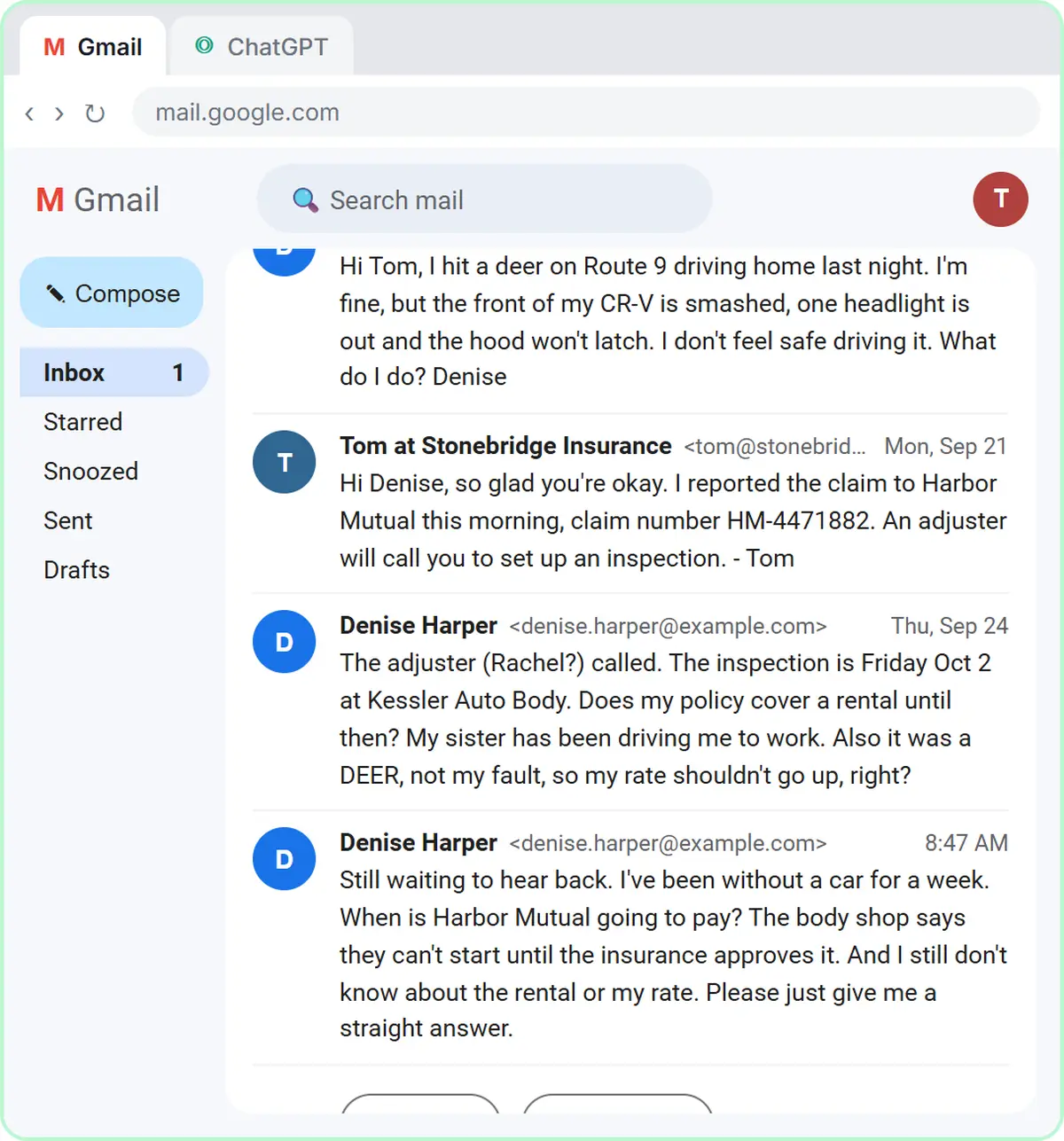
The Reply Faster: Claim-Status Emails lesson begins right at the FNOL moment. In the thread, a made-up client, Denise, emails her agent on September 21 after hitting a deer on Route 9. The agent, Tom at the made-up Stonebridge Insurance Agency, replies that he reported the claim to Harbor Mutual that morning with claim number HM-4471882, and that an adjuster will call to set up an inspection.
That report is the first notice of loss. What follows in the lesson is the gap after it: Denise's later emails ask when she will be paid, whether a rental is covered and whether her rate will go up, and her last message says she has been without a car for a week.
The lesson's facts list answers each question honestly: the adjuster is Rachel Moore, the inspection is Friday, October 2, and payment timing belongs to the carrier. The takeaway is that the FNOL is a start, not an answer.
Try this lesson free or read the step-by-step guide.
Common confusions
FNOL vs filing a claim for payment
The first report opens the claim. Payment comes later, after inspection and a coverage decision. Reporting a loss does not guarantee any payment.
FNOL vs police report
A police report is a public record of an incident. An FNOL goes to your insurer. Some losses need both, and the insurer may ask for the police report number.
Tips
- Report quickly and write down the date, time and place while you remember them.
- Take photos before anything is moved, and keep every repair estimate.
- Save the claim number and the adjuster's name in one place, and give both to anyone helping you.
Related terms
More Business terms
Where you use it: free lessons
- Reply Faster to Claim-Status Emails: ChatGPT for Independent Insurance Agencies (ChatGPT, 10 min)
- Reply Faster: Turn a Messy Customer Email Thread into a Clear, Friendly Reply (ChatGPT, 9 min)
Frequently asked questions
- Do I have to report every loss?
- Your policy sets the notice rules, and whether a small loss is worth reporting is a decision to discuss with your agent. Do not guess about coverage.
- Who should make the report, me or my agent?
- Either can, depending on your policy and agency. The lesson's agent made the report for the client on the same day.