What is subrogation in insurance?
Quick answer
Subrogation is the right of an insurance company, after paying a claim for its customer, to seek reimbursement from the person or company that actually caused the loss. If the insurer recovers money, the policyholder may also get their deductible back, depending on the result.
Last updated
Updated · By Robert Breen
Why it matters for a small business
Imagine another driver hits your parked car. You file with your own carrier to get repairs started quickly, and your carrier pays. It then pursues the other driver's insurer for what it spent. The idea is that the party at fault, not the policyholder's carrier, should bear the cost, which can also keep the policyholder's premiums from rising unfairly.
For the policyholder, subrogation often runs in the background. The practical points are: cooperate with requests for information, do not sign away rights to the other party without checking with your carrier, and ask whether your deductible is part of the recovery. Details vary by policy and by place, so this is general information, not legal advice.
In a real lesson: Reply Faster to Claim-Status Emails: ChatGPT for Independent Insurance Agencies
The Reply Faster: Claim-Status Emails lesson is a useful counterexample. A made-up client, Denise, hit a deer on Route 9. The agent at Stonebridge Insurance Agency treats it as a comprehensive claim with a $500 deductible, and the carrier, Harbor Mutual, has assigned an adjuster.
In this thread there is no other driver and no other party to pursue, so the lesson gives no subrogation to talk about, and it never uses the word. That is worth noticing: subrogation depends on someone else being responsible, and a deer is not.
The lesson does show what clients usually ask: who pays, how soon and whether the deductible is lost. The agency's rule, in the facts list, is to explain what the policy shows and who decides, and never to promise payment dates or amounts on the carrier's behalf. The same restraint applies when a subrogation case is open.
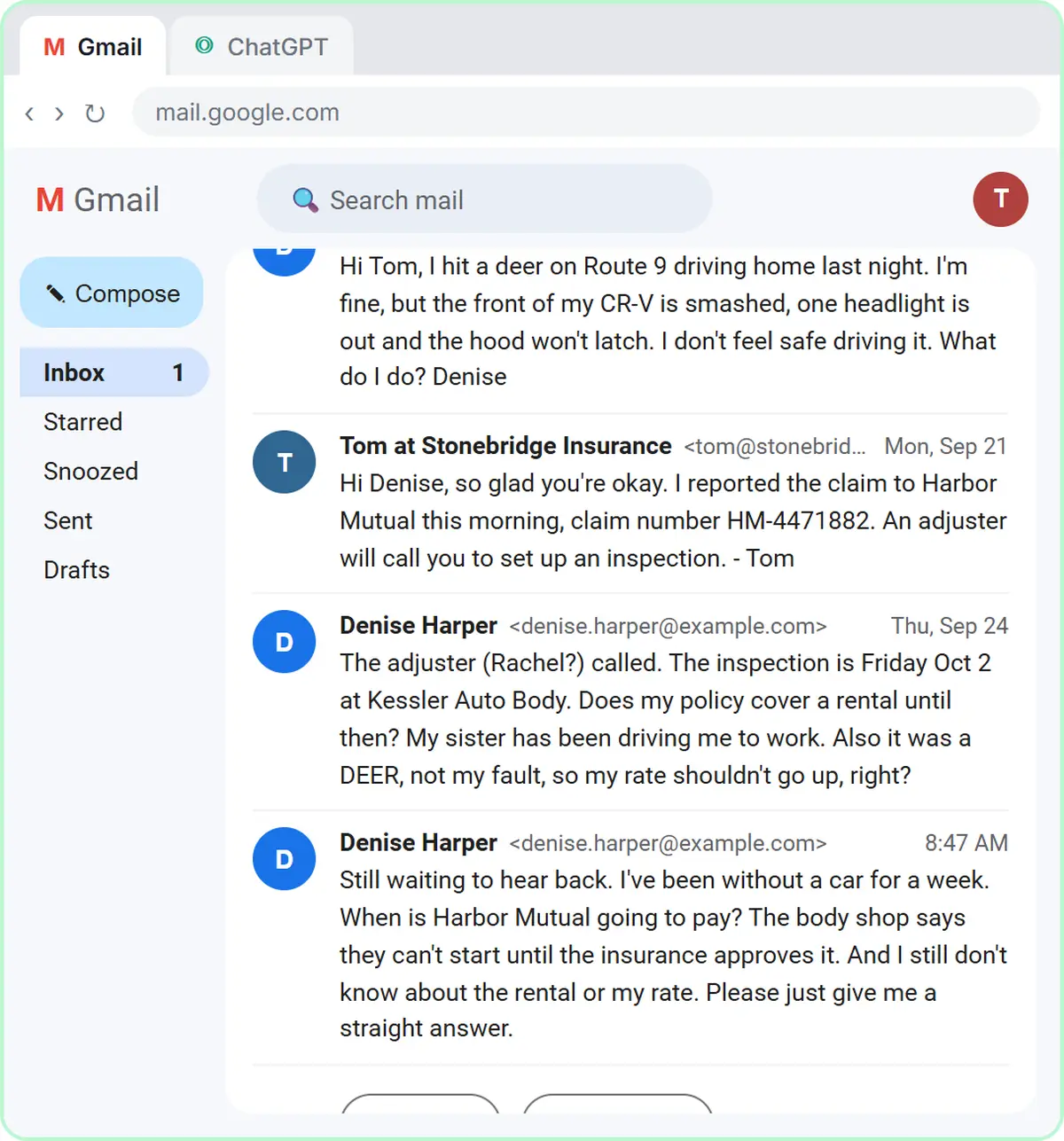
Try this lesson free or read the step-by-step guide.
Common confusions
Subrogation vs claim payment
Paying the claim comes first and is between you and your carrier. Subrogation happens afterward and is the carrier's effort to recover its costs from someone else.
Subrogation vs a lawsuit by you
A carrier's subrogation rights belong to the carrier. You may still have your own claims, such as your deductible or uninsured losses, and a lawyer can explain how they fit together.
Tips
- Keep photos, names, the police report number and the other party's insurance details from the start.
- Ask your adjuster whether a subrogation effort is planned and whether your deductible is included.
- Check with your carrier before signing a release or settlement with the other party.
Related terms
More Business terms
Where you use it: free lessons
- Reply Faster to Claim-Status Emails: ChatGPT for Independent Insurance Agencies (ChatGPT, 10 min)
- Reply Faster: Turn a Messy Customer Email Thread into a Clear, Friendly Reply (ChatGPT, 9 min)
Frequently asked questions
- Will I get my deductible back?
- Sometimes, if the carrier recovers enough from the party at fault. Whether and when depends on the claim, so ask your adjuster.
- Does subrogation delay my payment?
- Usually no. Carriers typically pay their customer first and then pursue recovery, but your policy and situation decide the specifics.