What is the difference between legal information and legal advice?
Updated · By Robert Breen
Legal information is factual and general: what was filed, what a deadline is, what a hearing is for. Legal advice applies the law to a specific person's situation and recommends what they should do or predicts what will happen. Only a licensed attorney should give legal advice.
Why it matters for a small business
Clients ask law firm staff for advice all the time: "Are we going to win?" "Should I settle?" Paralegals, assistants and office managers can share facts about the case, but recommendations and predictions belong to the attorney. Crossing that line can cause real harm to the client and serious problems for the firm.
AI makes the line easier to cross by accident. Language models are trained to be helpful and reassuring, so a draft reply will happily say a case "looks strong" or that a missed deadline means an automatic win. This page is general information, not legal advice. Anything legal you send or sign should be reviewed by a licensed attorney, and firm policy on predictions should be written into the facts you give AI.
In a real lesson: Reply Faster to a Client Asking for a Case Update: ChatGPT for Small Law Firms
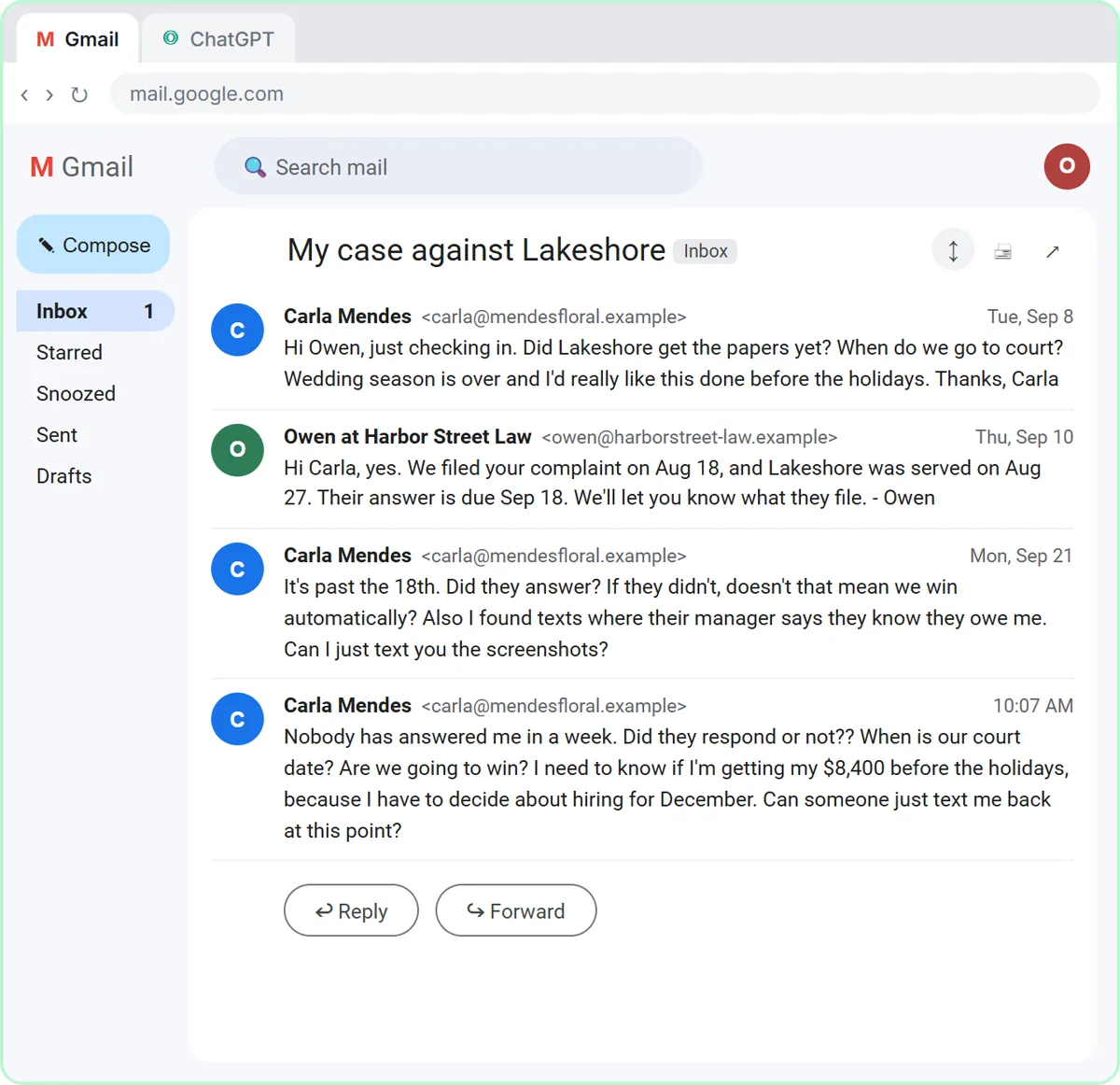
In the Reply Faster: Client Case Updates lesson, Carla Mendes, a client of the made-up firm Harbor Street Law, asks three things: has the venue responded, when is her court date, and is she going to win her $8,400 before the holidays. The facts you paste say: "We can't predict the outcome, whether Lakeshore will settle, or when or whether Carla will be paid. Firm policy: no predictions and no legal advice by email."
ChatGPT's first draft still crosses the line. It says that if Lakeshore doesn't answer by Oct 2, "you win by default," calls the Nov 17 hearing the day "the judge will hear your case," and adds that her case "looks strong." When you ask it to check every claim against the facts, those three lines are flagged as unsupported.
The final reply, signed by paralegal Owen Park, sticks to information: what was filed and when, the new deadline, what the Nov 17 date really is, and that the firm can't predict the outcome. The advice part, her real question, goes to a call with Attorney Hale at one of two set times.
Try this lesson free or read the step-by-step guide.
Common confusions
Explaining a process vs predicting a result
"A missed deadline isn't an automatic win; the judge decides" explains a process. "You'll win if they miss it" predicts a result. The first is information; the second is advice.
Legal information vs a legal disclaimer
Adding "this is not legal advice" to a message that recommends a course of action doesn't turn it into information. What the message actually says is what counts.
Tips
- Put "no predictions and no legal advice" in the facts for every client reply you draft with AI.
- Offer a call with the attorney whenever the client's real question is "what should I do?"
- Use the claim-check step on every draft. The client case update prompt builds it in.
Related terms
Where you use it: free lessons
Frequently asked questions
- Can a paralegal answer client questions about their case?
- Generally they can share factual updates, such as dates and filings, under an attorney's supervision. Rules vary by jurisdiction, so the supervising attorney should set what staff may say.
- Can ChatGPT give legal advice?
- It can produce text that sounds like advice, but it isn't a lawyer, doesn't know your jurisdiction or all the facts, and can be wrong. Have a licensed attorney review anything legal.