What is time to hire?
Quick answer
Time to hire is the number of days between a candidate entering your hiring process, usually by applying or being contacted, and that candidate accepting a job offer. It shows how quickly your team moves once a good person is in the pipeline.
Last updated
Updated · By Robert Breen
Why it matters for a small business
Good candidates rarely wait. Every extra day between interview and decision is a day another employer can make an offer. A long time to hire often has nothing to do with the candidate; it comes from slow scheduling, notes nobody wrote up and decisions waiting on a meeting.
Those delays are mostly paperwork, which is where AI helps. Turning a debrief into a scorecard in minutes, drafting the next-step email the same day and listing action items with owners can take days off the process. The interviews and the decision still take the time they need; it's the waiting in between that shrinks.
In a real lesson: Turn an Interview Debrief into a Scorecard and a Candidate Follow-Up (Recruiting & HR)
The Interview Debrief to Scorecard lesson shows where hiring days are usually lost and how to win them back. At Willow Bend Physical Therapy, a made-up clinic, the panel debriefs on Kira Delgado for Front Desk Lead, and HR manager Hannah Cole promises: "I'll email Kira today so she knows where things stand."
ChatGPT turns the transcript into a scorecard, decisions and an action items table, then drafts the email to Kira, under 120 words with only the next steps. Hannah will send interview times by Thursday, and the reference calls are already assigned.
Nothing in the lesson rushes the decision. What it removes is the gap where notes sit unwritten and the candidate hears nothing, which is often the biggest single chunk of time to hire.
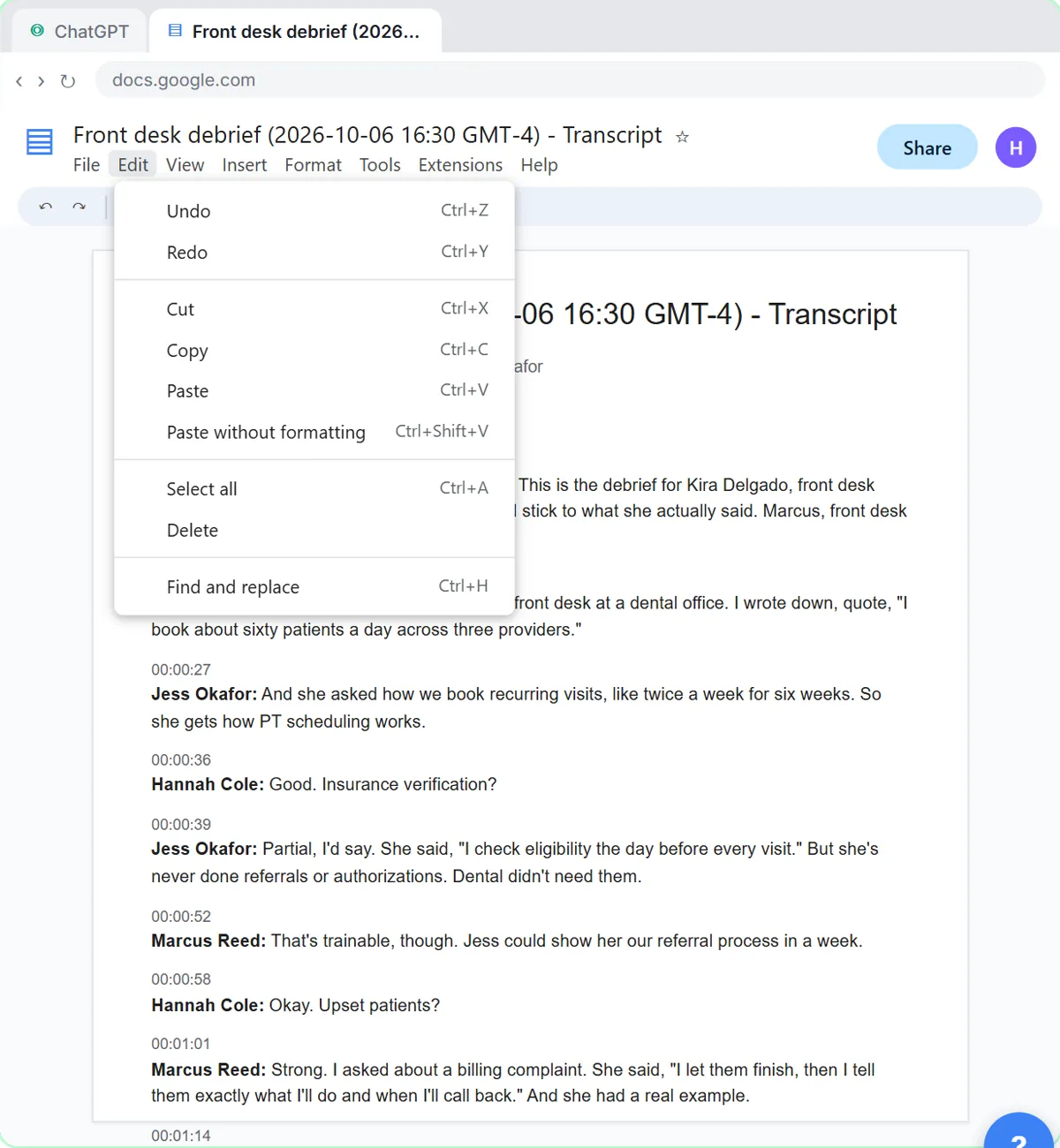
Try this lesson free or read the step-by-step guide.
Common confusions
Time to hire vs time to fill
Time to fill counts from when the job opens, often when the job requisition is approved, to when an offer is accepted. Time to hire starts later, when the chosen candidate enters the process.
Time to hire vs candidate experience
Time to hire is a number. Candidate experience is how the process feels. A fast process with no updates can still feel bad.
Tips
- Write up interview notes the same day, using AI if it helps.
- Book the next round before the debrief ends.
- Track the days spent waiting between stages, not only the total.
Related terms
More Business terms
Where you use it: free lessons
- Turn an Interview Debrief into a Scorecard and a Candidate Follow-Up (Recruiting & HR) (ChatGPT, 9 min)
Frequently asked questions
- What is a good time to hire?
- It varies by role and industry. Many teams aim for a few weeks for office roles. The best target is your own current number, then shorter.
- How does AI reduce time to hire?
- It cuts the time spent writing up notes, scorecards and update emails, so decisions and next steps happen the same day instead of next week.