Pasting client emails into ChatGPT can be safe if you remove every private detail the task doesn't need, use a plan that doesn't train on your chats, and follow your company's AI policy. This checklist is for office staff at accounting firms, insurance agencies, law firms and HR teams, and you can practice it free in the tax firm reply lesson without touching a real account.
A client email is sitting in your inbox. ChatGPT could draft a good reply in a minute, but there's an account number in the second message and a date of birth in the signature. That hesitation is healthy. The steps below turn it into a routine. This is general guidance, not legal advice: your company's policy and your professional rules come first.
What should I paste into ChatGPT, and what should I leave out?
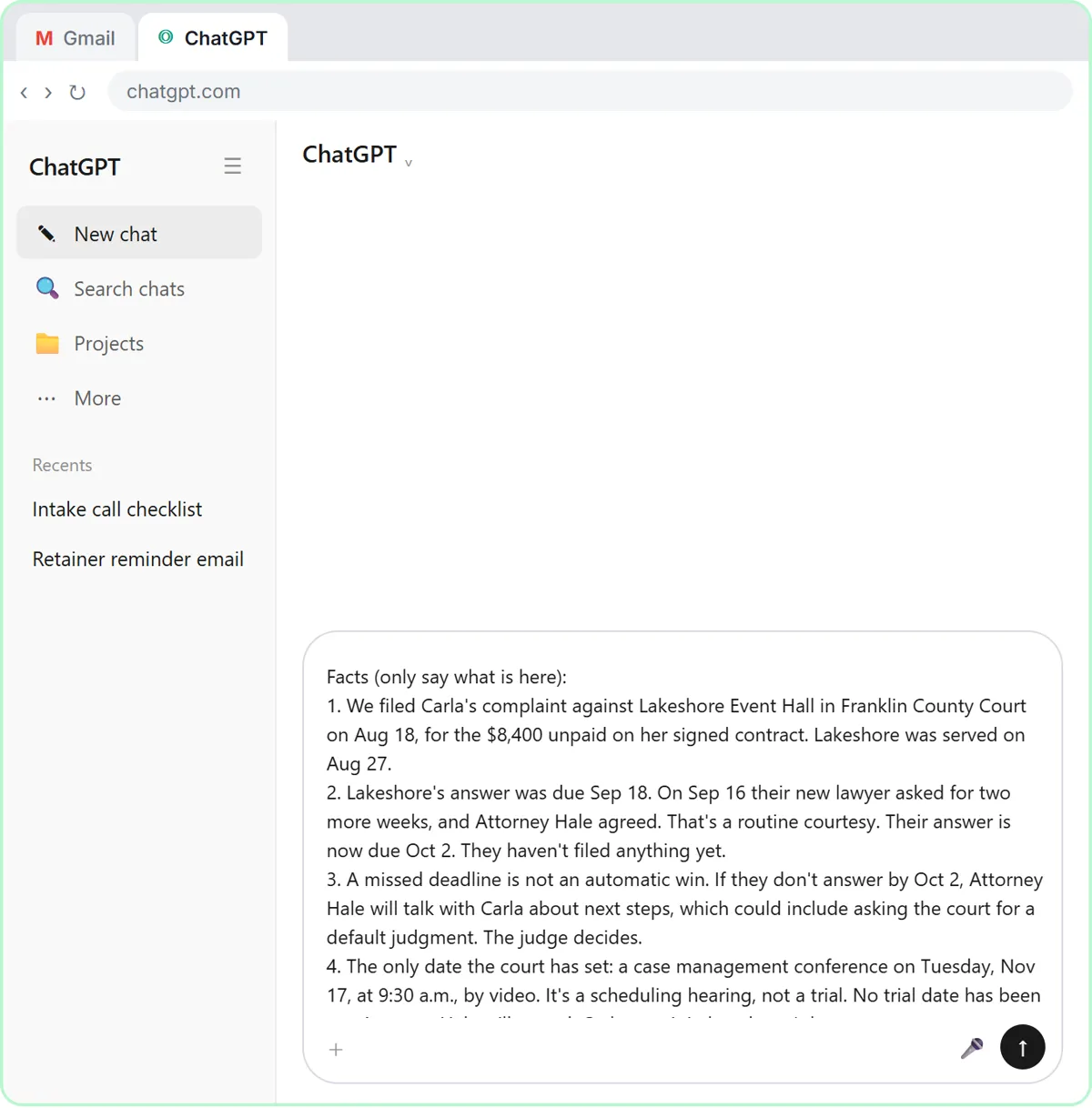
Paste only what the reply needs, and leave out everything else. To answer "where's my refund?", ChatGPT needs to know which forms are in and what the firm can promise, not the client's Social Security number.
In every Stepthrough reply lesson, the copy step comes with the same instruction: select the messages, and if there's anything private in there, leave it out.
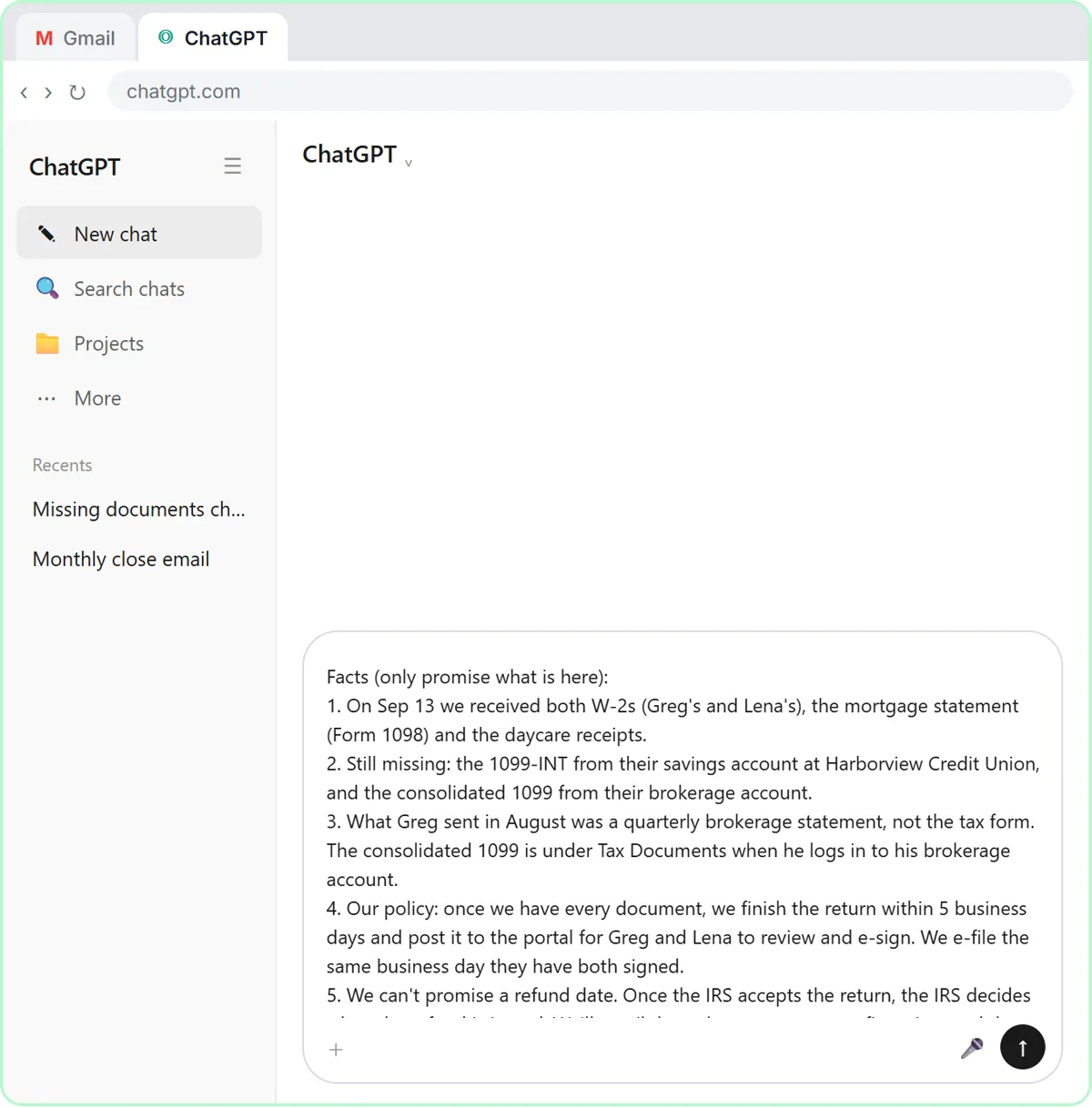
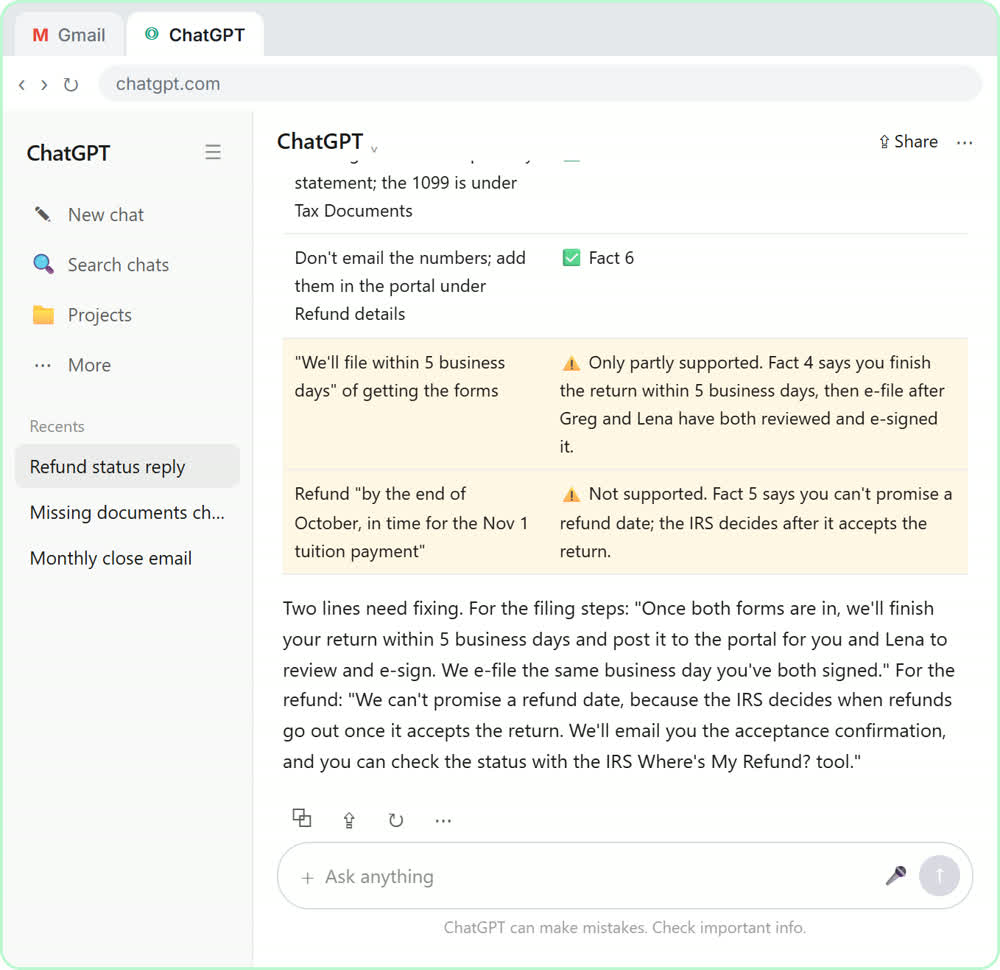
A short numbered facts list helps too. When you write the facts yourself, you choose exactly what ChatGPT sees, which is safer and gives a better draft.
What client data should each industry remove before pasting?
Each industry lesson's guide names what to take out and which rules to check. Here is what each one says.
| Industry | Remove before pasting | What the guide points to |
|---|---|---|
| Tax and bookkeeping | Social Security numbers, bank routing and account numbers, dates of birth, anything the reply doesn't need | Your firm's written data-security plan; IRS Publication 4557, Safeguarding Taxpayer Data |
| Insurance agencies | Driver's license numbers, dates of birth, Social Security numbers, bank details, medical information from any injury claim | Your agency's written information security program; the Gramm-Leach-Bliley Act and state laws based on the NAIC model law |
| Law firms | Anything the reply doesn't need from a confidential client email | Your firm's AI policy and your jurisdiction's rules; ABA Formal Opinion 512 (July 2024) |
| Recruiting and HR | Anything the scorecard doesn't need; nothing that isn't job-related | Your company's policy |
- Accounting: IRS Publication 4557 is a good reference if your firm is writing its data-security plan. More in ChatGPT for accountants.
- Insurance: insurance agencies are covered by privacy rules under the Gramm-Leach-Bliley Act, and many states have adopted insurance data security laws based on the NAIC model law. See ChatGPT for insurance agencies.
- Law: ABA Formal Opinion 512 says lawyers need to understand how a tool uses what they enter, and that informed client consent may be needed before client information goes into a tool that can learn from it. See ChatGPT for law firms.
- Recruiting: interview notes are personal information about the candidate, so keep them only where your policy says. See ChatGPT for recruiters.
Does ChatGPT train on the client data I paste?
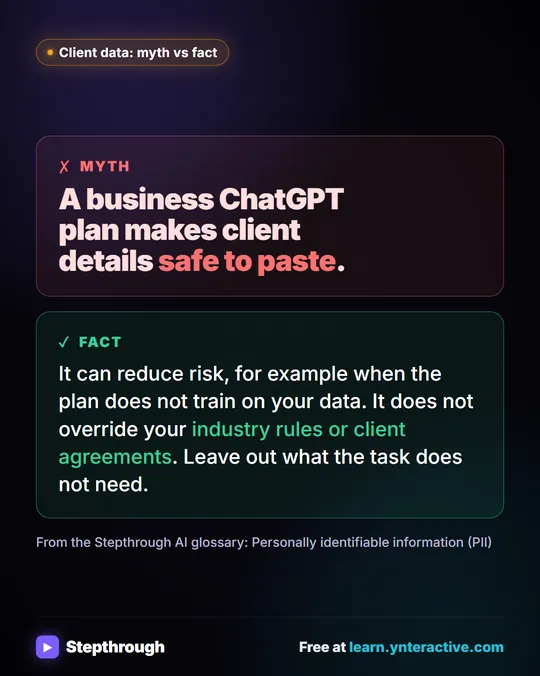
It depends on your plan. On ChatGPT Business and Enterprise, OpenAI says it does not train on your chats by default; on personal plans, you can turn off "Improve the model for everyone" in Settings, under Data controls.
Check that setting before the first real client thread, not after. If your company provides a business plan, use that account for work rather than a personal one.
A plan that doesn't train on your chats is still a place you've sent the data. Removing what isn't needed still matters on every plan.
Do I need my company's permission to use ChatGPT with client data?
Yes: follow your company's written AI policy first, and fit AI use inside any data-security program you're already bound by. Every Stepthrough industry lesson says some version of this.
Before you paste, check:
- Does your company, firm or agency have a written AI policy? Some allow AI on approved accounts only, some not at all.
- Does your industry require a written data-security or information security program? AI use should fit inside it.
- In law, does the matter need client consent before information goes into the tool?
Try it free, step by step
Reply Faster to Clients Chasing Their Refund: ChatGPT for Tax and Bookkeeping Firms. A client wants a refund date while two tax forms are still missing. Give ChatGPT the thread and your firm's facts, catch the date it shouldn't promise, and send a calm, clear reply from Gmail. You do every step yourself in a practice copy of ChatGPT, it checks your work as you go, and “Do it for me” finishes any step you get stuck on. Free, and nothing touches your real accounts.
Start the free lessonHow do I keep sensitive data out of the reply ChatGPT writes?
Put the rule in your facts list, and ChatGPT repeats it in every draft. Privacy covers what leaves your outbox, not only what goes into ChatGPT.
- In the tax firm reply, the client offers to email his new bank account numbers. Fact 6 says never send account numbers by email: add them in the portal under Refund details.
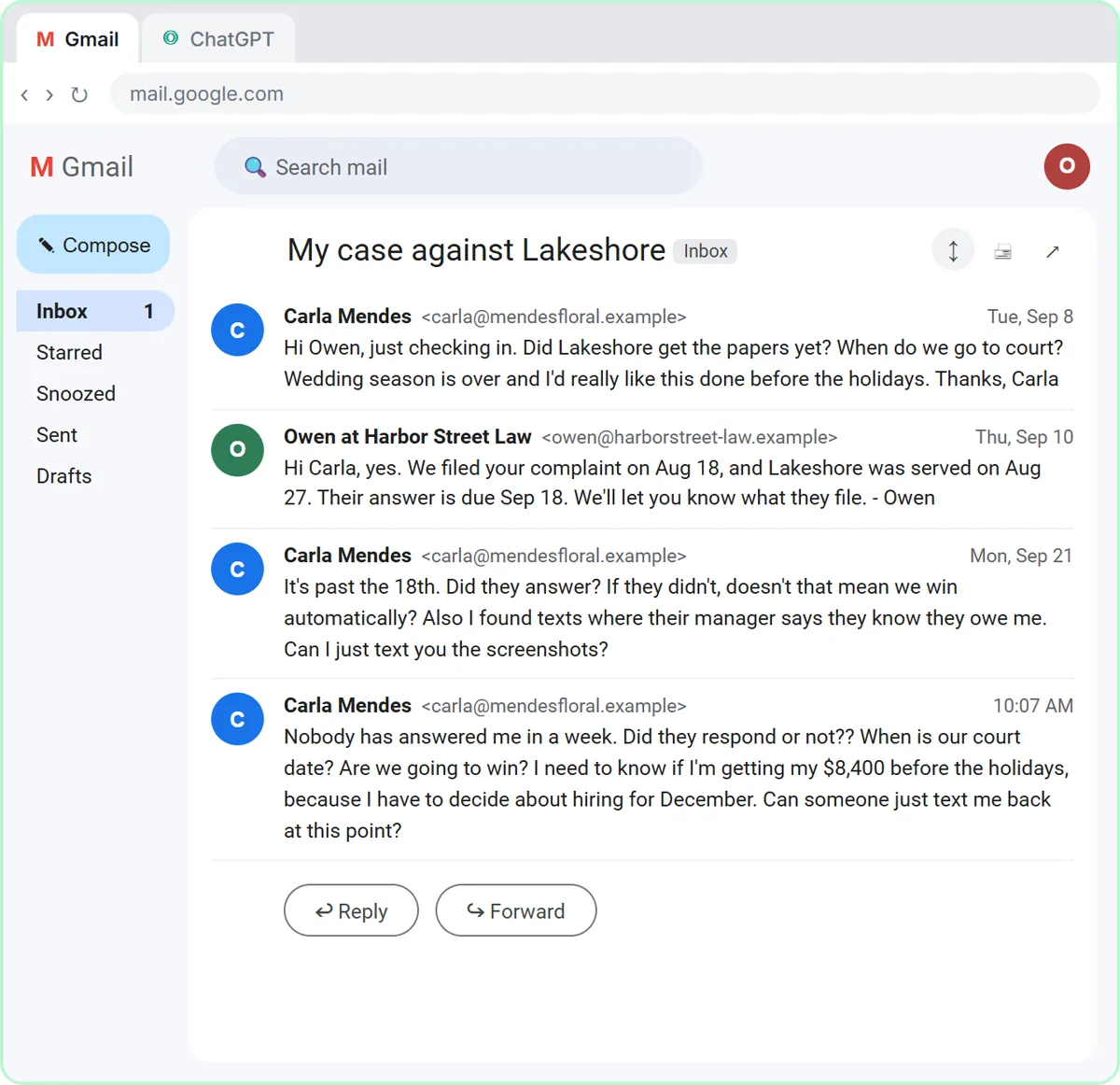
- In the law firm reply, the client wants to text screenshots of evidence. The firm's rule is no case details or evidence by text or social media, only the secure client portal under Documents.
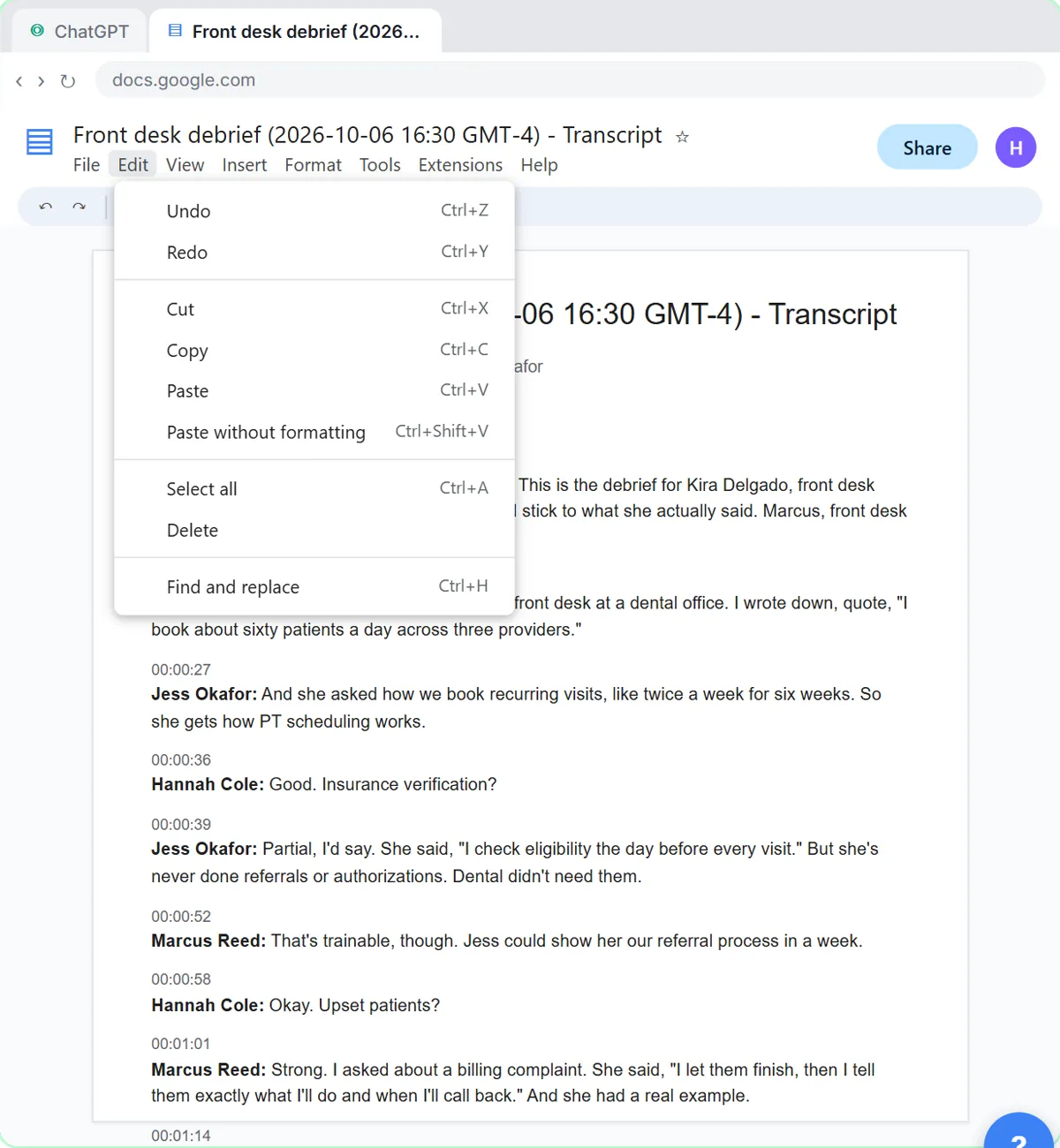
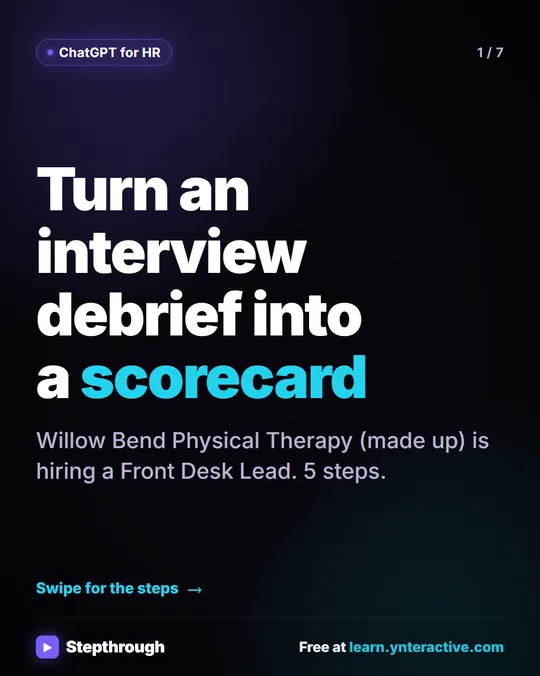
- In the interview scorecard, the follow-up email to the candidate includes only the next steps. The scores, the panel's discussion and the pay question stay inside the team.
The scorecard request also tells ChatGPT to use only what's in the transcript and about the must-haves, with no guessing at age, family, health, religion or anything else that isn't job-related. When a panelist mentions the candidate's kids, the comment never makes it into the scorecard.
Should a person read every AI-drafted client email before it's sent?
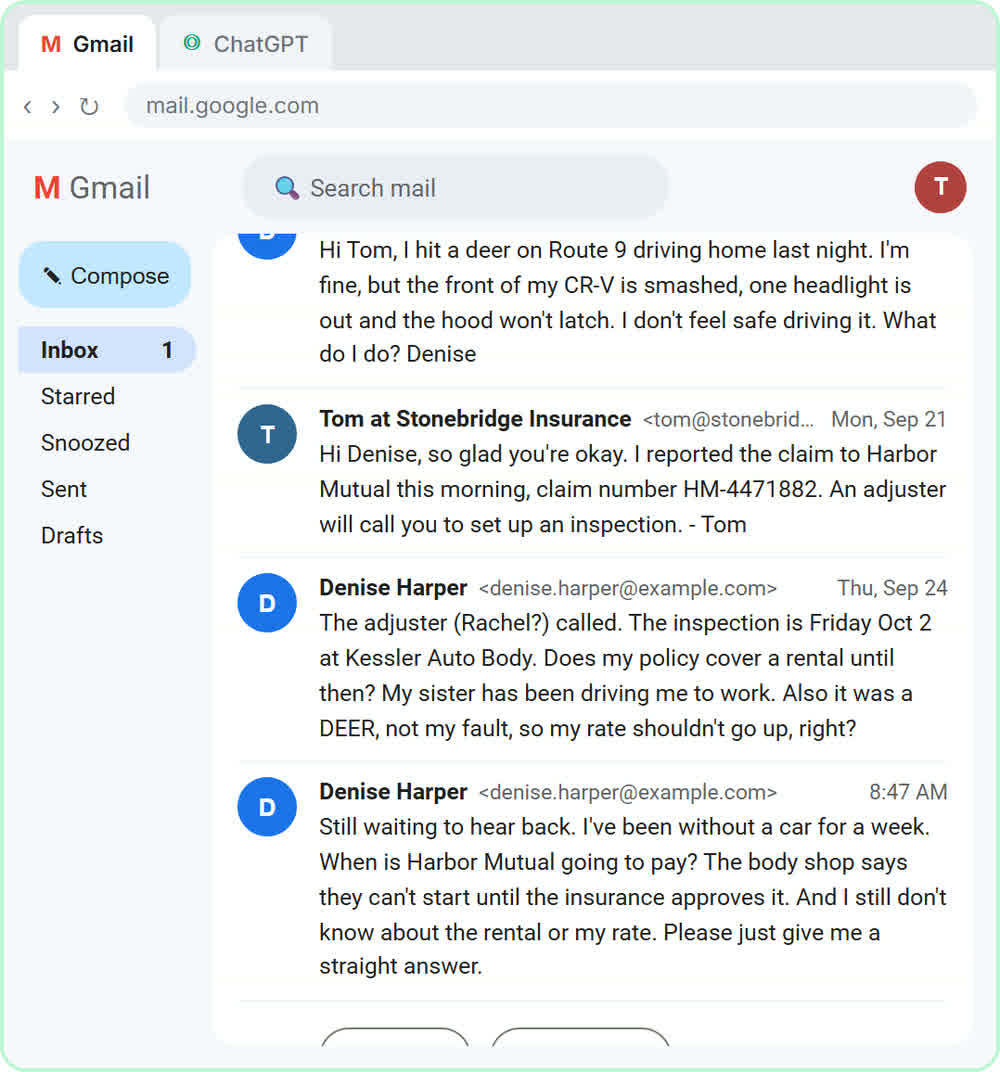
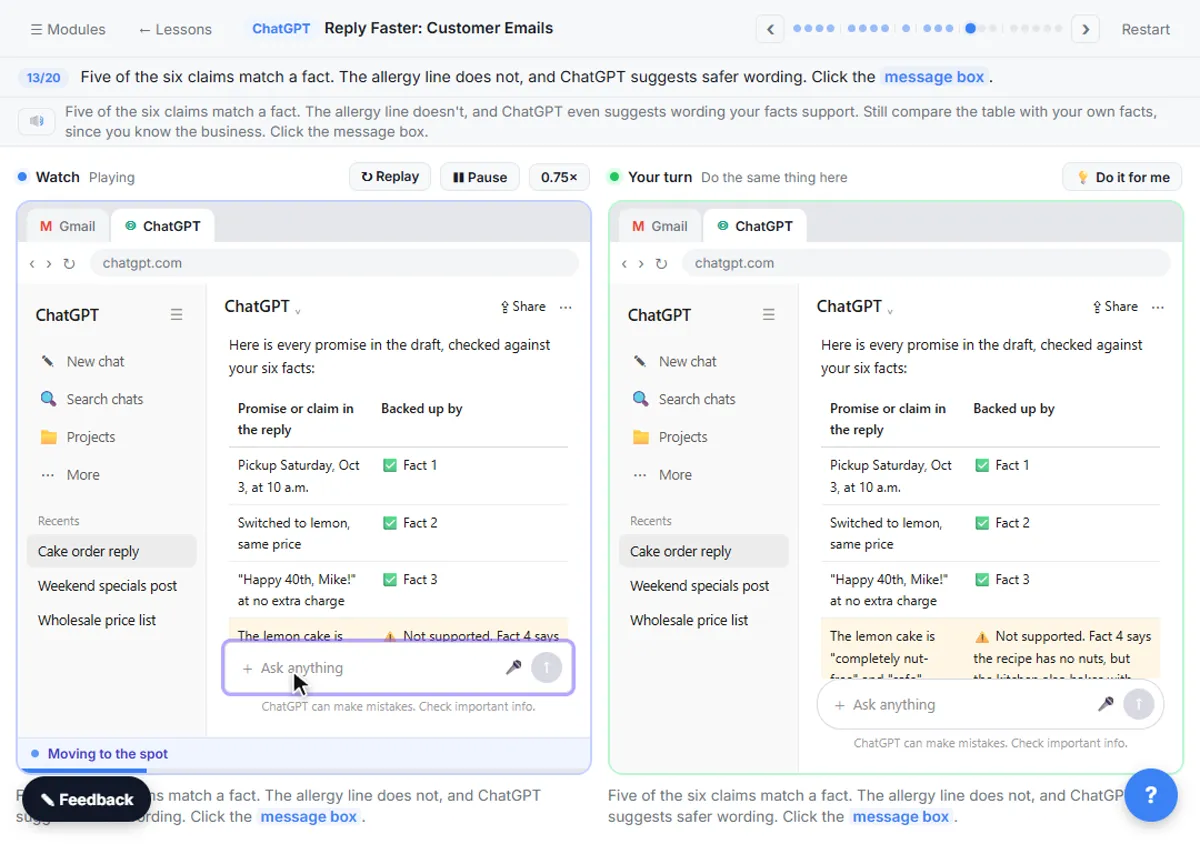
Yes. A person should read every reply, because AI drafts lean toward reassuring promises the facts don't support.
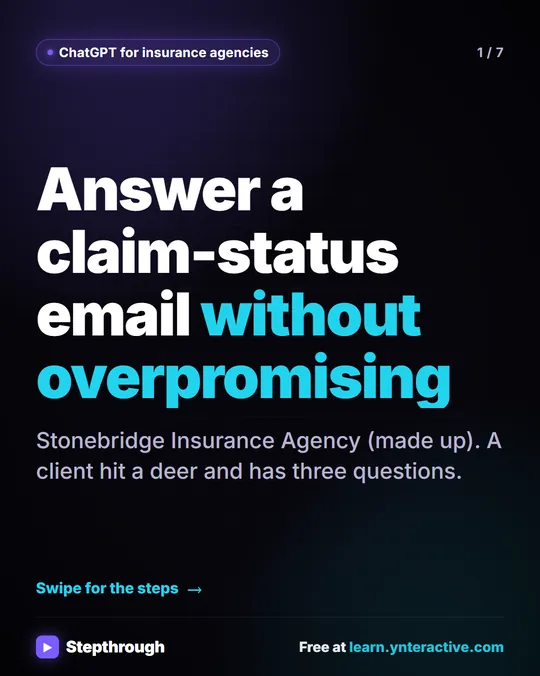
In the insurance claim lesson, the first draft promises a rental "the whole time your CR-V is in the shop" and says the rate "won't go up." Neither promise is in the facts, and a claim-by-claim check catches both. More in check AI drafts for promises.
Can I practice this without real client data?
Yes. The Stepthrough lessons run on practice copies of Gmail, Google Docs and ChatGPT with made-up businesses, including Harbor Street Law and Willow Bend Physical Therapy, and nothing you type is sent anywhere.
Key takeaways
- Before pasting a client email into ChatGPT, remove Social Security numbers, account numbers, dates of birth, license numbers, medical details and anything else the task doesn't need.
- On ChatGPT Business and Enterprise, OpenAI says it does not train on your chats by default; personal plans can turn off "Improve the model for everyone" under Settings, Data controls.
- Your company's AI policy and your industry's rules, such as IRS Publication 4557, the Gramm-Leach-Bliley Act or ABA Formal Opinion 512, come before any plan setting.
- Put rules like "never send account numbers by email" in your facts list so every ChatGPT draft repeats them.
- A person should read every AI-drafted client reply before it is sent.
Frequently asked questions
- Is it safe to paste client emails into ChatGPT?
It can be, after you remove anything the reply doesn't need and only in line with your company's policy and professional rules. Business and Enterprise plans don't train on your chats by default, and personal plans can turn training off under Data controls.
- Does ChatGPT train on what I paste?
On ChatGPT Business and Enterprise, OpenAI says it does not train on your chats by default. On personal plans you can turn off "Improve the model for everyone" in Settings under Data controls.
- What should I remove before pasting a client email into ChatGPT?
Remove Social Security numbers, bank and account numbers, dates of birth, driver's license numbers, medical details and anything else the task doesn't need. Write the facts the reply needs as a short numbered list instead.
- Do lawyers need client consent to use ChatGPT?
ABA Formal Opinion 512 (July 2024) says informed client consent may be needed before client information goes into a tool that can learn from it. Check your jurisdiction's rules and your firm's AI policy; this isn't legal advice.