Recruiters and HR managers can use ChatGPT to turn an interview debrief transcript into a scorecard: each must-have rated Strong, Partial or Not discussed with a quote as evidence, next steps with owners and dates, and a short email to the candidate. You can practice it free, with no account, in the Interview Debrief to Scorecard lesson. This isn't legal advice: ChatGPT organizes what the panel said, people make the hiring decision, and your company's policy and the law where you hire come first.
What does a real interview debrief look like?
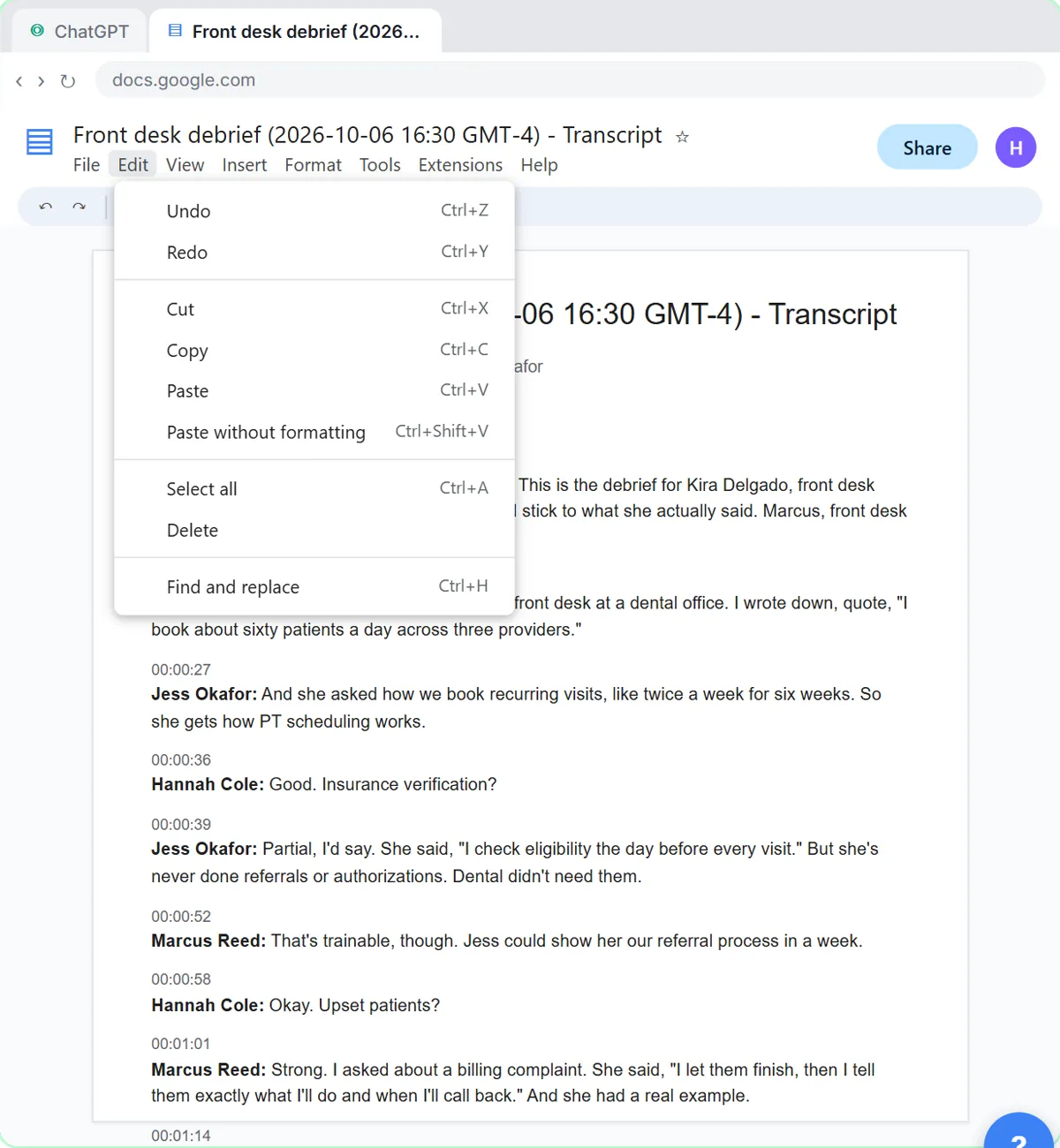
A real debrief mixes ratings, quotes, next steps and the occasional comment that isn't about the job. In the Interview Debrief to Scorecard lesson, you work with the transcript Google Meet saved after a debrief at Willow Bend Physical Therapy, a made-up practice. Hannah, the HR manager, runs it with Marcus and Jess, the two interviewers. They interviewed Kira Delgado for Front Desk Lead, a role with four must-haves:
- Two or more years running a front desk
- Insurance verification
- Calming upset patients
- Training other staff
Front desk experience and upset patients come out strong, insurance is partial (eligibility checks, but no referrals or authorizations), and training other staff never came up. When Jess mentions that Kira has two little kids, Hannah stops it: it's not about the job, and every candidate was asked whether the 7:30 start works. The panel agrees on a final round with Dr. Patel, no offer until references are checked, and parks a question about pay.
How do you ask ChatGPT for an interview scorecard?
Name the role's must-haves, ask for a rating and a quote for each, and tell ChatGPT to stick to job-related points. Copy the transcript from the Google Doc (Edit, Select all, then Edit, Copy), switch to ChatGPT, and paste the request before the transcript:
You're my recruiting assistant. I'm Hannah, the HR manager at Willow Bend Physical Therapy. Below is the transcript of today's panel debrief for Kira Delgado, who interviewed for Front Desk Lead. The must-haves for the role are: two or more years running a front desk, insurance verification, calming upset patients, and training other staff. Give me:
1. A three-sentence summary that scores her on each must-have (Strong, Partial or Not discussed), with a short quote from the interview as evidence
2. The decisions we made
3. The action items as a table: task, owner, due date
4. Open questions
Only use what's in the transcript, and only what's about the job's must-haves. Don't guess at age, family, health, religion or anything else that isn't job-related. If an owner or date isn't said, write "Not stated".
Then paste the transcript underneath (in real ChatGPT, press Shift+Enter for a new line first, then Ctrl+V) and click Send.
The rating scale makes an unasked must-have show up as a gap instead of an assumption, and the quote ties each score to something the candidate actually said.
How do you check the scorecard ChatGPT writes?
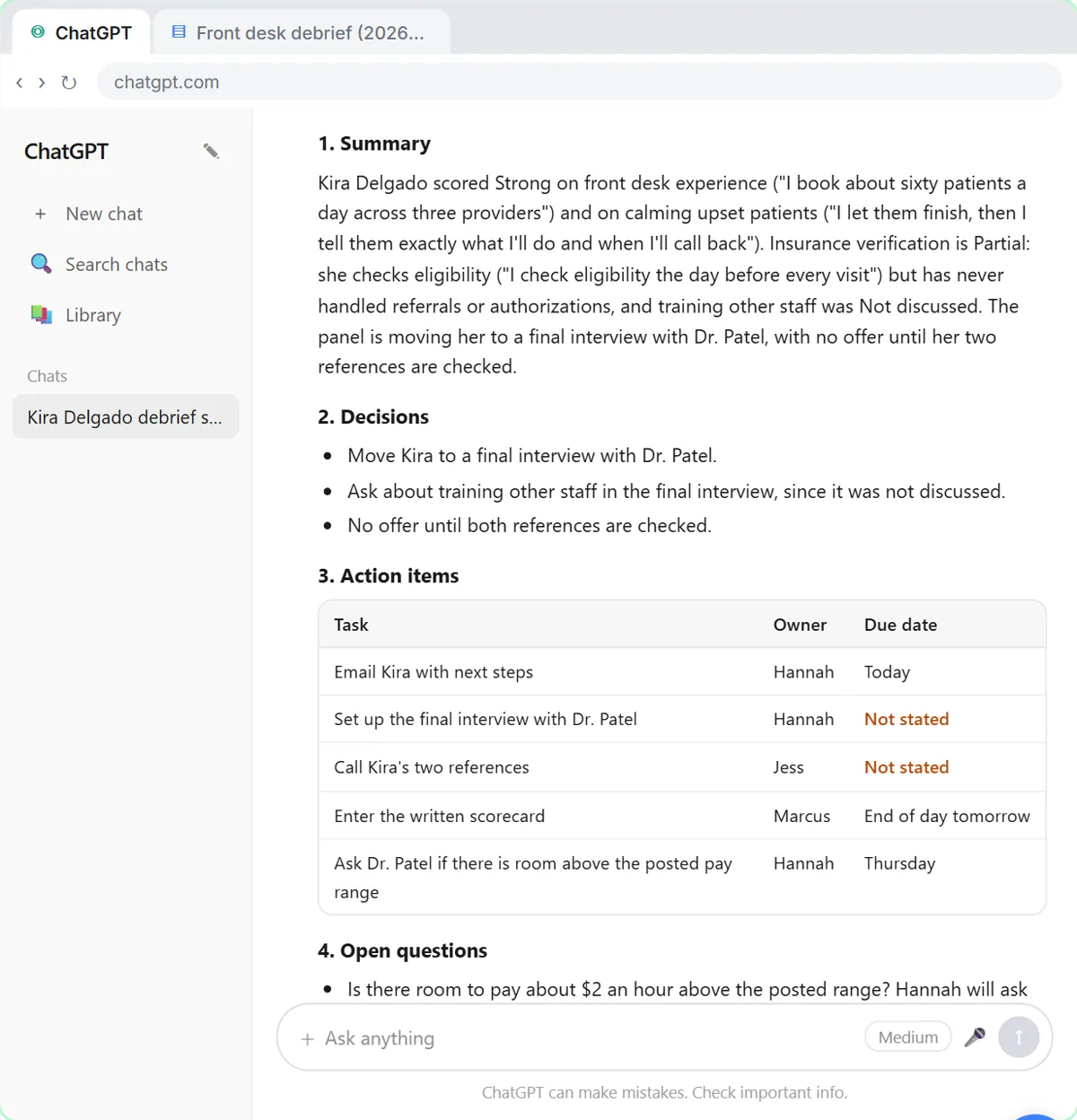
Read the scorecard against your own notes, and confirm that every score has evidence and nothing off-topic made it in. In the lesson, each must-have gets a score and, where there is one, a quote. Training other staff says Not discussed, which tells the final round what to cover. And the comment about Kira's kids isn't there, because the request told ChatGPT to stick to the job.
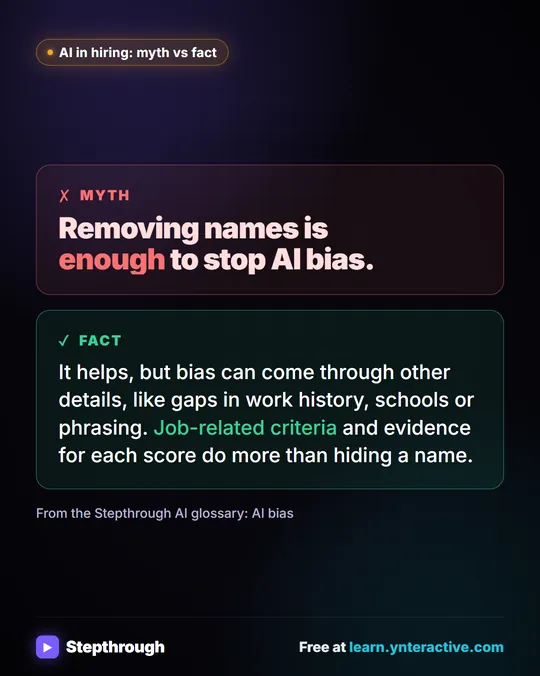
Asked to simply "summarize the meeting," an AI model may repeat whatever was said. Keeping the record on the job's requirements is fairer to every candidate and easier to stand behind. The request is a writing aid, not a compliance program.
How do you fill in missing owners and dates?
Tell ChatGPT the missing dates in one line. Two due dates say Not stated: nobody said when the final interview would be set up or when the references would be called. So you type:
Hannah will set up the final interview by Thursday, and Jess will call both references by Friday.
ChatGPT updates the table, and now every task has an owner and a date.
What should the email to the candidate say?
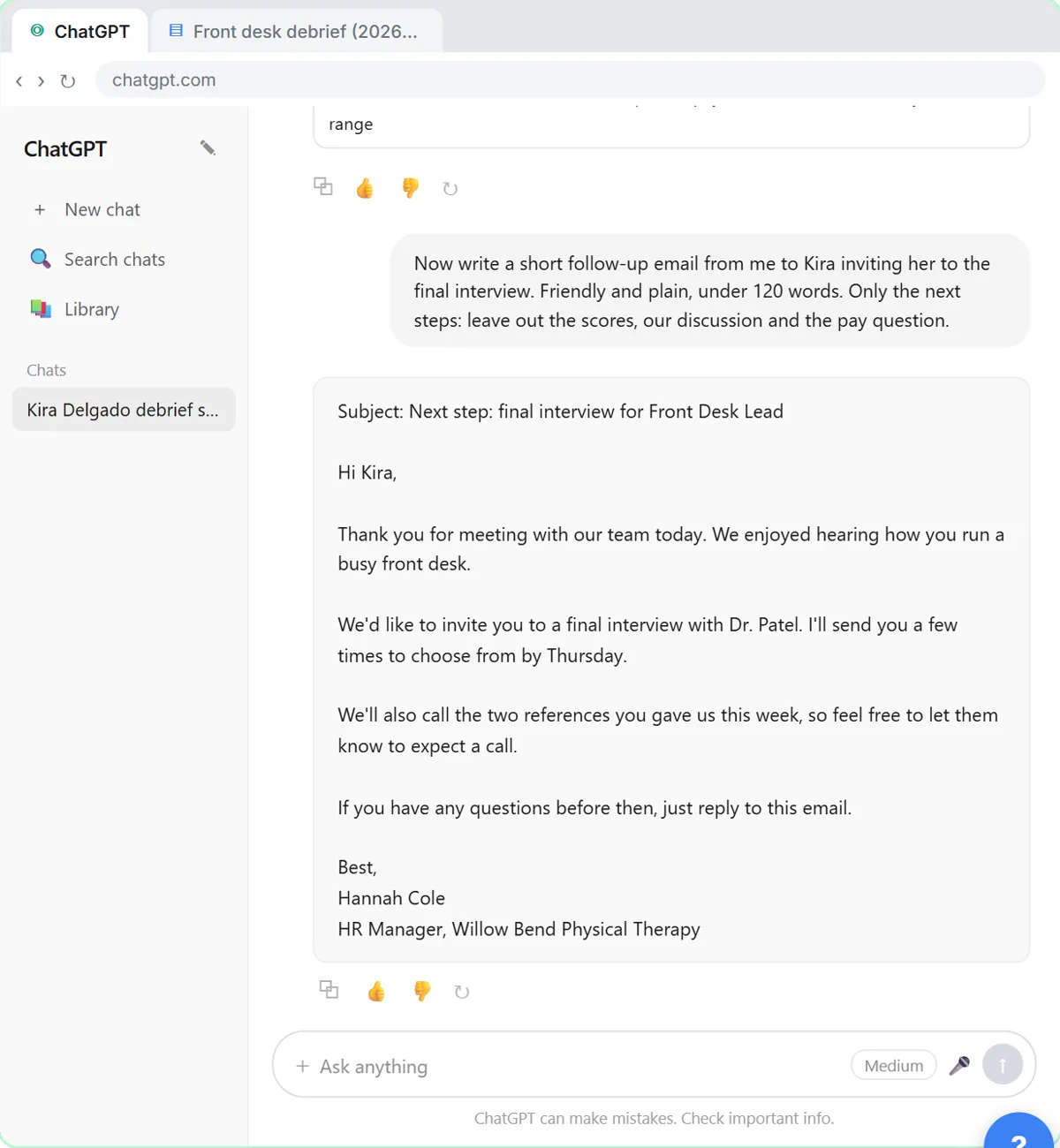
The candidate email should include only the next steps, never the scores, the panel's discussion or internal questions like pay. In the same chat, ask for the email to Kira:
Now write a short follow-up email from me to Kira inviting her to the final interview. Friendly and plain, under 120 words. Only the next steps: leave out the scores, our discussion and the pay question.
Read it, adjust anything that doesn't sound like you, then copy it into your email.
Can you upload the debrief transcript as a file?
Yes. ChatGPT can read an attached transcript file instead of pasted text. If the transcript arrives as a Word document, start a New chat, click the + button, choose Add photos & files, pick the file and click Open. A one-line version of the same request, with the four must-haves and the same rules, gets the same kind of scorecard.
Try it free, step by step
Turn an Interview Debrief into a Scorecard and a Candidate Follow-Up (Recruiting & HR). Turn the transcript of an interview panel's debrief into a scorecard against the role's must-haves, the decisions, action items with owners and dates, and a follow-up email to the candidate. You do every step yourself in a practice copy of ChatGPT, it checks your work as you go, and “Do it for me” finishes any step you get stuck on. Free, and nothing touches your real accounts.
Start the free lessonIs it safe to put candidate information into ChatGPT?
Only in line with your company's policy, on the right plan, and with unneeded details removed. Interview notes are personal information about the candidate. Before you paste a real transcript into any AI tool, check your company's policy, and use a business plan such as ChatGPT Business or Enterprise, which OpenAI doesn't use to train its models by default. Leave out anything the scorecard doesn't need, and keep the notes only where your policy says.
Where else can recruiters use this?
Use the same must-haves request for every debrief, phone screen or client write-up.
- Every panel debrief. Paste the same must-haves request under each transcript, so every candidate is compared on the same terms.
- Phone screens. A quick scorecard from your call notes before you decide on a first interview.
- Recruiting firms. A clean write-up for the hiring manager at your client, with the candidate email kept separate.
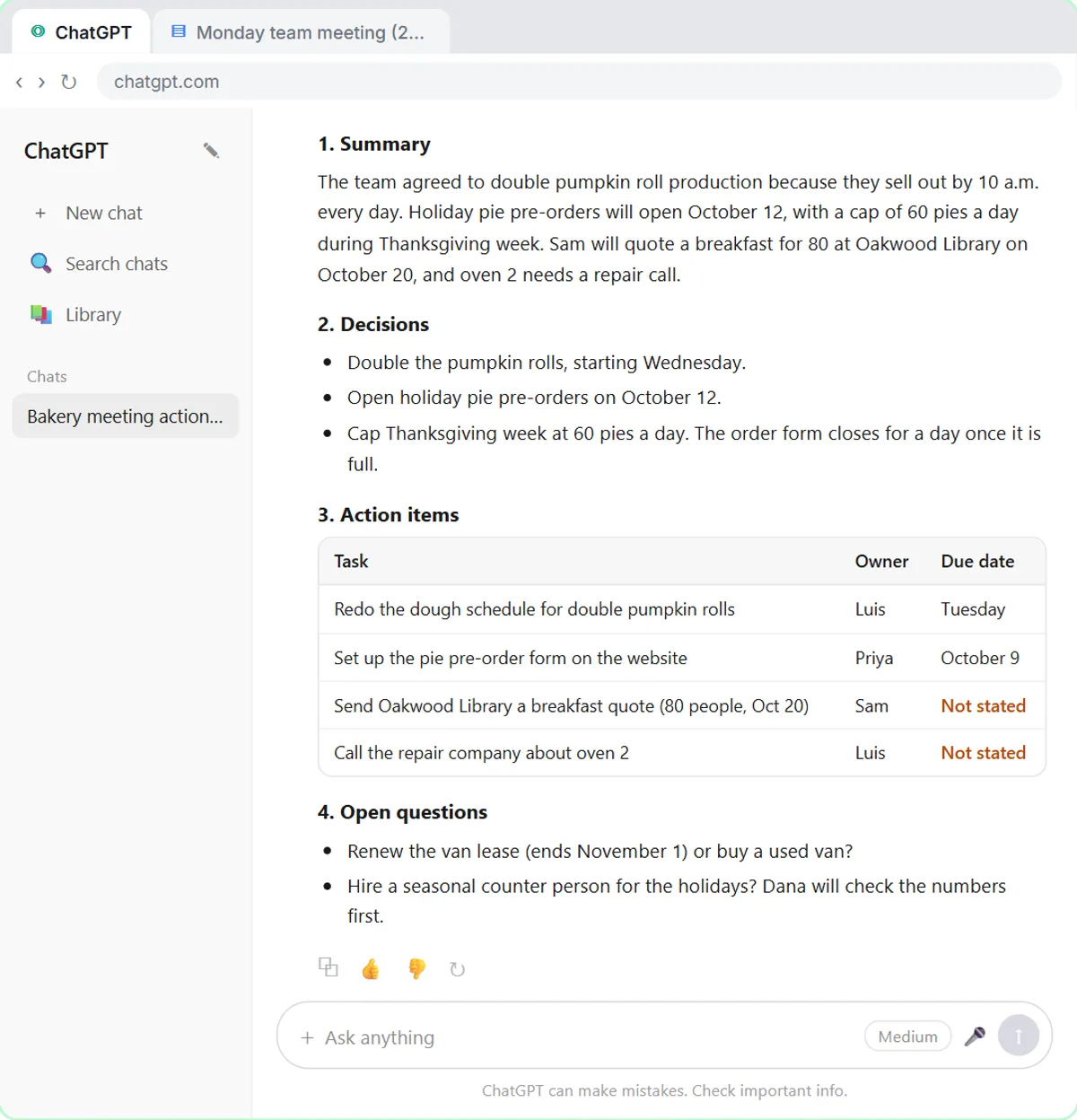
This is a specialized version of a routine that works for any meeting. The general version, with a bakery team meeting, is in Summarize a Meeting Transcript and in turn a meeting transcript into action items. If candidate emails are a big part of your day, the habit of checking a draft against your facts before sending is covered in check AI drafts for promises.
Key takeaways
- ChatGPT can turn an interview debrief transcript into a scorecard that rates each must-have as Strong, Partial or Not discussed, with a quote as evidence.
- Telling ChatGPT to include only job-related points kept a comment about the candidate's kids out of the scorecard in the lesson.
- Writing "Not stated" for missing owners or dates shows the gaps, which you fill in with one short message.
- The email to the candidate should contain only next steps, not scores, the panel's discussion or the pay question.
- ChatGPT organizes what the panel said; people make the hiring decision, and company policy and local law come first.
Frequently asked questions
- Can ChatGPT write an interview scorecard from a debrief transcript?
Yes, if you give it the role's must-haves and a clear format. Ask it to rate each one as Strong, Partial or Not discussed with a short quote as evidence, and to use only what's in the transcript. Check every score against your own notes.
- How do I keep AI interview notes job-related?
Tell it to include only what's about the job's requirements and not to guess at age, family, health, religion or anything else that isn't job-related. Use the same must-haves for every candidate, and read the output before you save or share it.
- Should ChatGPT decide which candidate to hire?
No. In the lesson it only organizes what the panel said. People make the decision, and your company's hiring policy and local employment law apply. This isn't legal advice.
- What should the email to the candidate include?
Only the next steps, like the next interview and when they'll hear from you. Leave out scores, the panel's discussion and internal questions like pay.
- Is the lesson free?
Yes. Stepthrough is free and the practice copy needs no accounts. To do it for real, you need your own ChatGPT account, and ChatGPT has free and paid plans.