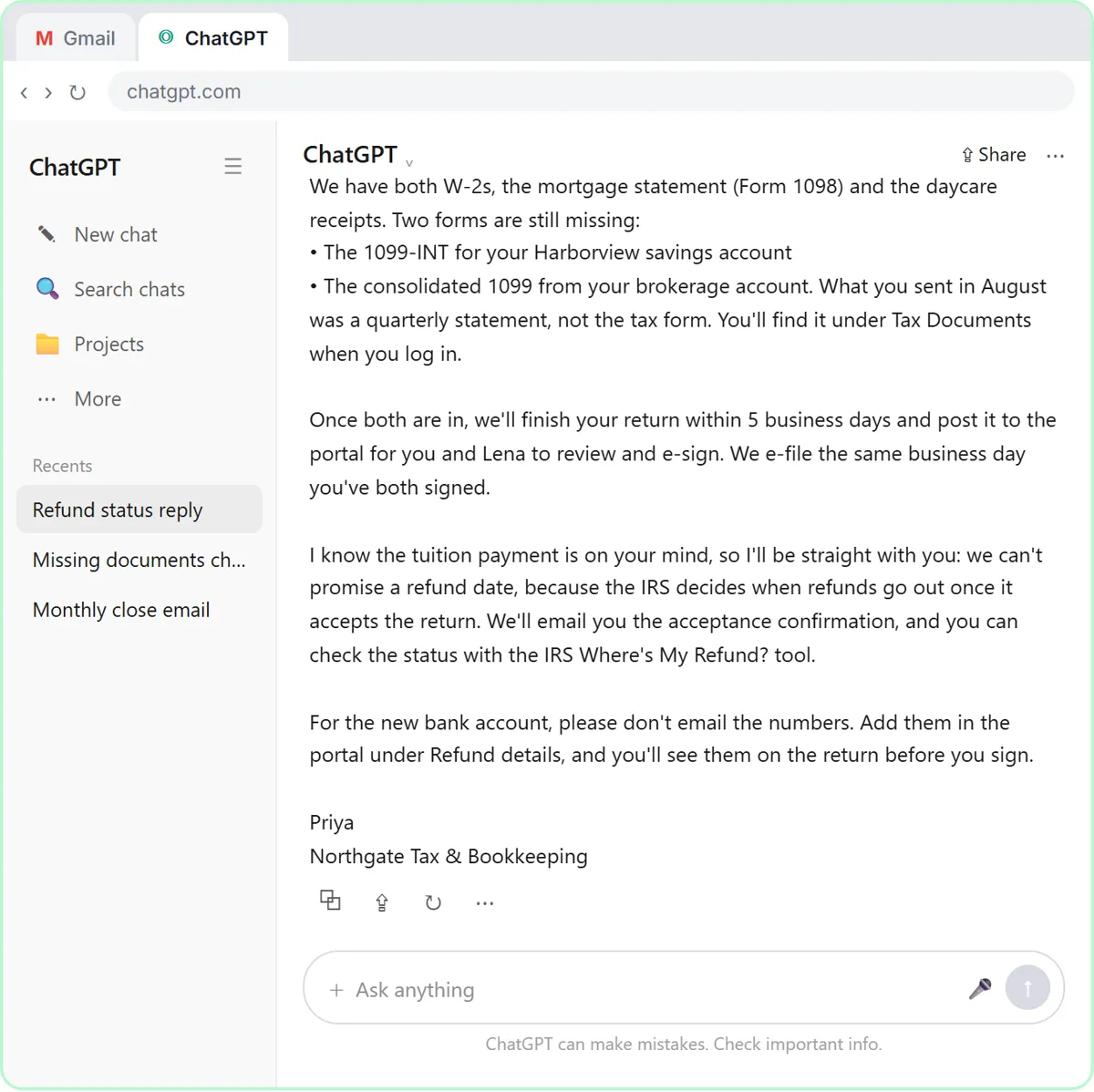
The model sentence comes straight from the lesson's final email: "Your Sep 24 email slipped past us, and that's on us." It's specific, it takes responsibility, and it's over in eleven words.
What should an apology for a late reply say?
Say what you missed, say it was on you, and move straight to the answers. The apology earns you a fair reading; the answers are what the person actually wants.
A strong late-reply apology has three parts:
- The specific miss. Name the email and its date, or the thing you didn't do. "Your Sep 24 email slipped past us" beats "sorry for any delay."
- Ownership, in plain words. "That's on us." No passive voice, no "due to high volume."
- A quick turn to the answers. The next sentence starts on what they asked.
What to leave out: long explanations, more than one apology, and promises about the future you can't guarantee.
Why should you apologize only once?
One apology reads as sincere; three read as nervous, and they push the answers further down the email. Every lesson in this set tells ChatGPT to "Apologize once" in its instructions.
A frustrated client wants to know where things stand. An email that opens with a paragraph of regret makes them wait twice.
How do you get ChatGPT to apologize for the right thing?
Put the miss in your facts list, in your own words, so ChatGPT apologizes for what actually happened instead of guessing. Then tell it how many times to apologize.
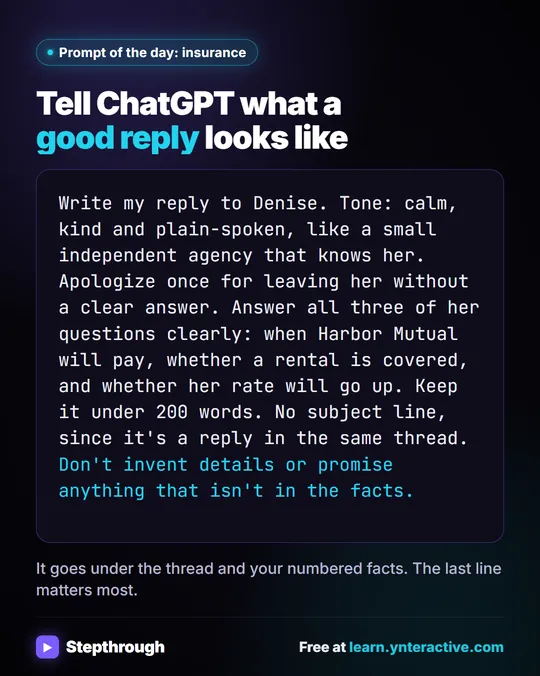
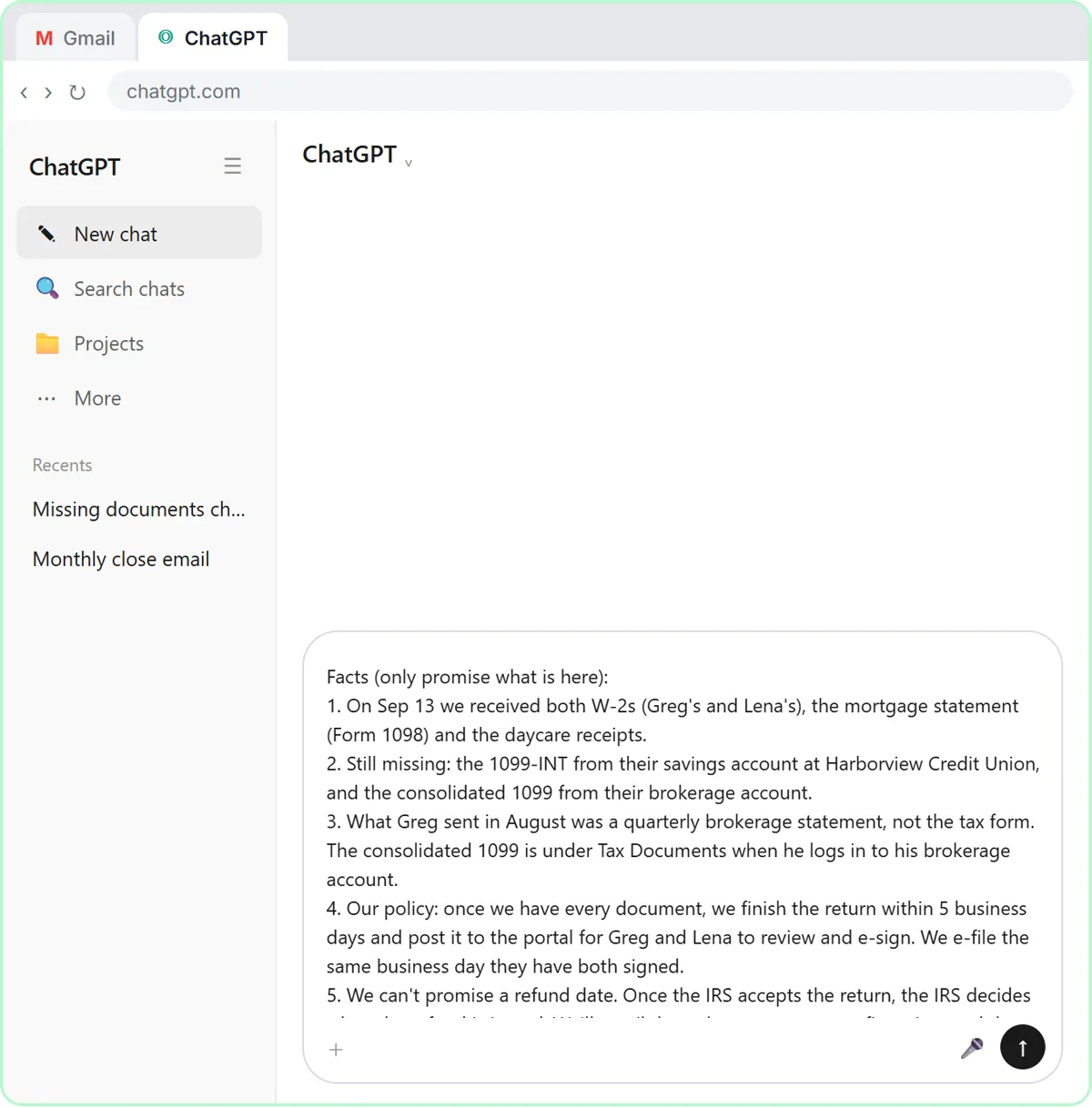
The lessons use the same routine: paste the email thread, add a numbered list of facts headed "Facts (only promise what is here):", and describe a good reply. The miss is one of the facts:
- Accounting (a made-up firm, Northgate Tax & Bookkeeping): "We missed Greg's Sep 24 email. That's on us."
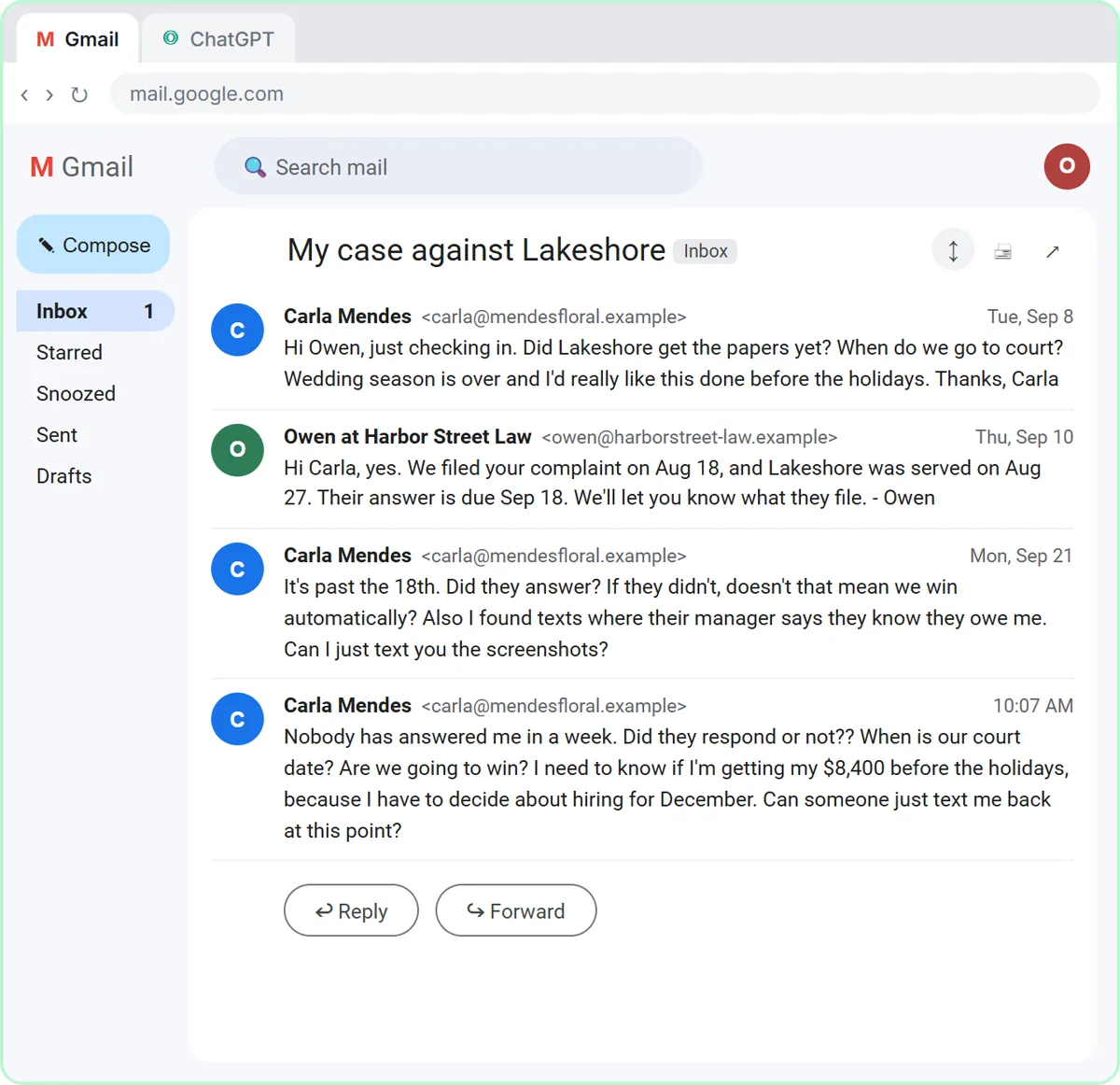
- Law (a made-up firm, Harbor Street Law): "We missed Carla's Sep 21 email, and we didn't tell her when the deadline changed. That's on us."
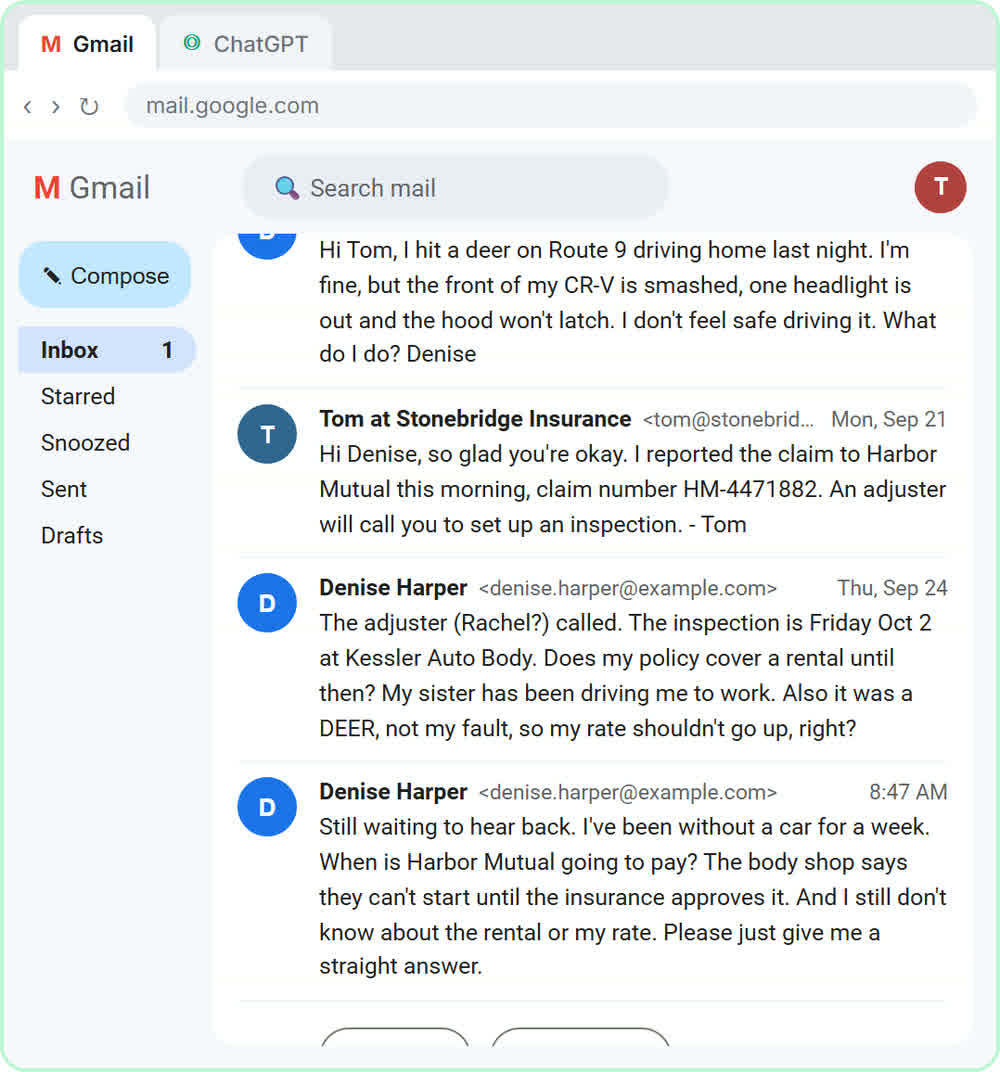
- Insurance (a made-up agency, Stonebridge Insurance Agency): "I left Denise a voicemail on Sep 25 but never answered her email. That's on me."
The instructions then say exactly what to apologize for, such as "Apologize once for missing his Sep 24 email." Without that fact, ChatGPT has to guess, and a guess can apologize for the wrong thing or invent a reason for the delay.
What do good late-reply apologies look like?
Here's how each lesson's final email opens. All three firms and clients are made up.
The accounting firm: "I'm sorry for the slow reply. Your Sep 24 email slipped past us, and that's on us." Then it lists what the firm has, what's still missing, and what happens next.
The law firm: "I'm sorry we missed your Sep 21 email and didn't tell you when the deadline changed. That's on us." The apology covers two misses, because the facts list named two. Then it goes straight to "Where things stand."
The insurance agency: "I'm sorry you've gone a week without a clear answer. I left you a voicemail on Friday, but I should have written back too." This one acknowledges the effort that was made (a voicemail) without using it as an excuse.
Each apology is one or two sentences. Each names the real miss. None explains why it happened.
Try it free, step by step
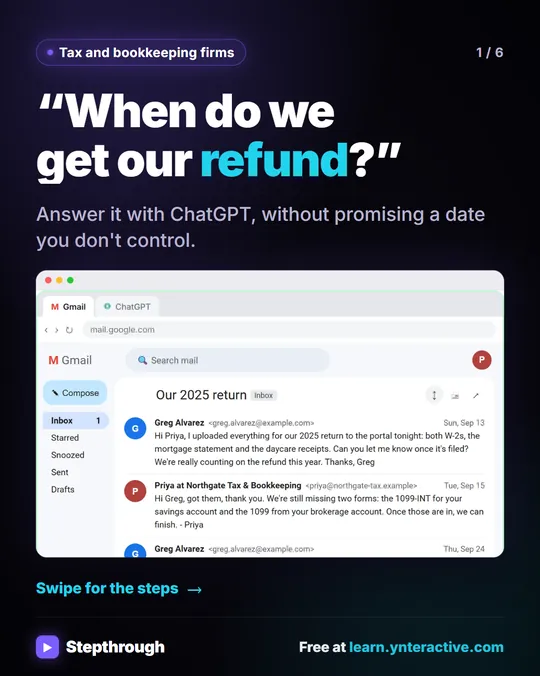
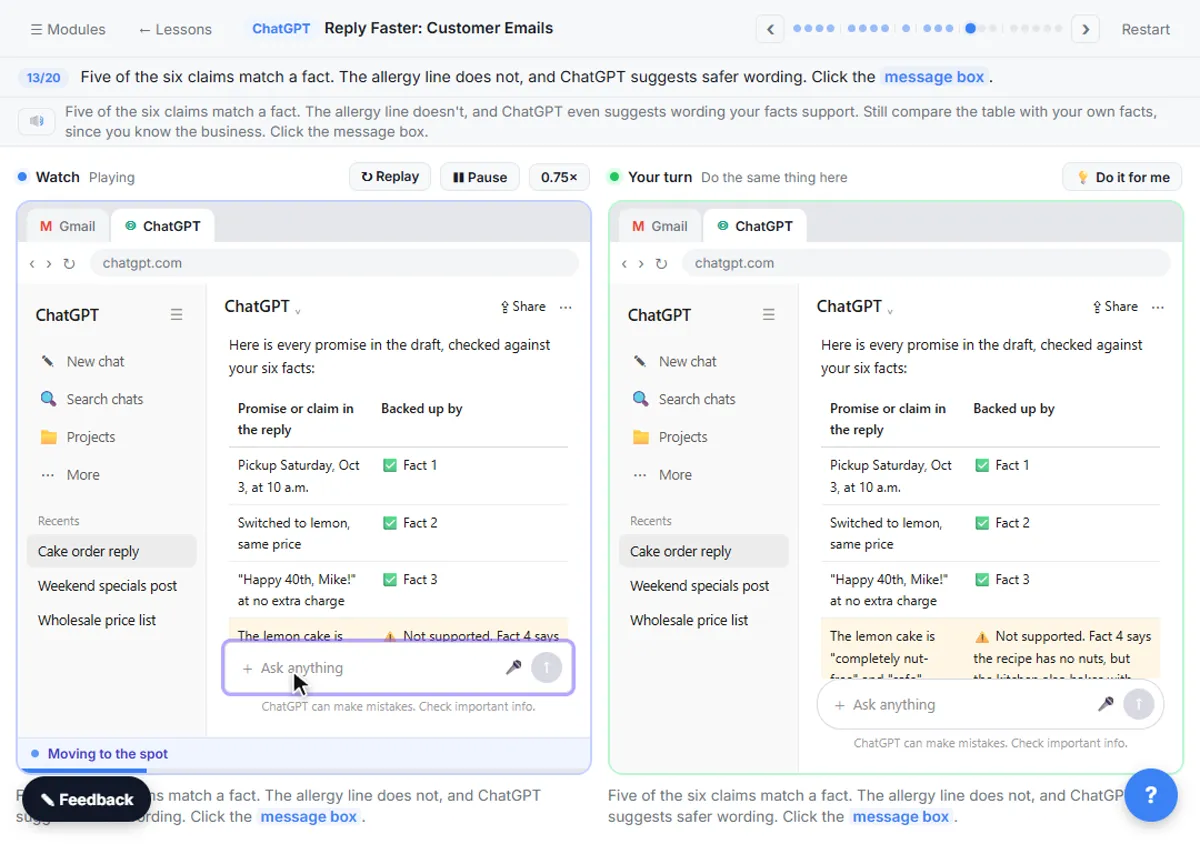
Answer Refund-Date Emails Without Overpromising using ChatGPT. A client wants a refund date while two tax forms are still missing. Give ChatGPT the thread and your firm's facts, catch the date it shouldn't promise, and send a calm, clear reply from Gmail. You do every step yourself in a practice copy of ChatGPT, it checks your work as you go, and “Do it for me” finishes any step you get stuck on. Free, and nothing touches your real accounts.
Start the free lessonWhy is answering every question part of the apology?
A late reply that skips a question creates a second late reply. The person waited; the best apology is an email that leaves them with nothing left to ask.
Late emails tend to pile up questions. By the time you reply, the client has written two or three times, and each message added something. In the lessons, every frustrated client asked three things:
- Greg wants a refund date, wants to know if his August upload was the right form, and wants to change his bank account.
- Carla wants to know if the other side responded, when her court date is, and whether she'll win.
- Denise wants to know when the carrier will pay, whether a rental is covered and whether her rate will go up.
The instructions name all three questions and say "Answer all three of [their] questions clearly." The insurance lesson goes one step further in its fix: "give each of her three questions its own short paragraph so the answers are easy to find." For a client who's been waiting, easy-to-find answers are part of the apology.
What should you never promise in an apology?
Don't promise outcomes you don't control, and don't promise it will never happen again. An apology is exactly where these slip in, because you want to make things right.
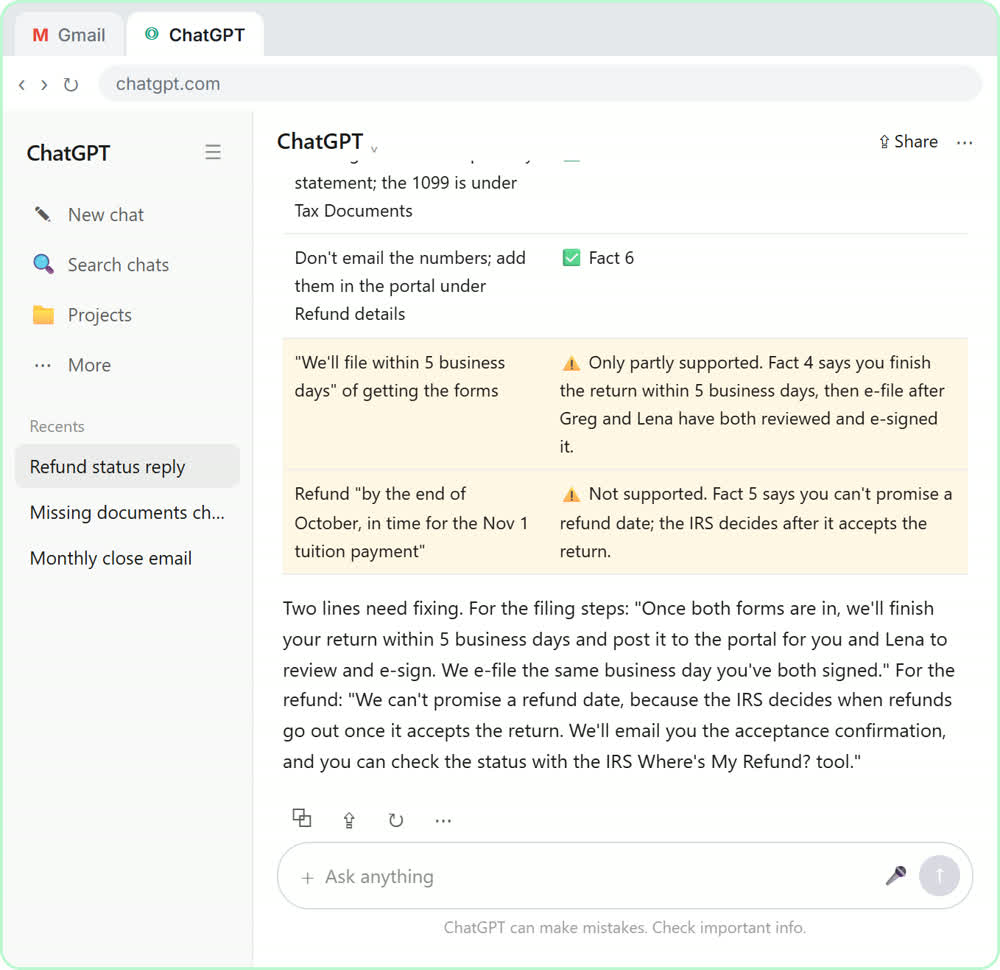
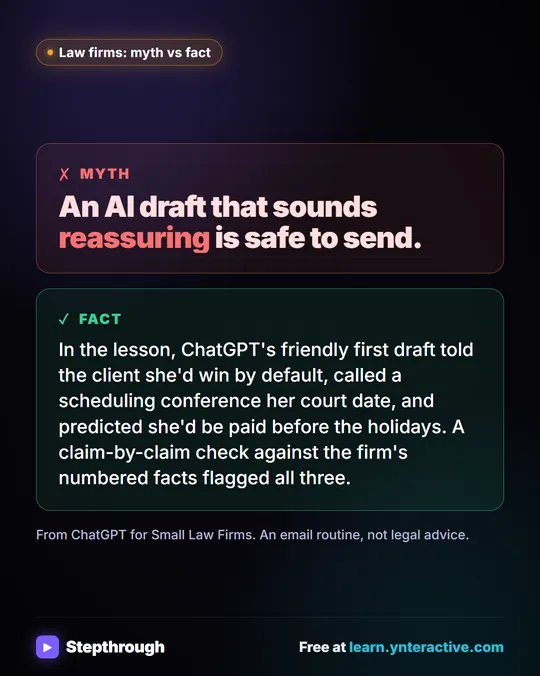
The lessons' first drafts show the risk. The accounting draft promised a refund by the end of October. The law draft predicted the client would be paid before the holidays. The insurance draft said the rate wouldn't go up. Each one sounds like a kind thing to say to someone who's been kept waiting. Each one was a promise the firm couldn't keep, and the promise-check table caught it. Check AI Email Drafts for Promises Before You Send covers that check in detail.
"It won't happen again" is the same kind of promise. If you've changed something real, like who watches the shared inbox, you can say that. Otherwise, the specific apology and complete answers say more than a pledge.
The lessons' facts lists also set firm-specific limits: no refund-date promises, no predictions and no legal advice by email, no promises about payment dates or rates on the carrier's behalf. This post isn't legal, tax or insurance advice; your firm's own policies decide what goes in writing.
How do you keep the tone right?
Calm, warm and plain. The lessons' instructions set it in one line, such as "calm, warm and professional, like a small local accounting firm that knows him." If the draft is stiff, ask for one change, like "a little warmer and easier to scan," and add "Keep every other fact exactly the same."
Acknowledge the person's real worry once, briefly. The accounting reply says "I know the tuition payment is on your mind, so I'll be straight with you," and the law reply says "I know December is on your mind." Then it gives the honest answer.
What about privacy when you paste the thread?
Leave out what ChatGPT doesn't need. In the lessons, Social Security numbers, account numbers and similar details stay out of the paste, and bank details go through a secure portal, never email. Follow your firm's policy, and for client work, use a business ChatGPT account that doesn't train on your data. Is It Safe to Paste Client Emails into ChatGPT? goes further.
All three lessons are free, take about 10 minutes and run in practice copies. Any ChatGPT plan works to start, including free, within its limits. More lessons for firms are on the accounting and bookkeeping hub.
Key takeaways
- An apology for a late reply should name the specific miss, own it in plain words, and turn straight to the answers.
- Apologize once; the lessons tell ChatGPT "Apologize once" so the answers aren't buried.
- Put the miss in your numbered facts list, such as "We missed Greg's Sep 24 email. That's on us," so ChatGPT apologizes for what actually happened.
- Answer every question the person asked, ideally each in its own short paragraph.
- Don't promise outcomes you don't control, like refund dates, case results or rates, and skip "it won't happen again" unless something really changed.
Frequently asked questions
- How do you apologize for a late email reply professionally?
Open with one or two sentences that name the missed email and take responsibility, such as "Your Sep 24 email slipped past us, and that's on us." Then answer every question.
- Should I explain why I was late?
Usually not. A short, specific apology is enough. A long explanation reads as an excuse and delays the answers.
- Is "sorry for the delay" enough?
It's better than nothing, but naming the specific email and owning it lands better than a generic phrase.
- Can ChatGPT write the apology for me?
Yes, if you tell it exactly what you missed in the facts and ask it to apologize once. Read the final email before you send it.
- Are these firms real?
No. Northgate Tax & Bookkeeping, Harbor Street Law, Stonebridge Insurance Agency and their clients are made-up examples used in the lessons.