What is attorney-client privilege?
Quick answer
Attorney-client privilege is a legal protection that generally keeps confidential communications between a client and their lawyer, made to get or give legal advice, from being forced into the open. The details vary by place, so this is a general explanation, not legal advice.
Last updated
Updated · By Robert Breen
Why it matters for a small business
The idea is to let people speak frankly to a lawyer, so the lawyer can give sound advice without fear that the conversation will be used against the client. Privilege can be lost, though. Sharing the conversation with an outsider, or carelessly handling documents, can undo the protection, and what counts as careless depends on the facts.
That is why law firms are particular about how clients send information. A secure portal, a short list of approved channels and a habit of not forwarding messages are small routines that support confidentiality. If you have a question about whether something is privileged, ask your own lawyer. A glossary entry or an AI assistant cannot answer it for your situation.
In a real lesson: Reply Faster to a Client Asking for a Case Update: ChatGPT for Small Law Firms
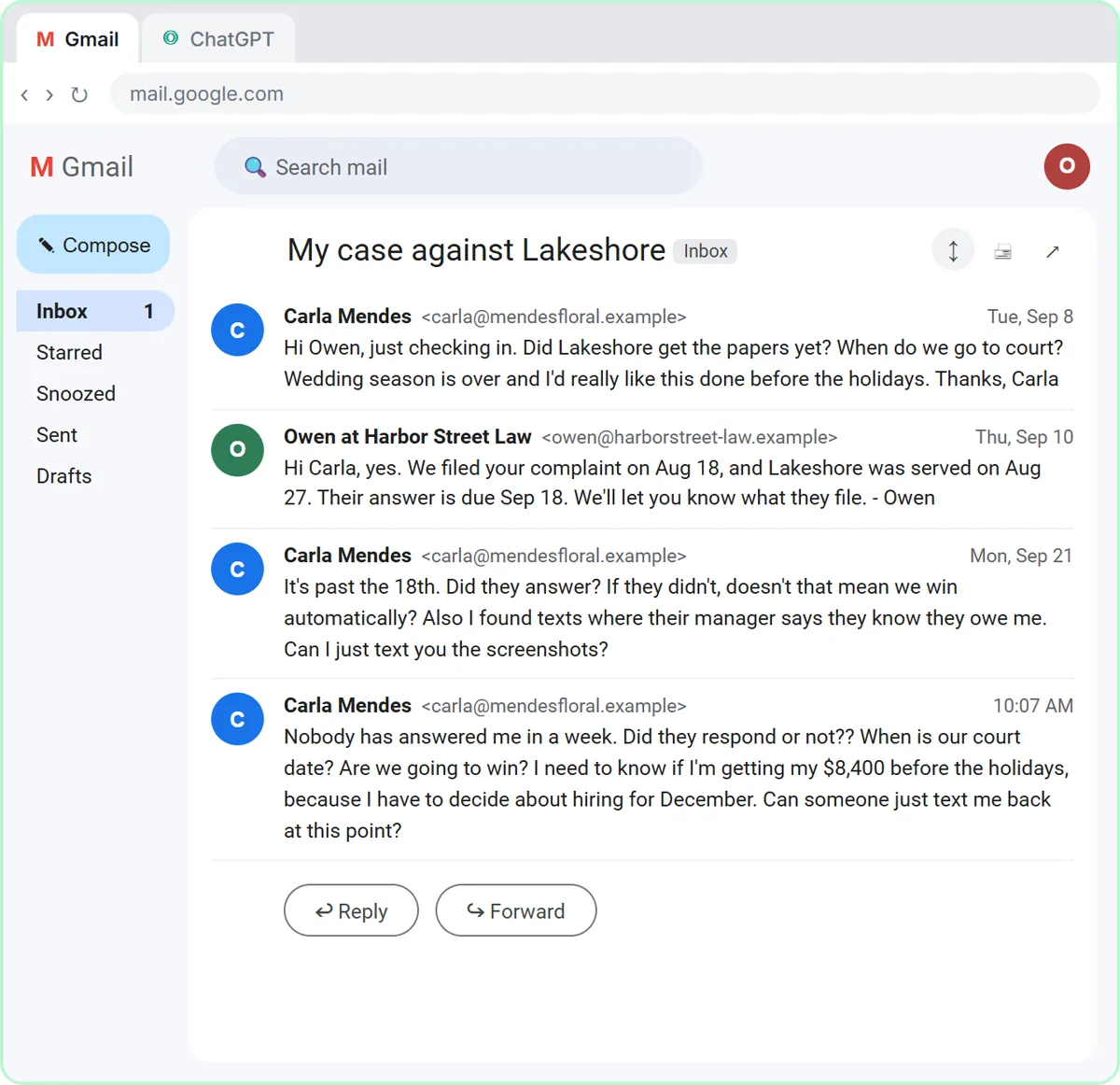
The Reply Faster: Client Case Updates lesson is about writing a clear case update, not about privilege, but it contains habits that serve confidentiality. In it, the made-up firm Harbor Street Law gets a worried message from a client, Carla, who offers to text screenshots of messages from the other side.
The firm's facts say it does not discuss case details or accept evidence by text message or social media. The reply asks Carla to upload the screenshots to the client portal under Documents and to keep the originals on her phone. The lesson also says to check your firm's rules for AI tools first and to leave out anything the reply does not need.
The lesson does not say these rules exist because of privilege, and it makes no claim about what is or isn't protected. It simply shows a firm choosing one controlled channel for sensitive material. Whether using any AI tool affects confidentiality for a particular matter is something to ask your attorney or follow your firm's policy about.
Try this lesson free or read the step-by-step guide.
Common confusions
Privilege vs confidentiality
Confidentiality is a broad duty to keep client information private. Privilege is a narrower legal rule about what can be compelled in a legal proceeding. Information can be confidential without being privileged.
Privilege vs legal advice
Privilege protects a conversation. It is not the same as legal information vs legal advice, which is about what a non-lawyer may say. Neither tells you whether your own message is protected.
Tips
- Use the channel your lawyer tells you to use, and keep other people off the thread.
- Do not forward lawyer emails to friends, coworkers or a public chatbot without asking.
- When unsure whether something is protected, ask the lawyer before sharing it.
Related terms
More Business terms
Where you use it: free lessons
- Reply Faster to a Client Asking for a Case Update: ChatGPT for Small Law Firms (ChatGPT, 10 min)
- Reply Faster: Turn a Messy Customer Email Thread into a Clear, Friendly Reply (ChatGPT, 9 min)
Prompt templates that use it
Frequently asked questions
- Does privilege apply to my accountant or consultant?
- Generally not in the same way. Some other protections exist in specific situations, so ask a licensed attorney about your case.
- Can I paste a lawyer's email into an AI tool?
- That is a risk question for you and your lawyer. Check your firm's AI policy and the tool's data settings first, and when in doubt, leave it out.