Insurance agents can use ChatGPT to draft claim-status emails by pasting the client's thread with a numbered list of the agency's facts, then asking ChatGPT to check every promise against those facts before sending. This is for producers, account managers and service reps at independent agencies. The free Reply Faster: Claim-Status Emails lesson walks through it step by step.
"When will they pay?" "Is my rental covered?" "Will my rate go up?" The honest answer to two of those is "that's up to the carrier," and ChatGPT, left alone, tends to promise more. This post is about writing emails, not insurance advice, and the agency, carrier, client and policy limits below are made up.
What is the example in the lesson?
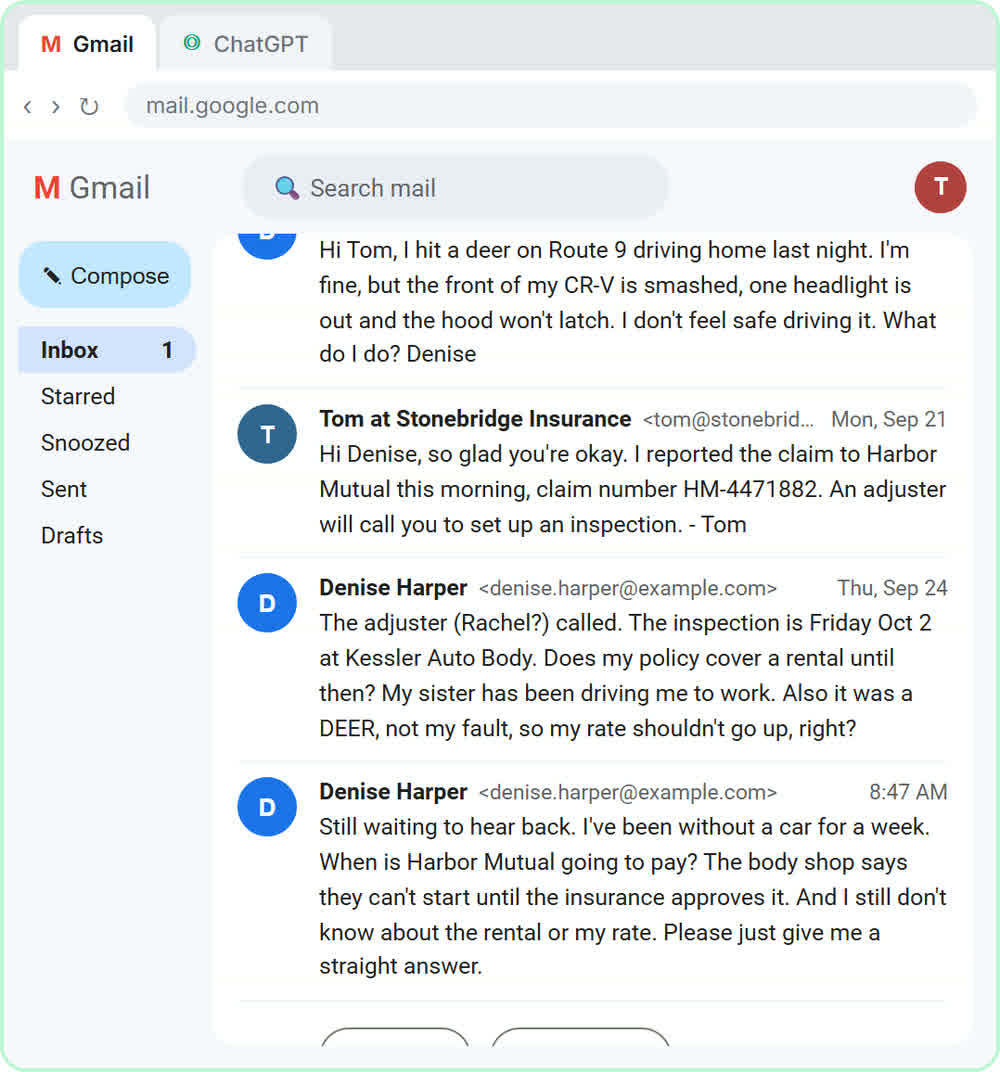
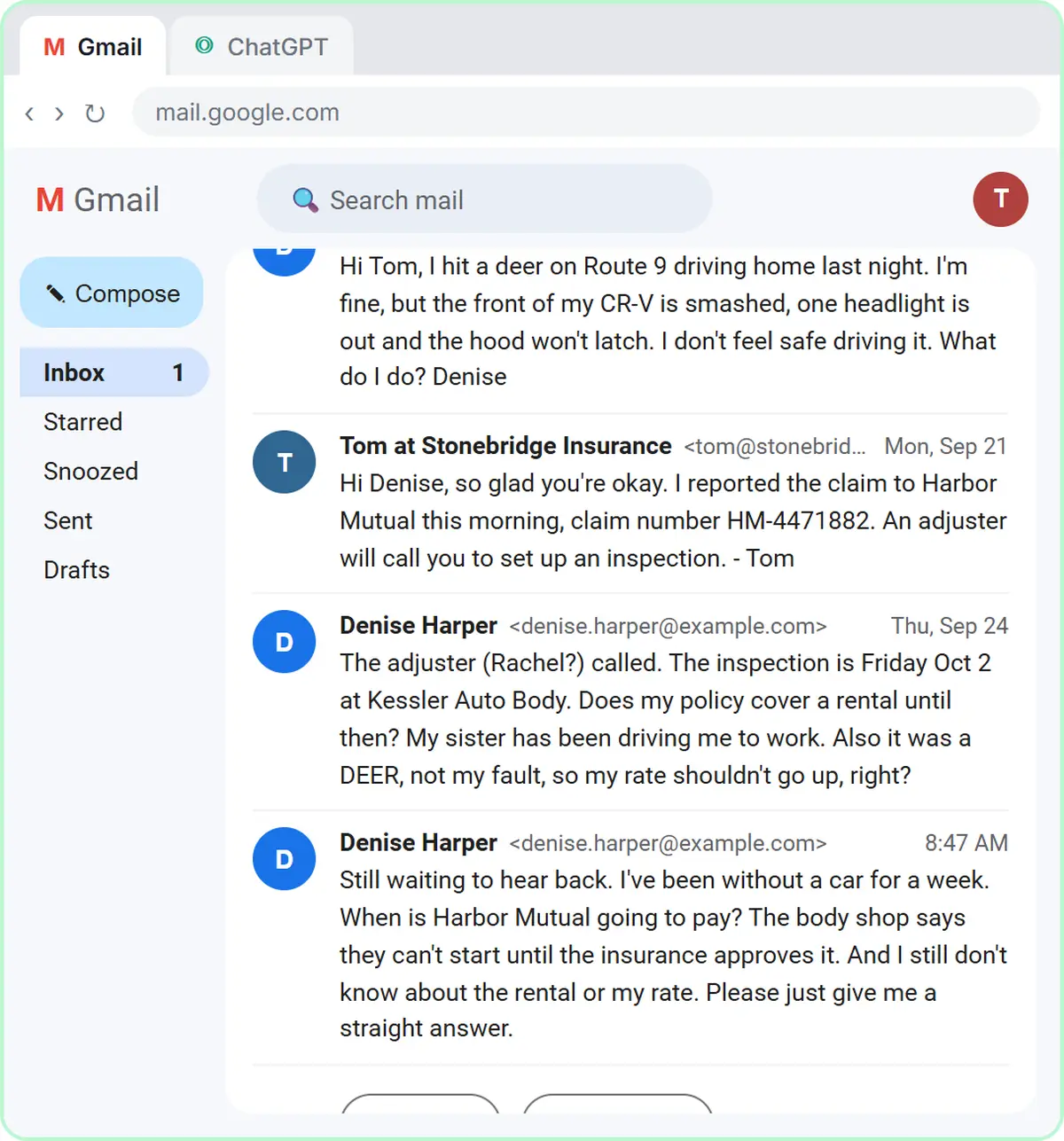
The lesson's example is a client who hit a deer and wants a payment date, a rental and a promise about her rate. The agency is Stonebridge Insurance Agency, the carrier is Harbor Mutual, and the client is Denise.
Denise's CR-V was damaged on Route 9. Her agent, Tom, reported the claim, and the adjuster, Rachel, booked an inspection for Friday, Oct 2, at Kessler Auto Body. Tom left a voicemail but never answered Denise's email. Now she has been without a car for a week and wants a straight answer.
How do I give ChatGPT the claim details?
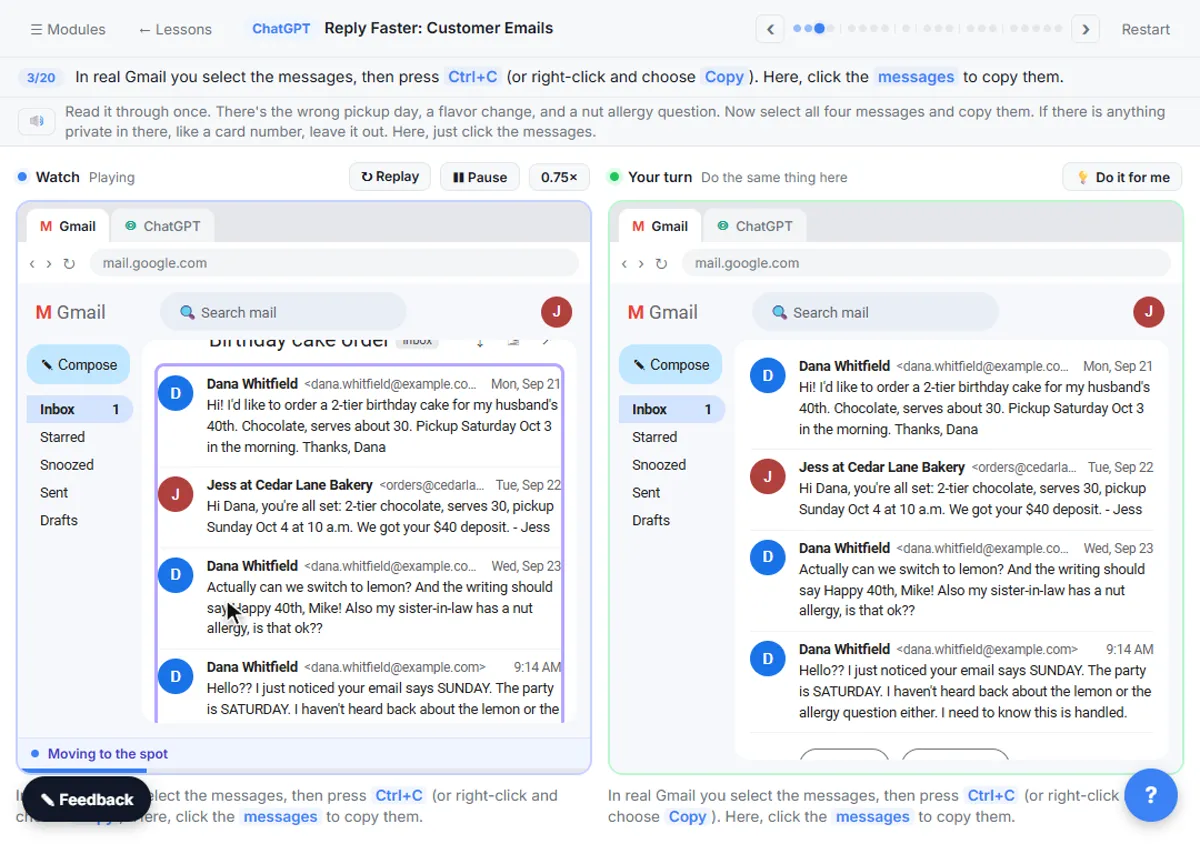
Paste the thread, then eight numbered facts under the heading "Facts (only promise what is here)". First open the thread in Gmail, click Expand all, and copy all four messages, leaving out private details like a driver's license number or date of birth. The lesson's eight facts are:
- The claim was reported to Harbor Mutual on Sep 21, claim number HM-4471882. A deer hit is a comprehensive claim with a $500 deductible.
- The adjuster is Rachel Moore, and the inspection is Friday, Oct 2, at Kessler Auto Body.
- Payment: Harbor Mutual decides when and how much it pays, not the agency. The $500 deductible comes out of the payment.
- Rental: the declarations page shows rental reimbursement of $40 per day, up to $1,200 per claim. Harbor Mutual approves the rental and the dates.
- Rates: Harbor Mutual sets the rate at renewal on Jan 15. Deer hits often don't raise rates, but the agency can't promise hers won't change.
- Agency rule: never promise payment dates, amounts, coverage decisions or rates on the carrier's behalf.
- Tom left a voicemail on Sep 25 but never answered her email.
- Sign it: Tom, Stonebridge Insurance Agency.
The instructions ask for a calm, kind tone, one apology, answers to all three questions, under 200 words, no subject line, and nothing that isn't in the facts.
What does ChatGPT get wrong in the first draft?
ChatGPT's first draft promises a rental "the whole time" the car is in the shop and says Denise's rate won't go up. Neither promise is in the facts. The rest of the draft is solid: it apologizes, names the adjuster and the inspection, and says the carrier decides when to pay.
How do I catch those promises?
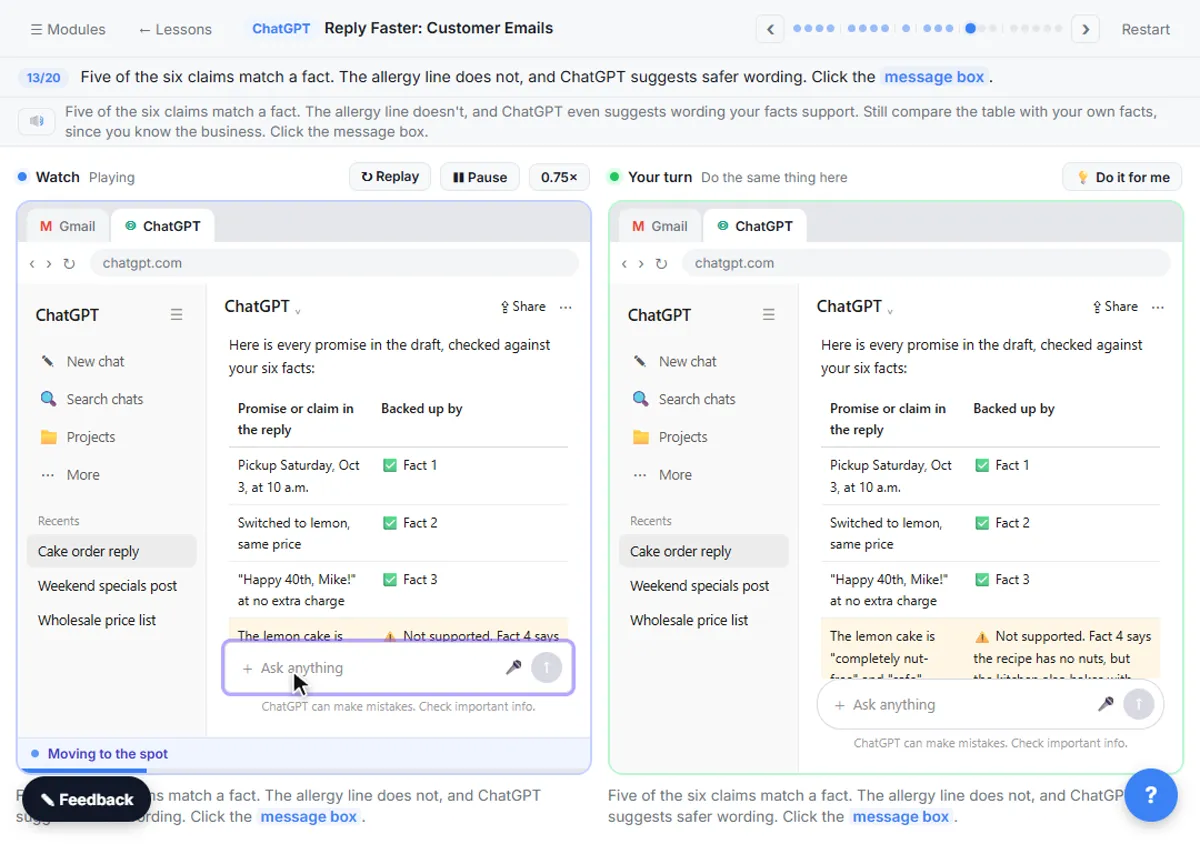
Ask ChatGPT for a table of every promise or claim in its reply, the fact that backs it up, and a flag on anything the facts don't support.
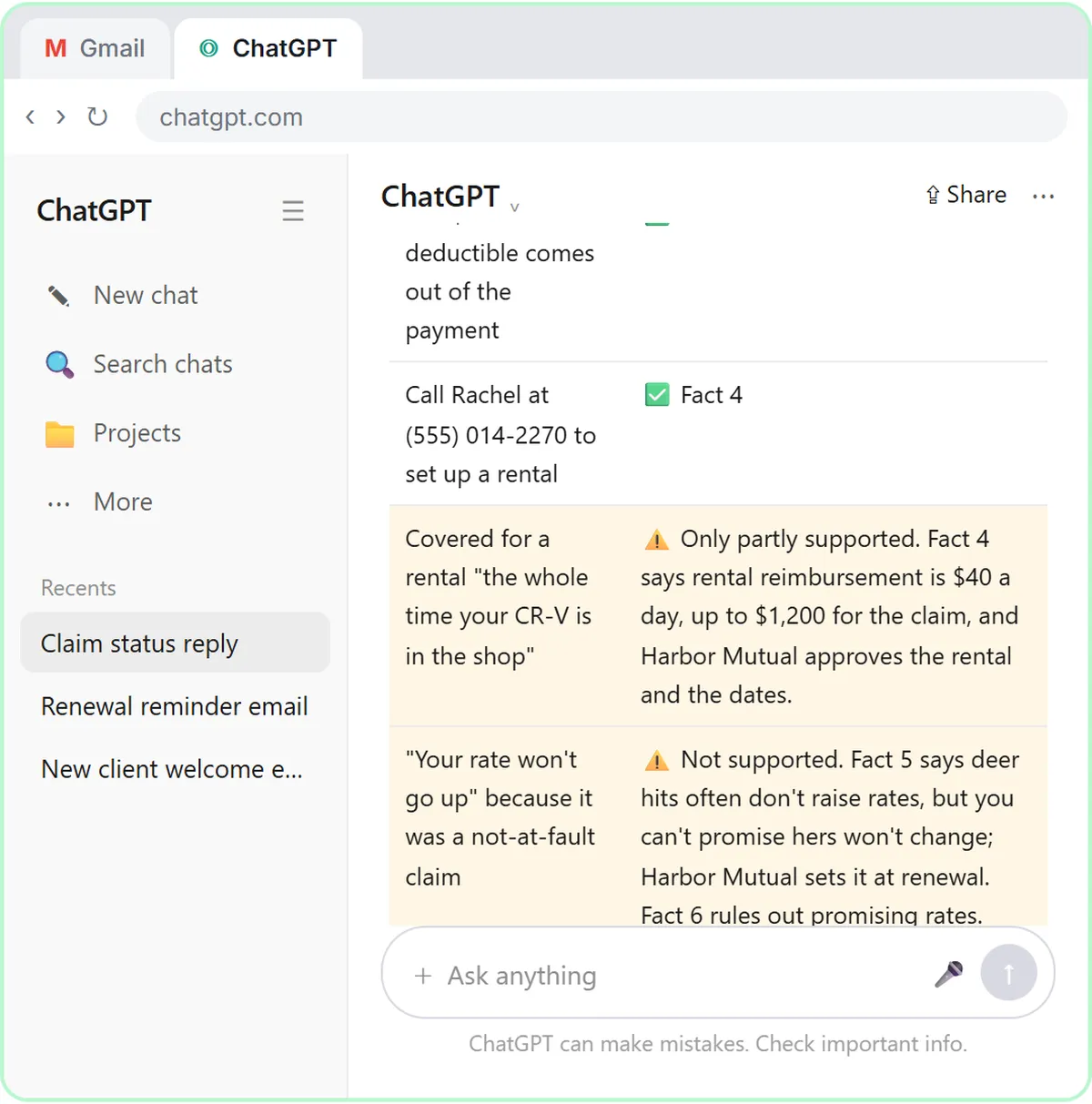
In the lesson's check table, six of eight claims match a fact. The rental line is only partly supported because it leaves out the $40 a day and $1,200 limit, and the rate promise isn't supported at all. The same habit works for any business, as shown in Check AI Email Drafts for Promises Before You Send.
How do I fix the draft and send it?
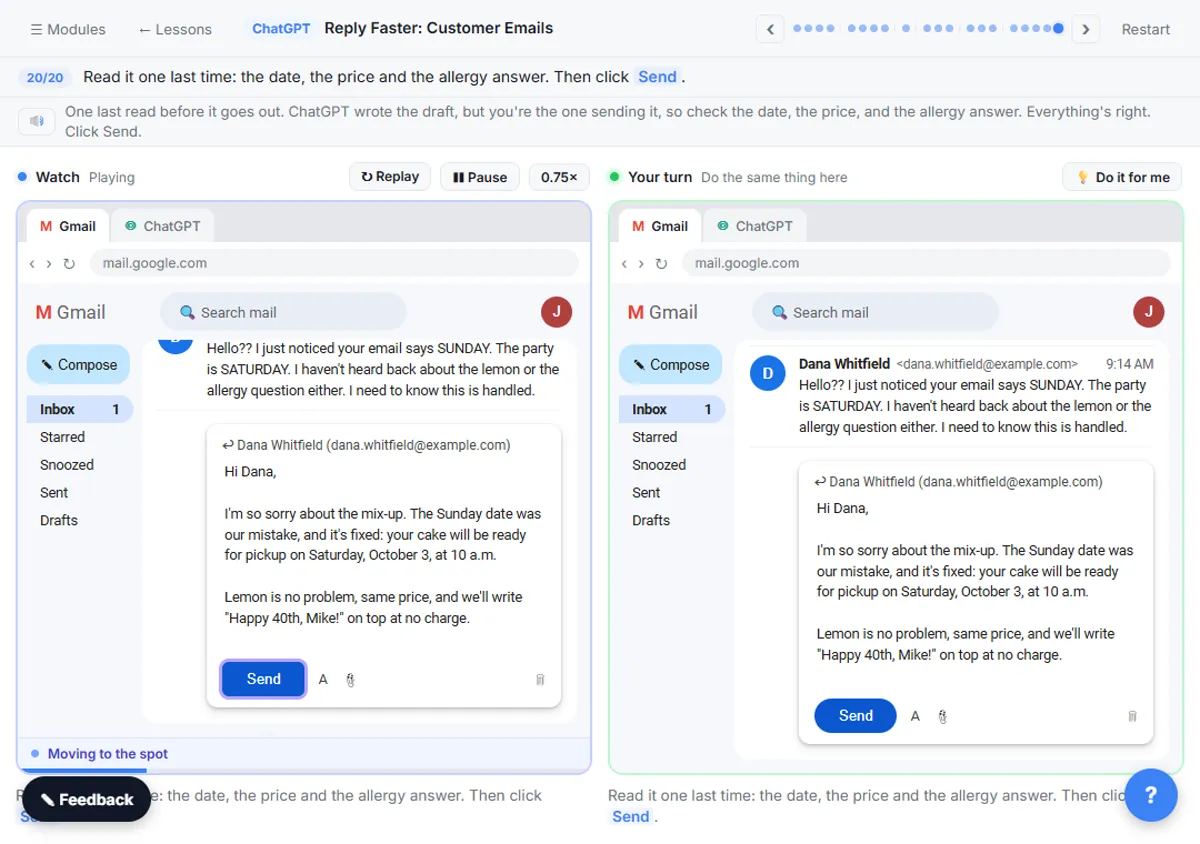
Ask for specific changes: use both suggested wordings, give each of the three questions its own short paragraph, stay under 200 words, and keep every other fact exactly the same. The final reply says the carrier decides the payment date, the rental is covered up to $40 a day and $1,200 for the claim, and nobody promises the rate. Copy it, click Reply under Denise's last message, paste, read it once more and click Send.
Try it free, step by step
Reply Faster to Claim-Status Emails: ChatGPT for Independent Insurance Agencies. A client with an open auto claim wants a payment date, a rental and a promise about her rate. Give ChatGPT the thread and your agency's facts, catch what it shouldn't promise, and send an honest… You do every step yourself in a practice copy of ChatGPT, it checks your work as you go, and “Do it for me” finishes any step you get stuck on. Free, and nothing touches your real accounts.
Start the free lessonWhy do overpromises matter more at an agency?
A written promise that something is covered, or that a rate won't go up, can come back as an errors and omissions (E&O) issue if the carrier decides otherwise. The safer pattern, which the lesson teaches, is to tell the client what the policy shows, who decides the rest, and what the agency will do next.
Rental reimbursement is a common trap. The declarations page lists a daily limit and a per-claim maximum, and the carrier approves the rental and dates, so "you're covered" sets up the next angry email. The limits in the lesson belong to the example policy; use your client's declarations page and your agency's procedures.
What client data is safe to paste into ChatGPT?
Paste only what the reply needs. Remove driver's license numbers, dates of birth, Social Security numbers, bank details and medical information from any injury claim before a thread goes into an AI tool, and follow your agency's written information security program. Insurance agencies are covered by privacy rules under the Gramm-Leach-Bliley Act, and many states have adopted insurance data security laws based on the NAIC model law, so check what yours requires.
On ChatGPT Business and Enterprise, OpenAI says it does not train on your chats by default. On personal plans you can turn off "Improve the model for everyone" in Settings under Data controls.
How do I use this at my agency?
Keep a numbered facts list for the claim emails you answer most, with the lines that never change (who decides payment and rates, how rentals get approved, what the agency won't promise) plus the claim details from the claim file and declarations page. Read every final reply yourself and check claim numbers, dates, limits and anything that sounds like a coverage decision. The same routine for everyday customer email is in Reply Faster, and there are more ChatGPT tutorials.
Key takeaways
- ChatGPT can draft claim-status emails quickly when you paste the thread with a numbered list of the agency's facts.
- ChatGPT's first draft in the lesson promised a rental "the whole time" and a rate that won't go up, and neither was in the facts.
- A table of every claim and the fact behind it caught both overpromises: six of eight claims matched, two did not.
- The carrier, not the agency, decides payment and sets rates, so agency emails should say what the policy shows and who decides.
- Remove license numbers, dates of birth and other private data before pasting a client thread into ChatGPT.
Frequently asked questions
- Can ChatGPT answer claim-status emails for my agency?
ChatGPT can draft them. Paste the thread and a numbered facts list, have ChatGPT check every claim against those facts, and treat every reply as a draft you're responsible for.
- How do I stop ChatGPT from promising a payment date or rate?
Put the answer in your facts: the carrier decides payment timing and sets rates at renewal, and your agency doesn't promise either. Then ask for a claim-by-claim table and fix anything it flags.
- Does this lesson give insurance advice?
No. The lesson teaches an email routine. The agency, carrier, client and coverage limits are made up, and whether a claim affects a rate depends on the carrier and the state.
- Is the lesson free?
Yes. The practice copy needs no accounts. To do it for real you need your own ChatGPT and email accounts; ChatGPT has a free plan and paid plans.