This is a guide to clear client communication, not insurance advice. The policy and the carrier decide what's covered.
What is a deductible, in plain words?
It's your share of a covered loss. The glossary entry on deductibles gives the example above and adds a point clients often miss: different coverages on the same policy can have different deductibles. A car policy might have one deductible for collision and another for comprehensive, which covers things like hitting a deer.
Where to find the numbers: the declarations page, the summary at the front of the policy that lists each coverage with its limits and deductibles.
Why do clients get confused about deductibles?
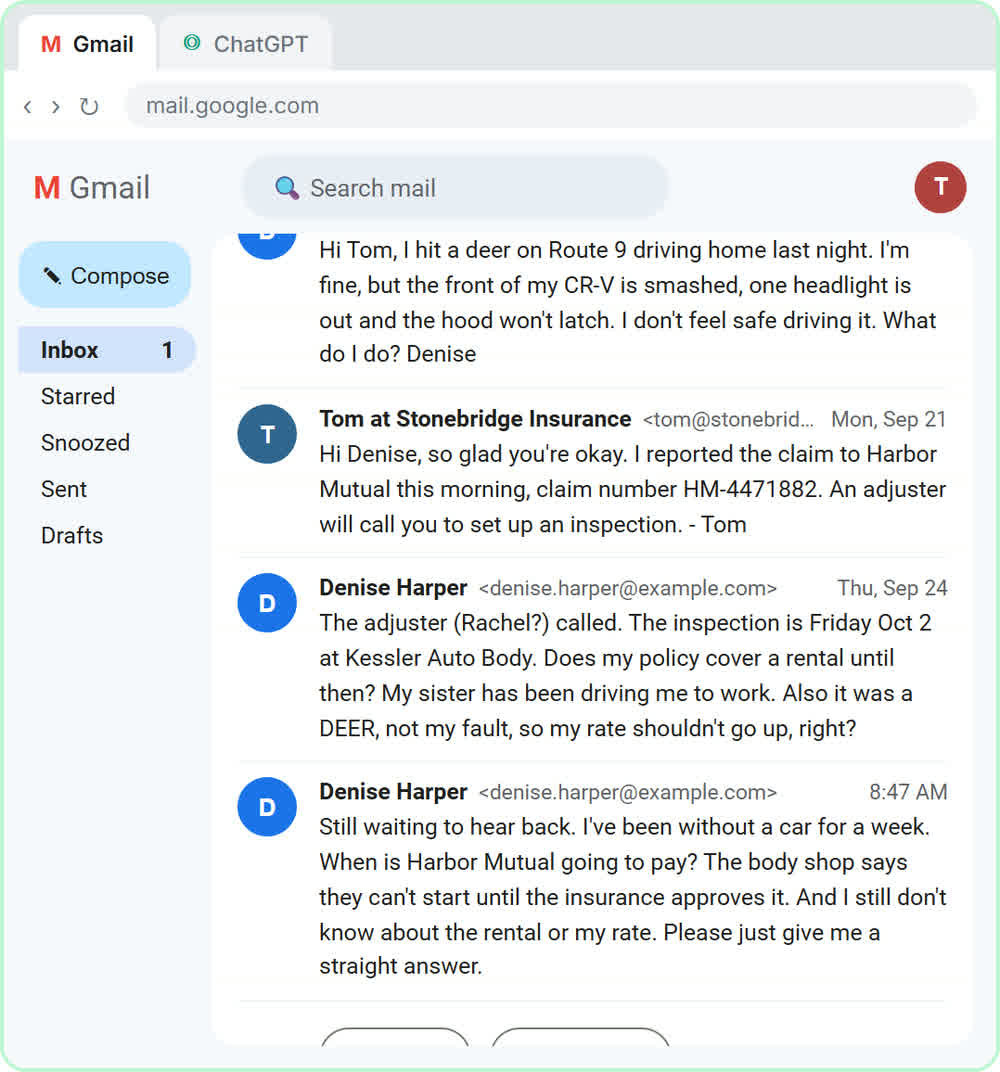
Because the word sounds like a bill they have to pay up front, and because they often don't know which deductible applies. The three questions agency staff hear most:
- "Do I have to pay the deductible before the shop starts?"
- "Which deductible applies to my claim?"
- "Will the deductible change my rate?"
How the deductible is handled depends on the carrier, the policy and the shop, so the answer comes from your facts, not from a general rule. In the lesson's case, the facts say the $500 comes out of the payment.
How do I explain a deductible in a claim email?
State the coverage, the amount and how it's handled, using the policy's own numbers, in one or two sentences. From the lesson's final reply:
"Rachel Moore, your adjuster on claim HM-4471882, inspects your CR-V this Friday, Oct 2, at Kessler Auto Body, then writes the estimate and works with the shop. Your $500 deductible comes out of the payment."
The facts behind that sentence, from the agency's list: "Hitting a deer is a comprehensive claim. Her comprehensive deductible is $500," and "The $500 deductible comes out of the payment." The email doesn't explain insurance in general. It explains this client's deductible on this claim.
How do I get ChatGPT to explain it accurately?
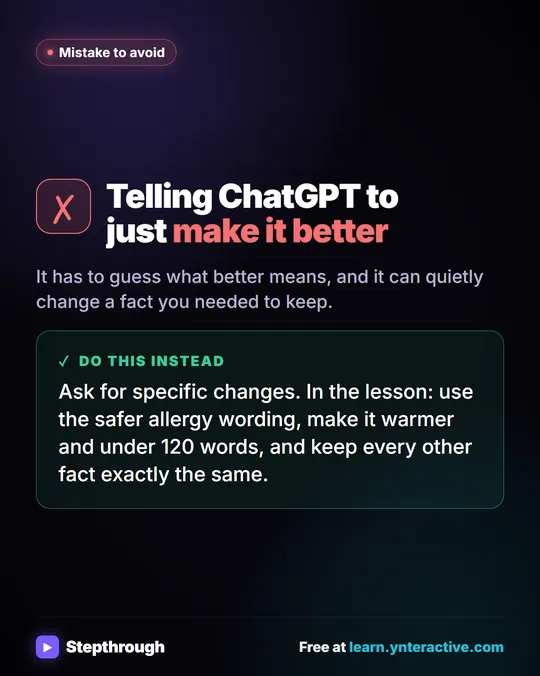
Give it the facts, including who decides what, and make it check the draft. The lesson's routine:
- Paste the thread, oldest message first.
- Paste the facts. The claim number, the coverage type, the deductible amount and how it's handled, the adjuster's name and number, the rental limits from the declarations page, and who decides payment and rates.
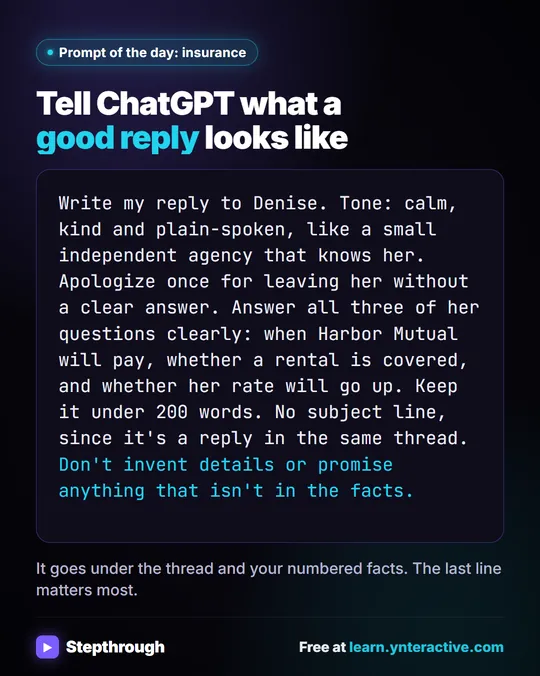
- Paste the instructions. The tone ("calm, kind and plain-spoken"), the three questions to answer, a word limit and "Don't invent details or promise anything that isn't in the facts."
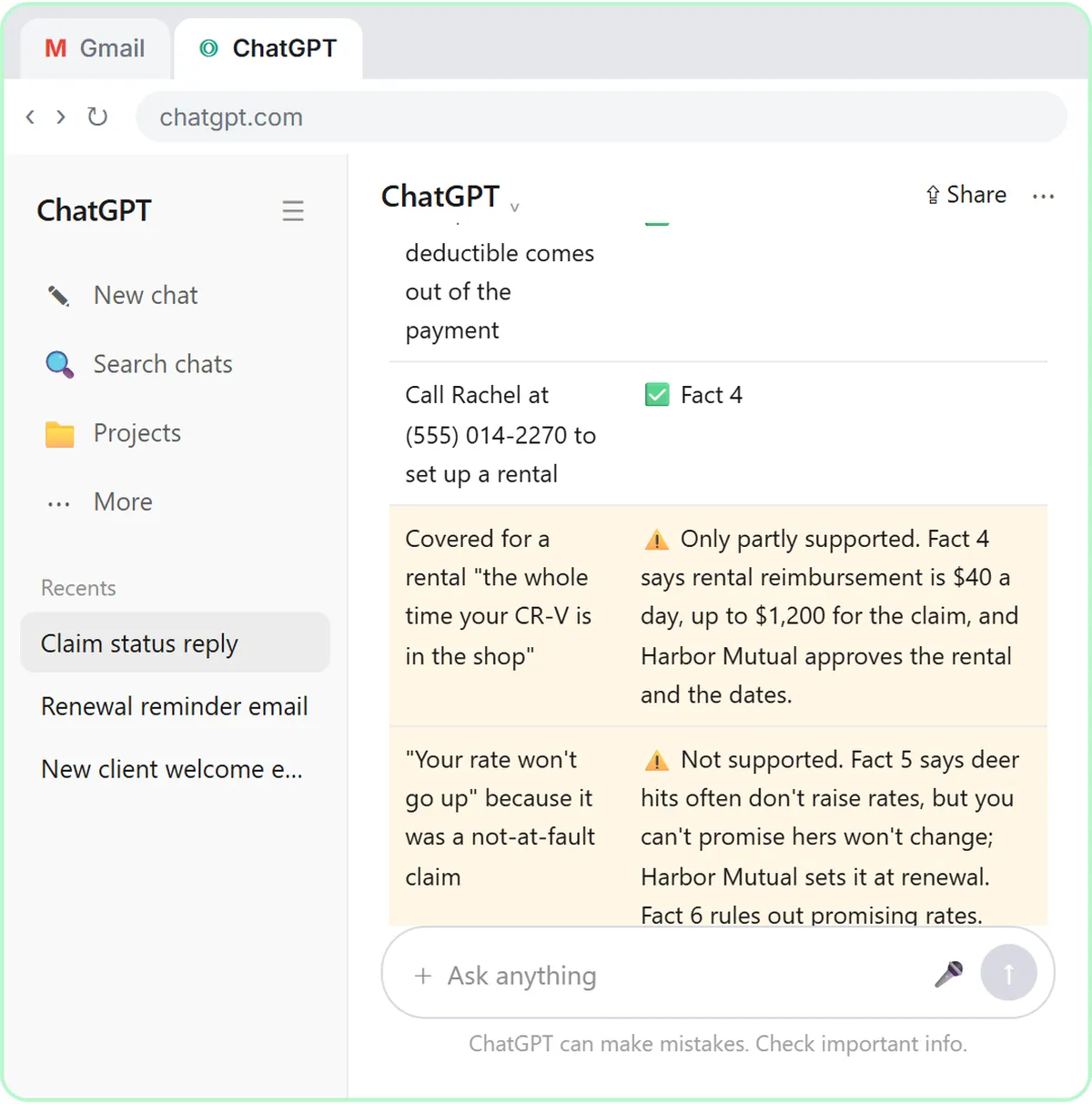
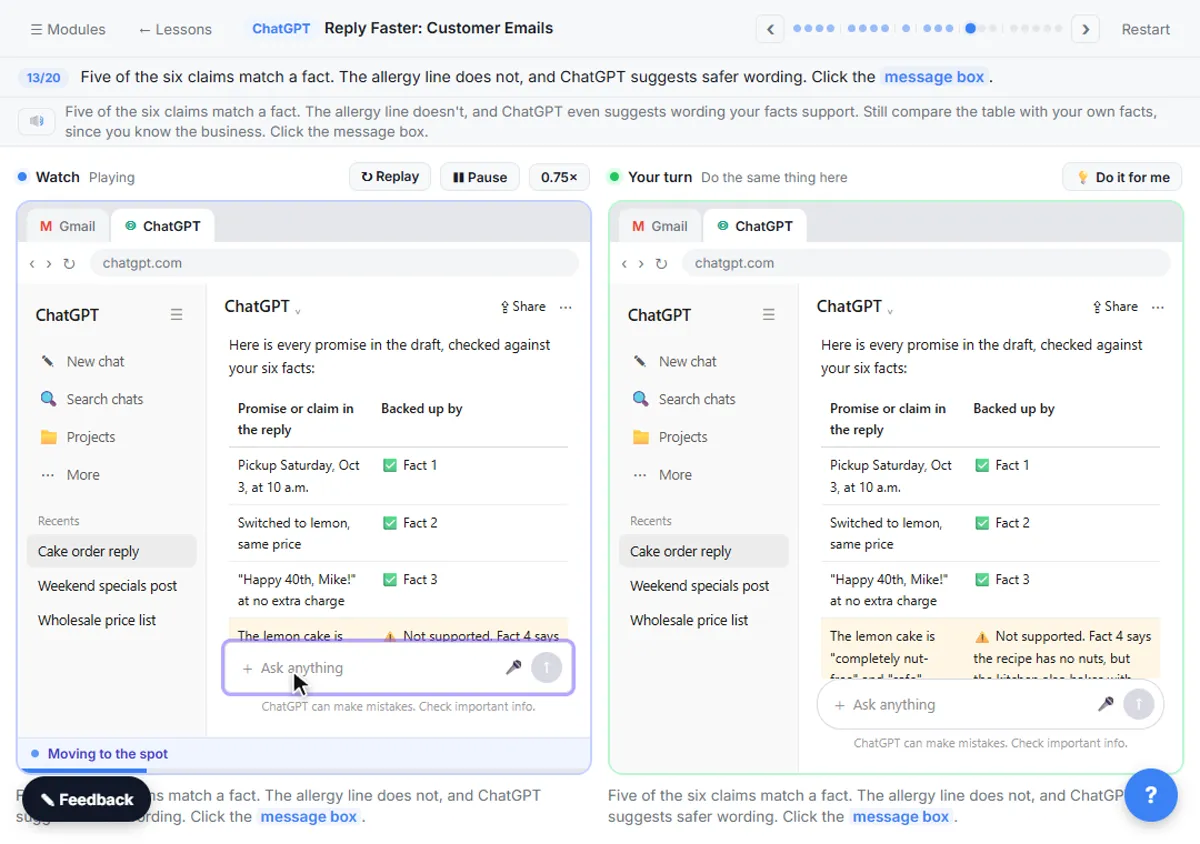
- Check the draft with a table of every claim and the fact behind it.
The agency's key rule, from the facts list: "We explain what the policy shows and who decides. We never promise payment dates, amounts, coverage decisions or rates on the carrier's behalf."
Try it free, step by step
Reply Faster to Claim-Status Emails: ChatGPT for Independent Insurance Agencies. A client with an open auto claim wants a payment date, a rental and a promise about her rate. Give ChatGPT the thread and your agency's facts, catch what it shouldn't promise, and send an honest… You do every step yourself in a practice copy of ChatGPT, it checks your work as you go, and “Do it for me” finishes any step you get stuck on. Free, and nothing touches your real accounts.
Start the free lessonWhat does ChatGPT get wrong in claim emails?
It over-reassures. In the lesson, six of the eight claims in the first draft match a fact. The rental line is only partly supported and the rate promise isn't supported at all. A client asking "my rate shouldn't go up, right?" gets a yes from a model trying to be kind.
The fixed reply handles both honestly:
- Rental: "Your policy includes rental reimbursement of $40 a day, up to $1,200 for this claim. Harbor Mutual approves the rental and the dates, so call Rachel... If you pick a car that costs more than $40 a day, you'd pay the difference."
- Rate: "Deer hits are usually handled as comprehensive claims, which often don't raise rates, but I can't promise yours won't change. Harbor Mutual sets your rate at your Jan 15 renewal, and I'll go over it with you before it takes effect."
Each answer gives the real numbers, names who decides and offers the next step. The rental reimbursement coverage and claims adjuster entries in the glossary explain those terms.
How should a claim email be laid out?
Give each question its own short paragraph, starting with the question itself. The lesson's fix request asks for exactly that: "give each of her three questions its own short paragraph so the answers are easy to find." The final reply opens its paragraphs with "When will you be paid?", "Is a rental covered?" and "Will your rate go up?"
Clients reread claim emails, often more than once. Questions as paragraph openers make the answer easy to find again.
What about client privacy?
Put only what the reply needs into ChatGPT. The claim number, coverage type and amounts are usually enough; leave out policy numbers, driver's license details and anything else the email doesn't use. Follow your agency's policy on AI tools, and use a business account that doesn't train on your data. ChatGPT for Insurance Agencies covers more of the routine, and the same thread, facts, check and fix steps work for any business in Reply Faster: Customer Emails.
Key takeaways
- A deductible is the part of a covered loss the policyholder is responsible for before insurance pays.
- Different coverages on one policy, such as collision and comprehensive, can have different deductibles listed on the declarations page.
- Explain the specific deductible on the specific claim: the coverage, the amount and how the facts say it's handled.
- Give ChatGPT the facts, including who decides payment, coverage and rates, and tell it not to promise anything outside them.
- In the lesson, the check table catches an unsupported rate promise and a partly supported rental line before the email goes out.
Frequently asked questions
- Does the policyholder pay the deductible to the insurance company?
Often not directly. On many car claims it is subtracted from the claim payment. How it works depends on the carrier, the policy and the shop, so check your facts before you explain it.
- Where do I find a client's deductible?
On the declarations page of their policy, which lists each coverage with its limits and deductibles.
- Can ChatGPT tell a client whether their rate will go up?
It shouldn't. The carrier sets rates. Give ChatGPT a fact that says so, and use wording like the lesson's: rates often don't change for this kind of claim, but you can't promise.
- Is it okay to use ChatGPT for claim emails?
Many agencies do, with rules: follow your agency's AI policy, share only what the email needs, and check every promise against the facts before sending.