Small law firms can use ChatGPT to draft client case-update emails by pasting the thread with a numbered list of the firm's facts, then having ChatGPT check every claim so nothing predicts an outcome. This is for solo attorneys, paralegals and office staff who answer client email. The free Reply Faster: Client Case Updates lesson walks through it step by step.
"Did they respond? When is our court date? Are we going to win?" The answers a client most wants to hear are the ones a firm can't give in writing, and ChatGPT, left alone, tends to give them anyway. This post teaches an email routine, not legal advice, and the firm, client, case and dates are made up.
What is the example in the lesson?
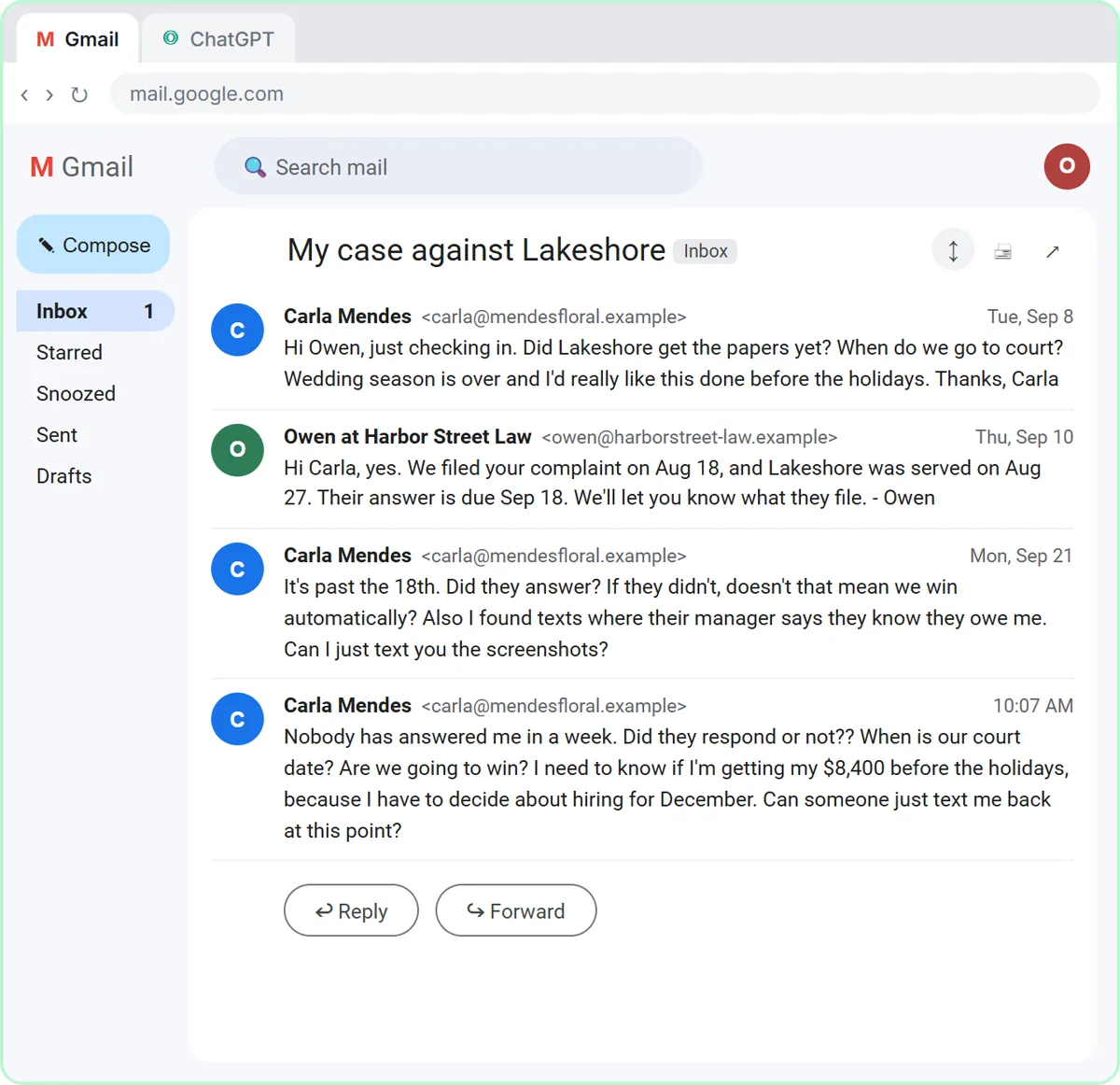
The lesson's example is Carla, a flower shop owner suing an event venue for $8,400, who wasn't told her case deadline moved. The firm is Harbor Street Law, and the venue is Lakeshore Event Hall.
The firm filed her complaint on Aug 18, and Lakeshore was served on Aug 27. The answer was due Sep 18, but Lakeshore's new lawyer asked for two more weeks and the attorney agreed, moving the deadline to Oct 2. Nobody told Carla. She asked if a missed deadline means she wins automatically and whether she can text screenshots, got no reply, and then asked when her court date is and whether she'll be paid before the holidays.
How do I give ChatGPT the case facts?
Paste the thread, then nine numbered facts under the heading "Facts (only say what is here)". First open the thread in Gmail, click Expand all and copy all four messages, after checking your firm's rules for AI tools and leaving out anything the reply doesn't need. The key facts are:
- The complaint was filed in Franklin County Court on Aug 18 for $8,400 unpaid on a signed contract. Lakeshore was served Aug 27.
- The answer deadline was extended as a routine courtesy and is now Oct 2. Nothing has been filed yet.
- A missed deadline is not an automatic win. Next steps could include asking for a default judgment. The judge decides.
- The only date the court has set is a case management conference on Tuesday, Nov 17, at 9:30 a.m., by video. It is a scheduling hearing, not a trial.
- Firm policy: no predictions of the outcome, a settlement or payment, and no legal advice by email.
- Firm policy: no case details or evidence by text or social media. Screenshots go to the secure client portal under Documents, and she keeps the original texts.
The other three facts give two call times with the attorney, admit the firm missed her Sep 21 email, and set the signature: Owen Park, Paralegal. The instructions ask for a calm, warm tone, one apology, no legal advice, under 200 words, and nothing that isn't in the facts.
What does ChatGPT get wrong in the first draft?
ChatGPT's first draft says three things the facts never said: Carla wins by default if Lakeshore misses Oct 2, Nov 17 is the day the judge will hear her case, and her case looks strong so she'll likely have her $8,400 before the holidays. The rest of the draft is friendly and accurate. A draft can sound kind and still predict an outcome.
How do I catch the predictions?
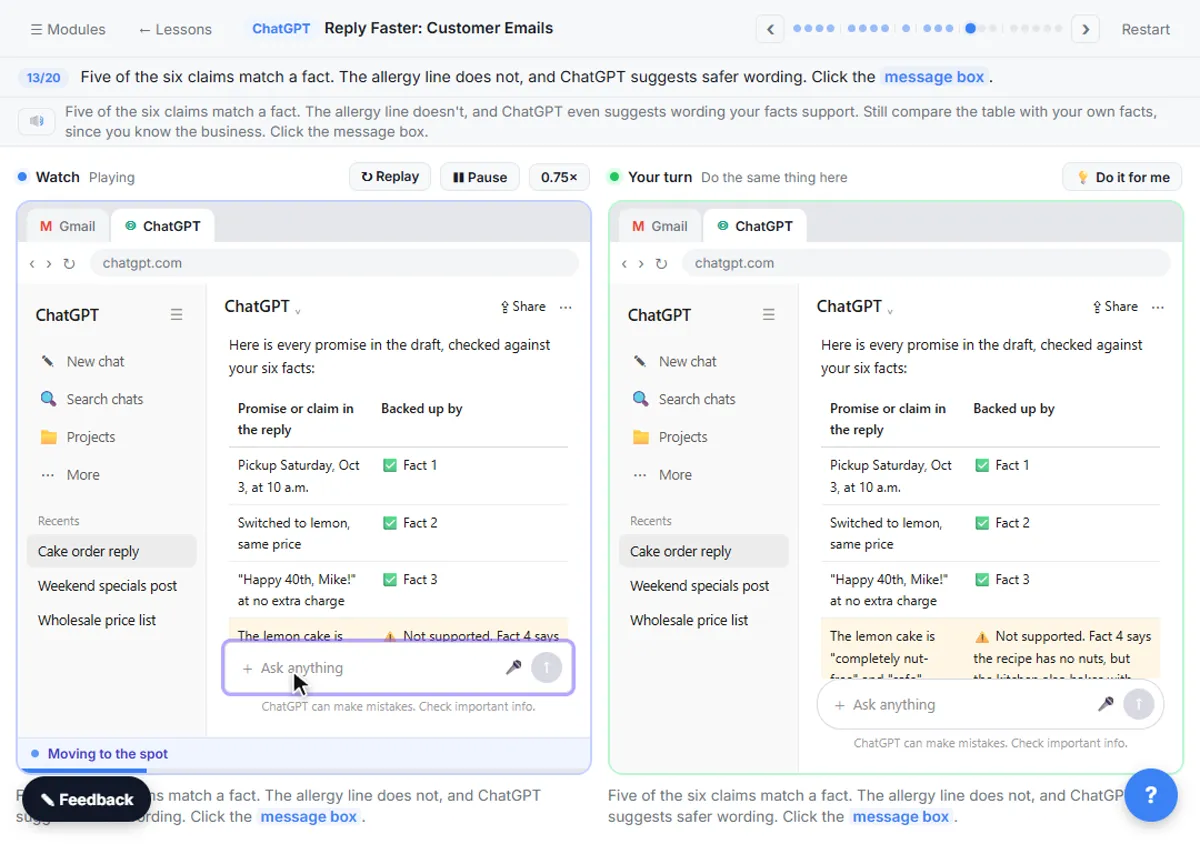
Ask ChatGPT for a table of every promise or claim in its reply, the fact that backs it up, and a flag on anything the facts don't support.
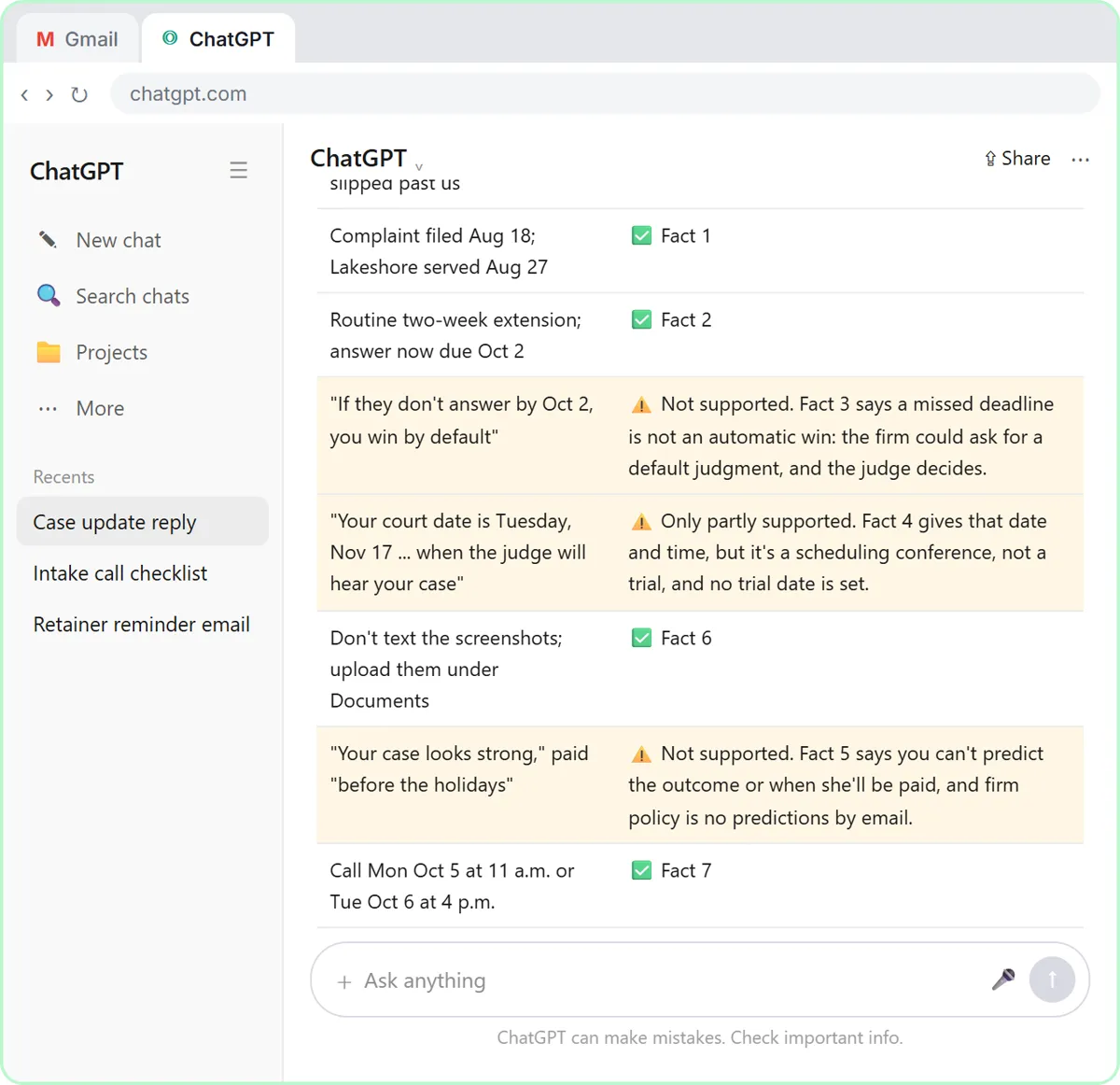
In the lesson's check table, five of eight claims match a fact. The three flagged lines each stretch a real fact: a missed deadline becomes a win, and a scheduling conference becomes a court date. The same pattern shows up with a bakery and an insurance agency in Check AI Email Drafts for Promises Before You Send.
How do I fix the update and send it?
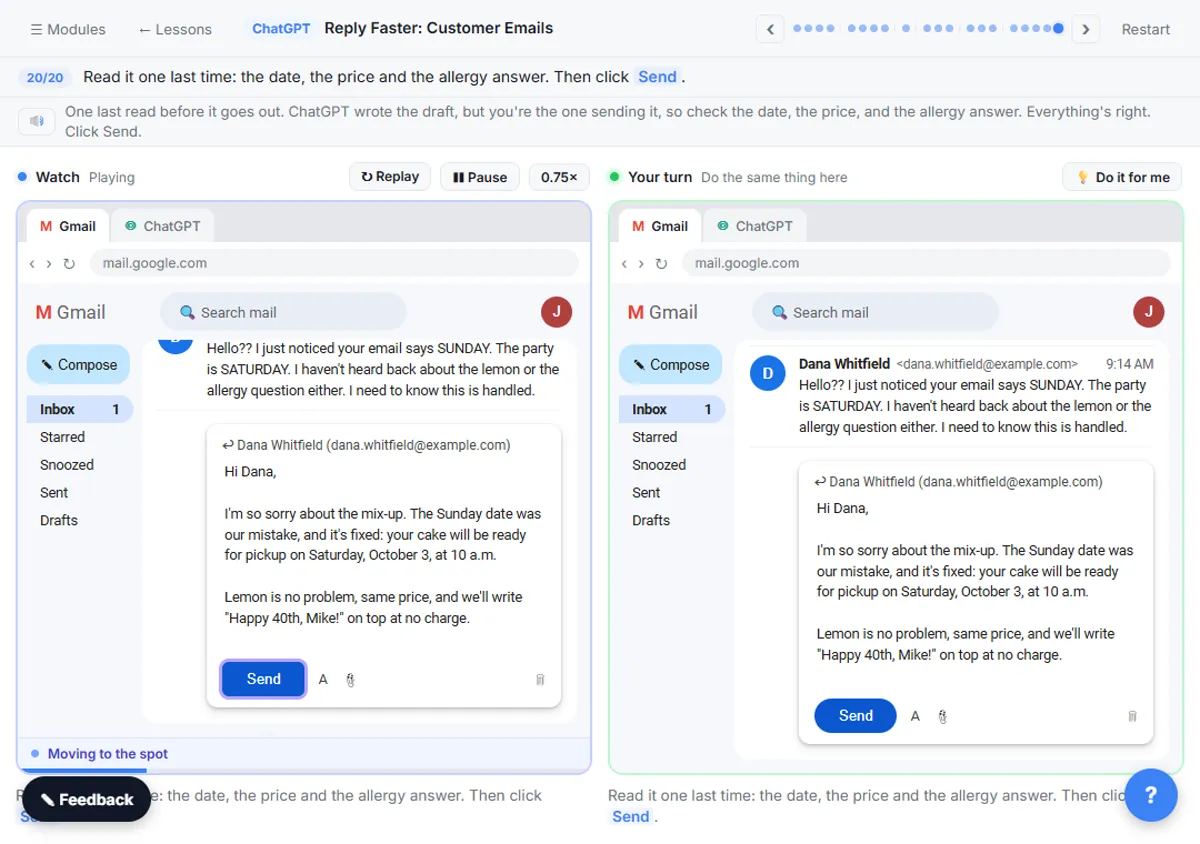
Ask for specific changes: use all three suggested wordings, add the line about keeping the original texts, make it warmer and easier to scan, stay under 200 words, and keep every other fact exactly the same. The final update lists where things stand in four short bullets, acknowledges Carla's December worry without predicting anything, offers two call times, and points her to the client portal. Click Reply under Carla's last message, paste, and read it once more; if an attorney approves client updates at your firm, they read it here too. Then click Send.
Try it free, step by step
Reply Faster to a Client Asking for a Case Update: ChatGPT for Small Law Firms. A client wants a court date and a promise she'll win. Give ChatGPT the thread and your firm's facts, catch the lines that predict an outcome, and send a clear, kind case update from Gmail. You do every step yourself in a practice copy of ChatGPT, it checks your work as you go, and “Do it for me” finishes any step you get stuck on. Free, and nothing touches your real accounts.
Start the free lessonWhy put the no-texting rule in the facts?
When the firm's no-texting rule is in the facts, every draft repeats it instead of saying "sure, send them over." Carla asked to text screenshots, and fact 6 tells ChatGPT that evidence goes only through the secure client portal. Standing rules like "no predictions by email" and "no evidence by text" belong in almost every facts list.
Is it safe to paste client emails into ChatGPT?
Only in line with your firm's AI policy and your jurisdiction's rules. Client emails carry confidential information, so decide what goes into an AI tool before you paste, and leave out anything the reply doesn't need. The ABA's Formal Opinion 512 (July 2024) says lawyers need to understand how a tool uses what they enter, and that informed client consent may be needed before client information goes into a tool that can learn from it.
On ChatGPT Business and Enterprise, OpenAI says it does not train on your chats by default; on personal plans you can turn off "Improve the model for everyone" under Settings, Data controls.
How do I use this at my firm?
Keep a numbered facts list for the updates you send most, with the lines that never change (no predictions, how clients send documents) plus the case-specific ones. Read every reply, check each date against the court's notice, and have the attorney approve it if that's your practice. The same routine for everyday customer email is in Reply Faster, and there are more ChatGPT tutorials.
Key takeaways
- ChatGPT can draft client case-update emails when you paste the thread with a numbered list of the firm's facts.
- ChatGPT's first draft in the lesson said "you win by default," called a scheduling conference a court date, and said the case looks strong.
- A table of every claim and the fact behind it flagged all three predictions: five of eight claims matched, three did not.
- Firm rules such as "no predictions by email" and "no evidence by text" belong in the facts list so every draft follows them.
- ABA Formal Opinion 512 says lawyers need to understand how an AI tool uses what they enter, and client consent may be needed.
Frequently asked questions
- Can ChatGPT write case-update emails for my law firm?
ChatGPT can draft them. Paste the thread and a numbered facts list, have ChatGPT check every claim, and treat every reply as a draft that someone at the firm reads and approves.
- How do I stop ChatGPT from predicting the outcome of a case?
Put "we can't predict the outcome or when you'll be paid" in your facts and "no legal advice" in your instructions, then ask for a claim-by-claim table. In the lesson the table flagged "you win by default" and "your case looks strong."
- Does this lesson give legal advice?
No. The lesson teaches an email routine. The firm, client, case, deadlines and court date are made up, and the firm's rules are the example's own policy.
- Is the lesson free?
Yes. The practice copy needs no accounts. To do it for real you need your own ChatGPT and email accounts; ChatGPT has a free plan and paid plans.