Here's the problem it solves. After a board meeting, someone has to write the minutes and chase the follow-ups, and at most small organizations that someone is the executive director or a volunteer with a day job. Minutes go out a week late, nobody remembers who promised what, and the next meeting starts by re-arguing what was already decided. A transcript plus an AI first draft gets the recap out the same day.
What is board meeting transcription?
It is a written, word-for-word record of what was said in a board meeting, made from the audio by a person or by speech-to-text software. A meeting transcript is the raw material. It is not the minutes: meeting minutes are the short official record of decisions and actions that the board approves at its next meeting.
That difference matters for boards. Minutes are usually kept as an official record; a transcript captures everything, including side comments and draft ideas nobody meant to put in the record. Decide in advance whether you keep the transcript at all, or use it only to write the minutes and then delete it.
How do I transcribe a board meeting, step by step?
- Check your rules first. Some boards have bylaws or policies on recording, and some laws require everyone's consent before a call is recorded. Ask your chair or counsel if you are not sure.
- Tell the room. Announce at the start that the meeting is being transcribed and what the transcript will be used for. Most meeting tools also show a notice to everyone when transcription starts.
- Turn on the transcript. In a video meeting, use the built-in transcript if your plan includes it. For an in-person meeting, record on a phone or room microphone and run the file through a transcription tool. Name speakers at the start so the transcript can label them.
- Clean out what does not belong. Before the transcript goes into any AI tool, remove donor names, personnel matters and anything discussed in executive session.
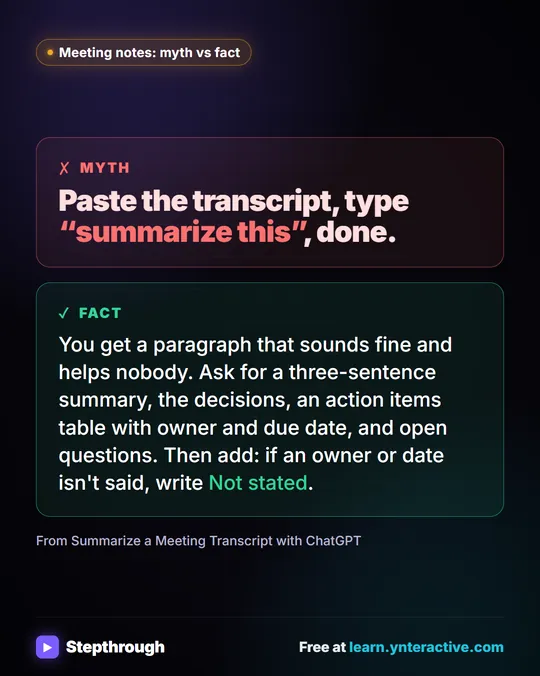
- Ask for draft minutes, not a summary. Ask for decisions, an action table (task, owner, due date) and open questions.
- Check and fill gaps. Compare every decision and date against the transcript. If nobody said a due date, you set it.
- Send the recap, then approve the minutes. The recap email goes out the same day; the formal minutes go to the next meeting for approval.
The guide to getting a transcript of a meeting covers the settings in each tool.
How do I turn a board meeting transcript into minutes with AI?
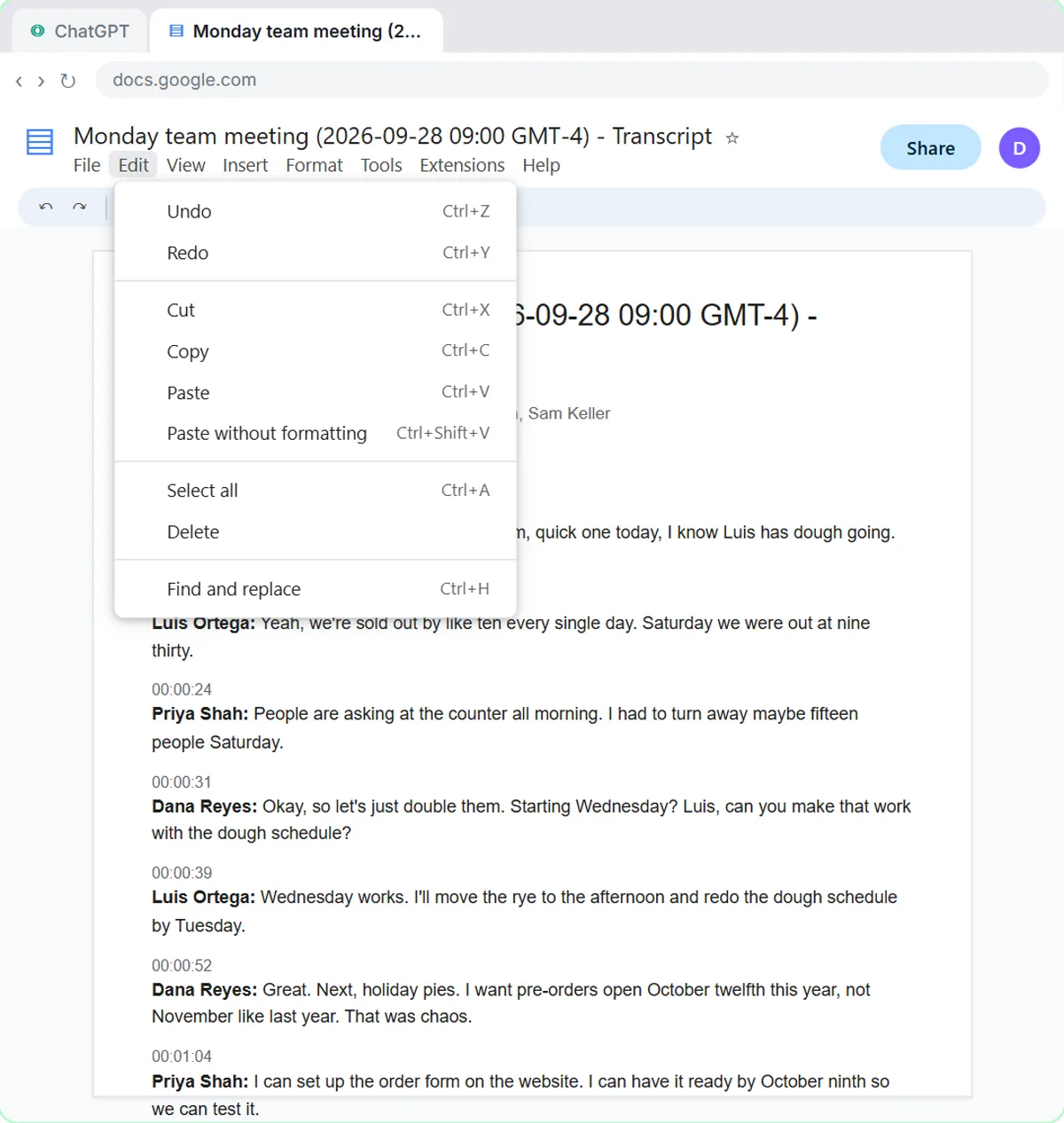
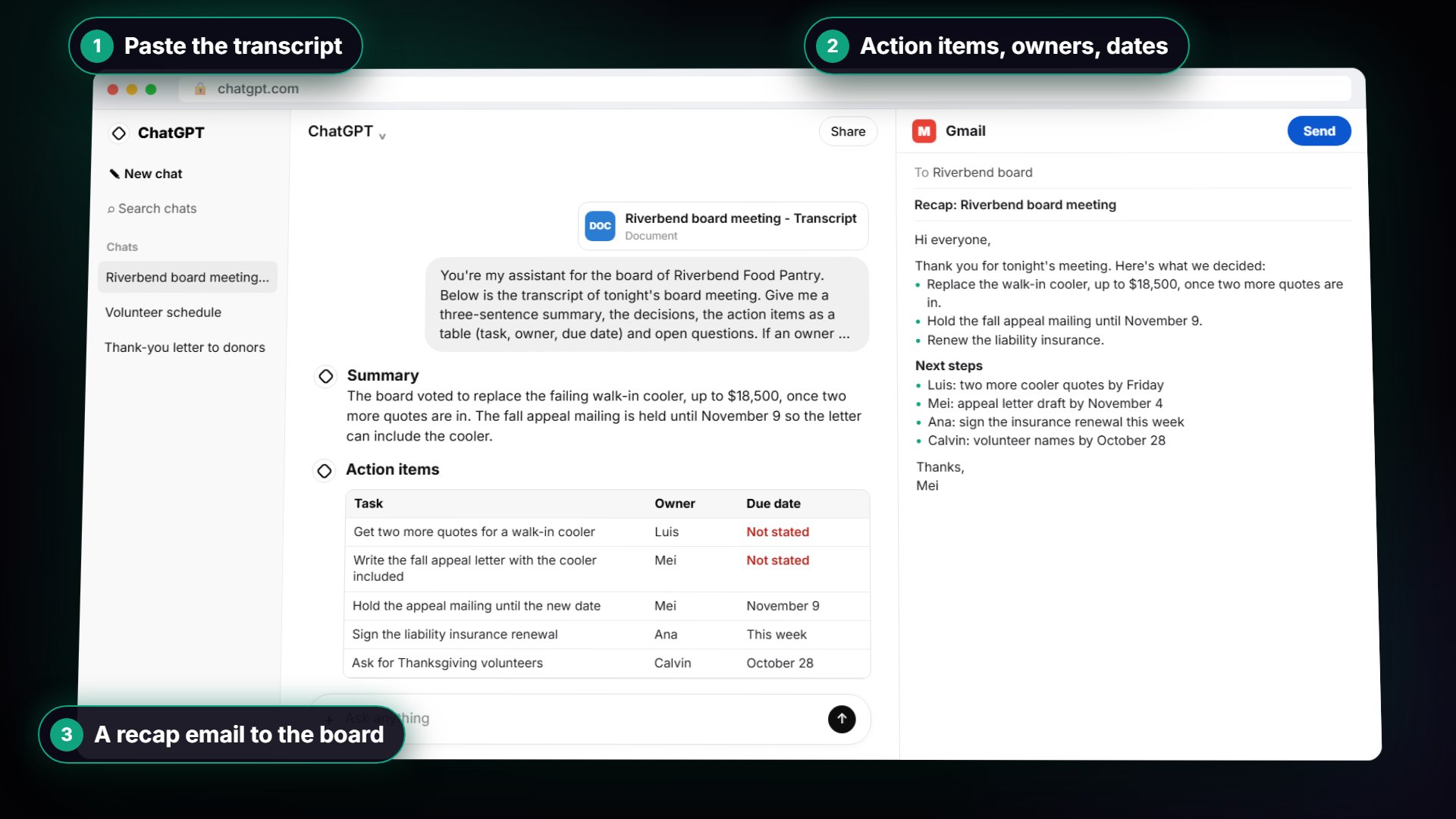
In the board meeting recap lesson, the Riverbend Food Pantry, a made-up nonprofit, has a saved transcript of its board meeting. You give ChatGPT the transcript and ask for a short summary, the decisions, an action table with an owner and a due date, and the open questions.
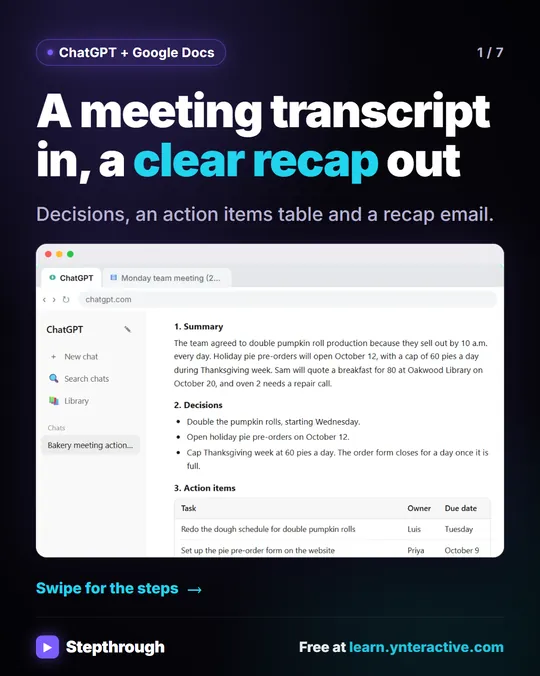
ChatGPT returns a three-sentence summary, three decisions, six action items and two open questions. Two of the action items, the extra cooler quotes and the appeal letter draft, had no due date in the meeting, so you fill those dates in yourself rather than letting ChatGPT guess. Then ChatGPT turns the result into a short, friendly recap email to the board.
That one habit, filling in dates nobody said, is the difference between a useful draft and a source of blame. Board members take a date in the minutes at face value. The AI meeting minutes template has a request you can reuse, and the board meeting minutes prompt is ready to copy.
Is AI transcription accurate enough for board minutes?
It is good enough to draft from, not good enough to approve without reading. Speech-to-text struggles with crosstalk, names, acronyms and people far from the microphone, and an AI summary can misplace who said what. Treat the AI output as the secretary's first draft:
- Check every motion, vote and decision against the transcript.
- Check names and numbers, especially money.
- Keep minutes short. Record what was decided, not every argument.
The meeting minutes vs meeting summary guide explains what belongs in each.
Is it safe to put a board meeting transcript into ChatGPT?
Only if your organization's policy allows it and you use an approved account. Board meetings often include donor details, personnel matters, legal advice and financial results that are not public yet. Remove what the minutes do not need before you paste, use a plan whose data settings your organization has checked, and leave executive session content out entirely. A short team AI policy is the easiest way to make that rule once.
Can I automate board meeting minutes?
Partly. Once the habit works by hand, a workflow can take over the follow-ups. In the n8n meeting notes to tasks lesson, an n8n workflow reads meeting notes from a Google Sheet, asks OpenAI for every action item with its owner and due day, and adds one row per task to an Action Items sheet. Keep a person between the draft and the board: automation should create a draft for the secretary, never send minutes by itself.
Key takeaways
- Board meeting transcription gives you a word-for-word record; minutes are the short, approved summary of decisions.
- Check your bylaws and consent rules, and tell the room before you transcribe.
- Ask AI for decisions, an action table with owners and dates, and open questions.
- Fill in any due date nobody said yourself, and check every decision against the transcript.
- Remove confidential and executive session content before using any AI tool.
Frequently asked questions
- Can AI take board meeting minutes?
AI can draft them from a transcript: decisions, action items with owners and dates, and open questions. The secretary checks the draft, and the board approves the final minutes.
- What does "this meeting is being transcribed" mean?
It means the meeting tool is turning what people say into written text as the meeting runs. The notice tells everyone so they know a written record exists. See what a meeting transcript is.
- Should board meetings be recorded?
It depends on your bylaws, your local law and your board's preference. Some boards record only to write minutes and then delete the recording. Decide the rule in advance and tell members.
- Are board meeting transcripts public?
For most private companies and nonprofits, no, but some public bodies have open-records rules. Ask your counsel, and remember a transcript may be discoverable in a dispute.
- What is the best tool for board meeting transcription?
The one built into the meeting platform your board already uses is usually the simplest. For more features, compare AI meeting note takers.
- Is Riverbend Food Pantry a real organization?
No. Riverbend Food Pantry is a made-up nonprofit used in the lesson.