ChatGPT for Electricians: Build an Electrical Bid Writer
A bid for a panel upgrade has to explain the scope, the permit, the inspection and why the price is a range. Plain ChatGPT gives you hashtags instead. In this free lesson you build an Electrical Bid Writer for Oak & Wire Electric, a Custom GPT that writes bid descriptions from your own services guide.
What you will build: a Custom GPT bid writer for electricians
You begin with a plain ChatGPT prompt: write a bid description for a 200-amp panel upgrade. The answer reads like an ad, not a bid, and it ends in a pile of hashtags. There is no scope of work, no permit and no price.
Then you build a Custom GPT called Electrical Bid Writer, loaded with bid-writing rules and the Oak & Wire Services & Pricing Guide. Same prompt, new answer. It opens with why the job is needed: the 100-amp panel is not enough for the heat pump and EV charger the homeowner is planning. It lists the scope in order: pull the permit and coordinate the service disconnect with the utility, replace the panel and meter base, update grounding and bonding, install AFCI and GFCI breakers where code requires with a plain explanation of what those do, label every circuit and schedule the inspection. It warns that power will be off most of one day, gives an estimated price of $2,800 to $4,200, explains what could change it, and asks the customer to book a free site visit.
Who this is for
Owners and office staff at small residential and light-commercial electrical contractors who write bids at night after the service day is done. If you are tired of retyping the same panel upgrade scope, or of explaining GFCI versus AFCI on the phone, this lesson is for you. No AI experience needed.
Step by step: what you do
- Ask ChatGPT: paste the bare panel upgrade prompt and read the generic reply.
- Explore GPTs: open More, click GPTs, then + Create.
- Name your GPT: Electrical Bid Writer.
- Add instructions: paste the bid rules for Oak & Wire Electric.
- Upload knowledge: in Google Drive, open the Bids & Estimates folder, preview Oak-and-Wire-Services-Pricing.pdf and click Select to attach it.
- Test your GPT: send the same prompt again and compare.
The bid rules you give it
The instructions tell the GPT to sound like an experienced electrician explaining the job to a homeowner: clear, calm and honest. Explain AFCI, GFCI and load calculation in a few words. No emojis and no hashtags, because a bid is a business document. Banned words include cutting-edge, state-of-the-art, unbeatable and best in town.
Every bid starts with one sentence on what the job is and why, lists the scope in the order the crew will do it, says who pulls the permit and that the work is inspected, and ends with a price range, what could change it and one next step. Never quote a single fixed price before a site visit. Never promise inspection results or utility timelines; say 'we schedule' or 'we coordinate'. The pricing guide holds the ranges for panel upgrades, Level 2 EV chargers, whole-home surge protectors, GFCI/AFCI updates per circuit, LED retrofits per fixture and first-hour troubleshooting.
Why it works
Electrical bids carry risk that other trades' quotes do not: permits, utility coordination, inspections and code changes. The rules keep the GPT from promising what you cannot control, like an inspection date or a utility reconnect. The ranges keep it from quoting a fixed number before anyone has looked at the meter location or the old wiring.
Common bid-writing mistakes this avoids
- Promising an inspection result. An inspector's call is not yours to make. The GPT says 'we schedule the inspection', never that it will pass on a certain day.
- Promising a utility date. Service disconnects and reconnects depend on the utility. The GPT says 'we coordinate' instead of naming a date.
- A single number before a site visit. A panel swap in a finished basement is not the same job as one on an outside wall. Ranges protect you and set honest expectations.
- Leaving out the outage. Customers are rarely told the power will be off most of a day. The sample bid says so up front and promises the date in advance.
- Unexplained code items. AFCI and GFCI breakers get one plain sentence each, so the homeowner understands why they are on the bid and does not treat them as upsells.
- Hype. Words like state-of-the-art and best in town are banned, because they make a safety document sound like an ad.
How to use this in your electrical business
Put in your own services, ranges, license details and a sample bid. Then paste the notes from a site visit and let the GPT draft the scope for you to check. It is most useful for the jobs you bid again and again right now: panel upgrades ahead of heat pump conversions, Level 2 EV chargers in attached garages, and surge protectors after a storm. Because the answers are in plain words, the same GPT can help you reply to a homeowner who asks why a charger install needs a bigger panel.
Frequently asked questions
- Can ChatGPT write electrical bids?
- It can draft the bid description if you give it your rules and price ranges. In this lesson it writes the scope, permit and inspection steps and a price range. You still check the scope against what you saw on site.
- Will it quote a fixed price?
- No. The instructions say to use ranges from the services guide and never quote a single fixed price before a site visit.
- Is Stepthrough free?
- Yes, completely free. To build the GPT for real you need your own ChatGPT account, and creating Custom GPTs may require a paid plan. Check OpenAI's current plans.
- How does the interactive lesson work?
- Each step is shown to you first on the left (Watch). Then you do it yourself in a practice copy on the right (Your turn), and every click is checked. If you get stuck, press Do it for me. It is a practice copy, so no real accounts are touched.
- How long does the lesson take?
- About 8 minutes across 16 steps.
More in AI Automation for Electricians
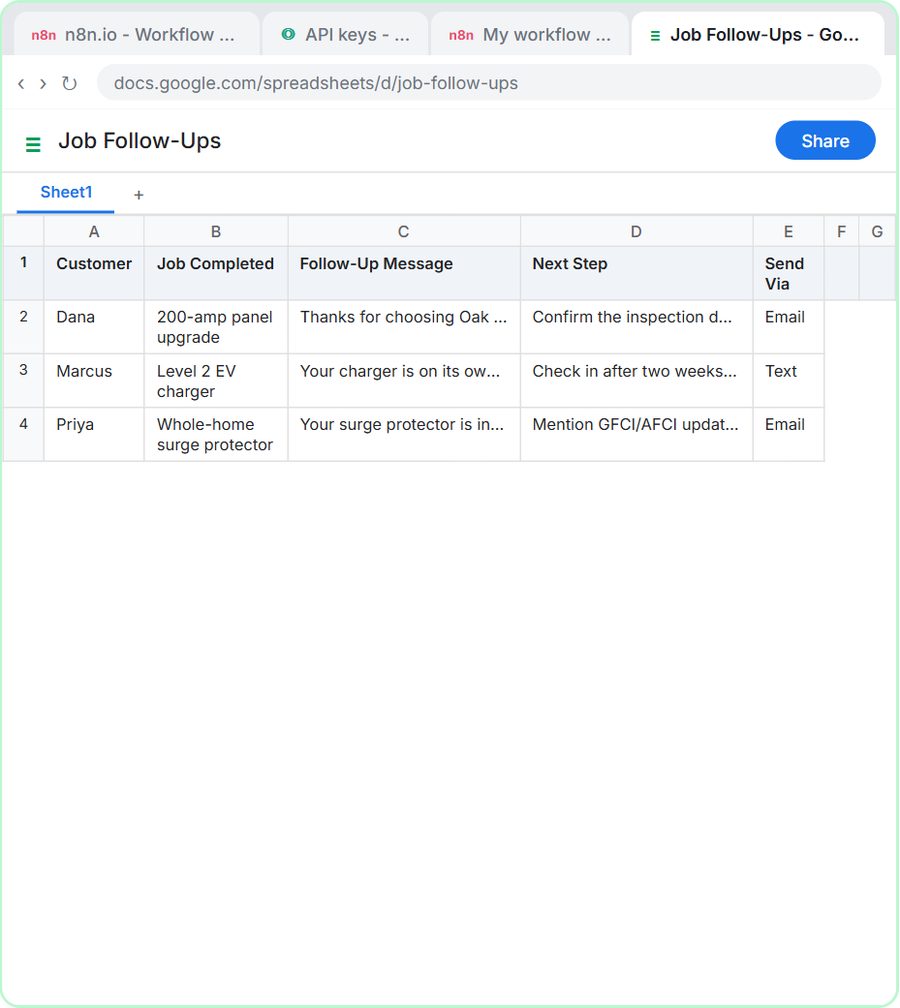 Build an AI Job Follow-Up Agent for Electricians
Build an n8n AI agent that writes a follow-up after each finished electrical job, with next steps, and saves it to Google Sheets. Free, step by step, no code.
Free · Live
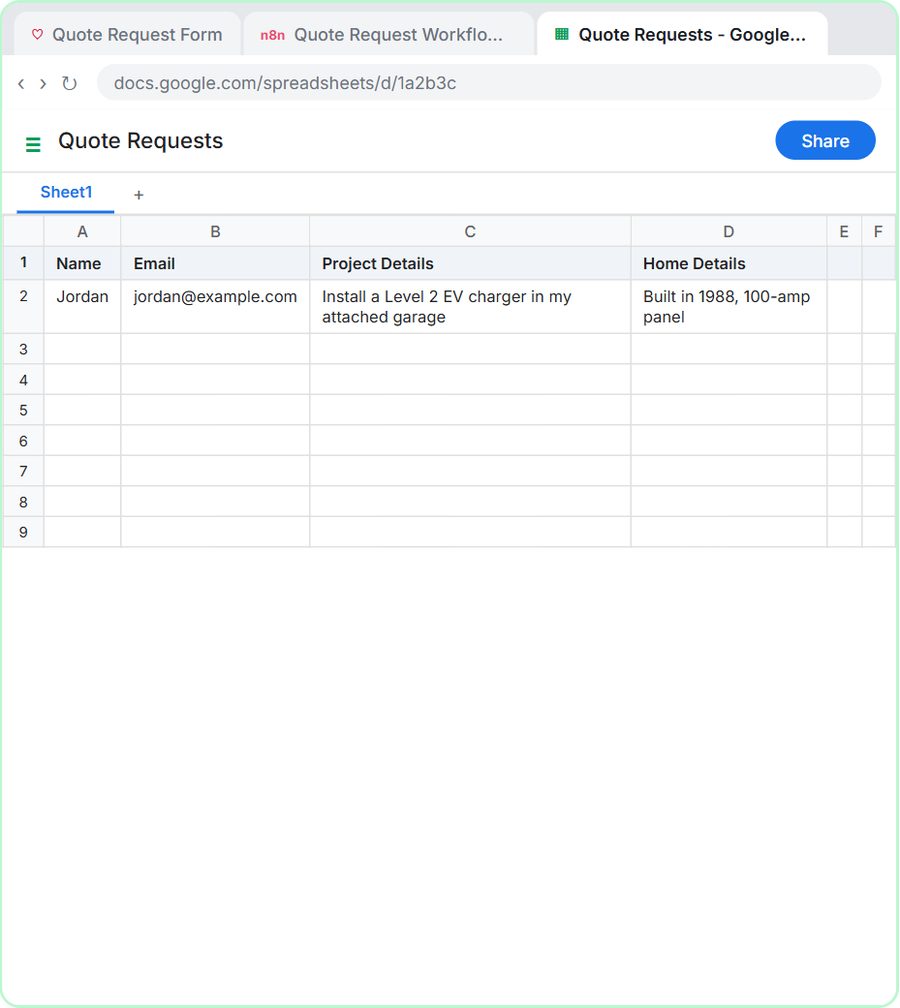 Build an AI Quote Request Form for Electrical Contractors
Build a quote request form that logs each electrical job and emails the customer an initial estimate range within minutes. Free, step by step, no coding.
Free · Live