The weeks around Thanksgiving and the December holidays are when a small bakery's inbox fills with pre-orders, changes and "just checking" emails, and when the team has the least time to talk. Neither routine needs anything beyond a ChatGPT account.
How can a bakery use ChatGPT for customer order emails?
Paste the whole email thread, a numbered list of facts the shop can actually promise, and a short description of a good reply; then have ChatGPT check its own draft before you send it. The lesson's example is Cedar Lane Bakery, a made-up neighborhood shop.
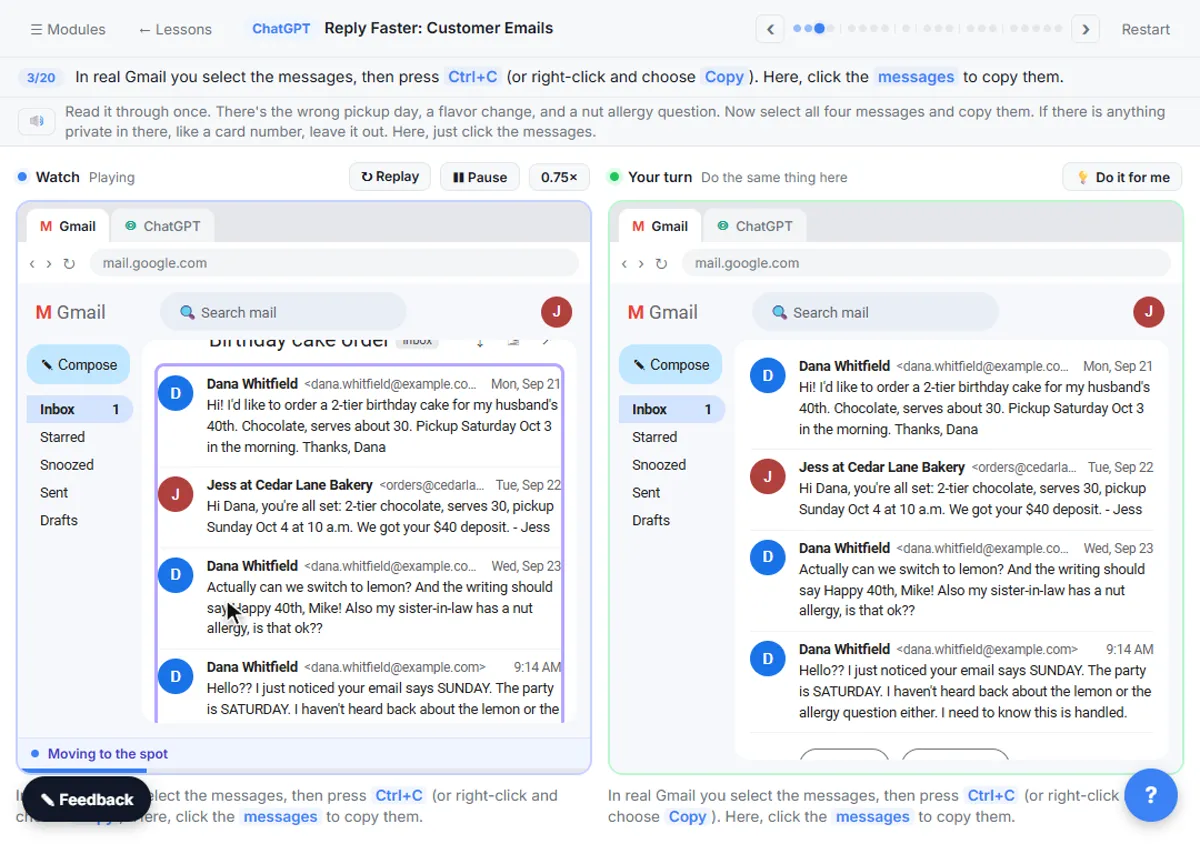
The order has gone sideways in a very bakery way. Dana ordered a 2-tier chocolate birthday cake for about 30 people, pickup Saturday, Oct 3. The confirmation said Sunday. Then she asked to switch to lemon, asked for "Happy 40th, Mike!" on top, and asked whether the cake is okay for a sister-in-law with a nut allergy. Her last email: "I need to know this is handled."
Start by opening the thread in Gmail and clicking Expand all (the double-arrow icon) so you copy every message, not just the newest one. Leave out anything private, like a card number.
What facts should a bakery give ChatGPT?
Give ChatGPT every fact the reply may promise: the date and time, the price, what's changing, what you can and can't say about allergens, and any discount the owner approved. The lesson's list starts with "Facts (only promise what is here):"
- Pickup can move to Saturday, Oct 3, at 10 a.m.
- Lemon is fine, same price: $120 total.
- "Happy 40th, Mike!" on top is fine, no charge.
- The lemon recipe has no nuts, but the kitchen also bakes with nuts, so the bakery can't promise any cake is nut-free.
- The Sunday date was the bakery's mistake. The owner approved 10% off the $80 balance, so $72 is due at pickup.
- Sign it: Jess, Cedar Lane Bakery.
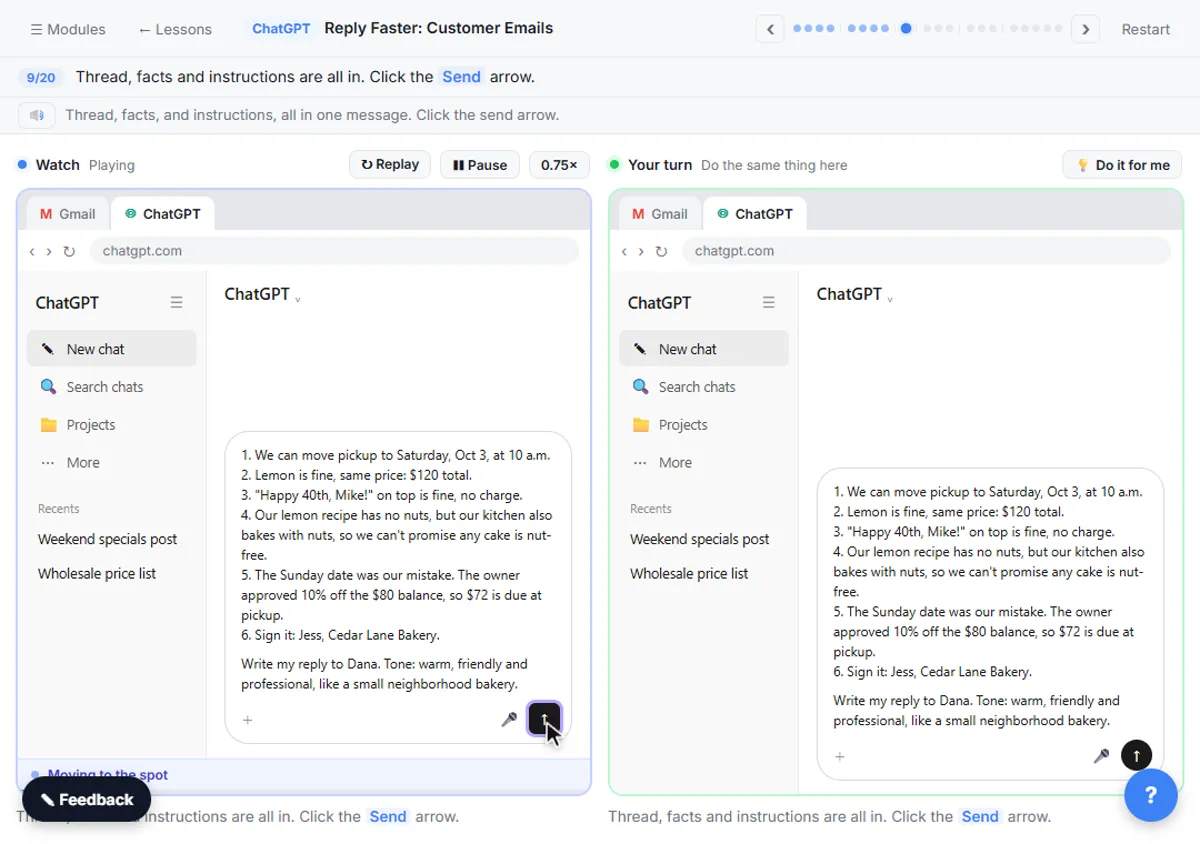
Then say what a good reply looks like. The lesson's instructions ask for a tone that's "warm, friendly and professional, like a small neighborhood bakery," one apology for the date mix-up, a clear answer to all three questions, under 150 words, no subject line, and "Don't invent details or promise anything that isn't in the facts."
How should a bakery handle allergy questions in AI replies?
Write the allergy answer yourself, as a fact, and make sure the final email uses your wording. ChatGPT's job is to say it kindly, not to decide what's true about your kitchen.
In the lesson, the first draft is good in every way except one: it calls the cake completely nut-free. That isn't in the facts. A draft can sound careful and still promise too much. So you ask ChatGPT to "Make a table of every promise or claim in it and the fact that backs it up. Flag anything the facts don't support." Five of six claims match. The allergy line doesn't, and ChatGPT suggests wording the facts do support.
The final reply says: "our lemon recipe has no nuts, but our kitchen also bakes with nuts, so we can't guarantee the cake is nut-free. I wanted you to know so your sister-in-law can decide what's right for her."
What your bakery says about allergens is your own call and your own policy. This post isn't food-safety advice. The point is simply that whatever your approved wording is, it should go into the facts list word for word, and the check should confirm the draft didn't soften or stretch it. Check AI Email Drafts for Promises covers the check in more depth.
Try it free, step by step
Reply Faster: Turn a Messy Customer Email Thread into a Clear, Friendly Reply. Turn a messy customer email thread into a clear, friendly reply: give ChatGPT the thread and your facts, check every promise, fix the tone, and send it from Gmail. You do every step yourself in a practice copy of ChatGPT, it checks your work as you go, and “Do it for me” finishes any step you get stuck on. Free, and nothing touches your real accounts.
Start the free lessonHow do you fix the tone without changing the facts?
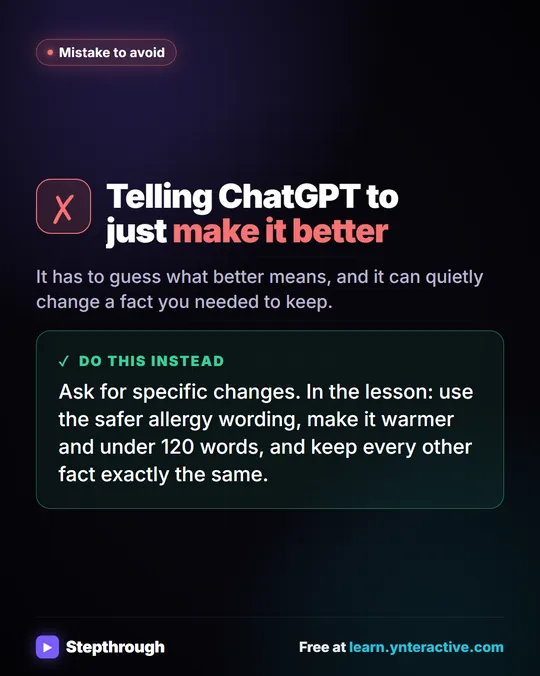
Ask for one specific change and tell ChatGPT to keep every fact the same. The lesson's fix prompt: "Use that allergy wording. Then make the whole reply a little warmer and shorter, under 120 words. Keep every other fact exactly the same. Reply with just the email."
Then copy the reply, click Reply under the customer's last message in Gmail, paste it, and read it one last time: the date, the price and the allergy answer. ChatGPT wrote the draft, but you're the one sending it.
How can ChatGPT summarize a bakery team meeting?
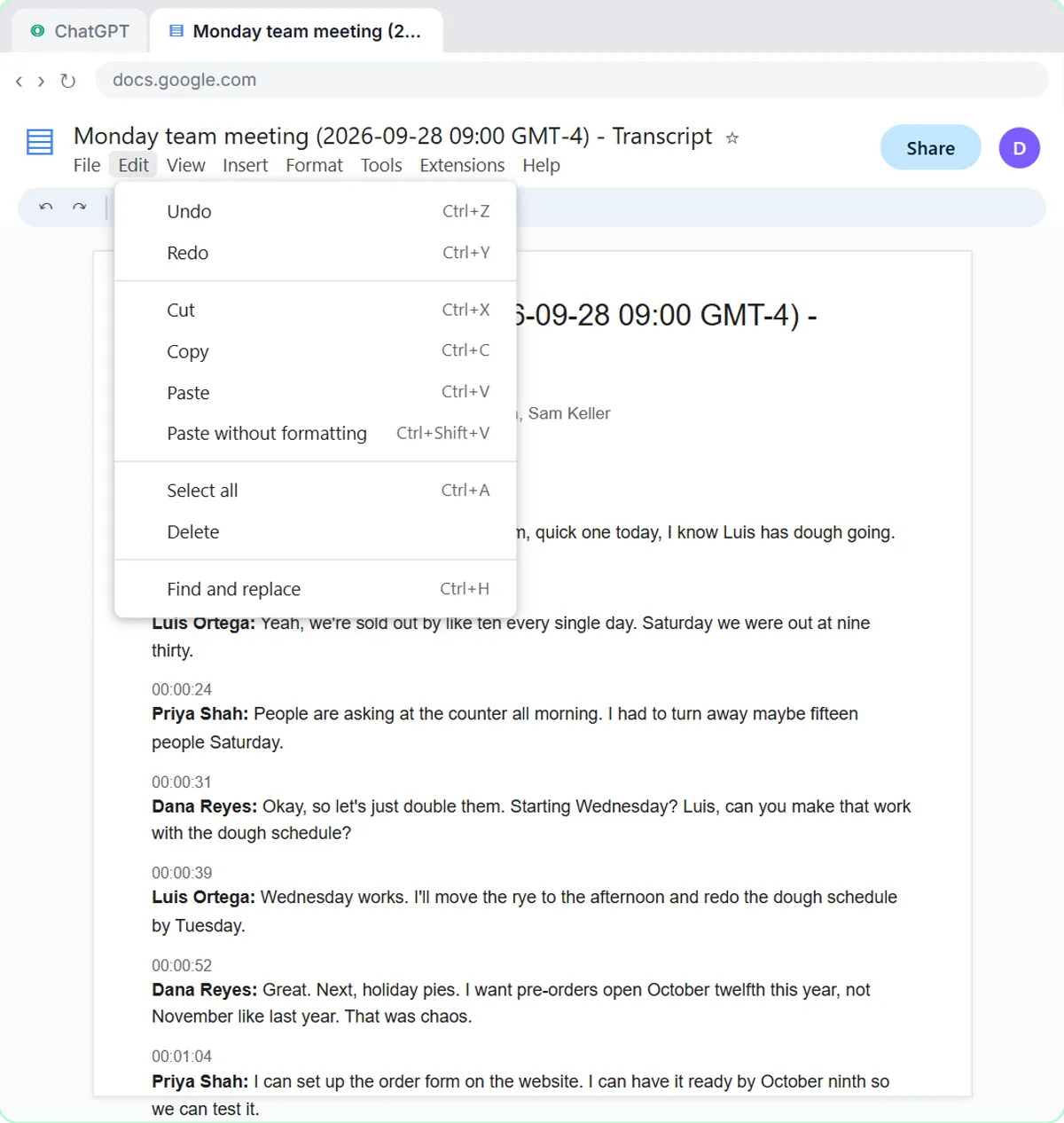
Paste a request and the meeting transcript into ChatGPT and ask for a summary, the decisions, an action items table with owners and due dates, and open questions. The meeting lesson uses a Monday meeting at Harbor Street Bakery, another made-up shop, saved by Google Meet as a Google Doc.
Four people cover a lot in two minutes:
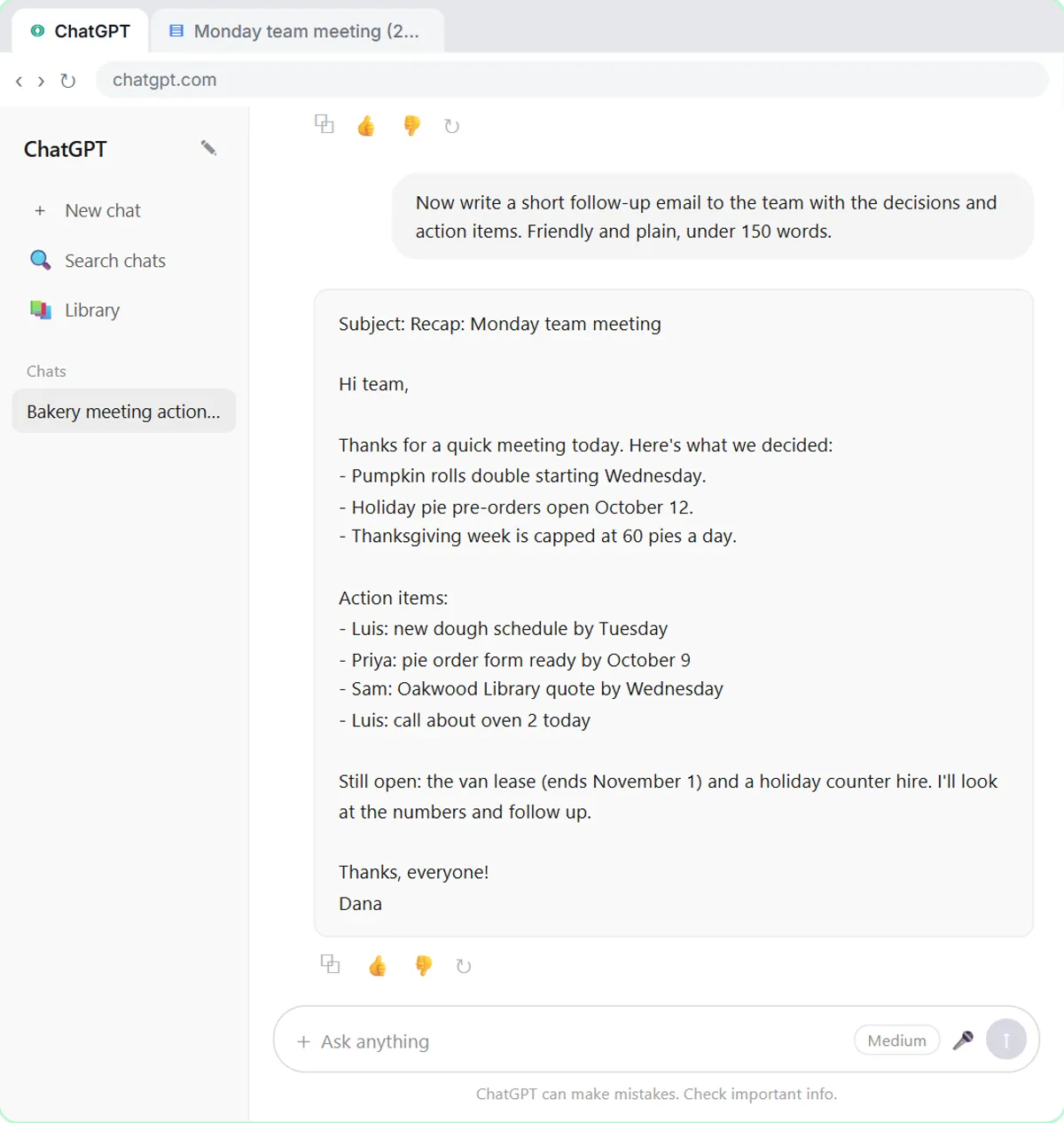
- Pumpkin rolls sell out by ten, so they're doubled starting Wednesday. Luis will redo the dough schedule by Tuesday.
- Holiday pie pre-orders open October 12. Priya will have the website order form ready by October 9 for testing.
- Pre-orders are capped at 60 pies a day for Thanksgiving week, and the form closes for a day once it's full.
- Oakwood Library wants breakfast for 80 people on October 20. Sam will put a quote together.
- Oven two is clicking again. Luis will call the repair company.
- Still open: whether to renew the van lease (up November 1) and whether to hire holiday counter help.
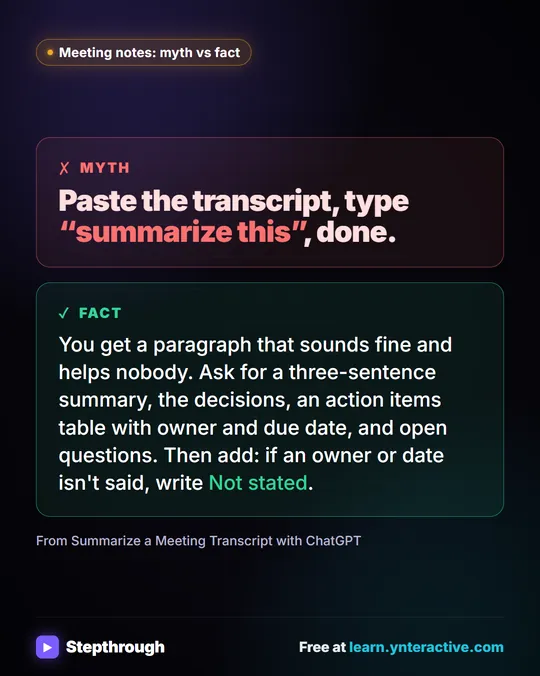
The request's last line does the most work: "Only use what's in the transcript. If an owner or date isn't said, write 'Not stated'."
Why does "Not stated" matter in a busy kitchen?
"Not stated" shows you exactly which tasks have no deadline, instead of letting ChatGPT invent one. In the lesson, two due dates come back as Not stated: nobody said when the library quote or the oven call would happen.
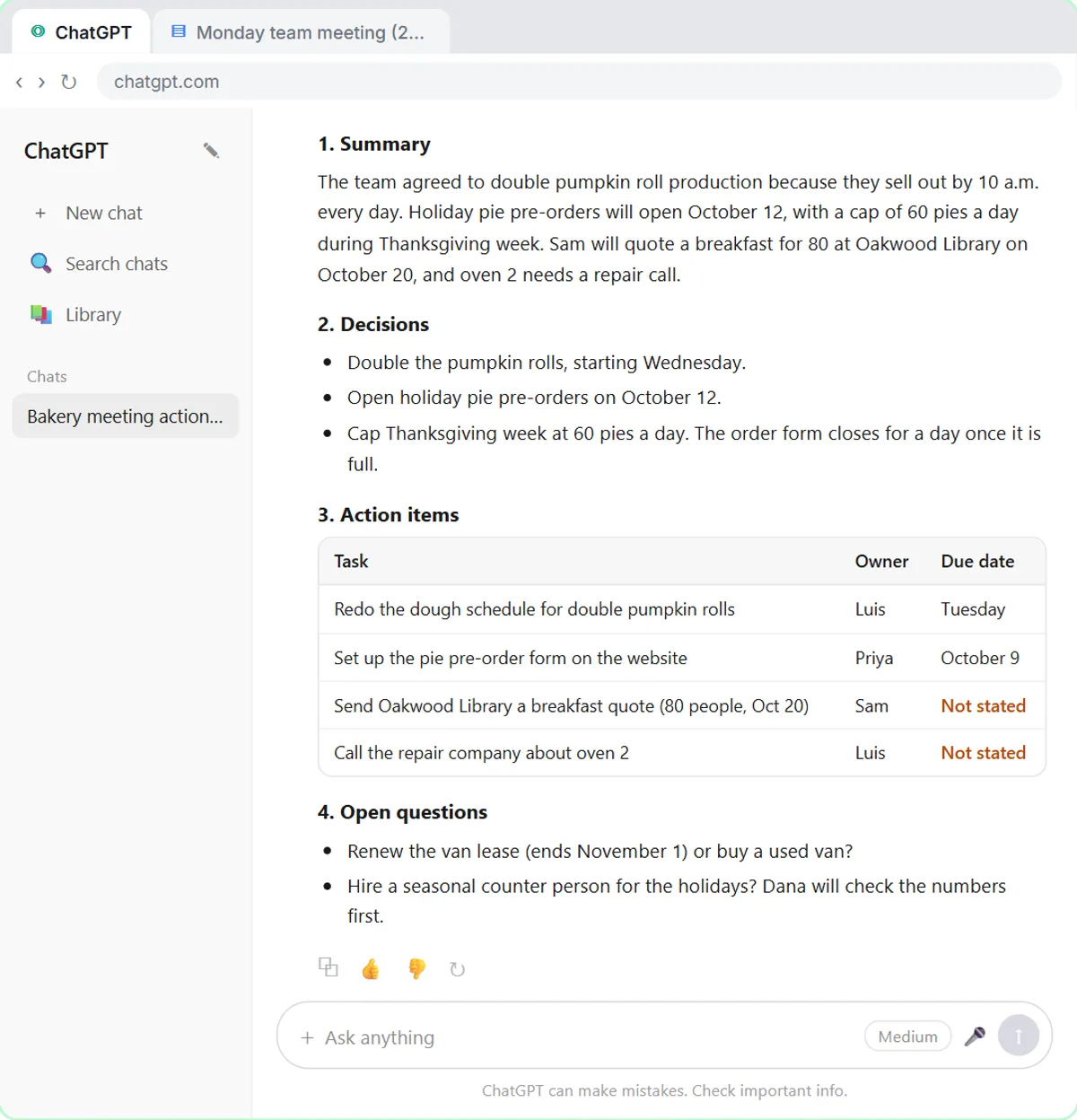
You were in the meeting, so you fill them in: "The library quote is due Wednesday, and Luis will call about the oven today." Then, in the same chat, ask for "a short follow-up email to the team with the decisions and action items. Friendly and plain, under 150 words." A guessed date on a catering quote is the kind of mistake that costs a customer. Turn a Meeting Transcript into Action Items goes step by step.
What should a bakery keep out of ChatGPT?
Keep out card numbers, customer phone numbers and anything you wouldn't want stored outside the shop. Share only what the reply needs, and if a transcript has private details in it, check your own rules before sharing it with any AI tool. For a business, a ChatGPT business account that doesn't train on your data is the safer choice.
What does it cost?
Both lessons are free and run in practice copies, so nothing is sent. Any ChatGPT plan works to start, including the free plan, within its limits; paid and business plans add more. Each lesson takes about nine minutes, and the ChatGPT for Everyday Work course puts them together.
Key takeaways
- A bakery can paste an order email thread into ChatGPT with numbered facts and get a reply that answers every question and apologizes once.
- The allergy answer should be the bakery's own approved wording, given to ChatGPT as a fact, and checked in the final draft.
- Asking ChatGPT for a table of every promise and the fact behind it catches lines like "completely nut-free" before they're sent.
- A meeting request that says "write Not stated" makes missing owners and dates visible instead of invented.
- In the same chat, ChatGPT can turn the corrected action items into a short team recap without re-pasting the transcript.
Frequently asked questions
- Can ChatGPT tell me if a cake is safe for someone with an allergy?
No. Only your bakery knows what's in your kitchen. Write your own approved allergen wording as a fact and let ChatGPT only phrase the reply.
- How long should a reply to an order email be?
Short. The lesson asks for under 150 words, then trims the final reply to under 120 words with every fact kept.
- Can ChatGPT write our holiday pre-order announcement?
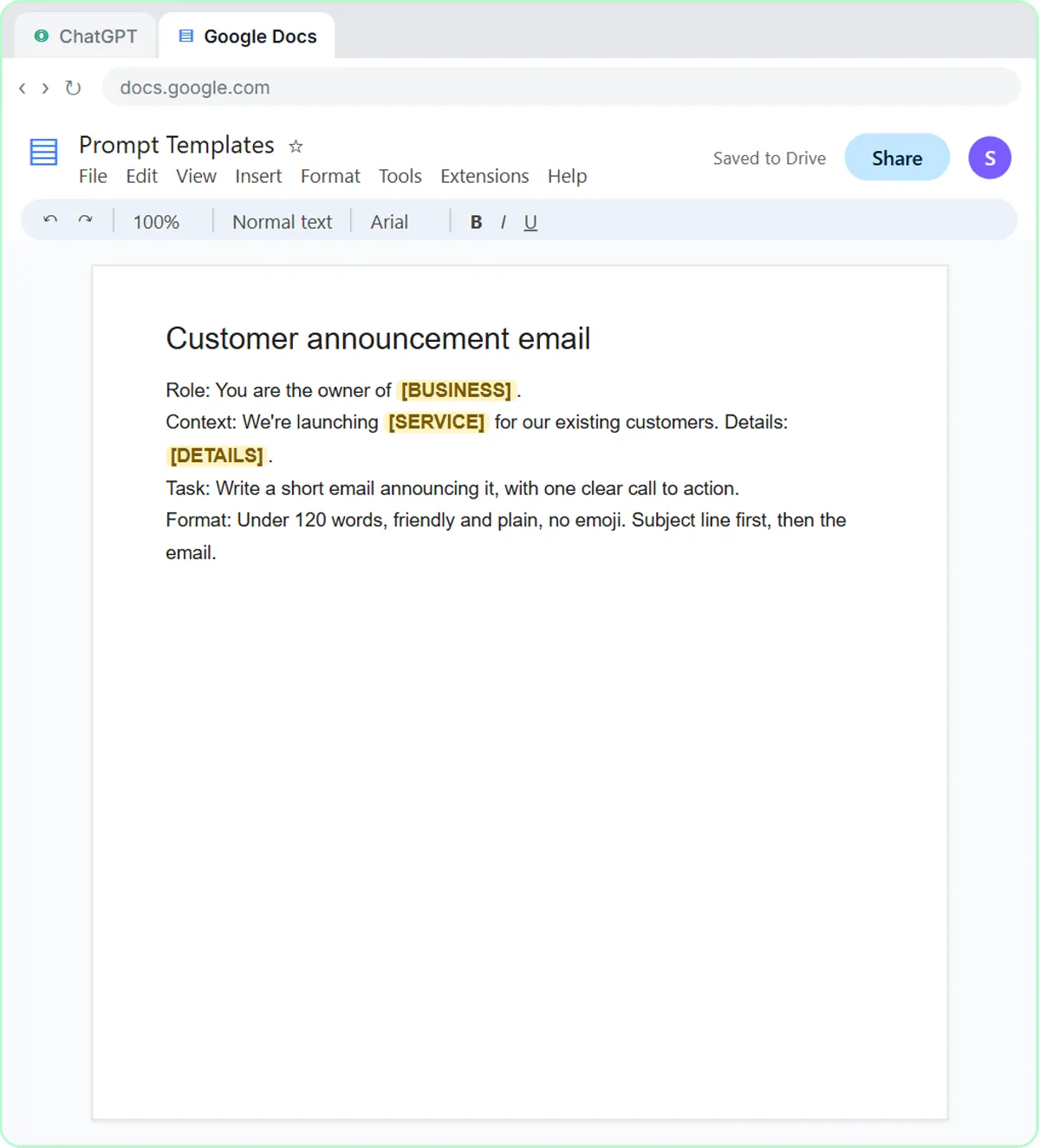
Yes. Give it the dates, the limits (like a daily cap) and how to order, and ask for a short, plain email with one call to action.
- Are Cedar Lane Bakery and Harbor Street Bakery real?
No. Both bakeries, their staff and their customers are made-up examples used in the lessons.