AI Prompts for HR Managers: 11 Copy-Ready Templates
Updated · By Robert Breen
HR managers answer the same policy questions every week, write announcements that have to be exactly right, and turn scattered notes into reviews and plans. Much of that is careful writing from facts you already have, which is where an AI assistant saves real time.
The prompts below quote your actual policy, keep to job-related facts and leave decisions with you. They are written to avoid the two big risks of AI in HR: inventing a rule that is not in your handbook, and letting personal details that have nothing to do with the job creep into a draft. Anything legal, disciplinary or medical still goes to the right person for review.
For a hands-on start, answer a leave-policy question with a made-up company, then try rolling out a team AI policy.
How do you use these prompts?
Copy a prompt into ChatGPT, Claude, Gemini or Copilot and replace every [BLANK] with your own details. Where a prompt says PASTE, paste your notes, email or document there. Each prompt follows the four parts from Prompt Writing 101: a Role, the Context, the Task and the Format you want back. Then check every name, date, number and promise in the answer before you use it.
Policies and employee questions
1. Answer an employee policy question from the handbook
You are the HR manager at [COMPANY]. An employee asked: "[QUESTION]". Here is the relevant section of our handbook:

[PASTE POLICY SECTION]

Write a short, kind reply that answers from the policy only and names the section. If the policy does not answer the question, say that clearly and tell them who will follow up: [CONTACT]. Do not guess at legal rights or make exceptions.

Format: under 120 words.
2. Draft a handbook section
Act as an HR manager drafting a new handbook section on [TOPIC] for [COMPANY], which has [NUMBER] employees in [LOCATIONS]. Our decisions so far: [YOUR RULES AND DECISIONS].

Write the section in plain English: purpose, who it applies to, the rules, how to ask for an exception and who to contact. Only include rules I listed. Add a bracketed note wherever local law may require something specific, so our employment lawyer can check it.

Format: headed subsections, under 400 words.
3. Summarize a policy change for staff
You are HR at [COMPANY]. We are changing [POLICY] from [OLD RULE] to [NEW RULE], effective [DATE], because [REASON].

Write an internal announcement that says what changes, what stays the same, who is affected and where to ask questions. Then write three short FAQ entries for the questions employees are most likely to ask.

Format: an announcement under 180 words, then the FAQ.
Onboarding and development
4. Build a first-week onboarding plan
You are an HR manager onboarding a new [JOB TITLE] at [COMPANY], starting [START DATE]. Their manager is [MANAGER]. The tools and people they need to meet are: [TOOLS, TEAMS, KEY PEOPLE].

Create a day-by-day plan for the first week: setup, introductions, training, a first small task and a check-in on day five. Mark who owns each item (HR, manager, IT or buddy).

Format: a table with Day, Activity, Owner, Done when.
5. Write a 30-60-90 day plan
Act as an HR business partner. A new [JOB TITLE] joins [TEAM] on [DATE]. Success in this role means: [GOALS FROM THE MANAGER].

Draft a 30-60-90 day plan with two or three measurable goals per stage, the support they will get, and the check-in questions for each stage. Keep every goal tied to the role's responsibilities.

Format: three headed sections with bullets, under 350 words.
6. Turn manager notes into a fair review draft
You are helping [MANAGER] write a performance review for a [JOB TITLE] for [REVIEW PERIOD]. The goals were: [GOALS]. Here are the manager's notes:

[PASTE NOTES WITH EXAMPLES]

Draft the review using only job-related evidence from the notes: strengths, areas to grow, and goals for next period. Leave out anything about health, family, age or other personal matters even if it appears in the notes, and list what you left out so the manager can see it.

Format: three headed sections with specific examples, then a "Left out" note for the manager only.
Announcements and recognition
7. Announce a promotion
You are HR at [COMPANY]. [EMPLOYEE NAME] is moving from [OLD ROLE] to [NEW ROLE] on [DATE]. Highlights they agreed to share: [ACHIEVEMENTS].

Write a short announcement for [CHANNEL] that congratulates them, says what the new role covers and who to contact for what from now on. Keep it warm and specific, without exaggerating.

Format: under 120 words.
8. Announce a departure respectfully
Act as an HR manager. [EMPLOYEE NAME], our [ROLE], is leaving on [LAST DAY]. Share only what they agreed to share: [AGREED DETAILS]. Their work will be covered by [COVERAGE PLAN].

Write a short internal note that thanks them, gives the last day and explains who to contact going forward. Do not give a reason for leaving unless it is in the agreed details.

Format: under 100 words.
9. Write an open enrollment reminder
You are HR at [COMPANY]. Benefits open enrollment runs from [START DATE] to [END DATE]. What is changing this year: [CHANGES]. How to enroll: [STEPS OR LINK]. Questions go to [CONTACT].

Write a reminder email that leads with the deadline, lists the changes in plain words and says what happens if someone does nothing, using only this rule: [DEFAULT IF NO ACTION].

Format: a subject line, then under 150 words with a short bullet list of changes.
Surveys and investigations support
10. Summarize employee survey comments
You are an HR analyst at [COMPANY]. Here are anonymous comments from our [SURVEY NAME]:

[PASTE COMMENTS]

Group them into themes, count how many comments fall in each theme and quote two short representative comments per theme. Do not try to identify who wrote anything, and remove any names or details that could identify a person from the quotes.

Format: a table with Theme, Count, Example quotes, then the top three themes in one sentence each.
11. Prepare neutral interview questions for a workplace concern
Act as an HR manager preparing to gather facts about a reported concern: [BRIEF NEUTRAL DESCRIPTION]. I will speak with [WHO: REPORTER, WITNESSES OR THE PERSON CONCERNED].

Draft open, neutral questions for each conversation that ask what happened, when, where and who else was present, without suggesting an answer or a conclusion. Add a reminder list of process steps to confirm with [LEGAL OR SENIOR HR CONTACT] before starting.

Format: questions grouped by conversation, then the reminder list.
How do you adapt these prompts to your own work?
- Paste the exact policy text every time you ask a policy question. The assistant should quote your handbook, not its general knowledge.
- Remove names, health details and anything protected before pasting notes. Describe people by role instead ("the employee", "the manager").
- Have anything about discipline, leave law or terminations reviewed by your employment lawyer or senior HR before it goes out.
- To give staff instant answers from your own policy documents, see Answer Employee Policy Questions using Airia.
Where can you practice these skills for free?
These free Stepthrough lessons practice the same jobs step by step, with a made-up business and practice copies of the real tools, so nothing touches your real accounts.
An employee asks about pay, unpaid weeks and whether his leave dates are approved. Give ChatGPT the thread and your leave policy, catch the answers you can't give yet…
Free · Live ~10 min Beginner
◷Roll Out a Team AI Policy in One Afternoon using ClaudeYour team already uses AI, with or without rules. Have Claude write a one-page acceptable use policy from your rules, check the parts that matter, then get the…
Free · Live ~10 min Beginner
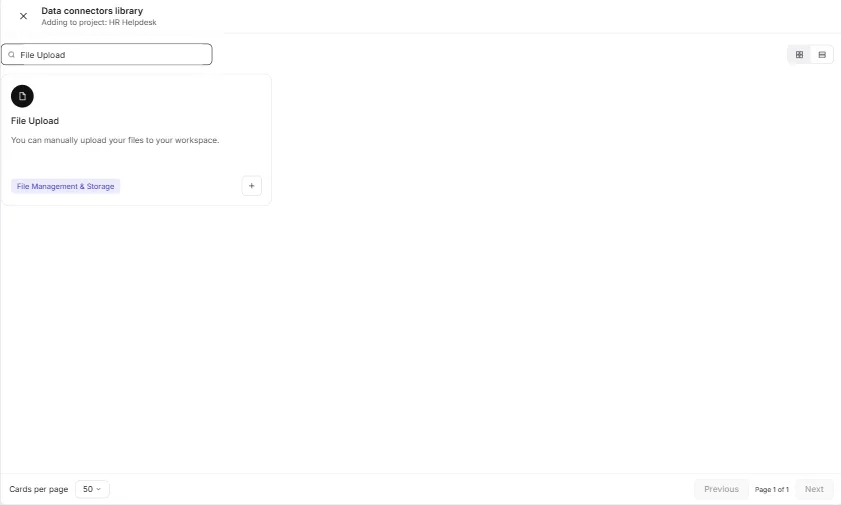 Answer Employee Policy Questions Instantly Using Airia
HR answers the same time-off and benefits questions all day. Give Airia your handbook, build a no-code agent that answers from it, test it, then share it with your team.
Free · Live ~10 min Intermediate
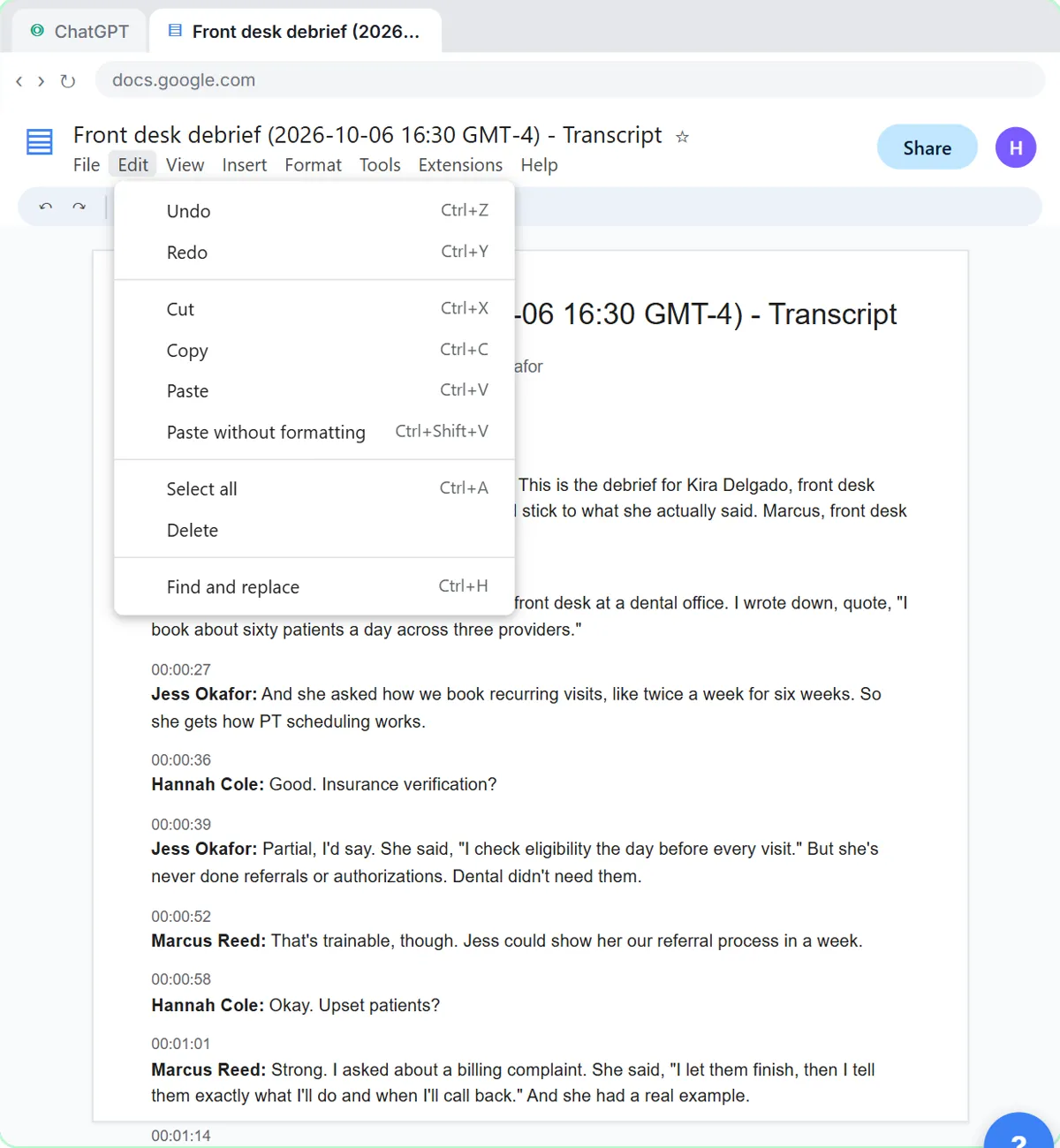 Score Every Candidate Fairly After the Interview using ChatGPT
Turn the transcript of an interview panel's debrief into a scorecard against the role's must-haves, the decisions, action items with owners and dates, and a follow-up…
Free · Live ~7 min Beginner
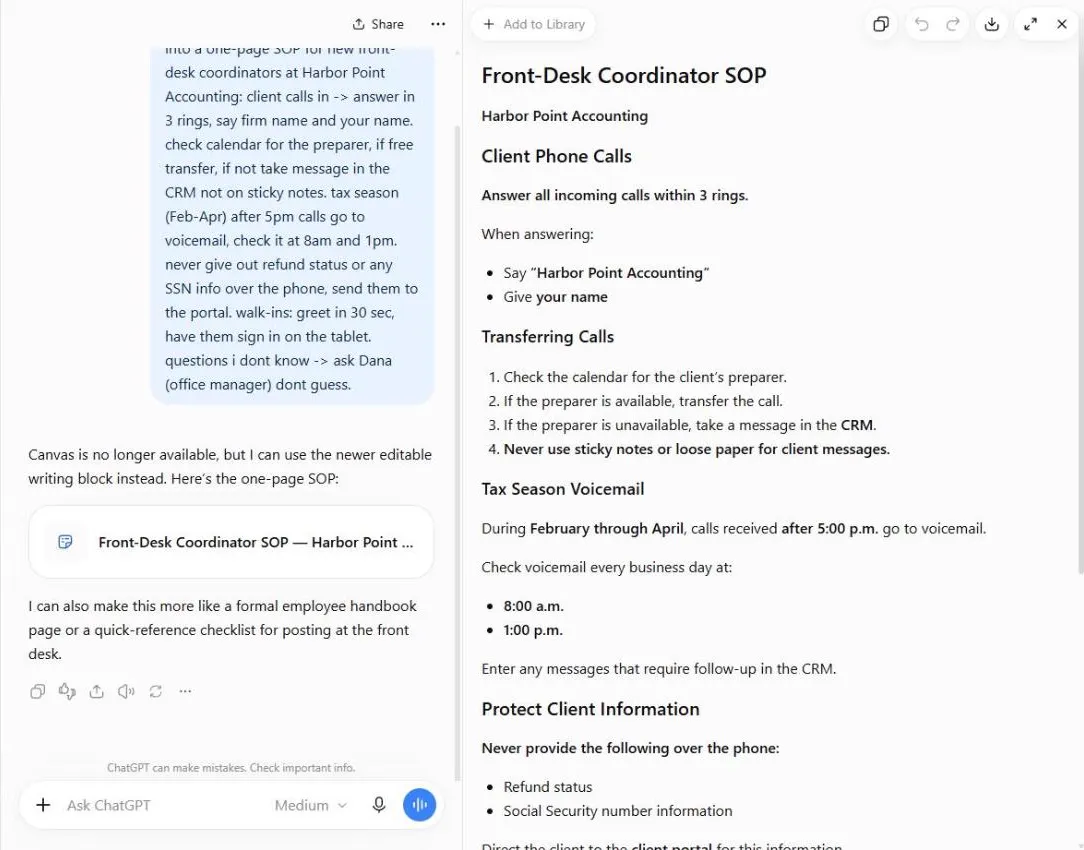 ChatGPT: Turn Rough Notes into a One-Page SOP in an Editable Document
Paste your messy notes, get a clean SOP in a document you can edit beside the chat, change one paragraph at a time, and check what the AI added.
Free · Live ~5 min Beginner
Which free courses fit this job?
- AI for Recruiting & HR: Fair job posts, scorecards, honest status replies and an applicant pipeline that never drops a candidate.
- Master ChatGPT for Work: Go from safe first chats to ChatGPT that knows your job, reads your files and runs multi-step work: data controls, memory, prompts, meeting minutes…
- AI Governance for Small Business: Put simple AI rules in place for a 5 to 50 person office: what data never goes in, which tools are approved, the right account settings, a one-page…
New to AI at work? Start with AI for HR Generalists: Where to Start (Free Path), a short path of free lessons in order.
Practice it free, step by step
Answer an Employee's Leave Questions Without Overpromising using ChatGPT for Recruiting & HR. An employee asks about pay, unpaid weeks and whether his leave dates are approved. Give ChatGPT the thread and your leave policy, catch the answers you can't give yet, and send a kind, accurate… You do every step yourself in a practice copy of ChatGPT, it checks your work as you go, and “Do it for me” finishes any step you get stuck on. Free, and nothing touches your real accounts.
Start the free lessonMore templates for this job
Single prompts from the prompt library, each with a filled-in example and a checklist for the answer.
- Employee policy question reply prompt: Answer a staff policy question from your own handbook text: quote the rule, say what it means plainly and admit when the…
- Employee handbook section prompt: Turn your own rules into one plain-English handbook section, with every gap and anything touching pay, discipline or privacy…
- 30-60-90 day plan prompt: Build a 30-60-90 day plan for a new hire: learn, contribute, then own, with checkable goals, people to meet and check-in dates…
- Employee survey results summary prompt: Summarize an anonymous employee survey into themes and quotes you can share, with rules that protect anonymity and keep small…
Prompts for other roles
Frequently asked questions
- Is it safe for HR to use AI?
- It can be, with rules: use an approved tool, remove personal and health details, quote your own policies and keep a person responsible for every decision. Never let an AI decide on hiring, pay, discipline or termination.
- Can AI write a performance review?
- It can turn a manager's notes into a clear first draft. The manager still owns the content, and the evidence should be specific, job-related examples the manager actually observed.
- Do these prompts replace legal advice?
- No. They draft communications and documents from your decisions. Employment law varies by location, so have policies and sensitive letters reviewed by a qualified employment lawyer.