A chatbot is software you talk to in a chat window. The chatbot glossary page explains how an AI chatbot differs from an AI agent that acts on your systems. For a plumbing office the difference matters most when water is on the floor and a customer needs a person, not a polite paragraph.
What should a plumbing chatbot answer?
Let it answer the questions whose answers never change and that you already give out. Three that work well:
- Hours and service area. Which towns you cover, when the office is open and what the after-hours rule is. Write these into its instructions word for word.
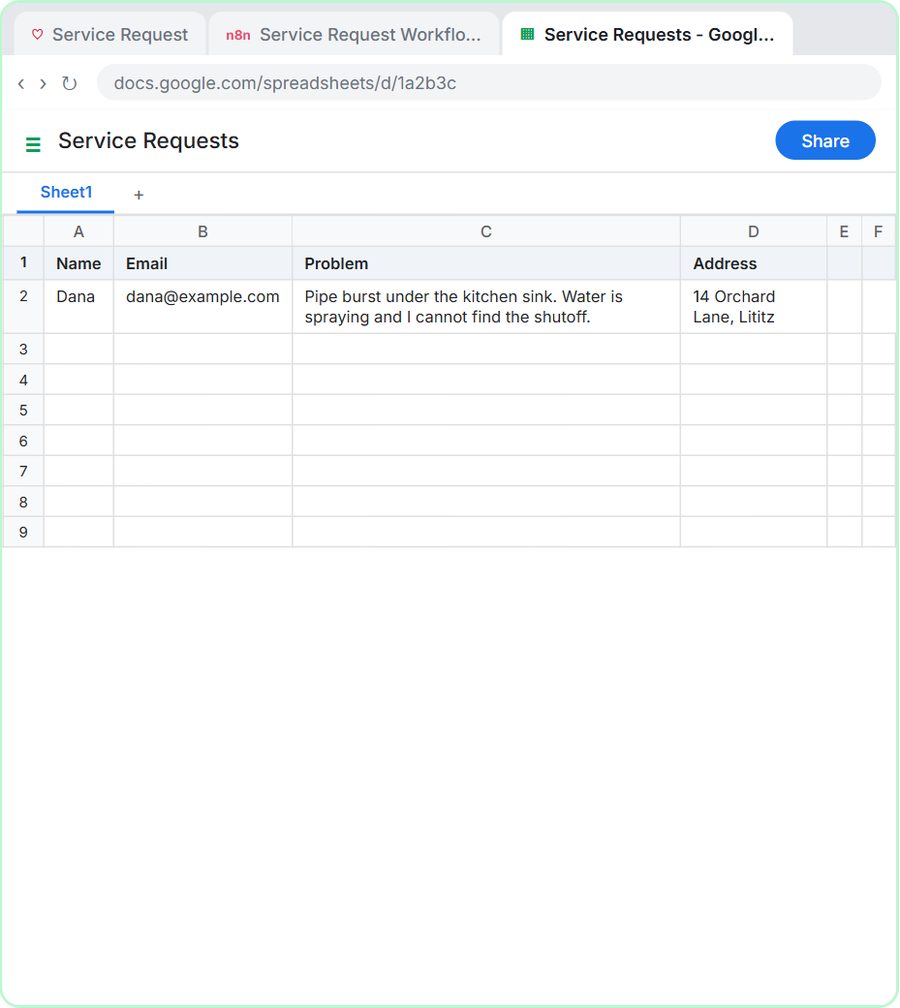
- How to request service. What you need from the customer: name, contact details, address and a description of the problem. A bot that asks for the same four things every time saves the callback.
- What happens next. When a customer can expect to hear back, and what an emergency request looks like. Only state timing you can keep.
Give the bot a written source for these answers, such as your own FAQ, rather than letting it guess. A bot that cannot see your schedule will still answer "Can you come Thursday?" in a confident tone unless its instructions say what to do instead.
What must a plumbing chatbot never do?
Three things stay with a person:
- Firm prices. A price depends on what the plumber finds. The bot can say that the office will confirm a price after looking at the job.
- Arrival times and promises. Only the dispatcher knows where the trucks are.
- Repair or safety instructions you have not written. Apart from steps you have approved in advance, such as how to shut off the main water valve, the bot should not walk a customer through a repair or judge a hazard.
Put these rules in the bot's system message in plain words, and read the first replies it writes before you put it in front of customers. The check AI drafts for promises guide shows how to catch a promise that slipped in.
When must the chatbot hand off to a person?
The bot should hand off whenever the request matches an emergency rule you wrote, or when it is unsure. Escalation rules name the exact situations ahead of time, so the risky cases never get a routine automated answer.
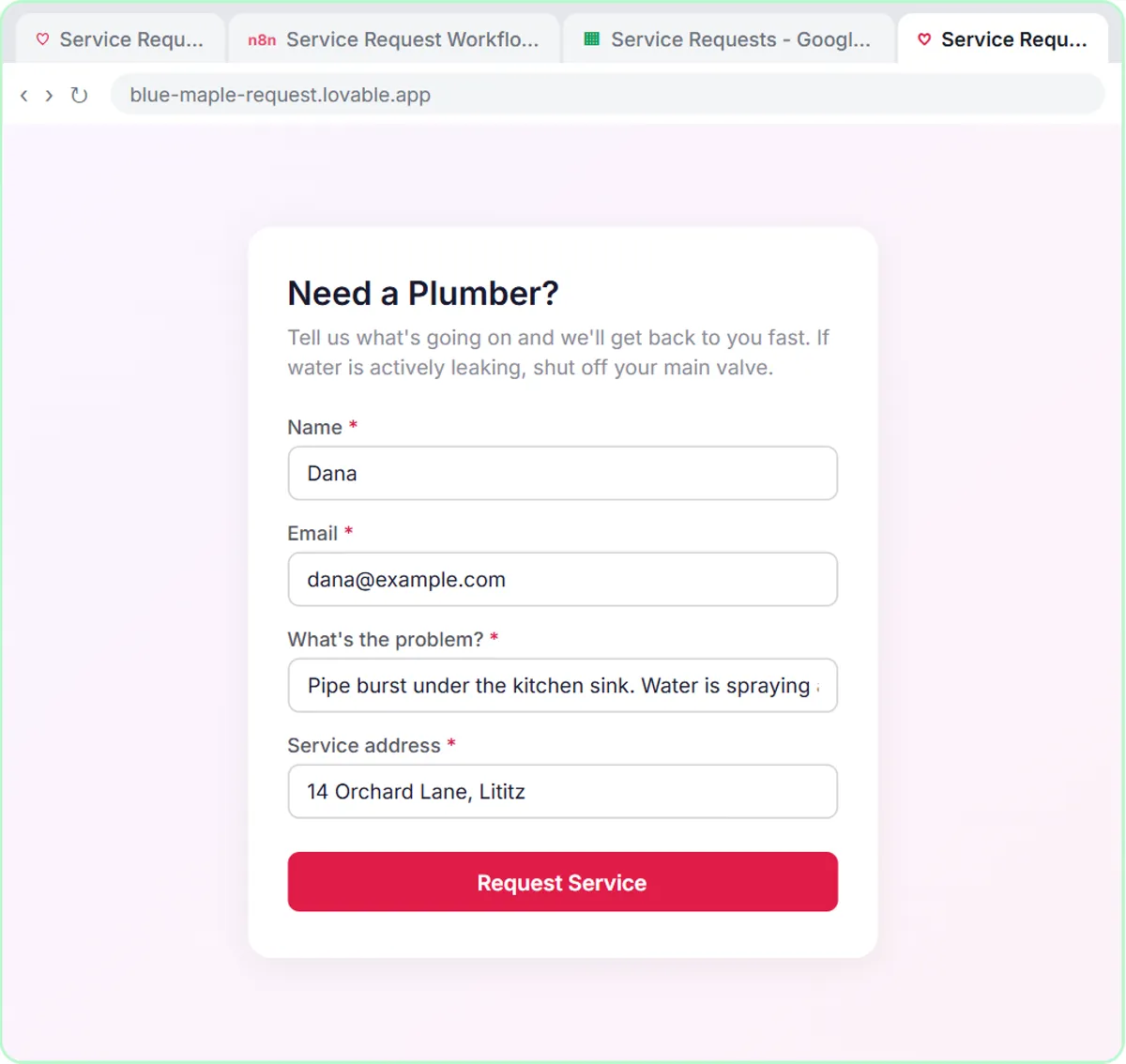
In the free AI Emergency Request Form lesson, the Blue Maple dispatcher follows three written levels. Emergency means an active leak, a burst pipe, a sewage backup or no water. Same-day means no hot water, a clogged main drain or a sump pump that won't run. Everything else is Scheduled. For emergencies, it tells the customer how to shut off the main water valve. That sorting is called AI triage, and the emergency request triage prompt gives you a template for your own rules.
Add two more handoff triggers of your own: a customer who is angry or asks for a person, and any question about a bill, a warranty or an insurance claim. Decide who gets told and how quickly, and write down what the customer hears in the meantime.
How do you build an AI chatbot for a plumbing company?
You have three realistic starting points, from simplest to most connected.
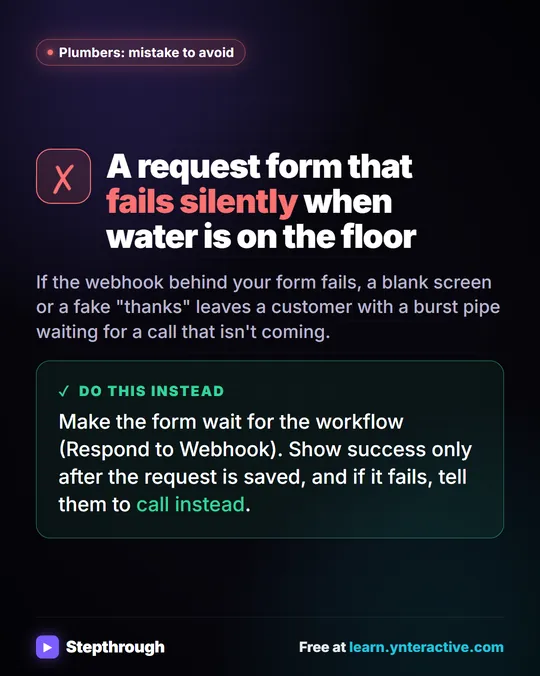
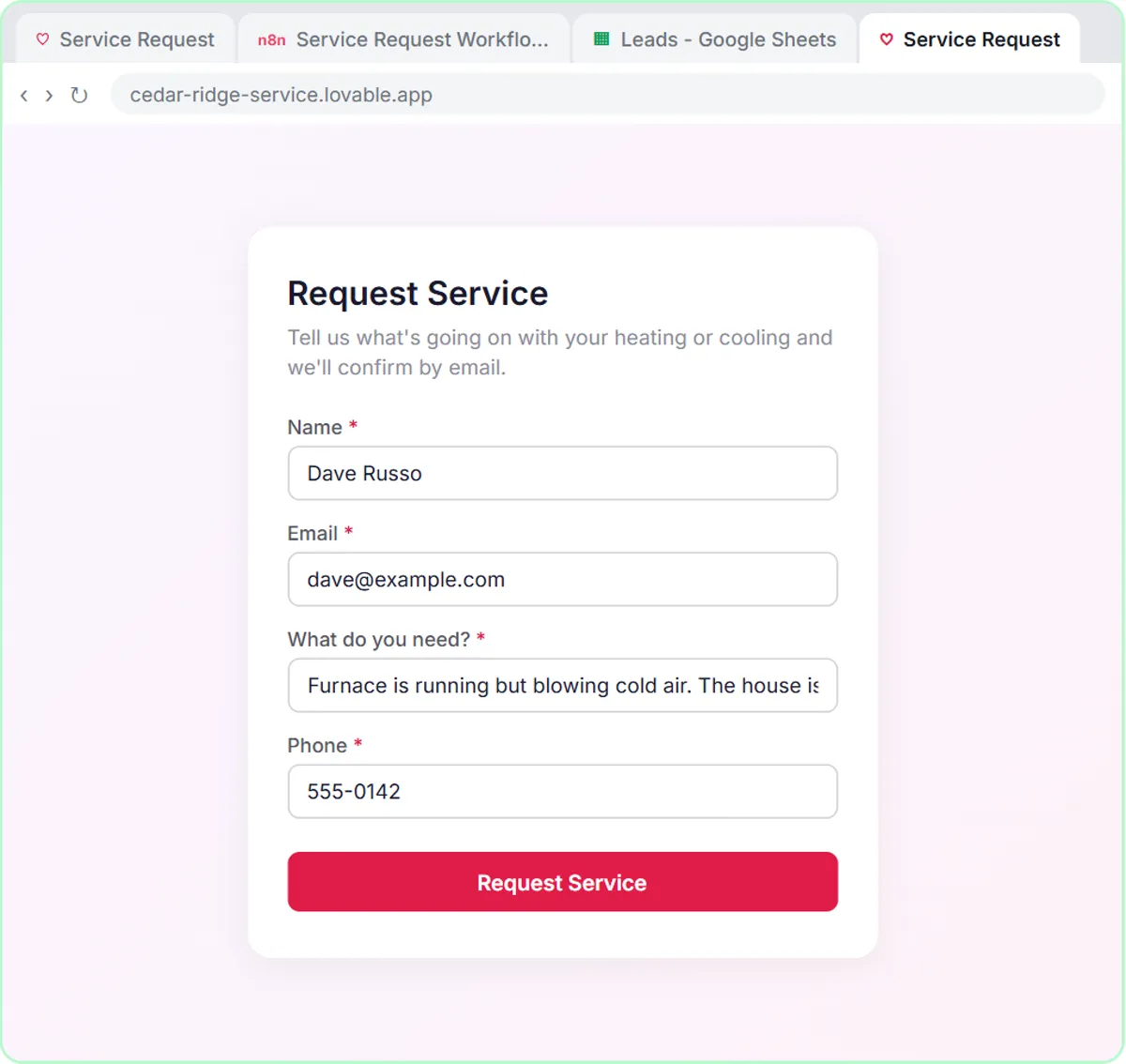
- A request form with an AI dispatcher. The AI Emergency Request Form lesson builds a form in Lovable that posts to an n8n workflow. The AI agent marks each request, logs it in Google Sheets and emails the customer next steps. It is a form rather than a free-flowing chat, which is often safer for emergencies because every request ends up in the same place.
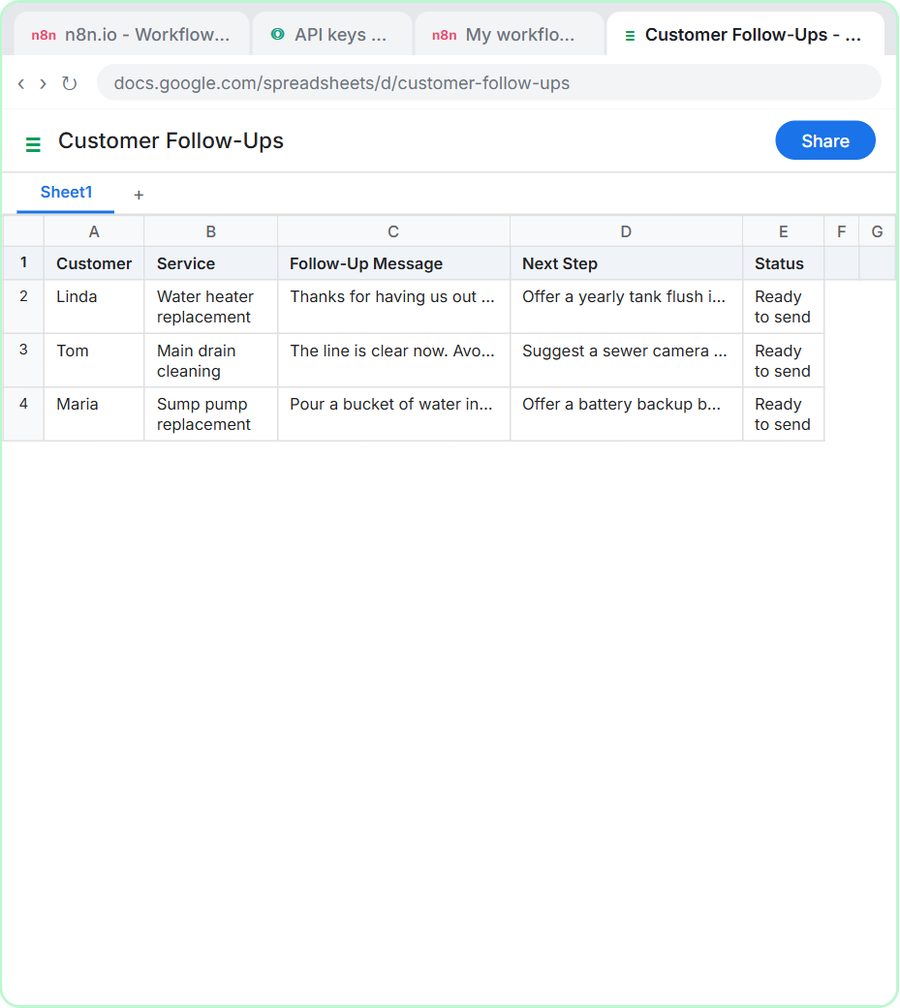
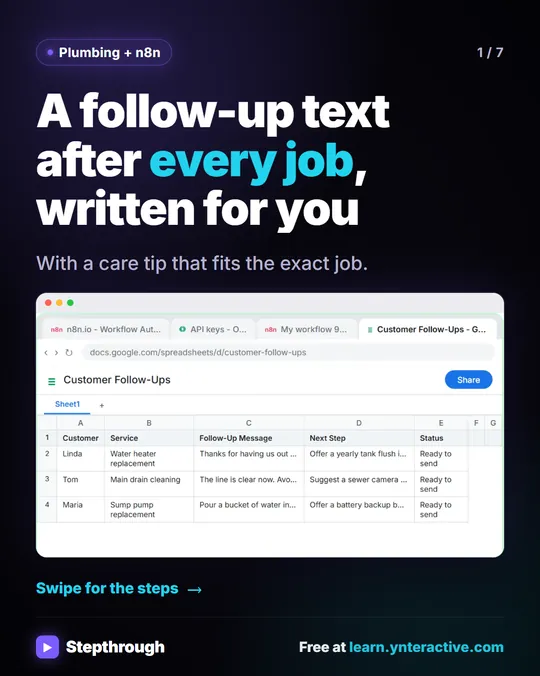
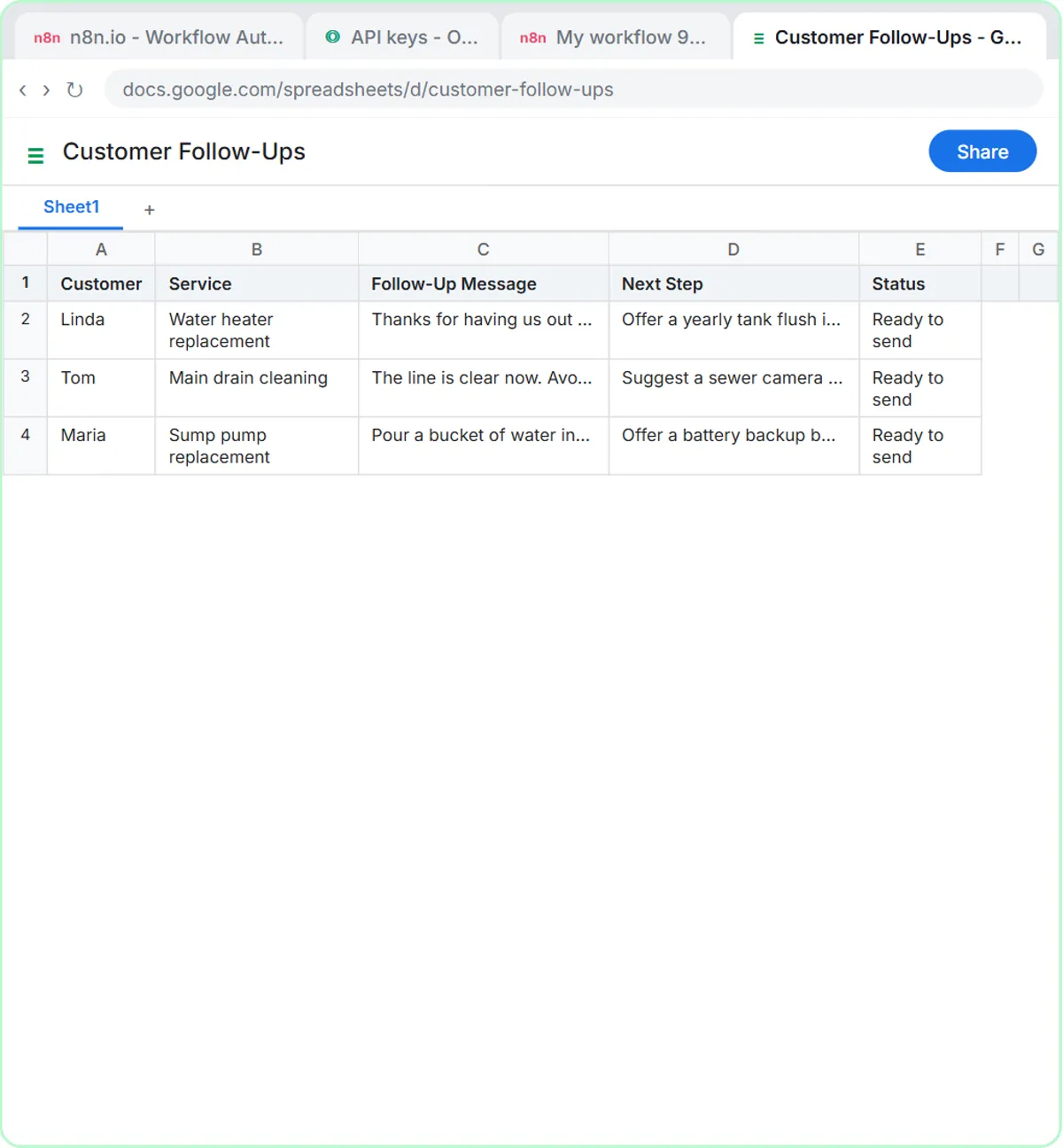
- A follow-up agent you chat with. The AI Customer Follow-Up Agent lesson builds an n8n chat agent that writes a follow-up text for each finished job and saves it to a sheet for the office to review. Nothing is sent on its own.
- A quote-writing assistant for your office. The Plumbing Quote Writer lesson builds a ChatGPT quote assistant that writes quotes from your services and price list, for staff rather than customers. OpenAI has announced it is retiring Custom GPTs (December 11, 2026 for Enterprise workspaces; other plans may follow), and the lesson's notice explains where to use the same skill today.
The AI for plumbing companies guide walks through the form lesson in detail, and the plumbing AI playbook lists every free lesson in order.
Try it free, step by step
Build an AI Emergency Request Form for Your Plumbing Company. Build an emergency service-request form in Lovable and connect it to an n8n workflow — webhook trigger, AI Agent that prioritizes the job, Google Sheets, Gmail, and a Respond node that ties it all… You do every step yourself in a practice copy of Lovable and n8n, it checks your work as you go, and “Do it for me” finishes any step you get stuck on. Free, and nothing touches your real accounts.
Start the free lessonWhat should you check before the chatbot goes live?
Test it with the worst questions you can think of, and keep a person watching for the first weeks.
- Ask the questions you dread. A burst pipe at midnight, a request for a price, a customer who is angry, a message in half a sentence.
- Read the replies out loud. If a reply promises something you cannot deliver, change the instructions and test again.
- Make the handoff visible. Whoever is on call should get the emergency request somewhere they will actually see it.
- Collect only what the job needs. A name, contact details, an address and the problem are enough. Follow your company's policy on customer data.
- Say it is an AI. Tell customers they are talking to an automated assistant and give them the office phone number.
Key takeaways
- A plumbing chatbot answers hours, service area and how booking works, and collects emergency details.
- It never gives a firm price, an arrival time or repair advice you did not write.
- Write emergency and escalation rules in plain words, and send those requests to a person.
- A form with an AI dispatcher is often a safer first build than an open chat.
- Test with your worst questions, and keep a person in the loop at first.
Frequently asked questions
- Can an AI chatbot answer plumbing emergencies?
It can collect the details of an emergency, mark it urgent using your written rules and tell the customer the steps you have approved, such as shutting off the main water valve. A person should be told right away and decide who goes where.
- Should a plumbing chatbot give prices?
Not firm ones. Prices depend on what the plumber finds on site. The bot can explain how you quote and say that the office will confirm a price, or share ranges only if you already publish them.
- Do I need to code to build an AI chatbot for my plumbing company?
No. In the free lessons, Lovable builds the form from a written prompt and the n8n workflow is built by clicking and pasting. A real build uses paid or trial plans for some tools, so check each vendor's pricing page.
- Is Blue Maple Plumbing a real company?
No. Blue Maple Plumbing is a made-up example used in the Stepthrough lessons.