AI Prompts for Sales Reps: 11 Copy-Ready Templates
Updated · By Robert Breen
Reps sell in conversations, but they lose hours around them: researching an account, writing the first email, preparing for discovery, recapping the call and following up when a deal goes quiet. A fast, specific draft for each of those steps means more time talking to buyers and fewer deals stalled by a slow follow-up.
These prompts keep your messages specific and honest. They draw on what you actually know about the prospect, quote what the buyer said, and never promise a discount, a feature or a date you have not confirmed. They work in any assistant and alongside any CRM.
Practice the highest-value habit first: send a same-day follow-up after every discovery call, then learn to hold your price when a prospect asks for a discount.
How do you use these prompts?
Copy a prompt into ChatGPT, Claude, Gemini or Copilot and replace every [BLANK] with your own details. Where a prompt says PASTE, paste your notes, email or document there. Each prompt follows the four parts from Prompt Writing 101: a Role, the Context, the Task and the Format you want back. Then check every name, date, number and promise in the answer before you use it.
Prospecting
1. Research an account before outreach
You are a sales rep at [COMPANY], which sells [PRODUCT] to [IDEAL CUSTOMER]. Here is what I found about [PROSPECT COMPANY] from their website, news and LinkedIn:

[PASTE NOTES]

Summarize what they do, likely priorities based on these notes, who might own the problem we solve and two possible reasons to reach out now. Label anything you infer as "Guess". Do not invent facts about the company.

Format: four short headed sections.
2. Write a short, specific cold email
Act as a sales rep at [COMPANY]. The prospect is [NAME, TITLE] at [PROSPECT COMPANY]. Specific reason to reach out: [TRIGGER, SUCH AS A NEW LOCATION OR JOB POST]. The problem we solve for companies like theirs: [PROBLEM]. Proof we can share: [CUSTOMER RESULT WITH PERMISSION OR "NONE"].

Write a cold email under 90 words: one line on the trigger, one on the problem, one on the proof and a low-pressure question as the call to action. No flattery and no fake familiarity.

Format: three subject line options, then the email.
3. Write a follow-up when a prospect has not replied
You are a sales rep. I emailed [NAME] at [COMPANY] on [DATE] about [TOPIC] and have not heard back. This is follow-up number [NUMBER].

Write a short follow-up that adds one new piece of value ([NEW INSIGHT, RESOURCE OR QUESTION]) instead of "just checking in". If this is the last follow-up, make it a polite close that leaves the door open.

Format: under 70 words.
Discovery
4. Prepare for a discovery call
Act as a sales coach. I have a [LENGTH]-minute discovery call with [NAME, TITLE] at [COMPANY]. What I know: [NOTES]. What we sell: [PRODUCT].

Give me: an opening line that sets the agenda, ten open questions grouped into current situation, problem, impact and decision process, and three things I must learn before the call ends. Avoid questions they could answer with yes or no.

Format: headed lists.
5. Recap a discovery call the same day
You are a sales rep at [COMPANY]. Here are my notes or the transcript from today's call with [NAME] at [PROSPECT COMPANY]:

[PASTE NOTES]

Write a follow-up email that summarizes their situation in their own words, the problems they mentioned, what they want to achieve, the agreed next step and date. Quote them where useful. Do not add any problem or promise that is not in the notes.

Format: a subject line, then under 200 words.
6. Update the CRM from call notes
Act as a sales rep updating [CRM]. Here are my call notes:

[PASTE NOTES]

Fill in these fields from the notes only: Stage, Pain points, Budget, Decision makers, Timeline, Competitors mentioned, Next step, Next step date. Write "Not discussed" for any field the notes do not cover.

Format: one line per field.
Objections and negotiation
7. Answer a pricing objection without discounting
You are a sales rep at [COMPANY]. The prospect said: "[THEIR OBJECTION]". Our price is [PRICE] for [WHAT IS INCLUDED]. Value they told us they care about: [VALUE FROM DISCOVERY]. What I am allowed to offer: [APPROVED OPTIONS, SUCH AS PAYMENT TERMS OR A SMALLER PACKAGE, OR "NOTHING"].

Write a reply that acknowledges the concern, ties the price back to what they told us matters and offers only the approved options. Do not offer a discount that is not approved.

Format: under 150 words.
8. Prepare for common objections
Act as a sales trainer for [PRODUCT] sold to [AUDIENCE]. The objections we hear most: [OBJECTIONS].

For each objection, write a question to understand it better, a short honest response and a proof point we can use from this list only: [PROOF POINTS]. Flag any objection where we have no proof point yet.

Format: a table with Objection, Clarifying question, Response, Proof.
Proposals and deals
9. Write a proposal summary
You are a sales rep writing the executive summary of a proposal for [PROSPECT COMPANY]. Their goals in their words: [GOALS]. What we propose: [SOLUTION AND SCOPE]. Price and terms: [PRICE AND TERMS]. Timeline: [TIMELINE].

Write a one-page summary that starts with their goals, explains how our proposal meets each one, states the price and terms clearly and ends with the next step and a decision date.

Format: headed sections, under 350 words.
10. Restart a stalled deal
Act as a sales rep. The deal with [COMPANY] has been quiet since [DATE]. Last known status: [STATUS]. What they cared about: [PRIORITIES]. Anything new I can offer: [NEWS, CASE STUDY, CHANGE].

Write a short, honest message that names the pause without guilt, offers something useful and asks a simple question about whether the project is still a priority.

Format: under 90 words.
11. Plan the next quarter for a key account
You are a sales rep planning [ACCOUNT NAME] for next quarter. What they buy today: [CURRENT PRODUCTS]. Contacts and relationships: [CONTACTS]. Their goals: [GOALS]. Risks: [RISKS].

Draft an account plan: goals for the quarter, contacts to build, opportunities that fit their goals, risks with a response and the three actions for this month.

Format: headed sections, under 350 words.
How do you adapt these prompts to your own work?
- Paste the buyer's exact words from your notes. Recaps and proposals that echo what the buyer said land far better than generic benefits.
- Keep a short "what I can offer" list from your manager and paste it under any negotiation prompt, so drafts never promise more than you can give.
- Do not paste a prospect's confidential documents into a tool your company has not approved.
- If leads are going cold before anyone replies, an automation can help. See the speed-to-lead agent lesson.
Where can you practice these skills for free?
These free Stepthrough lessons practice the same jobs step by step, with a made-up business and practice copies of the real tools, so nothing touches your real accounts.
Turn a discovery call transcript into the decisions, the next steps with owners and dates, deal notes for your CRM, and a follow-up email the prospect gets the same…
Free · Live ~7 min Beginner
◷Hold Your Price When a Prospect Asks for a Discount using ChatGPTA prospect wants 30% off and a free month to sign this week. Give ChatGPT the thread and your pricing rules, catch the discount you can't approve, and send a reply that…
Free · Live ~9 min Beginner
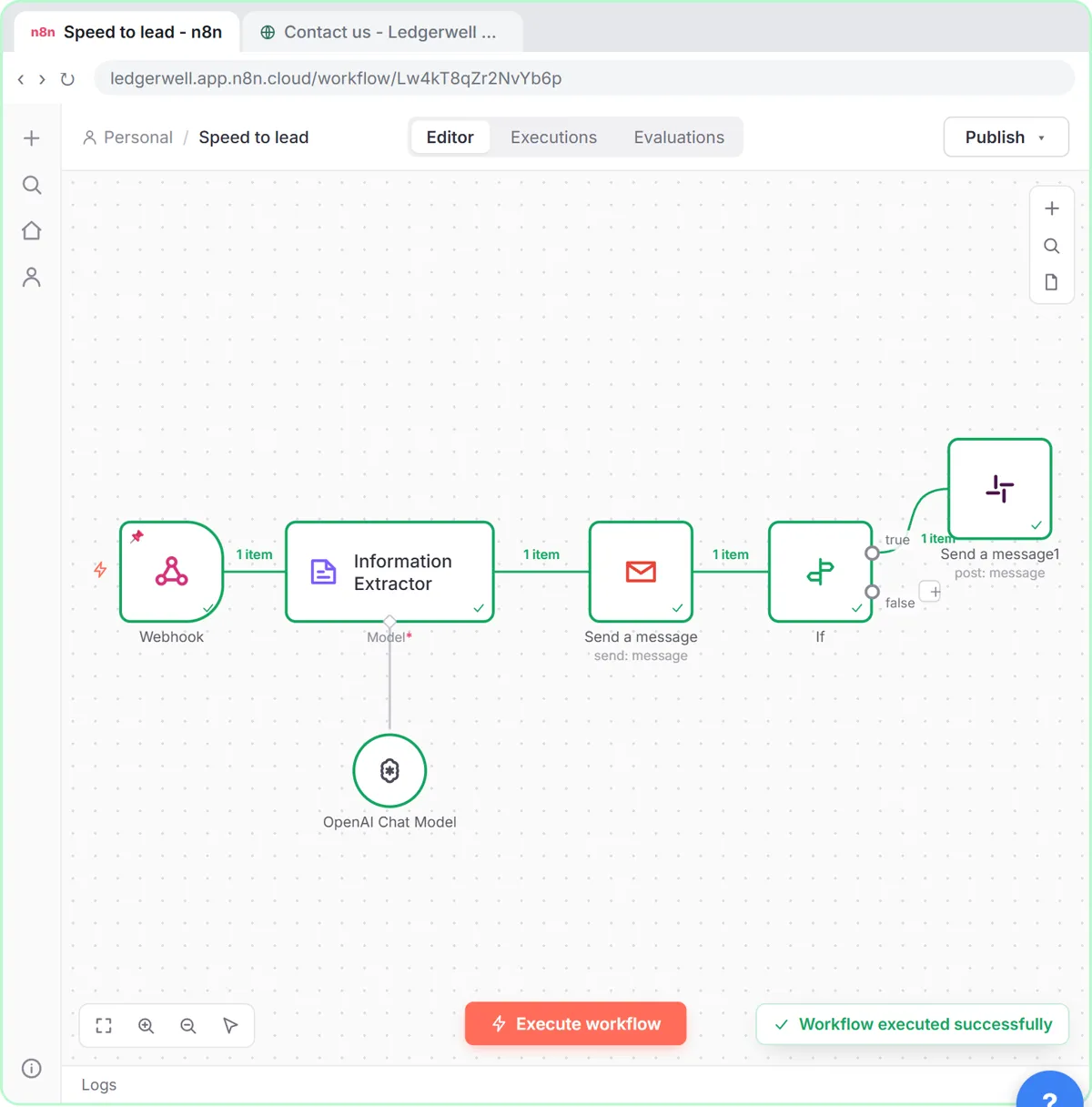 Speed-to-Lead Agent: Answer Every Web Lead in 60 Seconds
Build an n8n workflow that scores every website lead with AI, emails a personal first reply within seconds, and pings Slack only when a lead is hot.
Free · Live ~15 min Advanced
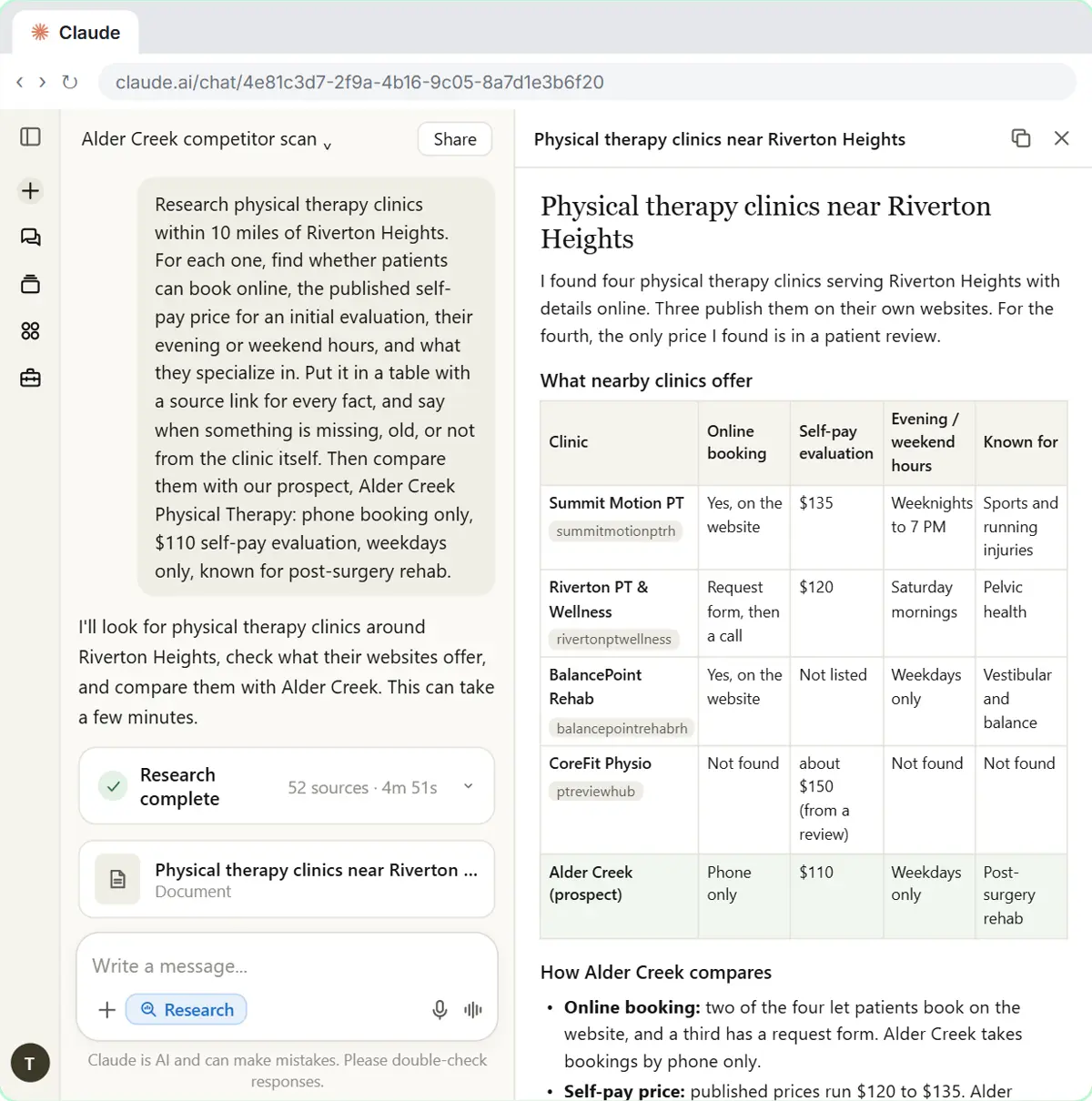 Research a Prospect's Market with Claude Research Before a Pitch (Consultants & Agencies)
Turn on Research before a pitch, have Claude check what a prospect's competitors offer online, read the cited report, check a source and turn it into talking points for…
Free · Live ~7 min Beginner
◷Never Lose a Client Follow-up using Capsule CRMA business case for a small firm: price what dropped follow-ups cost, then use Capsule CRM to give every enquiry an owner and a next step: add a client, check the…
Free · Live ~18 min Beginner
Which free courses fit this job?
- AI for Sales Teams: Same-day follow-ups after every call, held prices and agents that answer new leads in minutes.
- Master ChatGPT for Work: Go from safe first chats to ChatGPT that knows your job, reads your files and runs multi-step work: data controls, memory, prompts, meeting minutes…
New to AI at work? Start with AI Learning Path for Sales Reps: Lessons in Order, a short path of free lessons in order.
Practice it free, step by step
Send a Same-Day Follow-up After Every Discovery Call using ChatGPT. Turn a discovery call transcript into the decisions, the next steps with owners and dates, deal notes for your CRM, and a follow-up email the prospect gets the same afternoon. You do every step yourself in a practice copy of ChatGPT, it checks your work as you go, and “Do it for me” finishes any step you get stuck on. Free, and nothing touches your real accounts.
Start the free lessonMore templates for this job
Single prompts from the prompt library, each with a filled-in example and a checklist for the answer.
- Cold outreach email prompt: An honest cold email prompt for ChatGPT: verified facts about the prospect only, who you are and why you're writing, one easy…
- Discovery call prep prompt: Prep for a discovery call with a ChatGPT prompt that separates what you know from what you're assuming, then gives open…
- Objection handling prompt: A copy-ready ChatGPT prompt and template for sales objections: acknowledge, answer with facts you supply, ask for the next step…
- Stalled deal follow-up prompt: Restart a deal that went quiet after pricing or a proposal: address the likely blocker in the prospect's own words and ask for a…
Prompts for other roles
Frequently asked questions
- What is the best AI prompt for sales follow-ups?
- One that starts from your call notes and the buyer's own words, states the agreed next step and adds nothing new. The discovery call recap prompt above follows that pattern.
- Can AI write cold emails that work?
- It can draft short, specific emails quickly when you give it a real reason to reach out. Without a specific trigger and real proof, the result will be as generic as any template.