AI Prompts for Lawyers: 11 Copy-Ready Templates
Updated · By Robert Breen
At a small firm, the attorney is also the writer of every client letter, the reviewer of every contract and often the person answering the phone. A lot of that writing is translation: turning legal analysis into plain English, or a 30-page agreement into a one-page issues list. AI assistants are good at structure and plain language, which can free real hours for the legal judgment only you can provide.
These prompts are designed around professional responsibility. They work from documents and conclusions you supply, ask for clause and page references, and never ask the assistant to find case law or to predict outcomes. Verify everything, use approved tools for client material and follow your jurisdiction's guidance on AI use.
For hands-on practice with a made-up agreement, try Check a contract for red flags with Claude and AI Contract Review using Foxit AI.
How do you use these prompts?
Copy a prompt into ChatGPT, Claude, Gemini or Copilot and replace every [BLANK] with your own details. Where a prompt says PASTE, paste your notes, email or document there. Each prompt follows the four parts from Prompt Writing 101: a Role, the Context, the Task and the Format you want back. Then check every name, date, number and promise in the answer before you use it.
Contracts
1. Build an issues list for a contract
You are an attorney reviewing a [CONTRACT TYPE] for [CLIENT], who is the [PARTY ROLE, SUCH AS BUYER OR SERVICE PROVIDER]. Client priorities: [PRIORITIES]. Here is the contract:

[PASTE CONTRACT]

List clauses that may be unfavorable or unusual for my client, with the clause number, a quote of the key wording, why it may matter given the priorities and a question to consider. Do not draft revised language yet and do not conclude what is enforceable.

Format: a table with Clause, Wording, Why it may matter, Question.
2. Explain a contract to a client in plain English
Act as an attorney writing to [CLIENT FIRST NAME], who is not a lawyer. Here are my notes on the key terms of their [CONTRACT TYPE] and my advice:

[PASTE YOUR NOTES AND CONCLUSIONS]

Write a plain-English summary of what the contract requires of them, the main risks I identified and my recommendations, using only my notes. Keep legal terms to a minimum and explain any you use.

Format: short headed sections, under 400 words.
3. Prepare for a negotiation call
You are an attorney preparing to negotiate [AGREEMENT] on behalf of [CLIENT]. Our must-haves: [MUST HAVES]. Our nice-to-haves: [NICE TO HAVES]. Our fallback positions: [FALLBACKS]. What the other side has said so far: [THEIR POSITIONS].

Organize this into a negotiation sheet: each open issue, our position, their position, our fallback, and a question that could move the issue forward. Do not add positions I did not give.

Format: a table, then the three issues to raise first and why.
Research and memos
4. Outline a research memo
You are an associate at [FIRM]. The question presented: [QUESTION]. Facts: [FACTS]. Jurisdiction: [JURISDICTION]. Authorities I have already found and verified: [AUTHORITIES WITH CITATIONS].

Draft an outline for the memo: question presented, brief answer (marked "draft, to confirm"), facts, discussion headings that apply the authorities I listed to the facts, and open research questions. Do not cite any authority I did not provide.

Format: a structured outline with headings and bullets.
5. Summarize a long document for a busy partner
Act as an attorney summarizing [DOCUMENT TYPE] for a partner who has five minutes. Here is the document:

[PASTE DOCUMENT]

Write a summary: what it is, the three most important points with page or section references, any deadlines or dates, and anything that needs a decision. Quote exact wording for anything a decision depends on.

Format: headed bullets, under 250 words.
6. Find gaps in my argument
You are a skeptical opposing counsel. Here is my draft argument on [ISSUE]:

[PASTE ARGUMENT]

List the weakest points, the factual gaps an opponent would attack and the counterarguments I should address. Do not invent case law; describe arguments in general terms so I can research them.

Format: a numbered list, strongest attack first.
Client communication
7. Answer a client's status question without predicting the outcome
You are an attorney at [FIRM]. [CLIENT FIRST NAME] asked: "[QUESTION, SUCH AS WILL WE WIN OR WHEN WILL THIS END]". Where the matter stands: [STATUS]. What happens next and when: [NEXT STEPS]. What I can say about timing: [WHAT YOU ARE COMFORTABLE SAYING].

Write an honest, reassuring reply that explains the status and next steps, explains why the outcome cannot be guaranteed and invites a call to discuss.

Format: under 200 words.
8. Draft an engagement scope summary
Act as an attorney. We are engaged by [CLIENT] for [MATTER]. In scope: [IN SCOPE]. Out of scope: [OUT OF SCOPE]. Fee arrangement: [FEES]. Client responsibilities: [RESPONSIBILITIES].

Write a plain-English scope summary to accompany our standard engagement letter, so the client understands what is and is not included. Leave legal terms to our template and mark anything that needs my confirmation.

Format: four short headed sections, under 300 words.
9. Write a matter closing letter
You are an attorney closing [CLIENT]'s [MATTER]. Outcome: [OUTCOME]. Final items: [FINAL INVOICE, RETURNED DOCUMENTS, FILE RETENTION PERIOD]. Things the client should keep doing: [ONGOING OBLIGATIONS OR "NONE"].

Write a closing letter that thanks the client, confirms the matter is concluded, lists the final items and ongoing obligations and explains how to reach us for future needs.

Format: a business letter under 250 words.
Practice management
10. Draft a firm AI use policy
You are the managing attorney of [FIRM], with [NUMBER] attorneys and staff. Decisions we have made: approved tools [TOOLS], what client data may be used [RULES], review requirements [REVIEW RULES], disclosure to clients [DISCLOSURE POSITION].

Draft a one-page AI use policy covering approved tools, data rules, required human review, verification of citations, client disclosure and who to ask. Only include rules I listed, and mark spots where our state bar's guidance should be checked.

Format: numbered sections, under 450 words.
11. Write intake questions for a practice area
Act as an attorney designing intake questions for [PRACTICE AREA] inquiries at [FIRM]. We need to know enough to run a conflict check, spot deadlines and decide whether we can help, without giving advice.

Write 12 intake questions in plain language, grouped into contact, parties, key dates and the situation, and a closing script explaining that no attorney-client relationship exists until we confirm in writing.

Format: grouped questions, then the closing script.
How do you adapt these prompts to your own work?
- Never rely on an AI assistant for case citations. Verify every authority in a proper legal research source before it goes in anything.
- Use tools your firm approved for client material, with training on your data turned off, and follow your state bar's guidance. ChatGPT data controls shows the settings.
- Feed the assistant your conclusions, not just the facts, when drafting client letters. You decide the advice; it helps you say it clearly.
Where can you practice these skills for free?
These free Stepthrough lessons practice the same jobs step by step, with a made-up business and practice copies of the real tools, so nothing touches your real accounts.
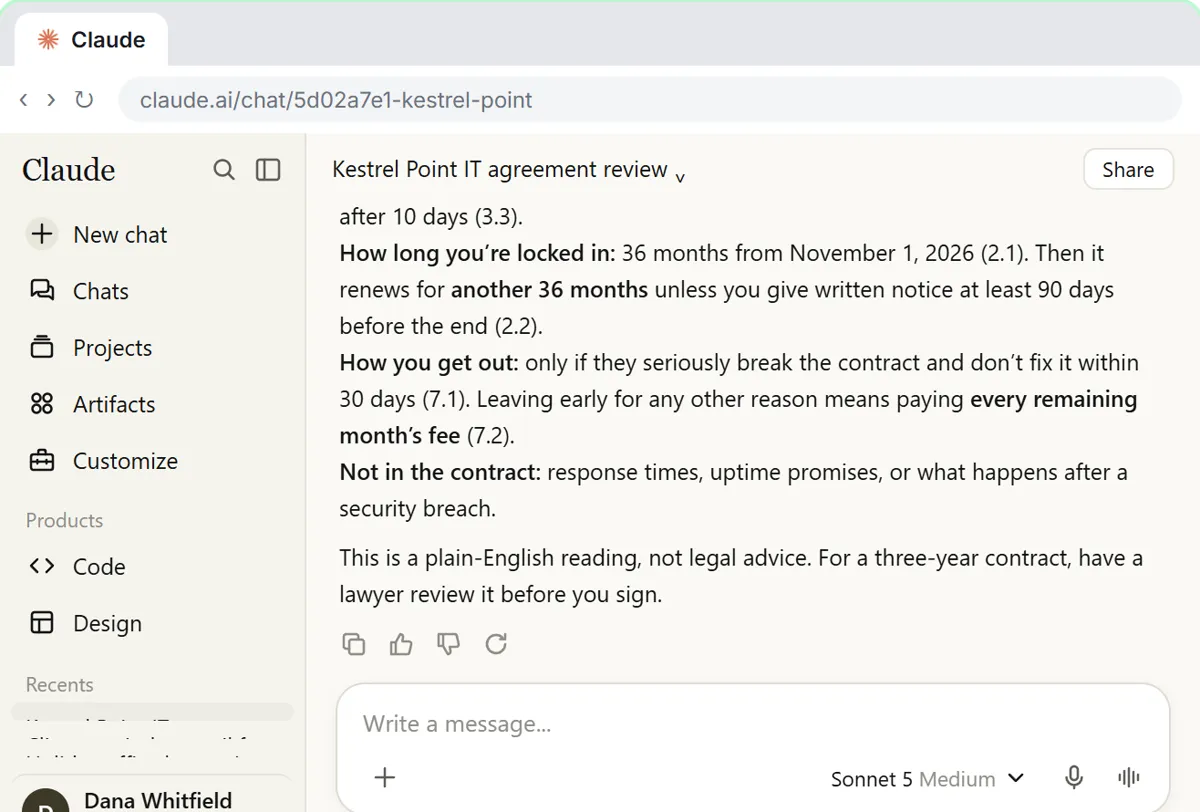 Check a Contract for Red Flags with Claude
Upload a vendor contract, get it in plain English, find the risky clauses with the exact words quoted, draft questions for the vendor, and save the review as a project…
Free · Live ~11 min Beginner
◷AI Contract Review in 10 Minutes using Foxit AISkimmed contracts hide auto-renewals, late fees and liability caps. Upload one to Foxit Workspace, get a plain-English summary and every renewal and exit date, check…
Free · Live ~10 min Beginner
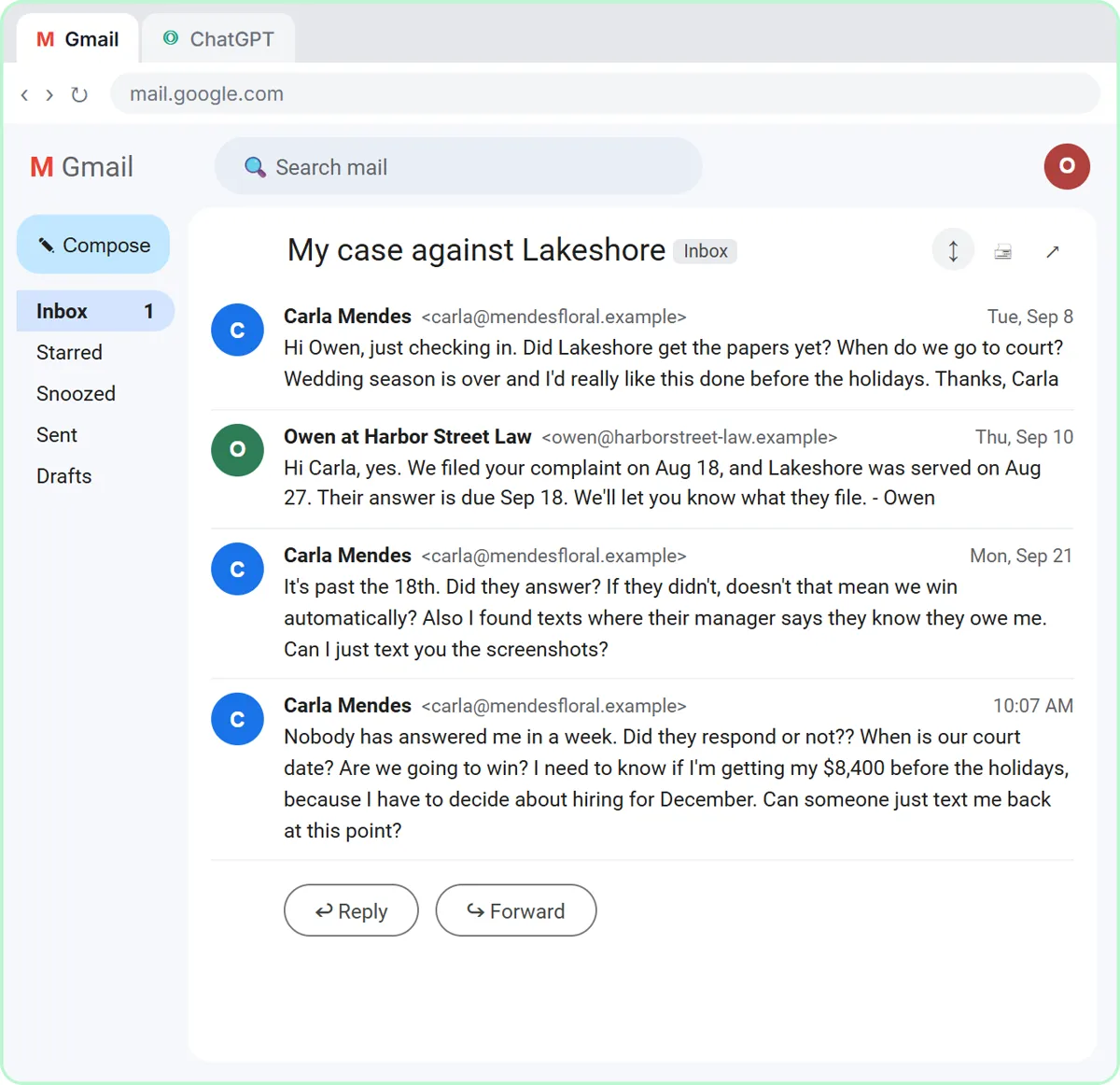 Answer Case-Update Emails Without Predicting the Outcome using ChatGPT
A client wants a court date and a promise she'll win. Give ChatGPT the thread and your firm's facts, catch the lines that predict an outcome, and send a clear, kind…
Free · Live ~10 min Beginner
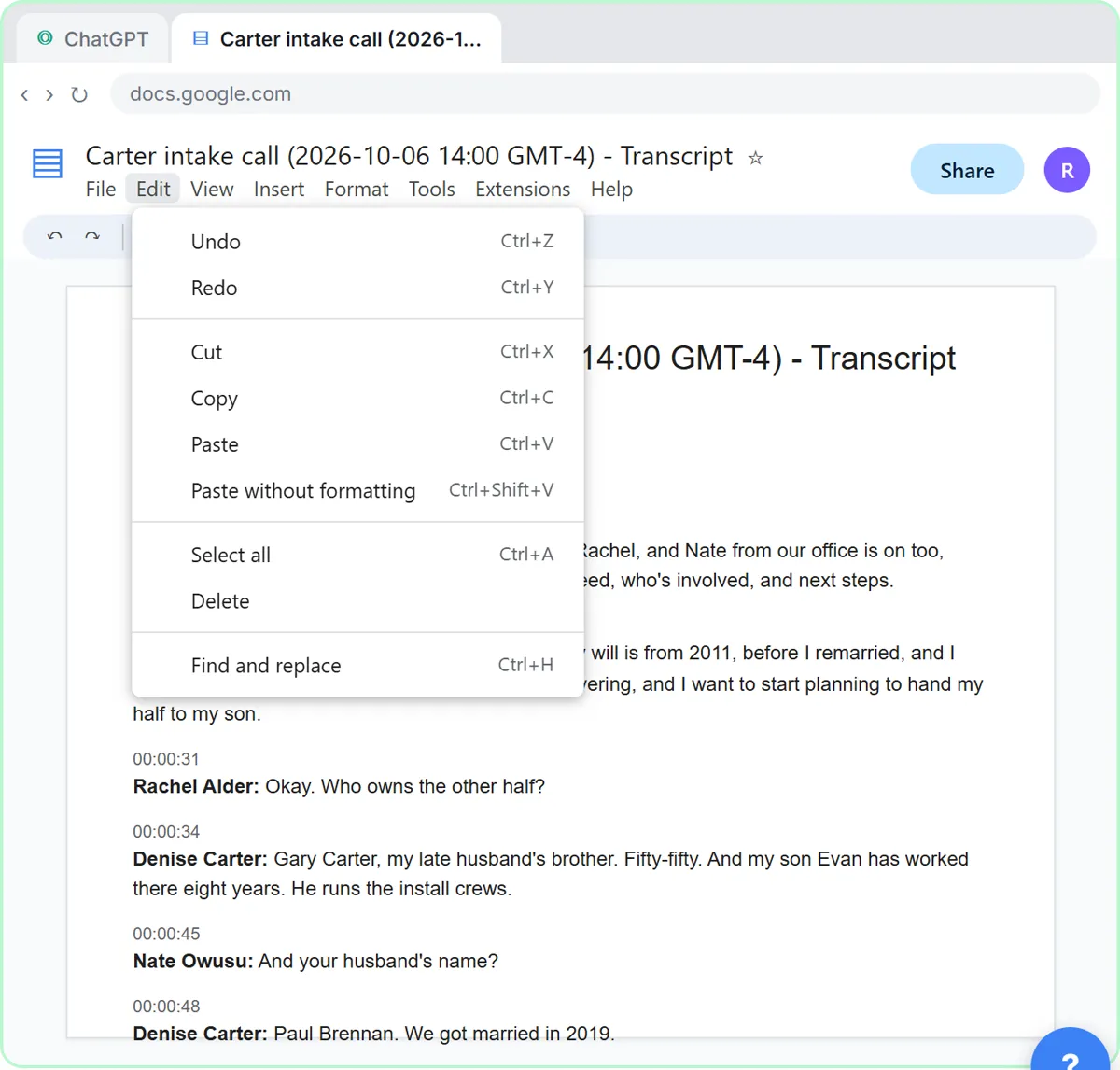 Turn a Client Intake Call into Next Steps and a Conflict-Check List (Law Firms)
Turn a new-client intake call into a summary, the engagement next steps with owners and dates, the names for your conflict check, and a follow-up email to the…
Free · Live ~9 min Beginner
◷ChatGPT: Keep Client Data Safe, Set Up Your Team's Data Controls in 10 MinutesA client asks if their files go into ChatGPT. Answer with confidence: set the data controls, memory, Temporary Chat and shared links, then hand your team a one-page AI…
Free · Live ~10 min Beginner
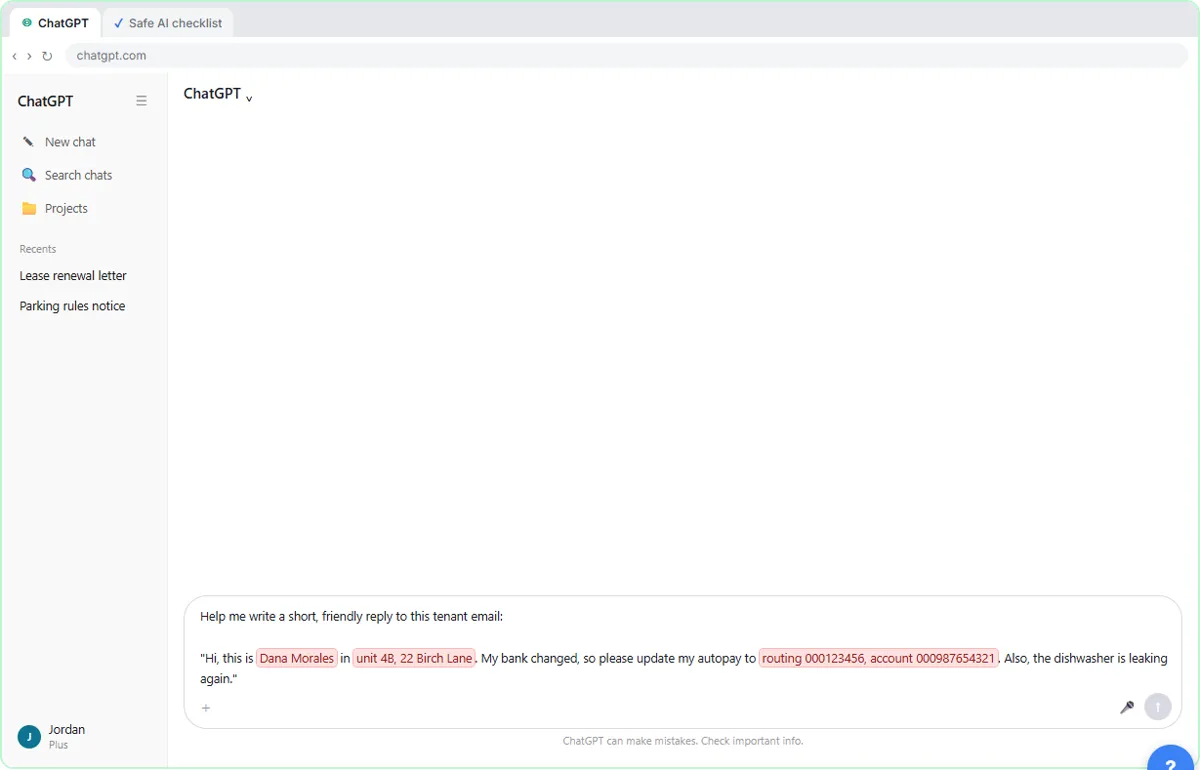 Use AI at Work Without Leaking Client Data using ChatGPT
Turn off model training, strip a tenant's bank details and address out of a prompt, then catch the two promises ChatGPT made up before the reply goes out.
Free · Live ~7 min Beginner
Which free courses fit this job?
- AI for Law Firms: Case-update replies, intake summaries and contract checks, without predicting outcomes or leaking client data.
- Master ChatGPT for Work: Go from safe first chats to ChatGPT that knows your job, reads your files and runs multi-step work: data controls, memory, prompts, meeting minutes…
- AI Governance for Small Business: Put simple AI rules in place for a 5 to 50 person office: what data never goes in, which tools are approved, the right account settings, a one-page…
Practice it free, step by step
Check a Contract for Red Flags with Claude. Upload a vendor contract, get it in plain English, find the risky clauses with the exact words quoted, draft questions for the vendor, and save the review as a project for the next one. You do every step yourself in a practice copy of Claude, it checks your work as you go, and “Do it for me” finishes any step you get stuck on. Free, and nothing touches your real accounts.
Start the free lessonMore templates for this job
Single prompts from the prompt library, each with a filled-in example and a checklist for the answer.
- Legal research memo outline prompt: Outline a legal research memo: question, facts, issues and the kinds of sources to find, with no invented cases and every…
- Contract version comparison prompt: Compare two versions of a contract and list every clause that changed, was added or was removed, in plain words, with no legal…
- Engagement letter draft prompt: Draft an engagement letter from your own approved terms: scope, exclusions, fees and client duties. Gaps get flagged for review…
- Matter closing letter prompt: Draft the letter that tells a client their matter is closed: what was done, what happens to their files, what stays open, and…
Prompts for other roles
Frequently asked questions
- Can lawyers ethically use ChatGPT?
- Many bar associations have issued guidance that allows AI use with conditions: competence, confidentiality, supervision and verification. Read your own jurisdiction's guidance and set a firm policy before you start.
- Can AI review a contract for me?
- It can produce a first-pass issues list and plain-English summaries quickly. The legal judgment about risk, enforceability and advice remains yours, and every point should be checked against the document.