This guide explains the term, the usual sequence of reminders, and the prompts that get a polite, accurate draft on the first try.
What does dunning mean?
Dunning means asking a customer to pay money they owe, usually as a planned series of reminders that get firmer over time. The word is old, but the job is ordinary: someone in the office notices an invoice is past its due date and sends a note.
A few related terms come up with it:
- Accounts receivable is the money customers owe you for work you've already invoiced.
- An AR aging report groups those unpaid invoices by how late they are, such as 1-30 or 31-60 days.
- Payment terms are the rules on the invoice, such as "Net 30," that set the due date.
Dunning is what you do with the aging report: work down the list and remind each customer at the right level of firmness. The glossary entry for dunning explains why the tone at each stage is the hard part.
What does a dunning sequence usually look like?
Most small businesses use three or four reminders, each a little firmer than the last. There is no single correct schedule, and your own terms and contracts decide what you can say. A common shape:
| Reminder | When (example) | Tone | What it says |
|---|---|---|---|
| 1. Friendly | A few days after the due date | Warm, assumes it slipped | The invoice number, amount, due date and how to pay |
| 2. Firmer | A couple of weeks late | Polite, direct | The same facts, plus a request to reply with a payment date |
| 3. Final | About a month late | Calm, serious | The same facts, plus the next step your policy allows |
The timing column is an example, not a rule. Use the steps your business actually follows, and only mention a late fee or a pause in service if your terms really include one.
How do I write a dunning email with ChatGPT?
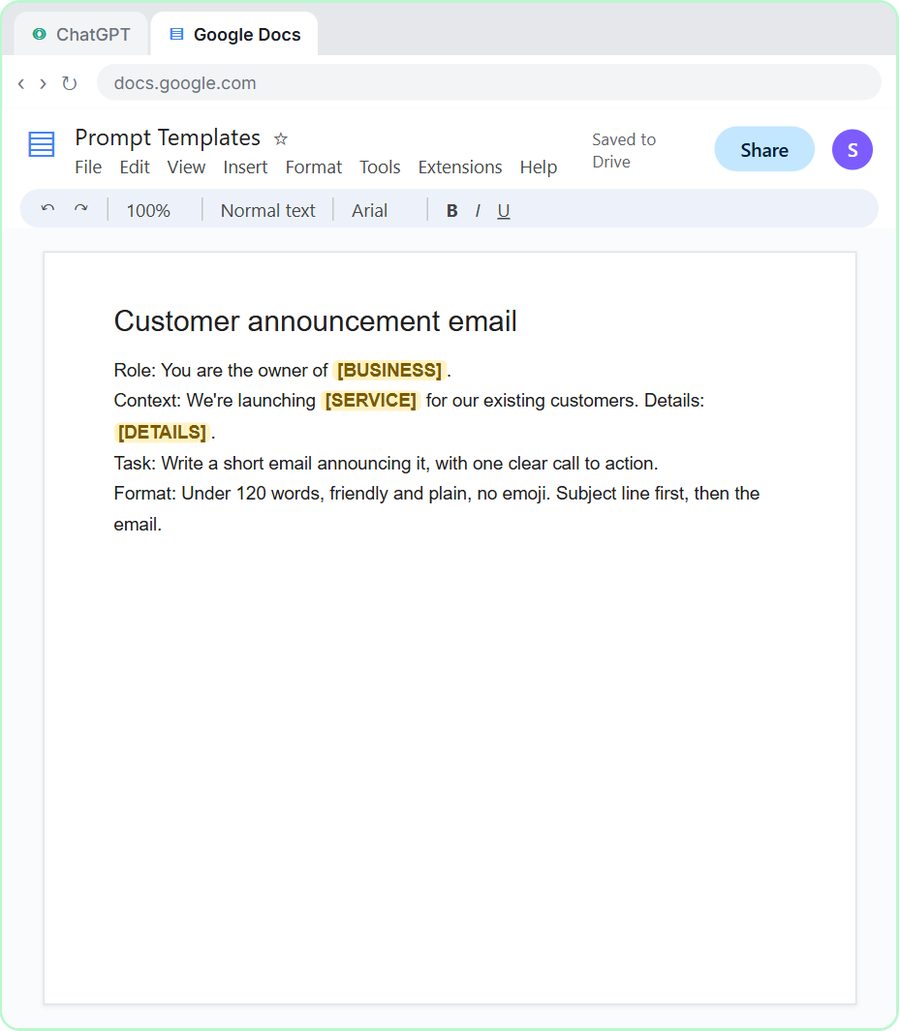
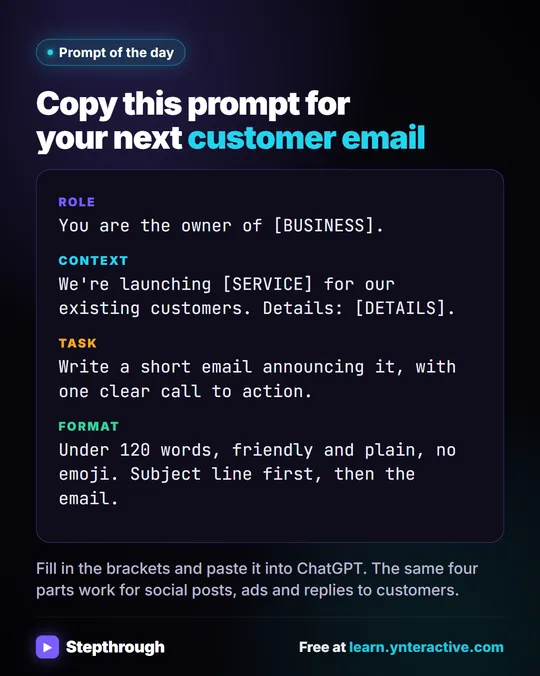
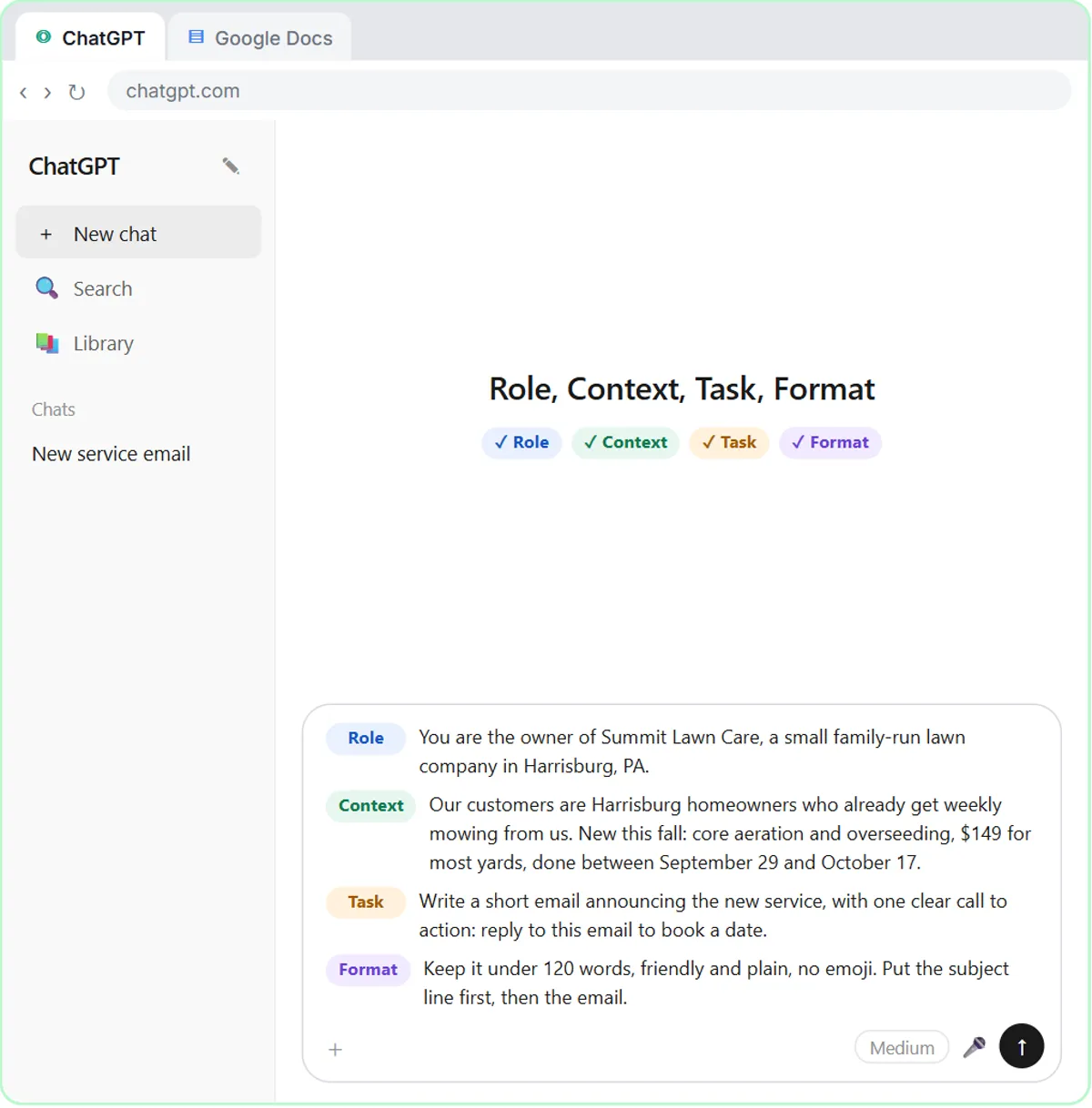
Give ChatGPT four parts: who is writing (Role), the facts it can't guess (Context), what you want back (Task) and how it should look (Format). That structure is the whole point of Prompt Writing 101, where the same request comes back generic when asked vaguely and specific when asked in four parts.
A dunning version of that prompt:
Role: You write payment reminders for [BUSINESS], a small [TYPE OF BUSINESS].
Context: Invoice [NUMBER] for [AMOUNT] was due on [DATE]. This is reminder [1, 2 or 3].
Payment options: [HOW TO PAY]. Our terms: [ANY LATE FEE OR NEXT STEP, OR "none"].
Task: Write a [friendly / firmer / final] reminder that asks them to pay or reply with a payment date.
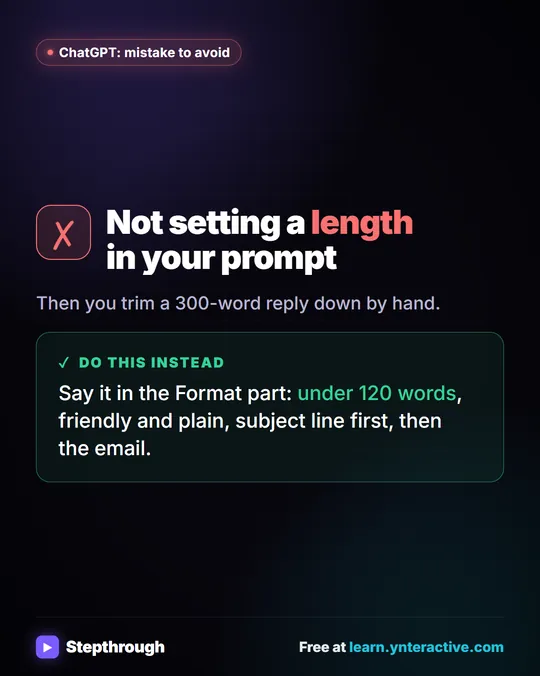
Format: Under 120 words, plain and polite, no emoji. Subject line first, then the email.
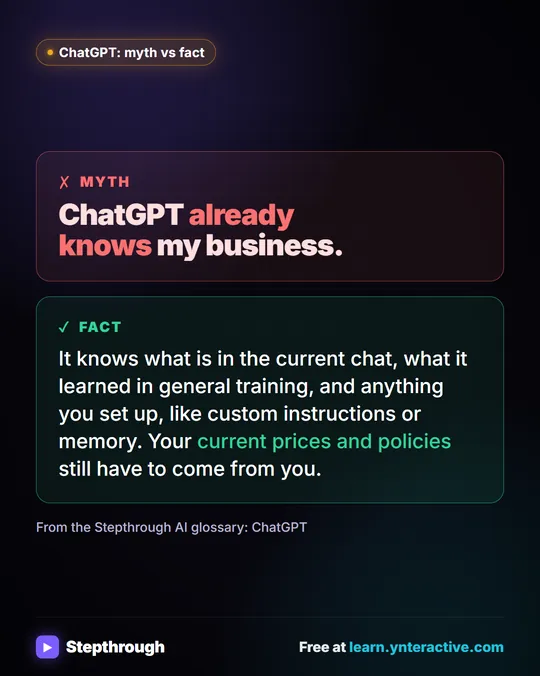
Only use the facts above. Don't invent fees, deadlines or consequences.
Fill in the blanks and send it. Then change one word, "friendly" to "firmer," for the next reminder. Save the prompt in a document, as the lesson does with its Prompt Templates doc, so you only fill in blanks next time.
Try it free, step by step
Prompt Writing 101: Role, Context, Task, Format. Ask ChatGPT for the same customer email twice, once vaguely and once with a four-part prompt, and see exactly why structure gets a better answer. You do every step yourself in a practice copy of ChatGPT, it checks your work as you go, and “Do it for me” finishes any step you get stuck on. Free, and nothing touches your real accounts.
Start the free lessonHow do I stop ChatGPT from adding threats or fees?
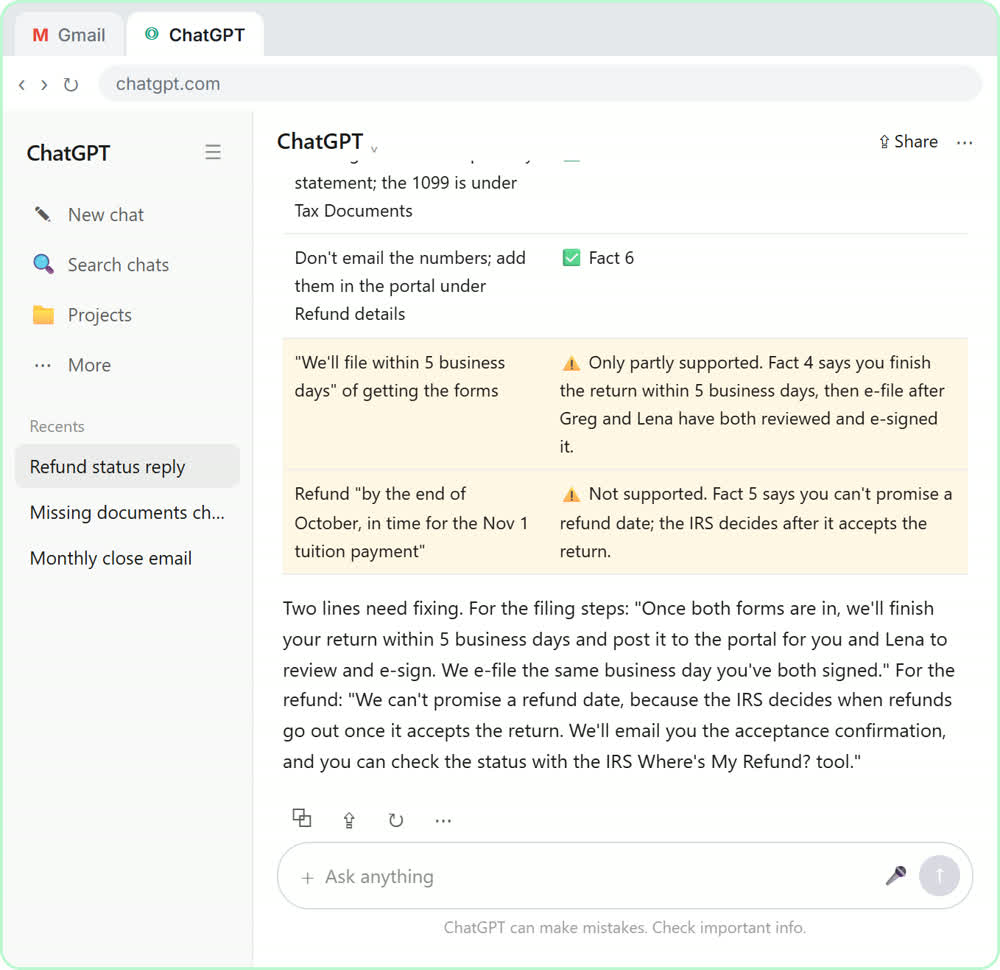
List the facts it may use, tell it not to invent anything, then ask it to check its own draft. That routine comes from Reply Faster: Client Refund Emails, where a made-up accounting firm answers a client who wants a date nobody can promise.
The lesson's check prompt works on any reminder:
Check that reply against my facts. Make a table of every promise or claim in it and the fact that backs it up. Flag anything the facts don't support.
In the lesson, the first draft sounds great but promises a timeline the facts don't support, and the check table catches it. A dunning draft can slip the same way: a late fee you don't charge, a "final notice" that isn't final, or a collections threat you never planned. If the table flags a line, ask for one specific fix, such as "Remove the late fee sentence and keep every other fact the same."
What should a payment reminder include?
A good reminder makes paying easy and leaves nothing to guess. Include:
- The invoice number and amount. The customer may have several invoices open.
- The original due date. Facts, not blame.
- How to pay. A link, a portal or the mailing address, whatever you actually accept.
- One clear ask. Pay now, or reply with a date.
- A real person's name. Sign it like a person, not "Accounts Department," if that fits your office.
Leave out guesses about why they haven't paid. "I know things get busy" is fine. "You must have forgotten" is not.
Should I paste customer details into ChatGPT for this?
Use only what the reminder needs. The invoice number, amount and due date are usually enough, and you can type the customer's name into the final email yourself. The lesson's accounting firm also has a firm rule worth copying: never ask for or send bank account numbers by email.
Follow your company's policy on AI tools. A business ChatGPT account that doesn't train on your data is a better choice than a personal one for client work. Is It Safe to Paste Client Emails into ChatGPT? goes deeper.
Can I automate dunning reminders?
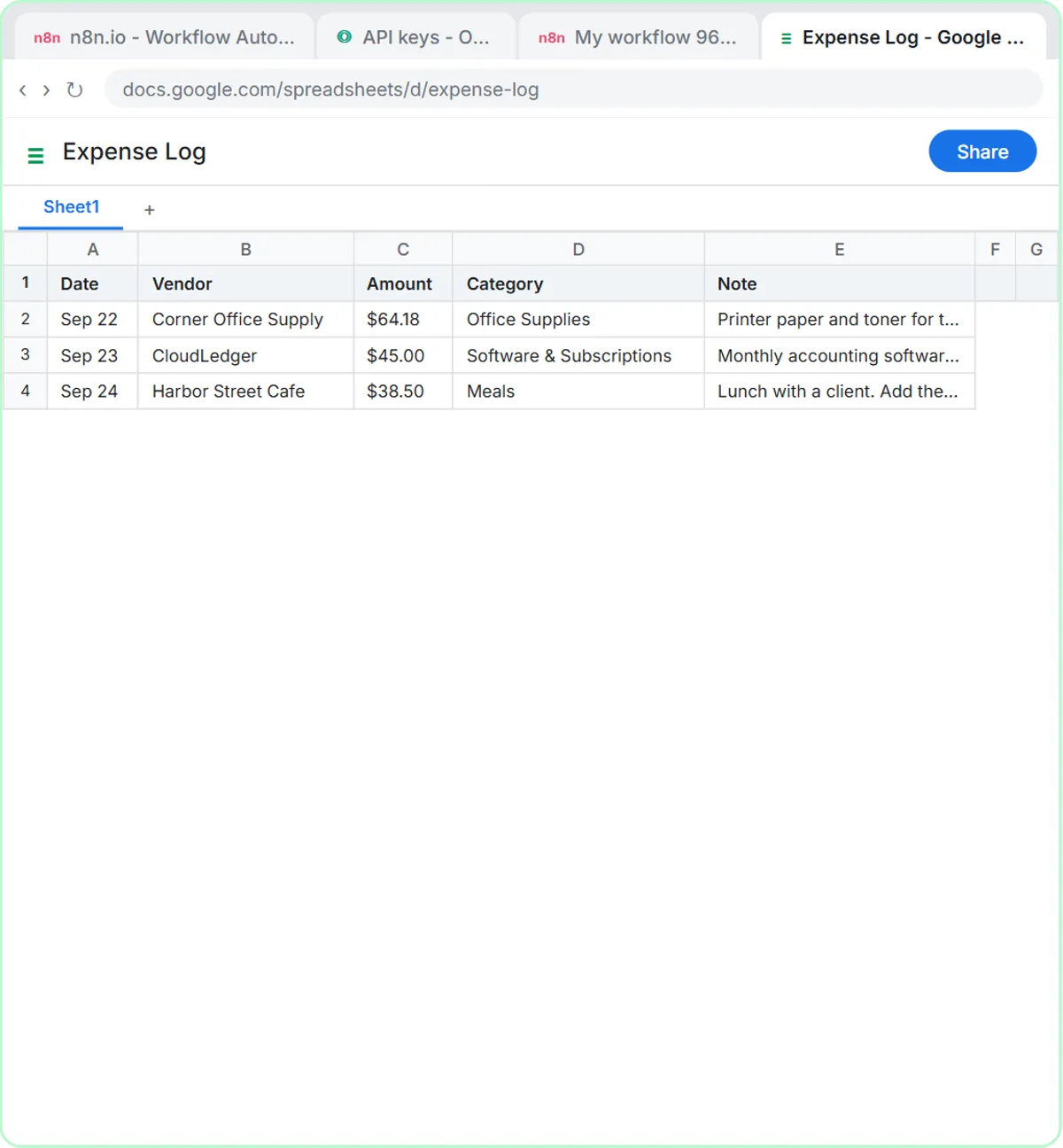
You can, but start by drafting them in ChatGPT and sending them yourself. Once your three reminders read well and your facts list is reliable, the same prompts can run inside an automation tool such as n8n. The finance industry page lists the free automation lessons for finance teams, such as the AI Expense Categorizer Agent.
Keep a person on the send button while you build trust in the drafts. A reminder that goes to the wrong customer, or quotes the wrong amount, costs more goodwill than a late one. Check AI Email Drafts for Promises Before You Send covers how to check drafts before they go out.
Key takeaways
- Dunning is the process of reminding customers about overdue invoices, usually in a friendly, firmer and final sequence.
- A four-part ChatGPT prompt (Role, Context, Task, Format) with the invoice number, amount, due date and payment options gets a specific draft.
- Tell ChatGPT to use only the facts you give it, then ask for a table that matches every claim in the draft to a fact.
- Only mention late fees or next steps that your own payment terms actually include.
- Put only what the reminder needs into ChatGPT, and never send bank account numbers by email.
Frequently asked questions
- What is the difference between dunning and collections?
Dunning is the series of reminders your own business sends about an overdue invoice. Collections usually means a later, more formal step, sometimes handed to an outside agency. Many businesses never need the second step if the reminders are clear and timely.
- How many dunning emails should I send?
Many small businesses use three: friendly, firmer and final. Pick a schedule that fits your payment terms and stick to it so every customer is treated the same way.
- Can ChatGPT write a firm payment reminder without sounding rude?
Yes. Ask for "polite, direct and calm" in the Format part, give it only the real facts, and tell it not to invent fees or consequences. Then read it as the customer would before sending.
- Is it okay to mention late fees in a reminder?
Only if your invoice terms or contract actually include them. Tell ChatGPT whether there is a late fee; if there isn't, say "none" so it doesn't add one.