What is AI literacy?
Quick answer
AI literacy is the working knowledge a person needs to use AI tools sensibly: what they are good at, where they fail, how to ask for what you want, how to check the answer, and what information should never go in. It is a practical skill, not a technical one.
Last updated
Updated · By Robert Breen
Why it matters for a small business
Two people with the same tool get very different results. One types a vague sentence, accepts the first answer and sends it. The other gives clear context, reads the draft against the facts and fixes the line that overpromises. The difference is not intelligence. It is a handful of habits that anyone can learn in an afternoon.
It is also becoming an expectation. The EU AI Act, for example, asks organizations that deploy AI systems to take steps so their staff have sufficient AI literacy for how they use them. Even where no law applies, clients increasingly assume that people using AI on their work understand its limits, including hallucinations and data risks.
In a real lesson: Prompt Writing 101: Role, Context, Task, Format
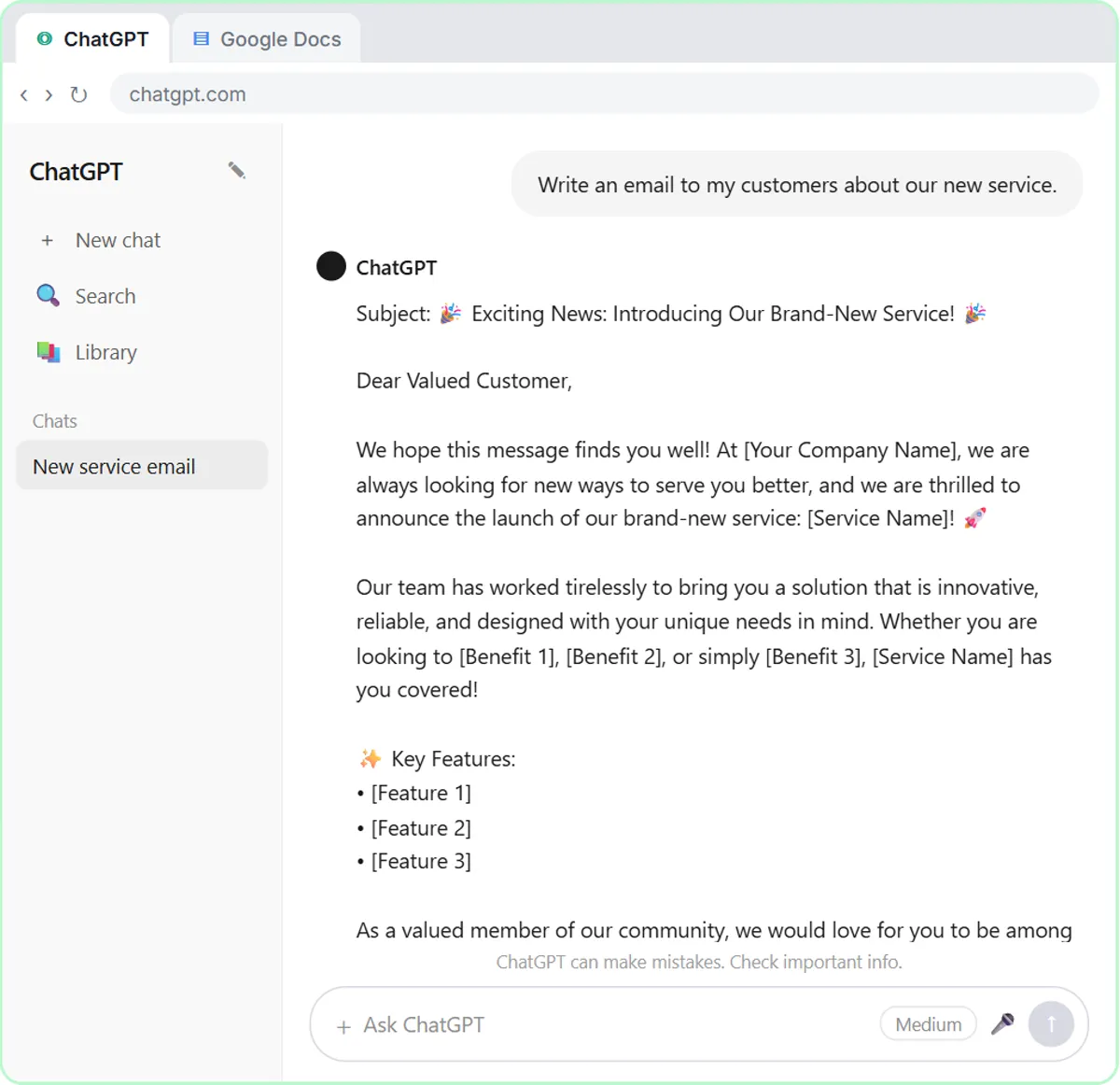
The Prompt Writing 101 lesson is a short course in AI literacy. You ask ChatGPT for the same customer email twice for Summit Lawn Care, a made-up lawn company. First the vague way: "Write an email to my customers about our new service." Then with four parts: Role, Context, Task and Format.
The second prompt gives the facts ChatGPT cannot guess, such as core aeration and overseeding at $149 for most yards between September 29 and October 17, and limits the email to 120 words with one call to action. The point is not the lawn company. It is seeing for yourself that the tool only knows what you tell it.
The Reply Faster: Customer Emails lesson adds the second half of literacy, checking. For Cedar Lane Bakery, also made up, you ask ChatGPT to make "a table of every promise or claim" in its draft and the fact that backs it up, and you catch the line that overpromises on a nut allergy.
Try this lesson free or read the step-by-step guide.
Common confusions
AI literacy vs prompt engineering
Prompt engineering is one skill inside AI literacy. Literacy also covers checking output, knowing when not to use AI, and handling private data correctly.
AI literacy vs technical AI skills
You do not need to know how models are trained or write code. Literacy is about using the tools well, the way computer literacy never required building a computer.
Tips
- Teach three habits first: give context, check every fact and keep private data out.
- Use your own real tasks in training. People remember a lesson built on their inbox.
- Share good prompts in a team prompt library so new staff start from what works.
Related terms
More Business terms
Where you use it: free lessons
- Prompt Writing 101: Role, Context, Task, Format (ChatGPT, 8 min)
- Reply Faster: Turn a Messy Customer Email Thread into a Clear, Friendly Reply (ChatGPT, 9 min)
- Summarize a Meeting Transcript with ChatGPT (ChatGPT, 9 min)
Frequently asked questions
- How long does it take to build basic AI literacy?
- The core habits can be learned in a few hours of hands-on practice. Staying current takes a little ongoing time, because tools and their settings change.
- Who in an office needs AI literacy?
- Anyone who uses AI tools or receives AI-written work. Managers need it too, so they can judge AI output their team sends them and set sensible rules.