What is AI governance?
Quick answer
AI governance is the set of decisions, owners and checks a business uses to manage AI: which tools are approved, what data may go into them, who reviews the output, and what happens when something goes wrong. A written policy is one piece of it. Governance is who keeps that policy working.
Last updated
Updated · By Robert Breen
Why it matters for a small business
Without governance, AI use spreads one person at a time. Someone pastes client files into a free tool, someone else lets an automation send emails nobody reads, and the first time anyone notices is when a client complains. Governance turns those private choices into shared ones, made once, written down and checked.
For a small firm it does not need a committee. It can be one owner, a short AI acceptable use policy, a list of approved tools and accounts, and a rule that a person reviews anything that goes to a client. Larger organizations often borrow from published frameworks such as the NIST AI Risk Management Framework or the ISO/IEC 42001 standard, which give structure for spotting and tracking risks.
In a real lesson: Turn a Client Meeting into Action Items and a Follow-Up Email (Accounting Firms)
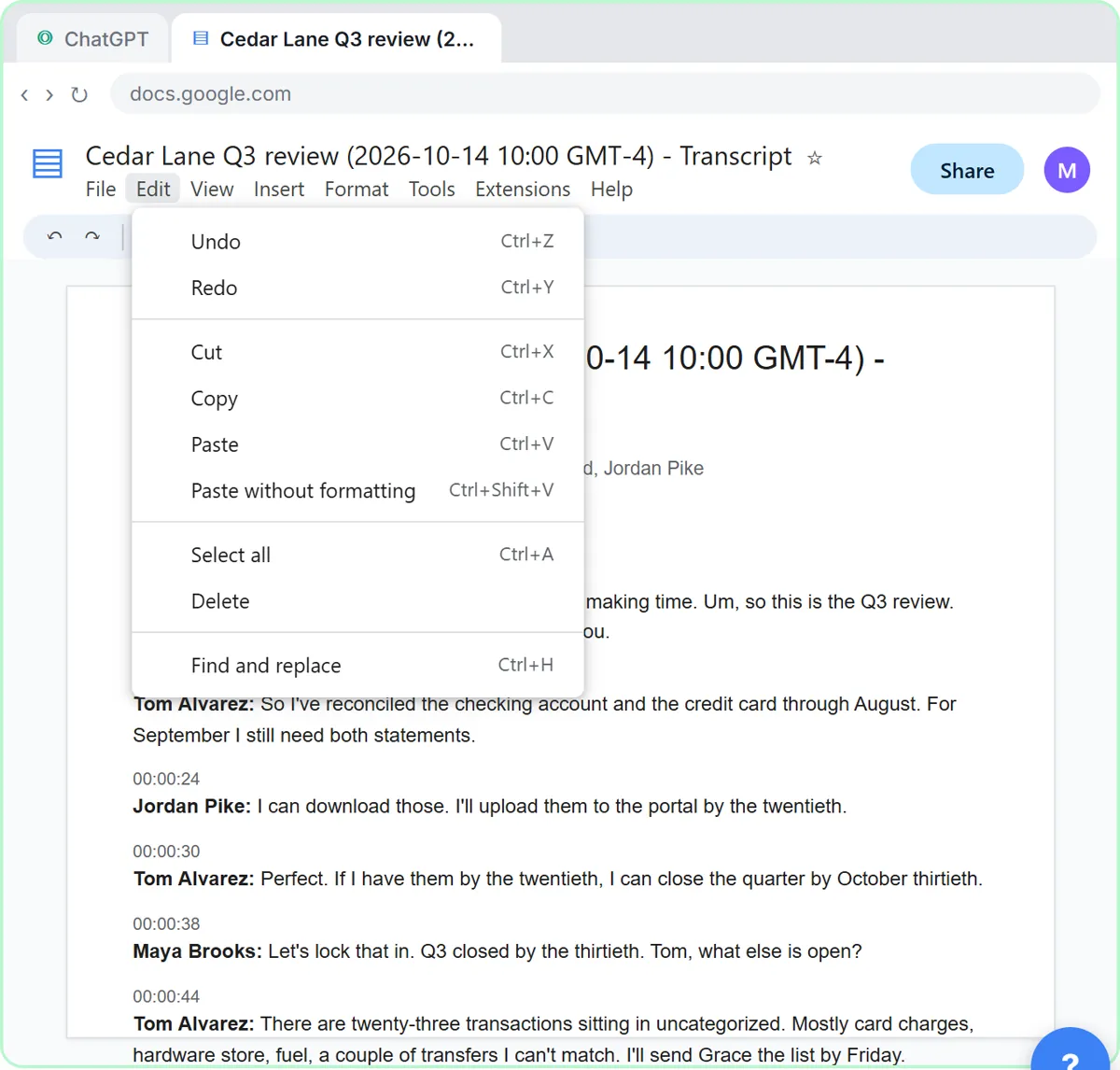
The Summarize a Client Meeting lesson is about turning a transcript into decisions and action items for Millbrook Accounting, a made-up firm, and its made-up client Cedar Lane Landscaping. It closes with three governance rules in one breath: "follow your firm's policy on AI tools, use a business account that doesn't train on your data, and leave out account numbers and tax IDs."
Those are the bones of a governance program: an approved tool, an approved account setting and a data rule. The lesson also builds in a review step. The prompt says to write "Not stated" instead of guessing, and the finish reminds you to check the owners, dates and numbers before the email goes out.
The AI Expense Categorizer Agent lesson shows the same idea inside an automation. Its system prompt for Maple Street Bookkeeping, also made up, names "the bookkeeper who reviews every entry before it is posted" and says "Do not give tax advice." Governance written right into the tool.
Try this lesson free or read the step-by-step guide.
Common confusions
AI governance vs an AI policy
The policy is the document. Governance is the ongoing work around it: approving tools, training people, checking that rules are followed and updating them when tools change.
AI governance vs guardrails
Guardrails are technical limits inside one tool, such as "drafts only." Governance decides which guardrails each tool needs and who checks them.
Tips
- Name one owner for AI decisions, even in a five-person office.
- Keep a simple list: tool, account type, who uses it, what data is allowed, who reviews the output.
- Review the list every few months. AI tools change their features and settings often.
Related terms
More Business terms
Where you use it: free lessons
- Turn a Client Meeting into Action Items and a Follow-Up Email (Accounting Firms) (ChatGPT, 9 min)
- Build an AI Agent That Categorizes Business Expenses (n8n, 12 min)
- AI Email Responder: Draft Gmail Replies Automatically with n8n (n8n, 12 min)
Prompt templates that use it
Frequently asked questions
- Is AI governance only for big companies?
- No. Big companies need more paperwork, but a small firm with client data has the same basic questions. A one-page policy, an approved tool list and a review rule cover most of it.
- Who should own AI governance in a small business?
- Usually the owner or office manager, with input from whoever handles IT and anyone with legal or compliance duties. What matters is that one named person can say yes or no to a new tool.