What are payment terms like Net 30?
Updated · By Robert Breen
Payment terms are the agreed rules for when a customer must pay an invoice. "Net 30" means the full amount is due thirty days after the invoice date. Terms can also include an early-payment discount, such as "2/10 net 30", meaning 2 percent off if paid within ten days.
Why it matters for a small business
Terms set your cash flow. A business that quotes Net 60 is lending its customers two months of money for free, while one that asks for payment on receipt gets cash quickly but may lose some deals. Whatever you choose, the terms should be on every quote, contract and invoice so nobody has to remember a conversation.
Terms also decide when you can call something late. Without a stated due date, a reminder feels like an accusation. With one, it is a plain fact. For your own bills, terms tell you the last day to pay without a penalty, and whether a discount is worth taking.
In a real lesson: Reply Faster to Clients Chasing Their Refund: ChatGPT for Tax and Bookkeeping Firms
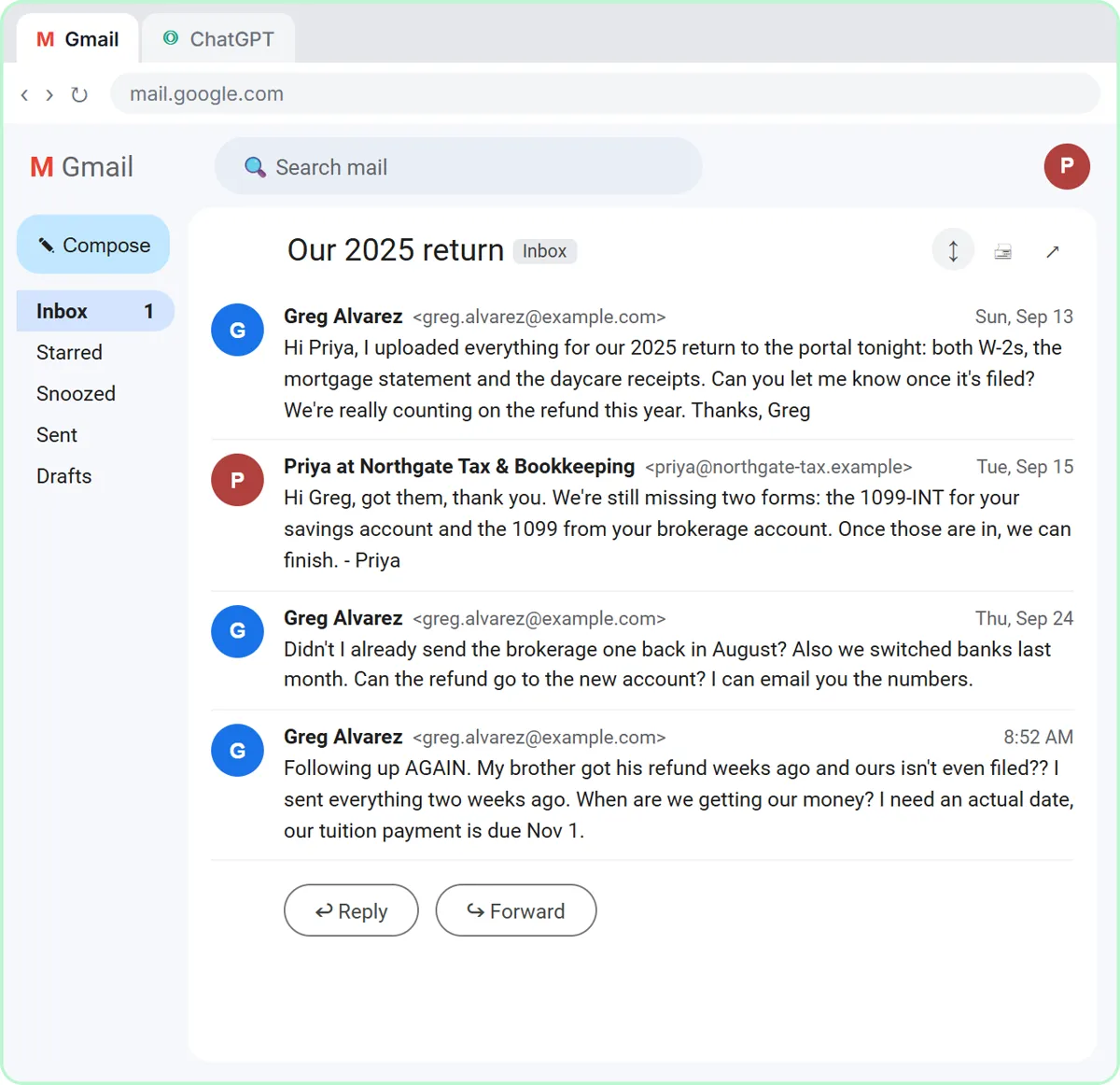
The Reply Faster: Client Refund Emails lesson is not about invoices, but it models a close cousin of payment terms: stating your timing rules in writing. In the lesson, Priya works at Northgate Tax & Bookkeeping, a made-up firm. A client, Greg, keeps asking when his refund will arrive.
Her facts list contains the firm's own turnaround terms: once every document is in, the return is finished within 5 business days and posted to the portal. The firm e-files the same business day both spouses have signed. It also says what the firm cannot promise, which is a refund date, since the IRS decides that.
That is the spirit of good payment terms. Say clearly what happens, in what order, within what time, and be honest about the part outside your control. The lesson then has ChatGPT check each promise in the draft against those facts. You could run the same check on an invoice email that quotes your terms.
Try this lesson free or read the step-by-step guide.
Common confusions
Net 30 vs due in 30 days from receipt
Net 30 counts from the invoice date, not from the day the customer opens the email. If you want it to count from receipt, say so in the terms.
Payment terms vs late fees
Terms say when payment is due. A late fee is a separate charge for missing that date, and it has to be agreed in advance and may be limited by local rules. Ask a lawyer before you add one.
Tips
- Put the terms and the exact due date on the invoice itself, not only in the contract.
- Send the invoice the day the work is done. Terms start counting when you do.
- If you offer an early-payment discount, make sure the savings are worth the lost cash on the other side.
Related terms
Where you use it: free lessons
- Reply Faster to Clients Chasing Their Refund: ChatGPT for Tax and Bookkeeping Firms (ChatGPT, 10 min)
- Turn a Client Meeting into Action Items and a Follow-Up Email (Accounting Firms) (ChatGPT, 9 min)
Frequently asked questions
- Is Net 30 the standard?
- It is very common, but there is no single standard. Terms vary by industry, customer size and negotiation. Choose what your cash flow can support.
- Can I change terms for one customer?
- Yes, if both sides agree and it is written down. Keep a note of the exception so your reminders match what you agreed.