What is accounts receivable?
Updated · By Robert Breen
Accounts receivable (AR) is the money customers owe your business for goods or services you have already delivered and invoiced but not yet been paid for. It is an asset on your books, but it doesn't pay bills until it turns into cash.
Why it matters for a small business
For a small business, AR is often where profit goes to hide. The work is done and the invoice is sent, but the cash is weeks away, and payroll is not. Keeping AR low and current is as important to cash flow as winning new work.
Most bookkeeping tools can show AR by age, often called an aging report: what is current, and what is 1 to 30, 31 to 60, or more than 60 days past due. The older an invoice gets, the less likely it is to be paid, so the work is consistent, timely reminders. That is where AI helps: drafting the right reminder for each invoice's age, in your tone, so following up is quick enough that it actually happens.
In a real lesson: Build a Custom GPT That Writes Overdue Invoice Reminders
In Build a Custom GPT That Writes Overdue Invoice Reminders, the example is a single receivable: "Write a payment reminder to a client whose $850 invoice is 45 days overdue." The firm is Maple Street Bookkeeping, a made-up bookkeeping firm with 4 people and about 60 small-business clients, and its instructions state the terms behind every receivable: "Invoices are due 30 days after the invoice date."
The Instructions spell out what an AR reminder needs so the client can act on it: a subject line with the invoice number, the client's first name, then "the invoice number, amount, original due date and days overdue," the ways to pay and one clear next step, all under 150 words. Those are exactly the fields an aging report gives you for each open invoice.
The GPT also has a collections policy attached, Maple-Street-Collections-Policy.pdf, so it only offers payment options the firm really accepts. The rules for how firm each reminder should be, by days overdue, are covered under dunning.
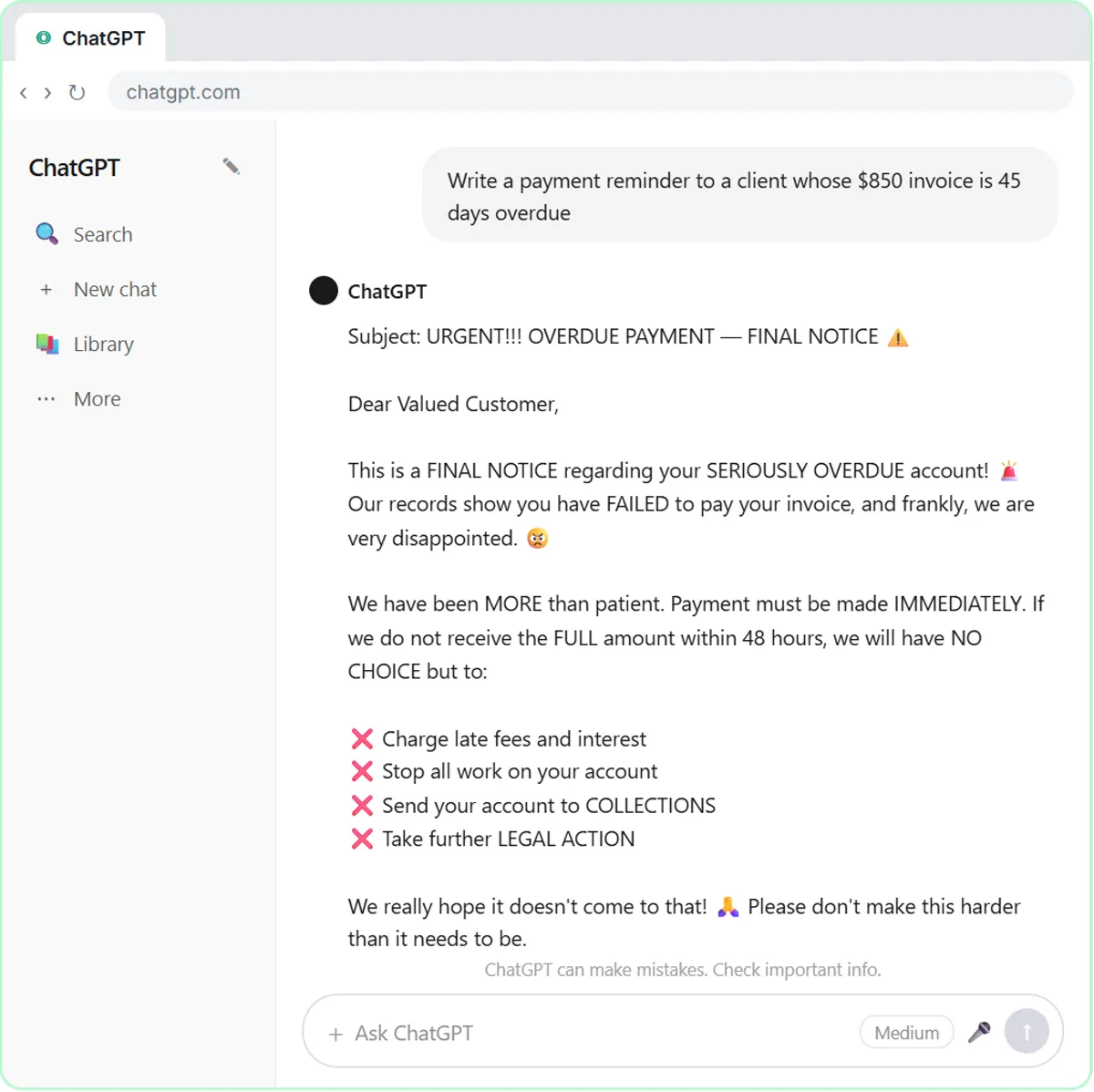
Try this lesson free or read the step-by-step guide.
Common confusions
Accounts receivable vs accounts payable
Receivable is money owed to you by customers. Payable is money you owe to vendors. Your receivable is your customer's payable.
Accounts receivable vs revenue
Depending on how you keep your books, you may record revenue when you invoice, before the cash arrives. AR is the gap between the two. Ask your accountant how your books treat it.
Tips
- Review your AR aging on a fixed day each week, not when cash feels tight.
- Put the invoice number and amount in every reminder. Vague reminders get vague replies.
- Never let AI invent late fees or interest. Only mention what your client agreement includes.
Related terms
Where you use it: free lessons
- Build a Custom GPT That Writes Overdue Invoice Reminders (ChatGPT, 8 min)
More free tutorials
Prompt templates that use it
Frequently asked questions
- Is accounts receivable an asset?
- Yes. It is money your business expects to receive, so it is listed as an asset, usually a current one.
- Can AI collect overdue invoices for me?
- It can draft the reminders. A person should review and send them, and anything long overdue or disputed should be handled personally.