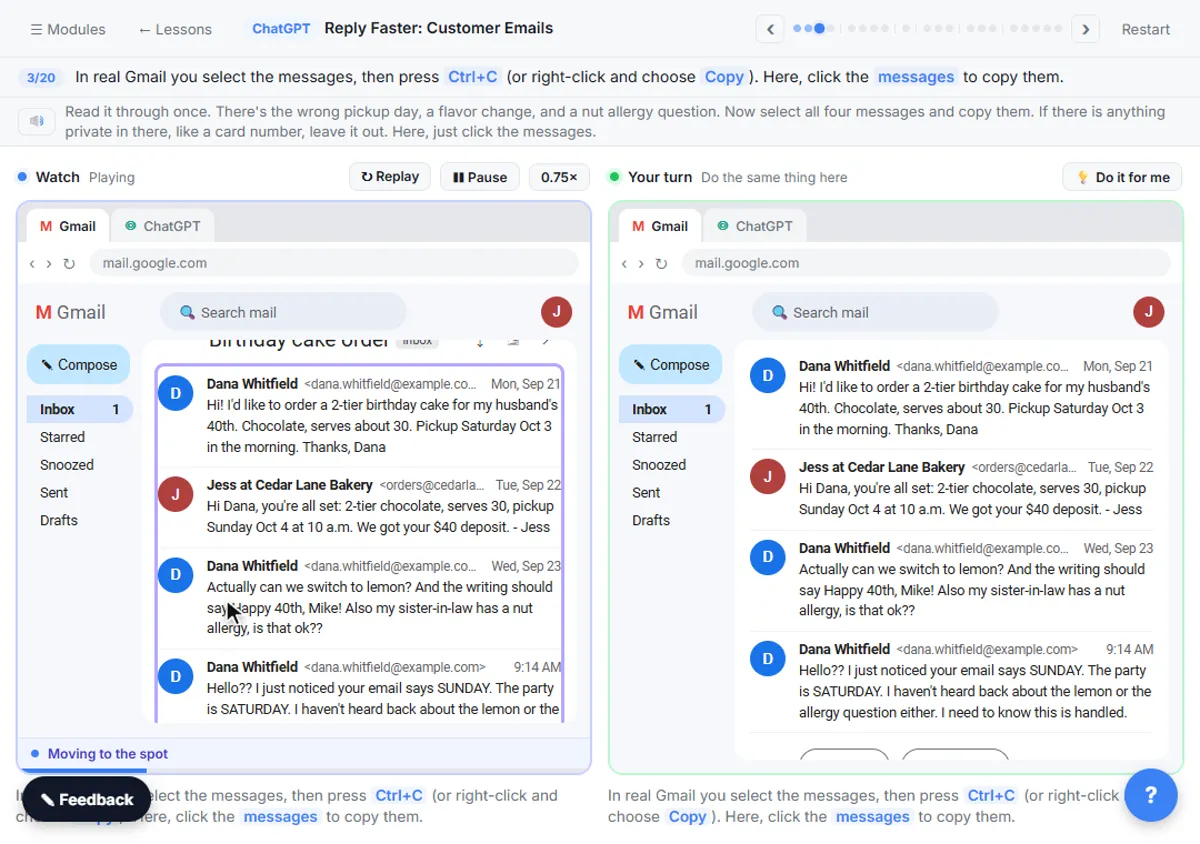
This guide is for accountants, bookkeepers and tax office staff. It's about client communication, not tax advice.
Why can't my firm promise a refund date?
Because once a return is accepted, the tax agency decides when the refund goes out, not your firm. The lesson's facts put it in one line: "We can't promise a refund date. Once the IRS accepts the return, the IRS decides when the refund is issued."
What the firm can promise is its own part. The lesson's firm, Northgate Tax & Bookkeeping, has a written policy: once every document is in, it finishes the return within 5 business days, posts it to the portal for the clients to review and e-sign, and e-files the same business day they've both signed.
What should the reply say?
Answer the date question honestly, explain what happens next, and give the client something they can do. A good refund reply has four parts:
- Where things stand. What you've received and what's still missing.
- Your timeline. What your firm does, and how fast, once the missing pieces arrive.
- The refund answer. Who decides the date, and how the client can check it.
- One next step. The specific thing the client should do now.
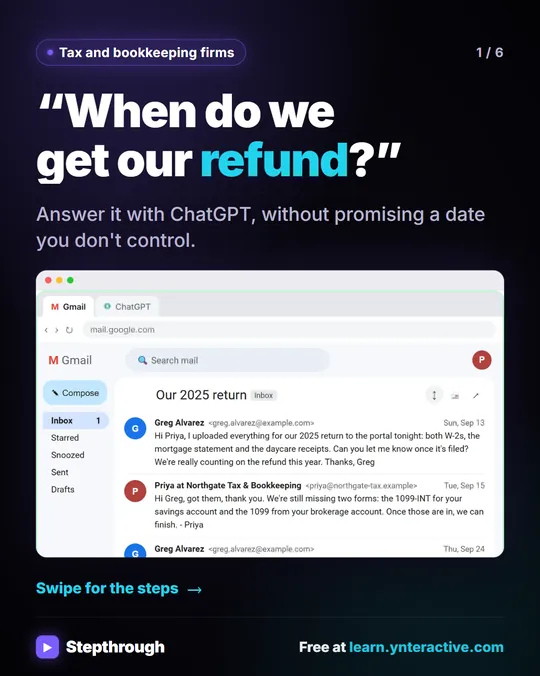
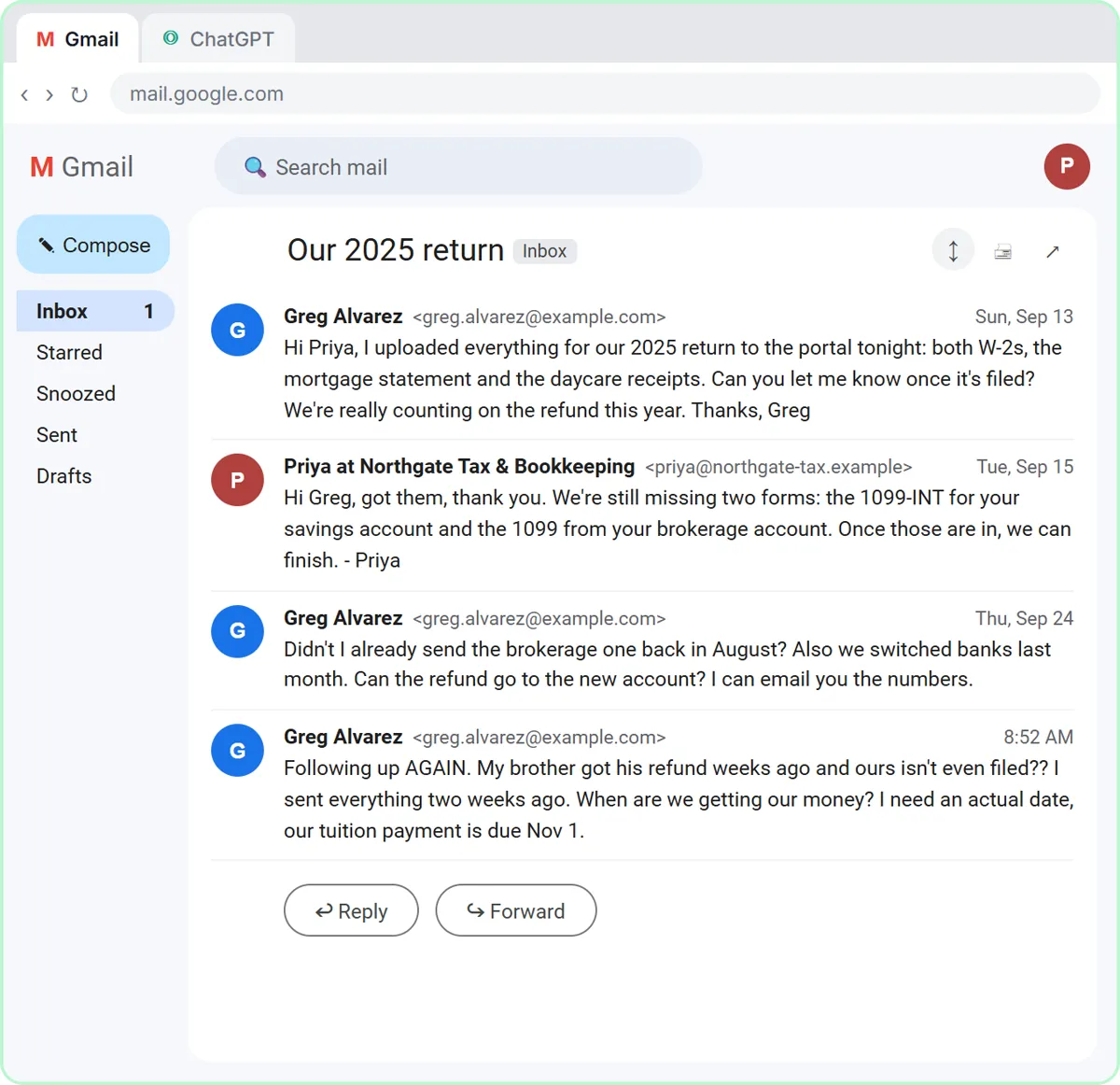
In the lesson, the client's return can't be filed yet because two forms are missing, one of which he thinks he sent in August. The real answer to "when?" starts with those two forms.
How do I get ChatGPT to draft it without promising a date?
Give it the thread, a numbered list of facts headed "Facts (only promise what is here):", and instructions that say not to invent anything. The lesson's facts include what was received on Sep 13, the two missing forms, what the August file actually was (a quarterly brokerage statement, not the tax form), the 5-business-day policy, the refund-date answer, the bank-account rule, and an admission that the firm missed the client's Sep 24 email.
The instructions ask for a calm, warm tone, one apology for the missed email, answers to all three of the client's questions, under 200 words, no subject line, and "Don't invent details or promise anything that isn't in the facts."
Then the important step:
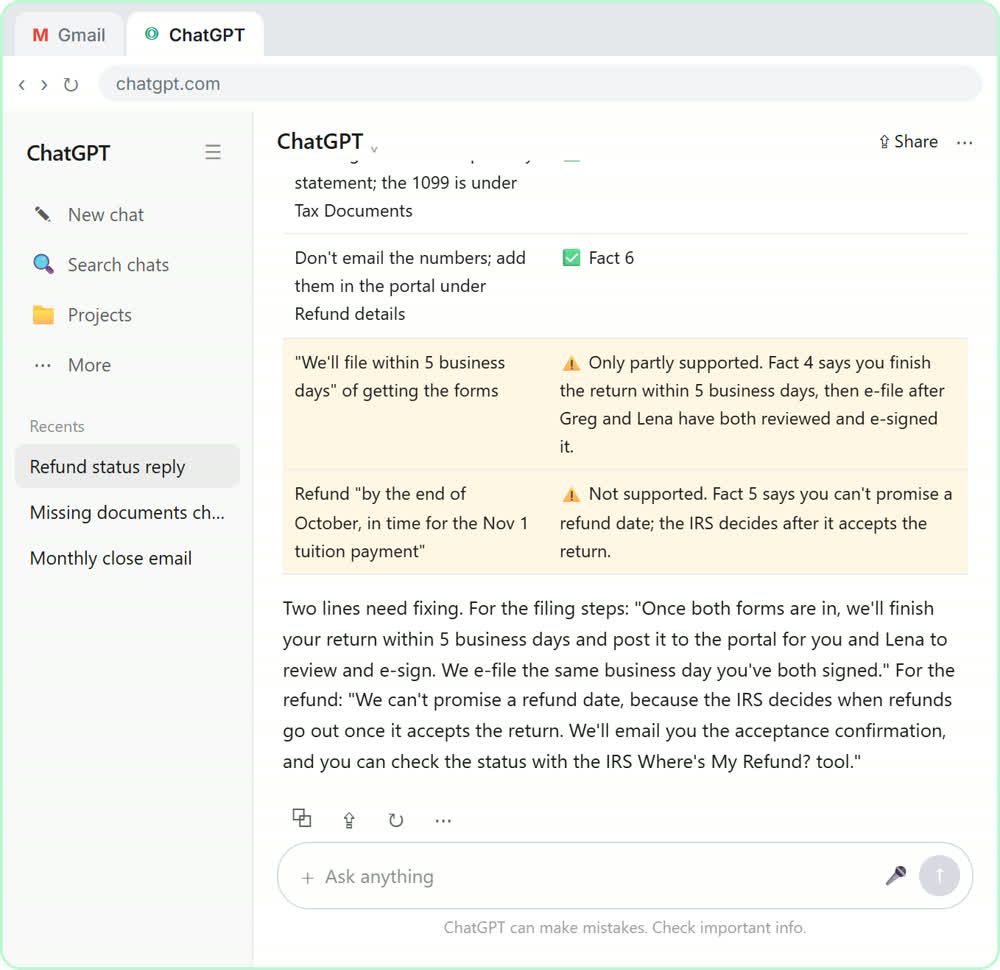
Check that reply against my facts. Make a table of every promise or claim in it and the fact that backs it up. Flag anything the facts don't support.
Try it free, step by step
Answer Refund-Date Emails Without Overpromising using ChatGPT. A client wants a refund date while two tax forms are still missing. Give ChatGPT the thread and your firm's facts, catch the date it shouldn't promise, and send a calm, clear reply from Gmail. You do every step yourself in a practice copy of ChatGPT, it checks your work as you go, and “Do it for me” finishes any step you get stuck on. Free, and nothing touches your real accounts.
Start the free lessonWhat does ChatGPT get wrong in refund emails?
Dates. In the lesson, five of the seven claims in the first draft match a fact, and two don't: the refund date, and "file within 5 business days." That second one is subtle. The policy is to finish the return within 5 business days of receiving every document, then post it for signing; filing comes after both clients sign. A model trying to sound helpful shortened the chain into a promise the firm never made.
ChatGPT suggests wording for both, and you ask for them in one message: use both wordings, make the reply warmer and easier to scan, still under 200 words, and keep every other fact exactly the same.
What does the final reply look like?
It's direct about the date and specific about everything else. Two lines from the lesson's final reply do most of the work:
"Once both are in, we'll finish your return within 5 business days and post it to the portal for you and Lena to review and e-sign. We e-file the same business day you've both signed."
"I know the tuition payment is on your mind, so I'll be straight with you: we can't promise a refund date, because the IRS decides when refunds go out once it accepts the return. We'll email you the acceptance confirmation, and you can check the status with the IRS Where's My Refund? tool."
The reply acknowledges the client's real worry, the tuition payment, without pretending to solve it. It tells him exactly what will happen and how to check on it himself.
What about the new bank account question?
Never take account numbers by email. The lesson's client offers to email his new bank details for the refund, and the firm's rule is clear: add the routing and account numbers in the portal under Refund details, where the client will see them on the return before signing. The reply says so in two sentences.
That rule also applies to your ChatGPT prompt. Don't paste account numbers, Social Security numbers or full tax documents into it. The reply only needs the names of the forms and the dates. Follow your firm's policy on AI tools and use a business account that doesn't train on your data.
How do I save this as a reusable prompt?
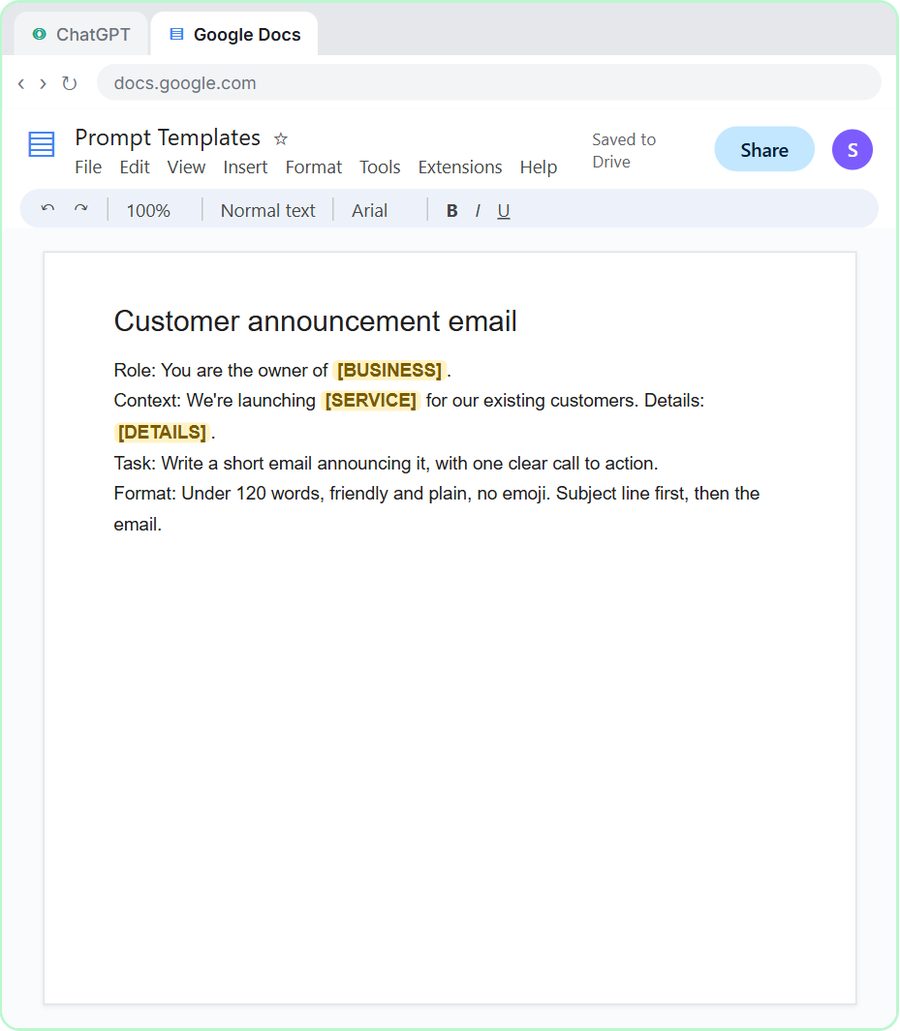
Put the instructions in a template with blanks, the way Prompt Writing 101 saves its prompt in a Prompt Templates document. Keep your firm's standing facts, the turnaround policy, the refund-date answer and the bank-account rule, at the top, and fill in the client-specific facts each time. How to Email Clients for Missing Tax Documents covers the missing-forms side of the same thread, and What Is Dunning? covers the opposite problem, when a client owes you.
Key takeaways
- A refund reply should separate what the firm controls, finishing and filing, from what it doesn't, when the tax agency issues the refund.
- The lesson's firm finishes a return within 5 business days of getting every document, then e-files the day both clients sign.
- Give ChatGPT a numbered facts list and the instruction "Don't invent details or promise anything that isn't in the facts."
- In the lesson, the check table catches a refund date and "file within 5 business days," neither of which the facts support.
- Never take bank account numbers by email or paste them into ChatGPT; point clients to the secure portal.
Frequently asked questions
- What should I tell a client who needs their refund by a certain date?
Say honestly that the tax agency decides when refunds are issued, explain what your firm will do and how fast, and tell them how they can check the status themselves.
- Can ChatGPT estimate when a client's refund will arrive?
It shouldn't. Give it a fact saying your firm can't promise a refund date, and run the check table to catch any date it adds anyway.
- How do I apologize for a slow reply without overdoing it?
Once, plainly, at the start. The lesson's reply says the client's email slipped past the firm and that's on them, then moves straight to the answers.
- Is it safe to use ChatGPT for client tax emails?
Many firms do, with rules: follow your firm's AI policy, use a business account that doesn't train on your data, and leave out account numbers and tax IDs.