What is an e-signature?
Quick answer
An e-signature, or electronic signature, is any electronic way of showing you agree to a document, such as typing your name, clicking an "I agree" box or drawing your signature on a screen. E-signature tools also record who signed, when and how.
Last updated
Updated · By Robert Breen
Why it matters for a small business
Printing, signing, scanning and emailing a page back slows every deal. E-signature tools let a client sign an engagement letter, NDA or change order from a phone in minutes, and they keep a completion record showing the signer's email, the time and the steps taken. That record is often more useful than an ink signature if anyone later asks who agreed to what.
In the United States, a federal law, the ESIGN Act, and a uniform state law most states have adopted, UETA, generally say a signature or contract cannot be denied legal effect just because it is electronic. There are exceptions for certain kinds of documents, and other countries have their own rules. If a document is high stakes or unusual, ask an attorney whether e-signing is appropriate.
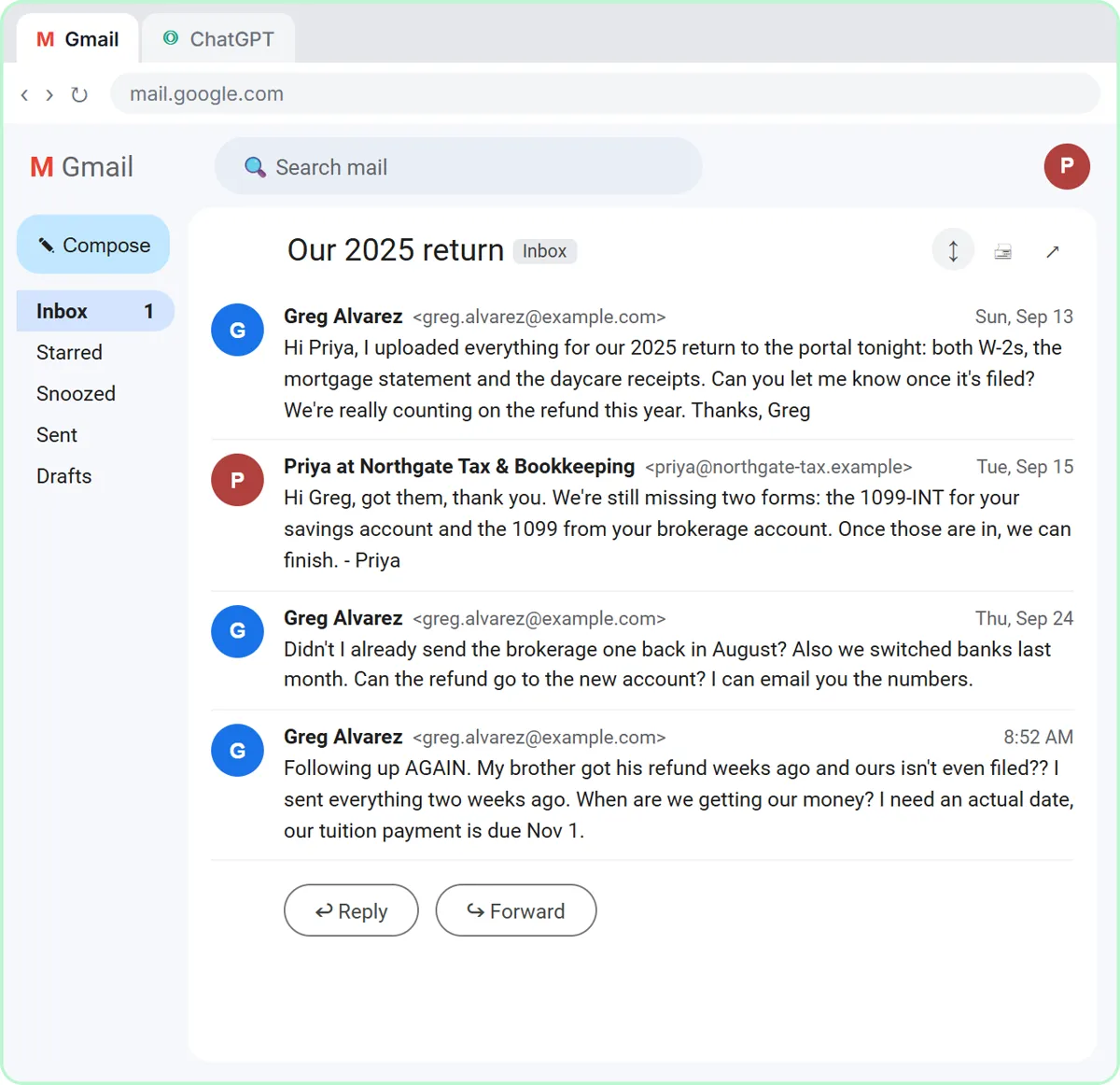
In a real lesson: Reply Faster to Clients Chasing Their Refund: ChatGPT for Tax and Bookkeeping Firms
In the Reply Faster: Client Refund Emails lesson, Priya at Northgate Tax & Bookkeeping, a made-up firm, answers a client named Greg. One of her facts describes the firm's signing step: once every document is in, the firm finishes the return within 5 business days "and post it to the portal for Greg and Lena to review and e-sign. We e-file the same business day they have both signed."
That is e-signing in everyday office work: the document lives in a secure portal, each person reviews and signs on their own, and the next step waits until both signatures are in. The same inbox shows another message titled "Signed engagement letter," a reminder that client agreements arrive this way too.
The lesson also keeps sensitive details out of email: "never send account numbers by email," it says, and asks Greg to add them in the portal instead. Using the portal for both signing and sensitive data is the same habit. The lesson does not cover which e-signature rules apply to tax forms, so follow your firm's procedures there.
Try this lesson free or read the step-by-step guide.
Common confusions
E-signature vs digital signature
People use the terms loosely. "Digital signature" often means a specific technical method that uses cryptographic certificates to detect tampering. An e-signature is the broader idea of signing electronically, and many e-signature tools use digital signature technology underneath.
E-signature vs a pasted image
Pasting a picture of your signature into a document is a form of electronic signing, but it leaves little record of who did it and when. Dedicated tools add identity checks and a completion record.
Tips
- Send documents for signing from a known tool or portal, and tell clients to expect it, so they can spot fake signing requests.
- Save the completed document and its completion record together.
- Check that signers are the right people, especially when two signatures are required.
- Ask an attorney before e-signing unusual or high-stakes documents.
Related terms
More Business terms
Where you use it: free lessons
- Reply Faster to Clients Chasing Their Refund: ChatGPT for Tax and Bookkeeping Firms (ChatGPT, 10 min)
- Reply Faster to a Client Asking for a Case Update: ChatGPT for Small Law Firms (ChatGPT, 10 min)
Prompt templates that use it
Frequently asked questions
- Is an e-signature legally binding?
- In many situations, yes. US law generally treats electronic signatures like handwritten ones, with exceptions for some document types. Rules vary by country and document, so ask an attorney when it matters.
- Can AI sign documents for me?
- It should not. Signing means agreeing, so a person should read and sign. AI can help you understand or summarize a document first, and you still decide.