This guide explains the term, the report that tracks it, and where AI fits without overstepping. It isn't accounting or tax advice; your accountant decides how your books treat AR.
What does accounts receivable mean?
AR is every unpaid customer invoice added together. The accounts receivable glossary entry puts the problem plainly: the work is done and the invoice is sent, but the cash is weeks away, and payroll is not. That's why a profitable small business can still feel short of cash.
A few related terms help:
- Payment terms are the agreed rules for when an invoice is due.
- Net 30 is the most common term: the full amount is due 30 calendar days after the invoice date. An invoice dated March 1 is due March 31.
- Dunning is the series of reminders you send once an invoice is late.
What is the difference between accounts receivable and accounts payable?
Receivable is money owed to you; payable is money you owe. Your customer's unpaid invoice is your receivable and their accounts payable. The two are tracked separately even when one company is both a customer and a vendor of yours.
AR is also not the same as revenue. Depending on how your books are kept, you may record revenue when you invoice, before the cash arrives, and AR is the gap between the two. Ask your accountant how your books handle it.
What is an AR aging report?
An AR aging report lists every unpaid invoice and groups the balances by how late they are, usually current, 1 to 30 days, 31 to 60, 61 to 90 and over 90. Most bookkeeping tools can produce one.
It turns a vague worry about cash into a short list: these three customers are over 60 days, call them first. The older an invoice gets, the less likely it is to be paid, so the work is consistent, timely reminders. Two things to check in your own report:
- Which date it counts from. Some reports count from the invoice date, others from the due date. A 30-day-old invoice on Net 30 terms is on time under one and late under the other.
- Whether the old bucket is growing. If the over-60 bucket gets bigger month after month, something upstream is off, such as unclear terms, slow invoicing or one large customer drifting.
How does ChatGPT help with accounts receivable?
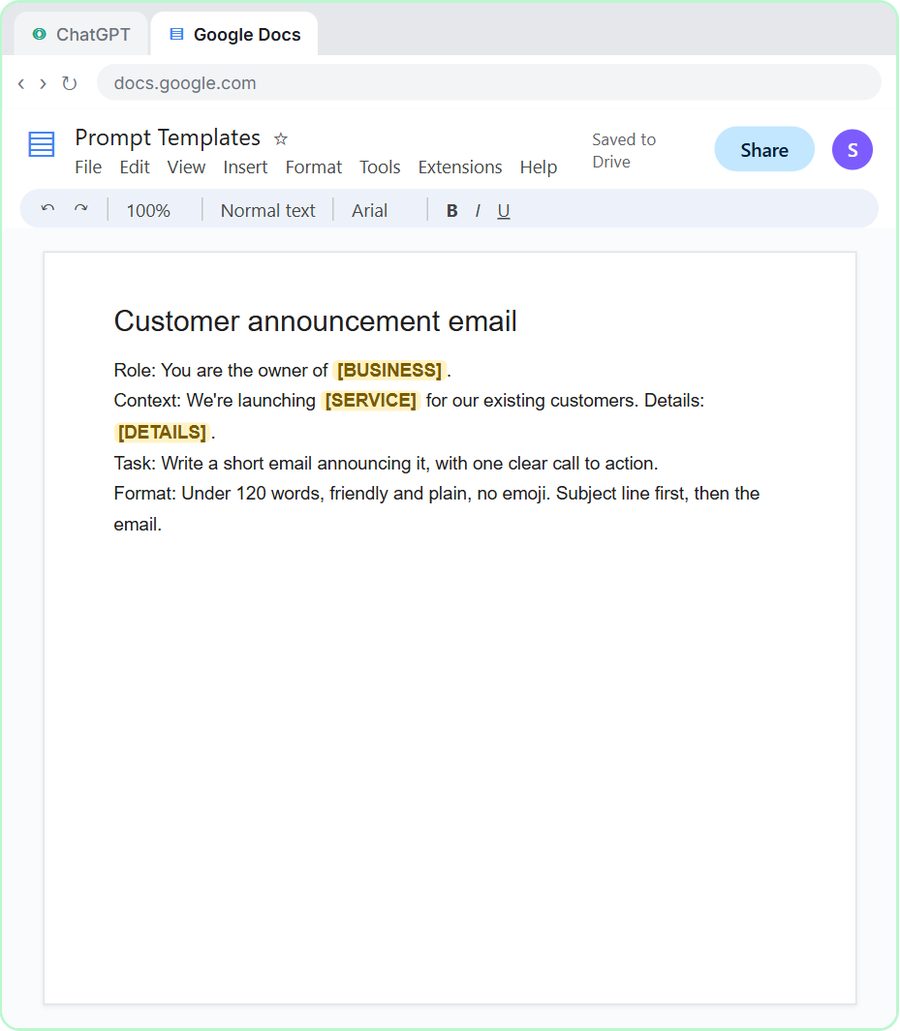
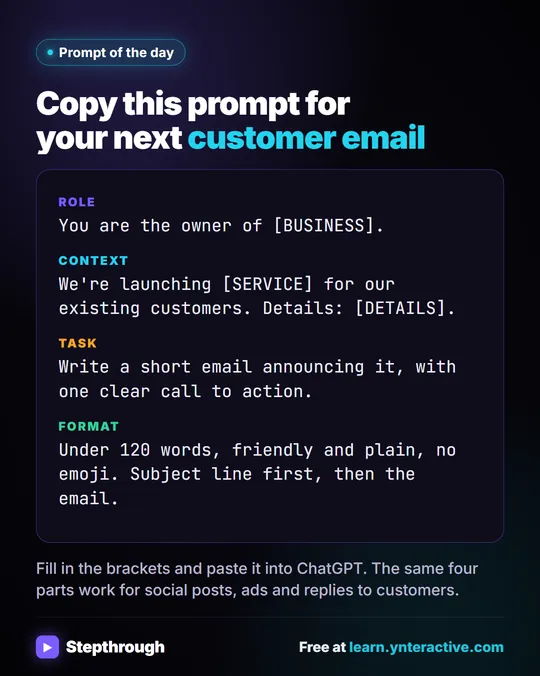
It drafts the reminder for each invoice so following up is quick enough that it actually happens. Give it the four parts from Prompt Writing 101: who is writing (Role), the facts it can't guess (Context), what you want (Task) and the shape of the answer (Format). An AR reminder version:
Role: You write payment reminders for [BUSINESS], a small [TYPE OF BUSINESS].
Context: Invoice [NUMBER] for [AMOUNT], dated [INVOICE DATE], was due on [DUE DATE] under [TERMS]. It is now [DAYS] days past due. Ways to pay: [HOW TO PAY].
Task: Write a friendly reminder that asks them to pay or reply with a payment date.
Format: Under 120 words, plain and polite, no emoji. Subject line with the invoice number first, then the email.
Only use the facts above. Don't invent fees, interest or deadlines.
Every fact in that prompt comes straight from the aging report: invoice number, amount, dates and days overdue. Let your bookkeeping tool or a spreadsheet formula work out the due date. The Net 30 glossary entry makes the point that date math is easy for a spreadsheet and easy for a language model to get slightly wrong. Let AI write the words around the date, not calculate it.
Try it free, step by step
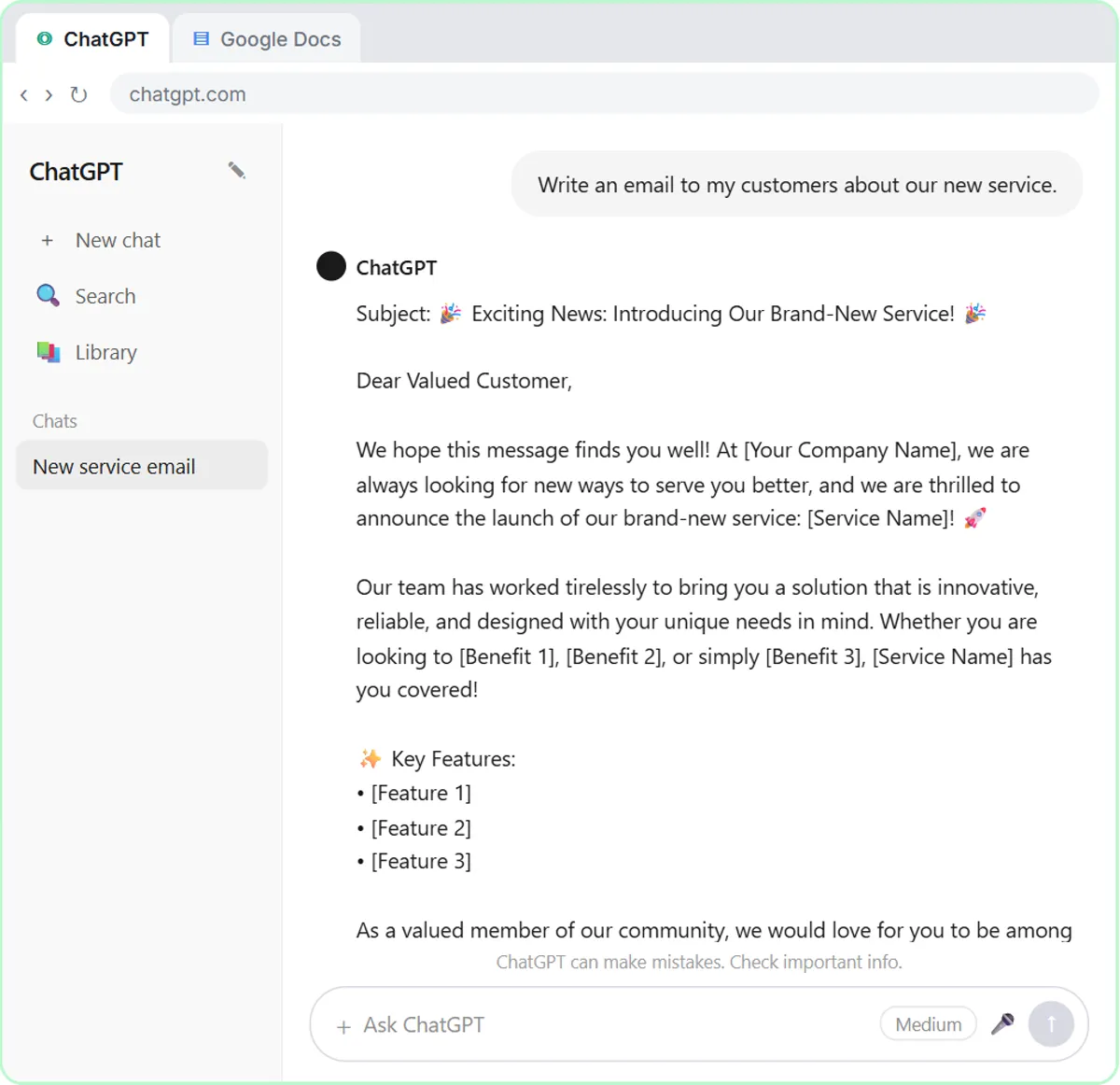
Prompt Writing 101: Role, Context, Task, Format. Ask ChatGPT for the same customer email twice, once vaguely and once with a four-part prompt, and see exactly why structure gets a better answer. You do every step yourself in a practice copy of ChatGPT, it checks your work as you go, and “Do it for me” finishes any step you get stuck on. Free, and nothing touches your real accounts.
Start the free lessonHow do I stop AI from promising things in a reminder?
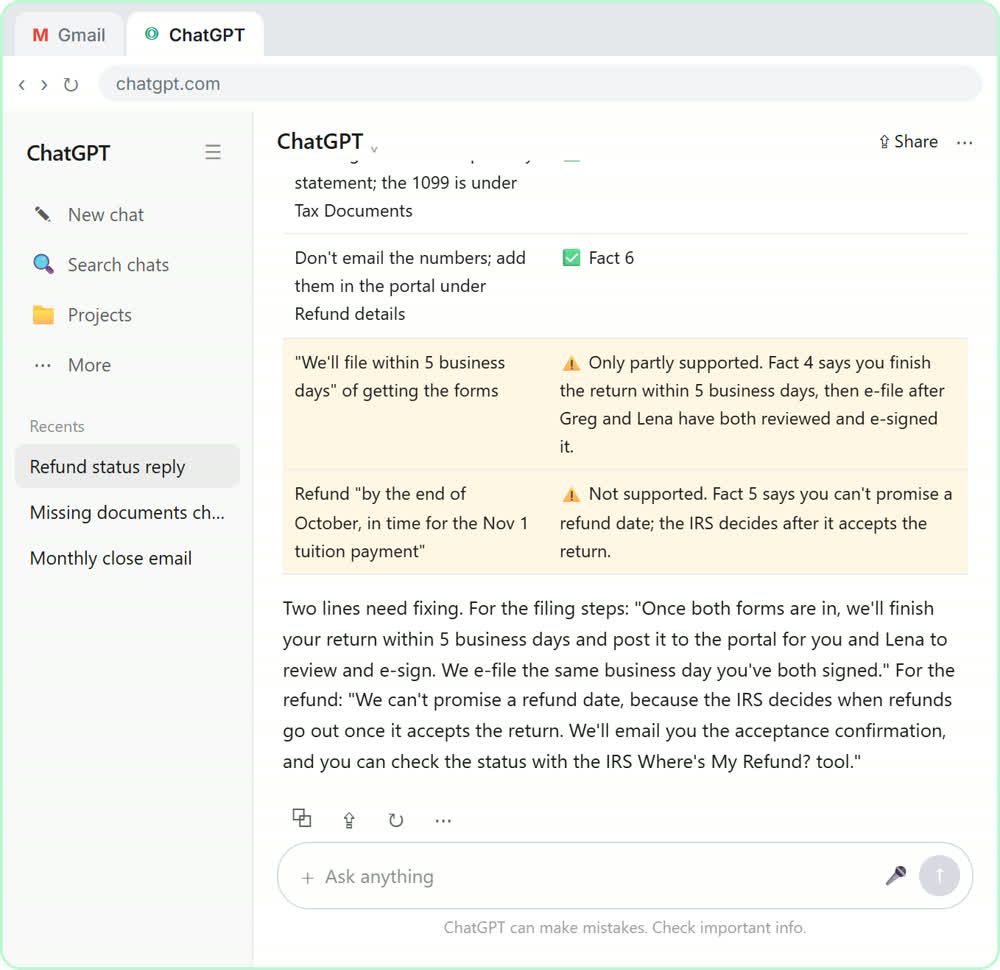
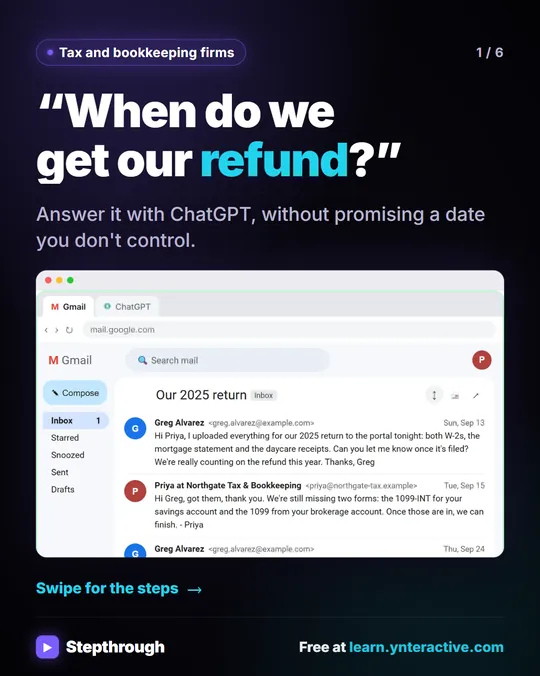
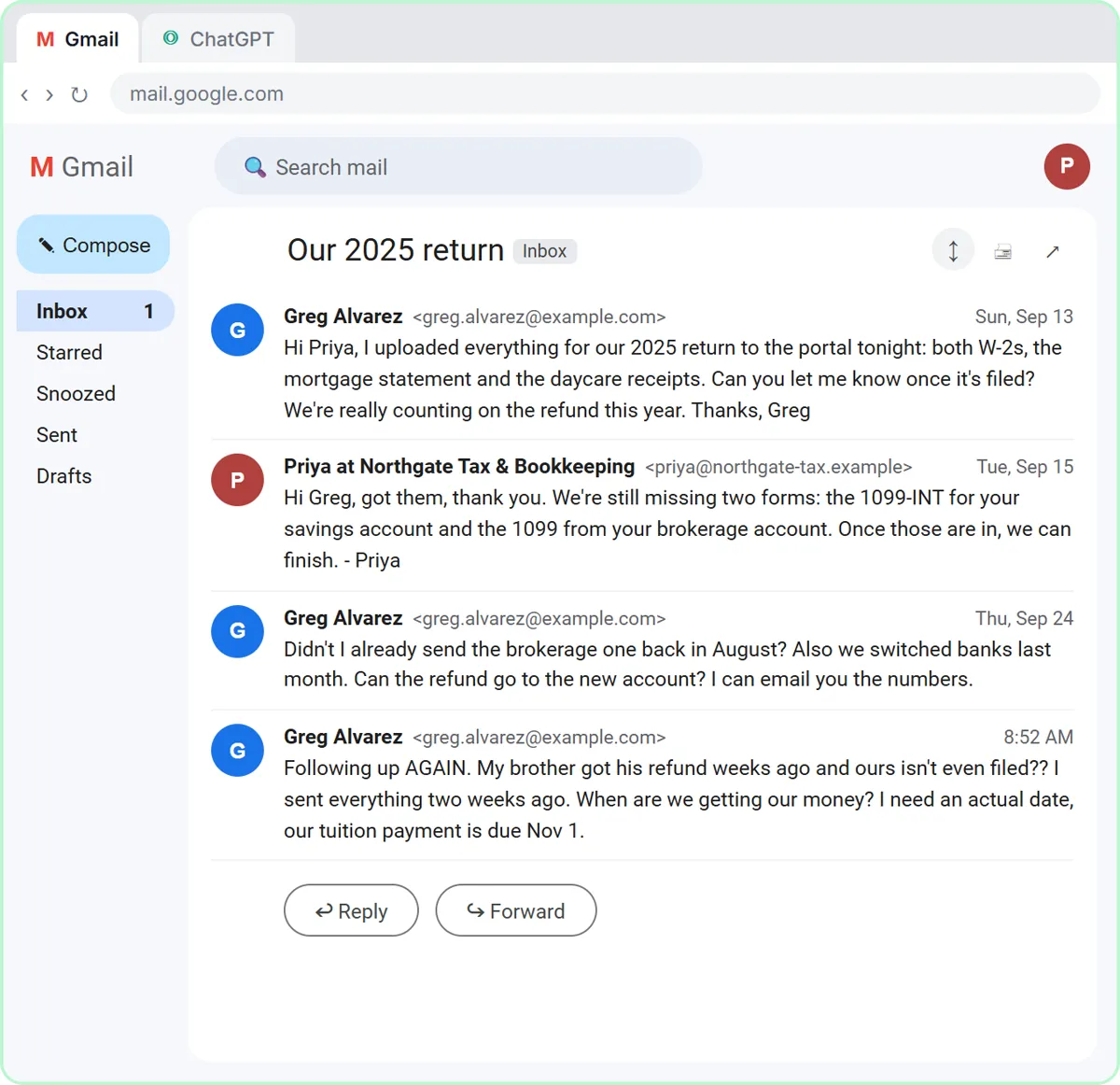
List the facts, tell it not to invent anything, then ask it to check its own draft. That's the routine in Reply Faster: Client Refund Emails. A client of Northgate Tax & Bookkeeping, a made-up firm, wants a refund date nobody can promise. The facts state the firm's real timing: once every document is in, the return is finished within 5 business days, and the IRS, not the firm, decides when a refund is issued.
ChatGPT's first draft still overpromises: it mentions a refund by the end of October. When you ask it to check every claim against the facts, the table flags that refund date, and it also catches a subtler slip. The draft says the return will be filed within 5 business days, but the facts say the firm finishes it in 5 business days and files only after both clients have e-signed. The fixed reply says what happens once both missing forms arrive, and promises no refund date.
AR reminders slip in the same ways: a late fee you don't charge, a "final notice" that isn't final, a date that doesn't match the invoice. Run the same check before you send, and only mention fees or next steps that your client agreement actually includes. Check AI Email Drafts for Promises Before You Send shows the check prompt in full.
What should I keep out of ChatGPT?
Anything the reminder doesn't need. The invoice number, amount and dates are usually enough, and you can type the customer's name into the final email yourself. Never ask for or send bank account numbers by email, and follow your firm's policy on AI tools. A business ChatGPT plan that doesn't train on your data is a better choice than a personal account for client work.
For the reminder sequence itself (friendly, firmer, final), see the dunning glossary entry. If you're on the other side, entering the bills your vendors send you, How to Extract Invoice Data with AI shows a free n8n build, and accounting firms writing to clients in a busy season can start with Tax Season Emails to Clients. For finance teams that want to go further, the finance industry page lists the free automation lessons.
Glossary terms used in this post: accounts receivable, AR aging report and dunning.
Key takeaways
- Accounts receivable is the money customers owe you for work you've already invoiced; it's an asset, but it isn't cash yet.
- An AR aging report groups unpaid invoices into buckets such as current, 1-30, 31-60, 61-90 and over 90 days late.
- Net 30 means the full amount is due 30 calendar days after the invoice date, not after the customer opens the email.
- ChatGPT can draft each reminder from the aging report's facts, but let a spreadsheet or bookkeeping tool calculate due dates.
- Ask ChatGPT to check every claim in the reminder against your facts, and never let it add fees your agreement doesn't include.
Frequently asked questions
- Is accounts receivable an asset or a liability?
An asset. It's money your business expects to receive, so it's usually listed as a current asset. Accounts payable, the money you owe vendors, is the liability side.
- How often should I review accounts receivable?
On a fixed day each week works for most small businesses, and always before you close the books for the month. Reviewing only when cash feels tight means invoices have already aged.
- Can AI collect overdue invoices for me?
It can draft the reminders. A person should review and send them, and anything long overdue or disputed should be handled personally.
- What counts as a bad debt?
That's an accounting and sometimes tax decision, so ask your accountant. The aging report supplies the evidence; it doesn't make the call.
Where can I go next?
To work through an aging report, try Collect Overdue Invoices Faster using ChatGPT and the visual guide to connecting Claude to Drive, Gmail and Calendar for pulling files and email into your follow-ups.