This guide is for contractors and the office staff who answer their price questions. Your contracts and local rules decide what counts as binding, so treat this as practical wording advice.
What is the difference between an estimate and a quote?
An estimate is a best guess; a quote is a commitment. The glossary entry on estimate vs quote defines them this way, and adds a third term: a bid is a price submitted to win a job, often against other contractors.
| Estimate | Quote | |
|---|---|---|
| Price | Approximate, often a range | Firm, for the stated scope |
| When you give it | Before you've seen the job | After the scope is clear, often after a visit |
| Can it change? | Yes, as you learn more | Only if the scope changes |
| Typical wording | "Usually $900 to $1,800" | "$1,350 for the work described" |
People use the words loosely, so say which one you mean. A customer who hears "quote" may expect that exact number on the invoice.
Why does the difference matter for AI replies?
Because an AI reply goes out without you seeing the job, so it can only ever give an estimate. If the wording sounds like a fixed price, the customer may hold you to it, and the AI has no way to know about the panel that's older than expected or the wall that needs opening.
Good automated price replies do three things:
- Give a typical range, only for standard jobs.
- Say what the price depends on.
- Say how and when the firm price is confirmed.
How does the AI Quote Request Form handle prices?
Its system message gives the agent the ranges, the conditions and a firm rule. From the AI Quote Request Form lesson, for Oak & Wire Electric:
Use the gmail tool to email the customer a short initial estimate note: thank them, restate the project, give a typical price range if it is one of our standard services (panel upgrade $2,800 to $4,200; Level 2 EV charger $900 to $1,800; whole-home surge protector $350 to $600), mention that permits and inspections are included where required, and explain that the final price is confirmed after a free site visit.

Never promise a fixed price. Do not use emojis.
Read what it allows. Ranges only for the three standard services, so an unusual request gets no number at all. A note about permits and inspections. And "the final price is confirmed after a free site visit," which turns the estimate into a quote at the right moment. The prices are the made-up business's, so use your own.
Try it free, step by step
Build an AI Quote Request Form for Electrical Contractors. Build a quote request form in Lovable and connect it to an n8n workflow — webhook trigger, an AI Agent that drafts an initial estimate note, Google Sheets, Gmail, and a Respond node that ties it all… You do every step yourself in a practice copy of Lovable and n8n, it checks your work as you go, and “Do it for me” finishes any step you get stuck on. Free, and nothing touches your real accounts.
Start the free lessonHow does the customer's request reach the AI?
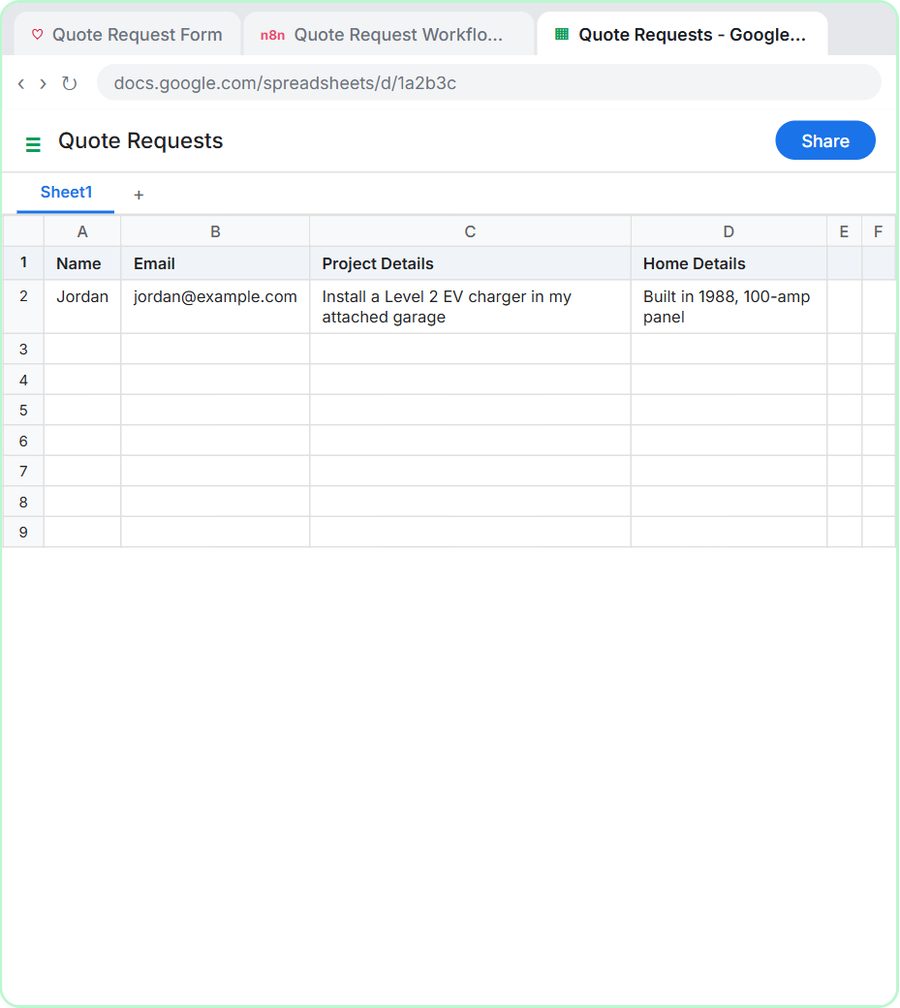
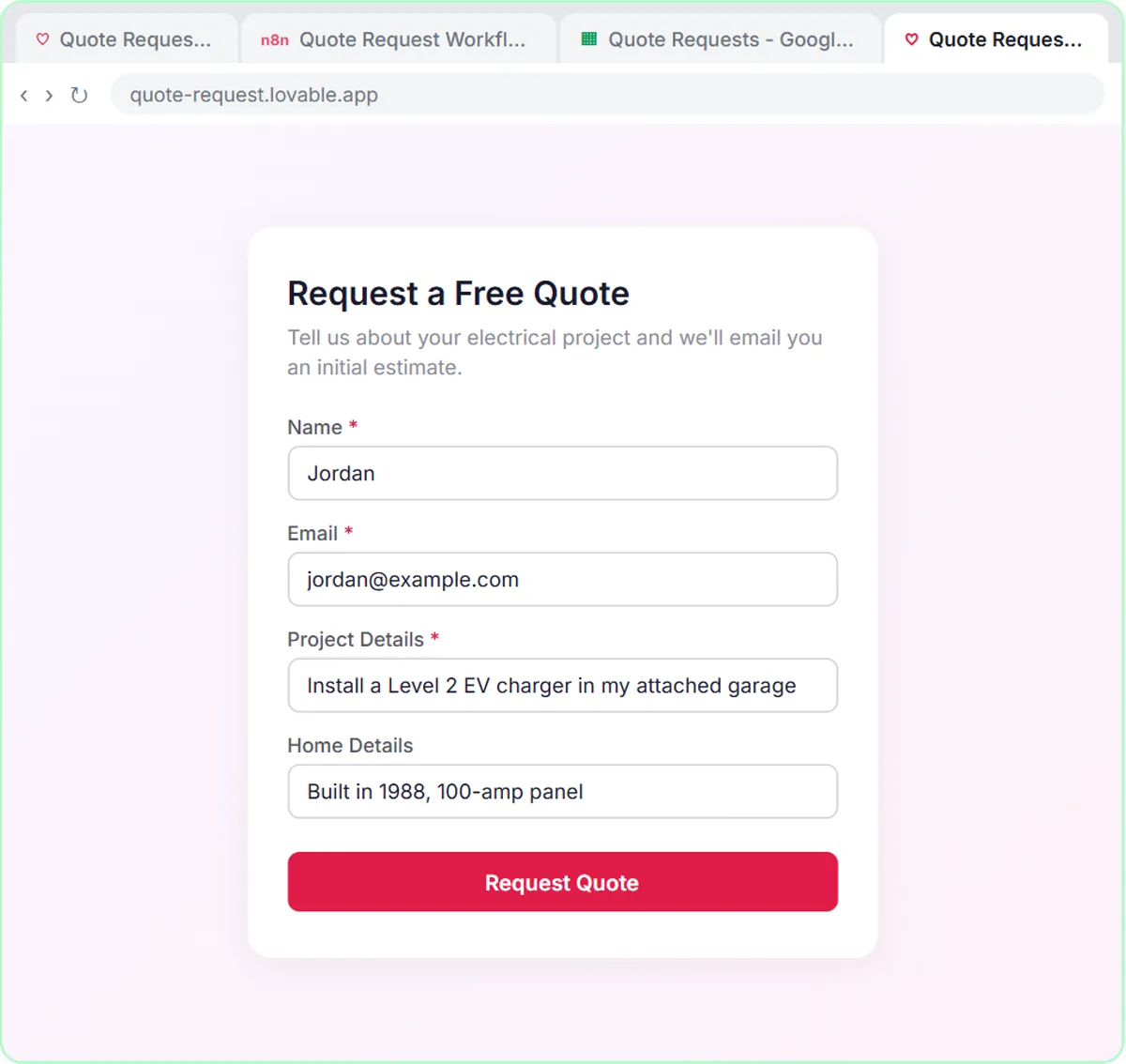
Through a quote request form built in Lovable and a webhook into n8n. The form asks for Name, Email, Project Details and Home Details, with the first three required. When the customer clicks submit, the form sends the answers to an n8n workflow that starts On webhook call. An AI Agent reads them, a Google Sheets tool logs the request, and a Gmail tool sends the estimate note.
The form shows "Thanks! Your quote request has been received." after it's sent. Notice the wording: the customer asked for a quote, and the business replies with an estimate note and an offer of a site visit, which is honest about what can be known from a form. AI for Electricians puts this form and the follow-up agent together.
What should an estimate email say?
Keep it short and specific. A good structure, in the order the lesson's system message uses:
- Thanks. By name.
- What they asked for. Restate the project in a sentence so they know you read it.
- The typical range. Only if it's a standard job you've priced many times.
- What's included or depends. For the lesson's electrician, permits and inspections where required.
- The next step. A free site visit to confirm the final price.
Leave out discounts, start dates and anything you haven't decided. If the request doesn't match a standard job, the email should say someone will follow up with details instead of guessing.
How do I follow up after the job?
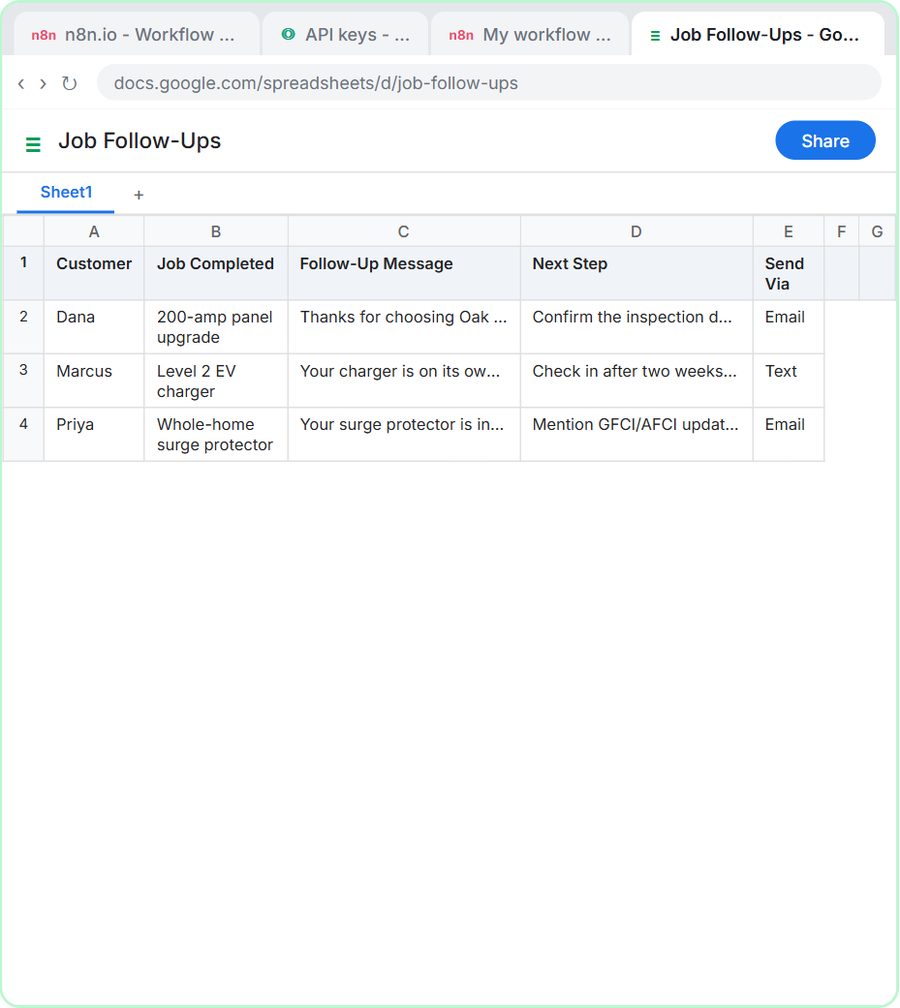
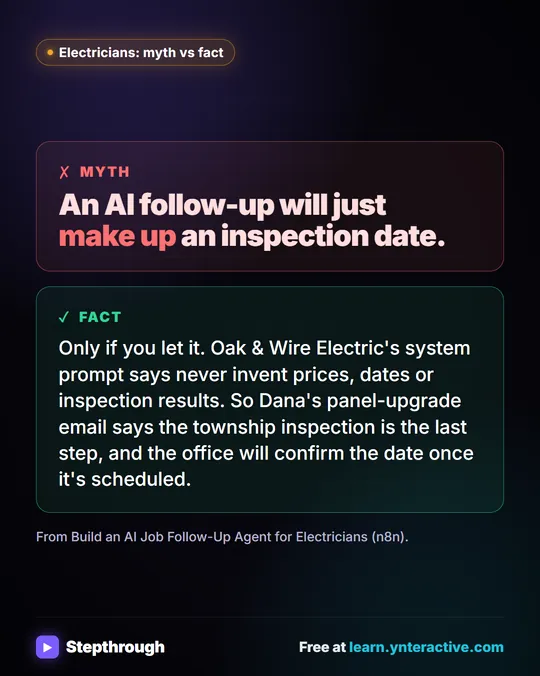
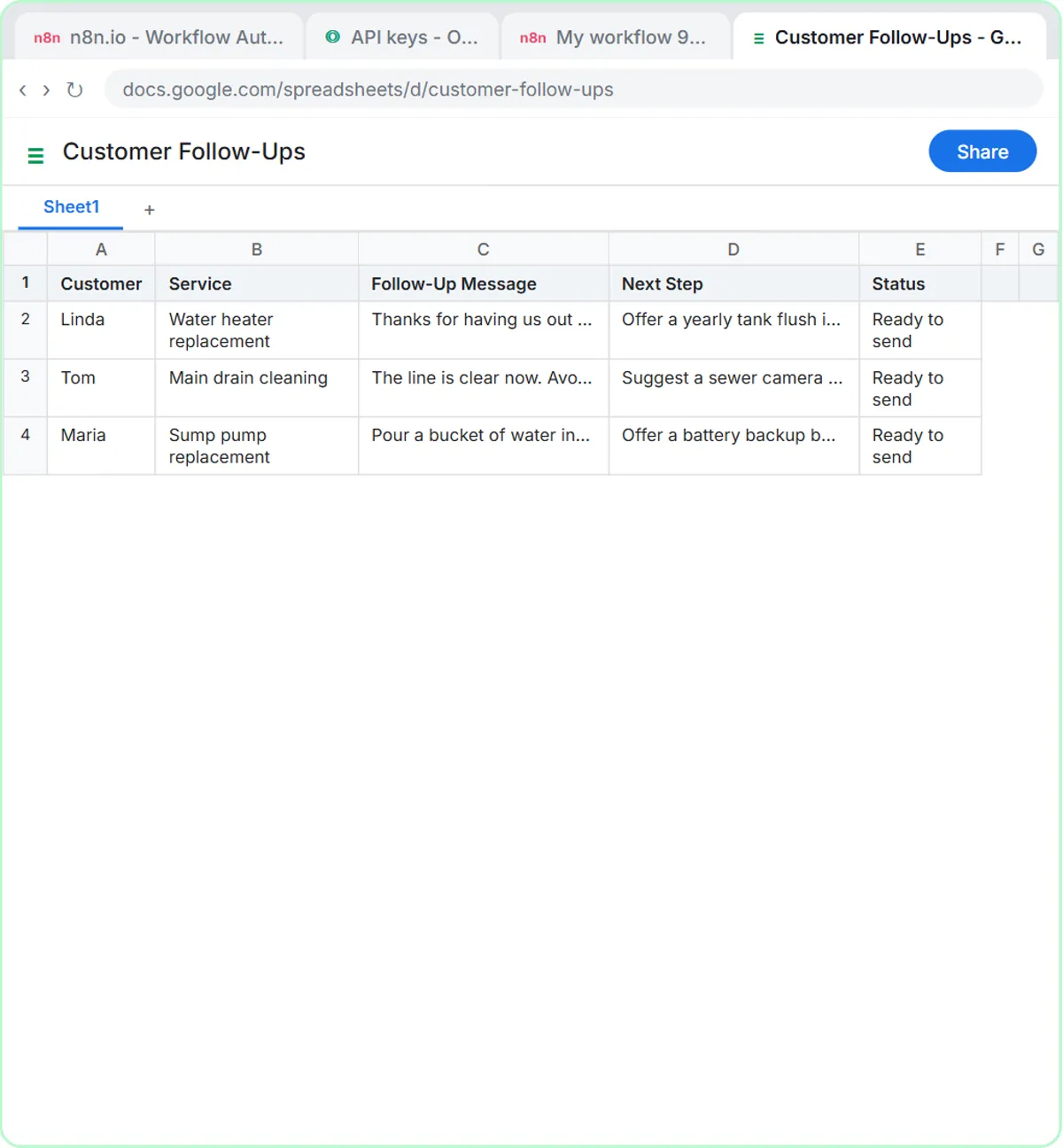
With a thank-you that names the work and invites questions, and it can be drafted by AI too. The AI Job Follow-Up Agent lesson builds an n8n agent that writes those follow-ups for completed jobs and saves them to Google Sheets for the office to review before sending. The system message rule that matters is the same one: don't invent prices, discounts or warranty terms.
Can office staff use ChatGPT for estimates the same way?
Yes. Paste the customer's request, list your standard ranges and conditions as facts, and add the same rule: "Give a range only for these services. Never promise a fixed price. Say the final price is confirmed after a site visit." Then check the draft against your facts before sending. Check AI Email Drafts for Promises Before You Send shows the check, and the electrical industry page lists the other electrical lessons.
Key takeaways
- An estimate is an approximate price that can change; a quote is a firm price for a clearly defined scope.
- An AI reply sent before anyone sees the job can only honestly give an estimate.
- The AI Quote Request Form lesson gives ranges only for three standard services and tells the agent "Never promise a fixed price."
- A good estimate email thanks the customer, restates the project, gives a typical range, notes what's included and offers a site visit.
- Say which word you mean, because customers often treat "quote" as the final price.
Frequently asked questions
- Is an estimate legally binding?
It depends on your contract and local rules, and this isn't legal advice. In common use, an estimate is approximate and a quote is firm, so label your price clearly.
- Should my website form say "Request a Quote" or "Request an Estimate"?
Either works if the reply is clear. The lesson's form says "Request a Free Quote" and the AI replies with an initial estimate note and a site visit to confirm the price.
- Can AI give a customer an exact price?
Only if your price really is fixed for that job, such as a flat-rate service. For anything that depends on the site, have it give a range and offer a visit.
- What if the request isn't a standard job?
Tell the AI to give no number and say someone will follow up. The lesson's agent only gives ranges for its three standard services.