The example is made up. Brightline Painting is five days late on a repaint at Harborview Dental because the client's paint is backordered. The two extra evenings cost Brightline about $420, which the client should never see. The answers in the lesson come from a real ChatGPT run on October 20, 2026.
What are the most common rewrite-for-audience mistakes?
Seven mistakes cover almost everything that goes wrong:
| # | Mistake | Fix |
|---|---|---|
| 1 | No "stays out" rule for each reader | Add "No internal costs" to the client part |
| 2 | Telling a story instead of giving facts | Attach a facts file with short, labeled lines |
| 3 | Three requests in three chats | Ask for all three in one request, labeled |
| 4 | Not saying "using only these facts" | Put it in the request |
| 5 | Skipping the fact check | Ask for every date, name, number and promise |
| 6 | Accepting a filled-in gap | Add what only you know yourself |
| 7 | Private details in a normal chat | Turn on Temporary chat first |
Why does the internal cost end up in the client email?
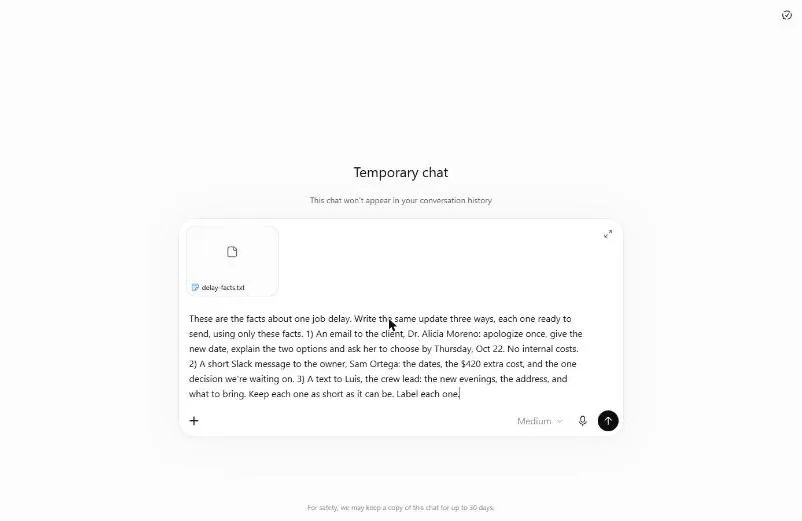
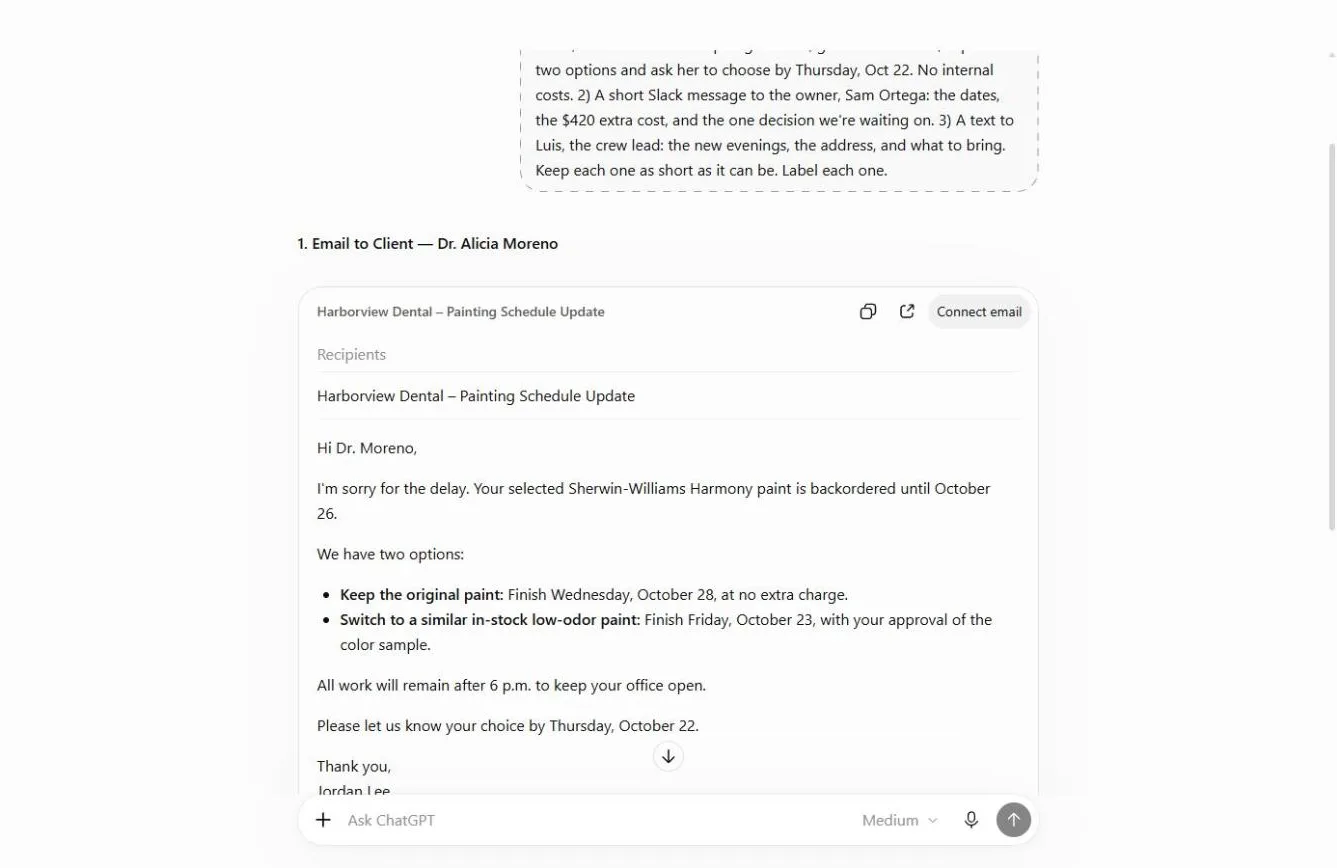
1. No "stays out" rule. If the first draft has the cost in it, every version built from it can carry it. The lesson's request fixes this with one line in the client part: "No internal costs." Each reader gets an in and an out. The client gets one apology, the new date, two options and a deadline, and no costs. The owner gets the opposite: the dates, the $420 and the one decision you are waiting on. The crew lead gets the evenings, the address and what to bring.
In the real run, the fact check confirmed it: the client email does not mention the $420, the two extra evenings or staffing details.
Which mistakes happen before you ask?
2. Telling a story instead of giving facts. A paragraph of "so here's what happened" is hard to check. The lesson uses a facts file with labeled lines: the job, the client contact, the original and new finish dates, why, what was offered, when the work happens, the cost, the crew and the owner. Every message is built from it, so the facts can't drift. You can download the same file: delay-facts.txt.
3. Three requests in three chats. Writing each version separately takes about half an hour, and small details change between them. Ask for all three in one request and label each one. They come back side by side, built from the same facts.
4. Not saying "using only these facts". The lesson's request says "each one ready to send, using only these facts." Without that line, ChatGPT may round out a message with details that sound right. The grounding entry explains why tying an answer to your own source matters.
7. Private details in a normal chat. Client names and job costs are private. In the lesson, you click the Temporary chat icon at the top right before you attach the file. Follow your company's policy too.
Why is the fact check the step people skip?
5. Skipping the fact check. The three messages look finished, so it is tempting to send them. The lesson asks one more question: list every date, name, number and promise in each message, mark anything that isn't in the file, and confirm the client email has no internal costs.
It took one request and found a real slip. The crew text said "hallway", but the file says two hallways. Small, but that is exactly the kind of detail a crew acts on.
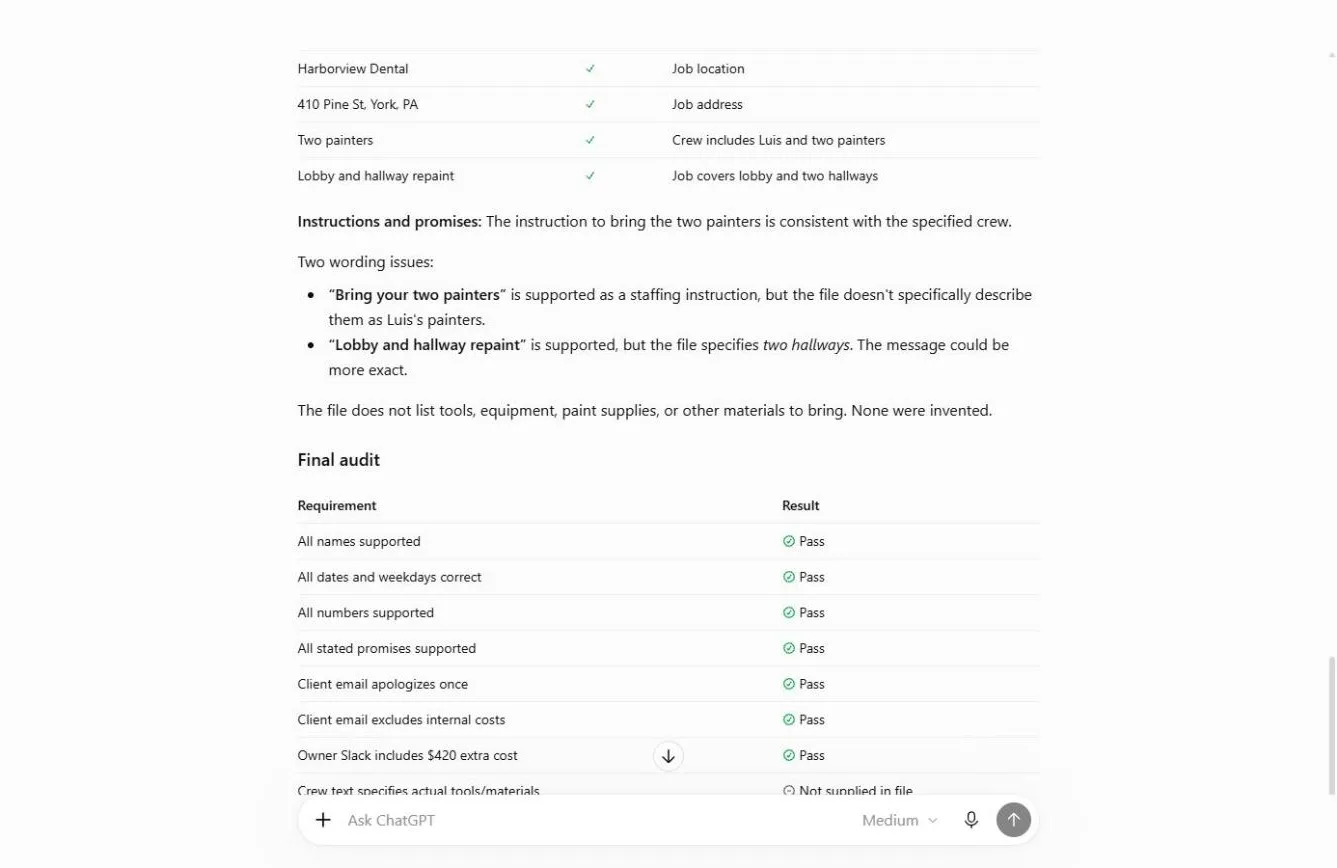
6. Accepting a filled-in gap. The request asked the crew text to say what to bring, but the facts file didn't say. In the real run, ChatGPT did the right thing: it added a note that the facts don't specify tools or materials, and did not make up a list. The final audit marked it "Not supplied in file". If your tool fills a gap with a guess, that guess goes to the person doing the work. Add the list yourself.
The lesson's last step is simple: fix the hallway line, add what Luis should bring, and send all three.
Try it free, step by step
Tell the Client, the Boss and the Team in One Go using ChatGPT. Give ChatGPT the facts once and get three ready-to-send messages, each written for its reader: an email to the client, a Slack to the owner and a text to the team. Then have it check every fact. You do every step yourself in a practice copy of ChatGPT, it checks your work as you go, and “Do it for me” finishes any step you get stuck on. Free, and nothing touches your real accounts.
Start the free lessonKey takeaways
- Give every reader an in and an out. "No internal costs" is the line that protects you.
- Use a facts file with short, labeled lines, not a story.
- Ask for all three messages in one request so they share the same facts.
- Always run the fact check. It catches slips like "hallway" vs "two hallways".
- When the facts are missing something, add it yourself.
The rewrite for audience FAQ answers the how-to questions. For more on catching made-up details, see the Catch Made-Up Facts lesson and stop ChatGPT making things up.
Frequently asked questions
- Can I paste the facts instead of attaching a file?
The lesson attaches a file so every message and the fact check point to one source. Keep the same short, labeled lines either way.
- What if the client email sounds too formal?
Ask for the change in the same chat, then run the fact check again so the facts stay right after the rewrite.
- Why didn't the crew text list what to bring?
Because the facts file didn't say. ChatGPT added a note instead of inventing a list. That gap is yours to fill before you send.
- Is the fact check always right?
No check replaces reading each message yourself before you send it. The lesson says so in its finish.