Which roles get the most from a Chatbase FAQ agent?
| Role | Typical repeat questions | What to change from the lesson |
|---|---|---|
| Office manager | Hours, location, booking, billing | Your FAQ file and contact line |
| Accountant or bookkeeper | Services offered, what you do not do, busy-season hours | Service list in General, seasonal hours in the file |
| Customer success manager | Setup steps, billing dates, cancelling | Onboarding FAQ, a hand-off to the account team |
| HR or recruiting | Hiring process, timelines, how to apply | Applicant FAQ, a strict no-personal-data rule |
| Agency owner | Packages, turnaround, what to send | Service FAQ, a fallback that books a call |
| Consultant or solo founder | Fees, who you work with, first call | A short FAQ, rules against quoting custom work |
| Operations lead | Everyone's version of the answers | One source file, the weekly log review |
How does the lesson's build carry across roles?
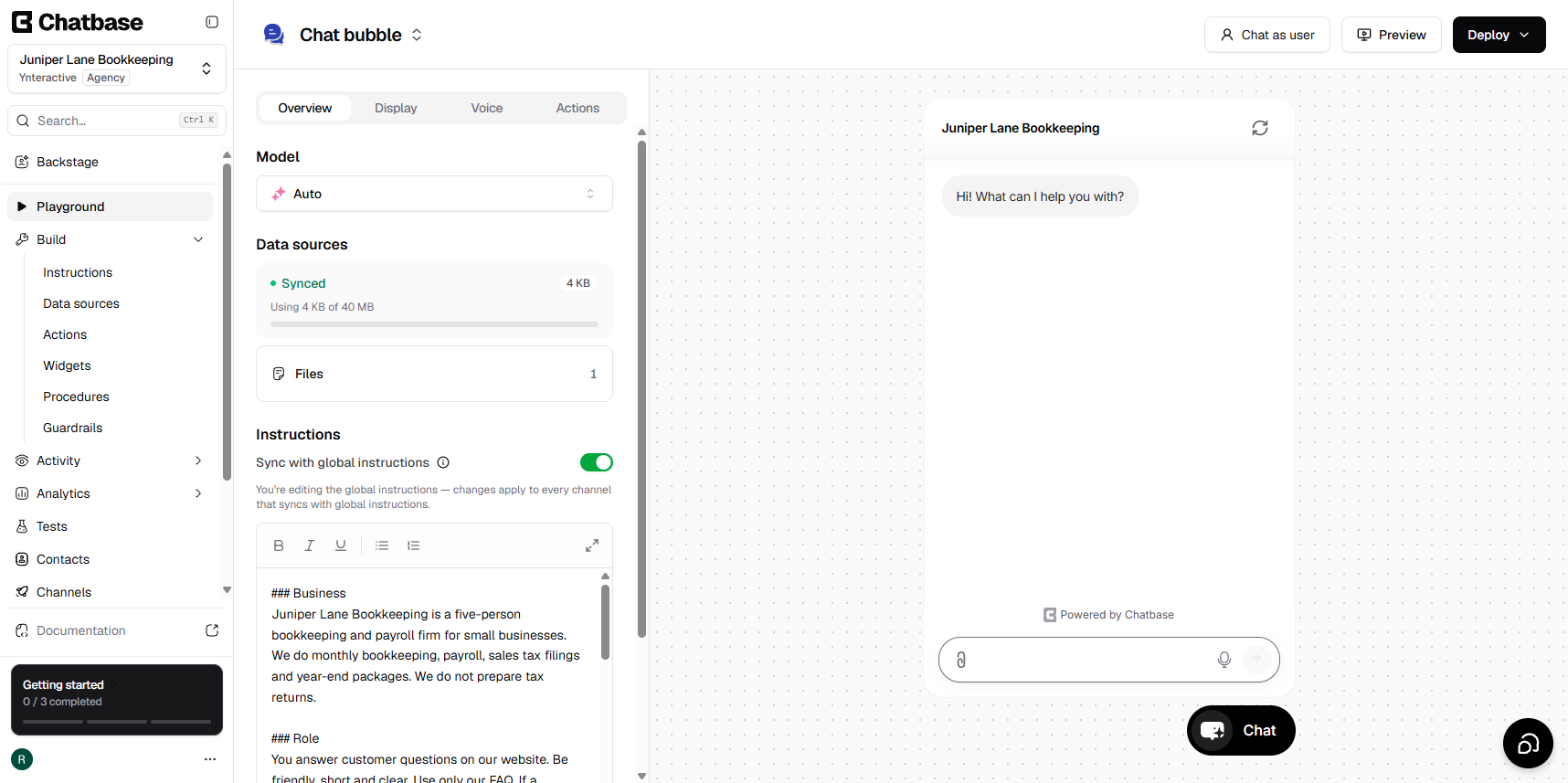
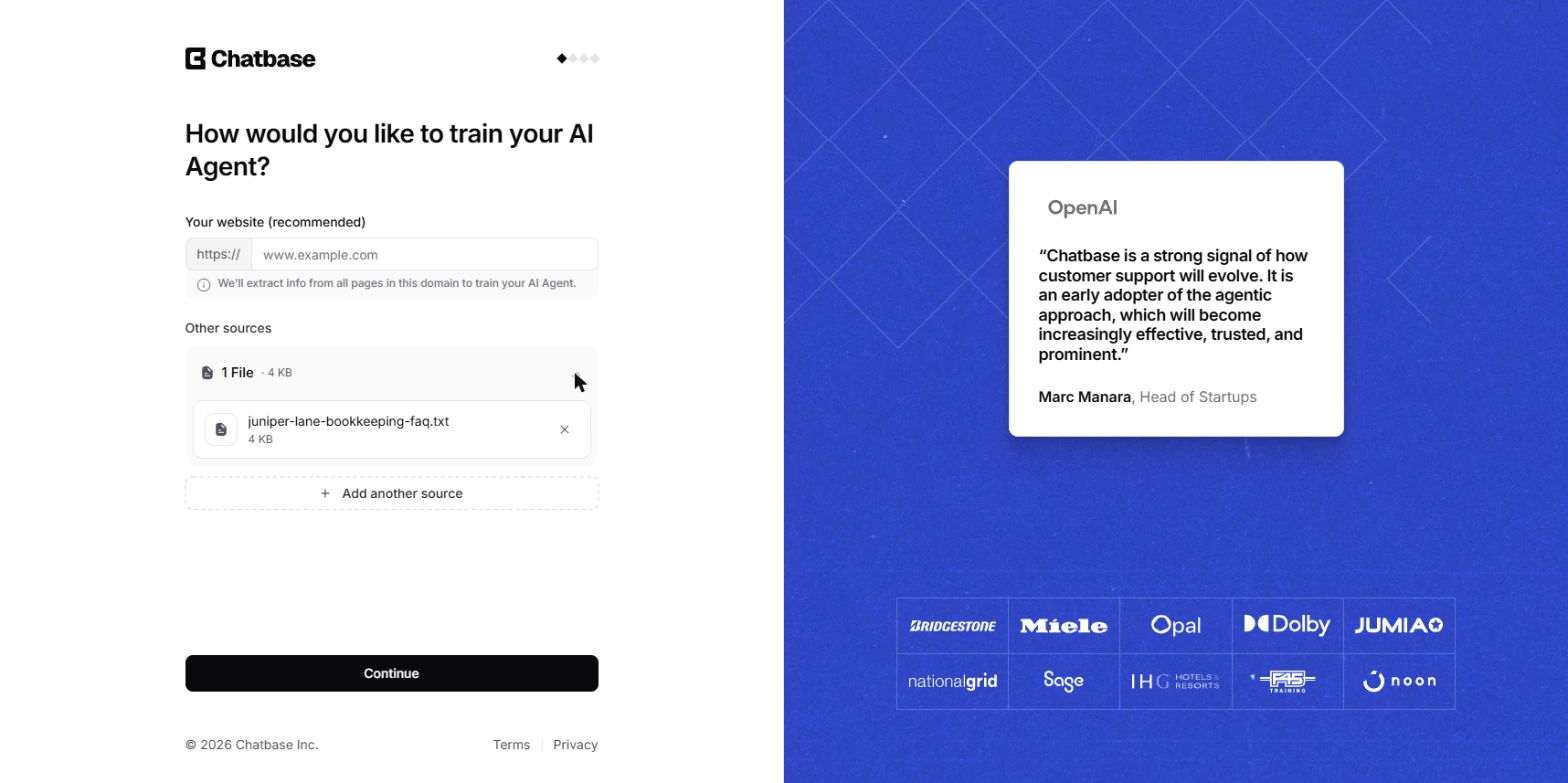
The steps do not change. What changes is the source file, the General text, the fallback contact and the test questions. Everything else, from Enable chat bubble to Revise answer, is identical. That is why the lesson is worth doing once with the sample file before you swap in your own.
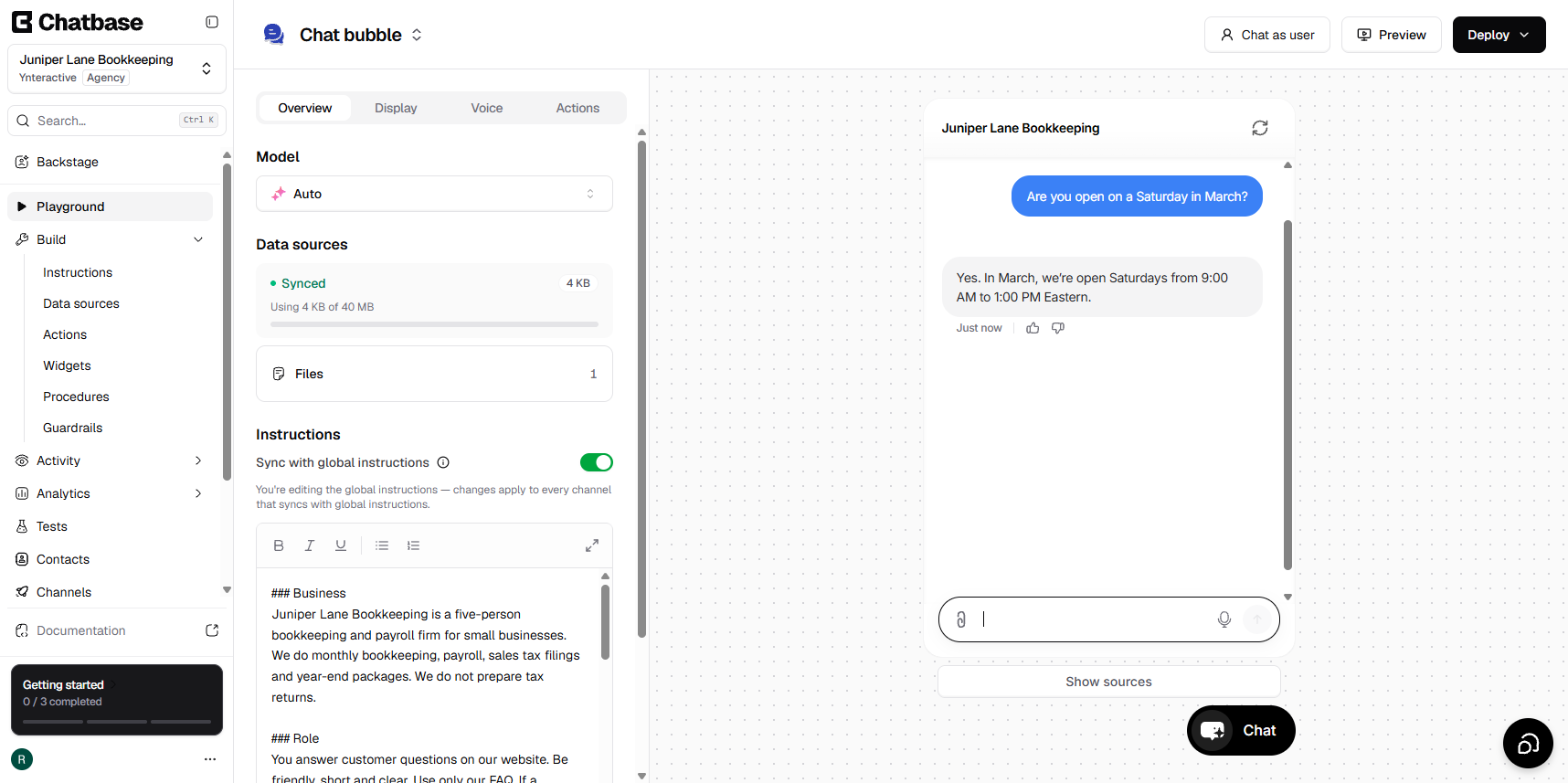
How would each role set it up?
Office manager
The job: keep the front inbox from filling with the same five questions. In the lesson, Dana's inbox had tax returns, prices, Saturday hours, refunds and how to book, with example numbers of about 40 emails a week at 4 minutes each.
How it applies: this is the lesson as written. Upload your FAQ, keep the "Use only our FAQ" line and put your own email and phone in the fallback.
What to check: ask the three questions customers send most in the Playground, and compare each answer with the file word for word.
Accountant or bookkeeper
The job: answer "do you do X?" questions before they become a consultation call. Juniper Lane's most useful line is a negative one: "We do not prepare tax returns."
How it applies: say what you do not do in General, and put seasonal details, such as extra Saturday hours from February 1 to April 15, in the file.
What to change: your services and your busy-season hours.
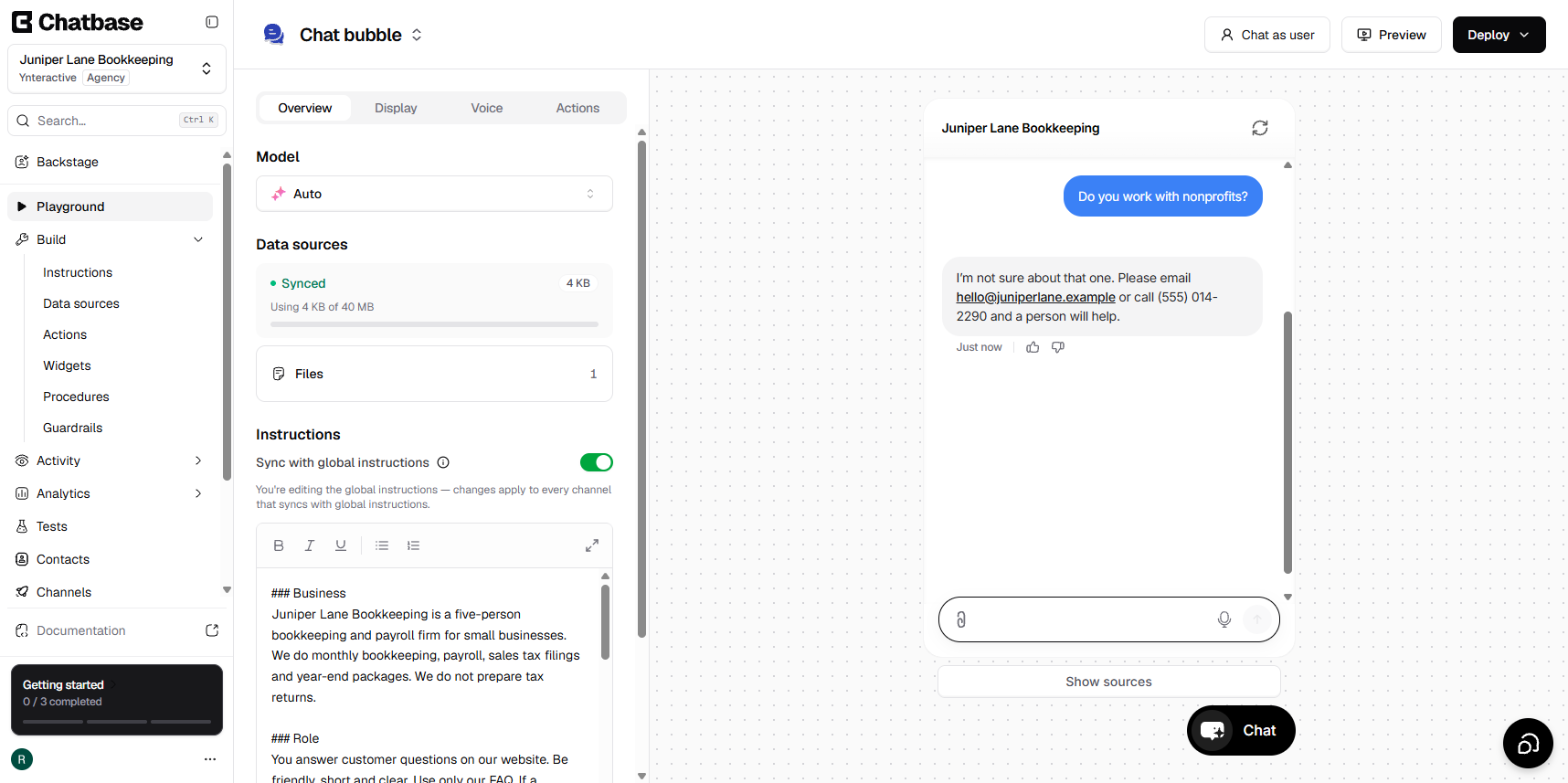
What to check: test a question about a service you do not offer. The lesson's test was "Do you do my tax return?"
Customer success manager
The job: cover the questions new clients ask in their first month, such as when they are billed and how to cancel.
How it applies: the sample FAQ already has sections for billing, refunds and cancelling. Replace them with yours, and point the fallback at the person who owns the account.
What to check: a refund question with a timing twist. The lesson uses "If I cancel after two weeks, do I get a refund?", where the right answer has two parts.
HR or recruiting
The job: answer applicant questions on a careers page so recruiters spend time on candidates, not on "when will I hear back?"
How it applies: train on an applicant FAQ instead of a client one. Keep the lesson's rule that the agent never asks for sensitive details in the chat, and add your own, such as never commenting on a specific application.
What to check: ask about something the FAQ does not cover and confirm you get the fallback, not a guess about your process.
Agency owner
The job: answer prospects' questions about packages and what to send before work starts.
How it applies: list packages and turnaround in the file. In the fallback, name how to book a call, the way the sample FAQ points to the Book a call button.
What to check: turn on Specific domains with your agency's site, so the bubble only runs where you put it.
Consultant or solo founder
The job: handle after-hours questions when there is no one else to answer them.
How it applies: a short FAQ is enough. The lesson's Guardrail "never guess prices, dates or policies" matters most here, because custom work has no fixed price. Say so in the FAQ, the way Juniper Lane gives a fixed price only after a free call.
What to check: confidence scores in Activity after the first week. Low scores show the questions your FAQ missed.
Operations lead
The job: make sure the website, the inbox and the team give the same answer.
How it applies: the agent is only as current as its sources. Make one FAQ file the source for everyone, and update it whenever a price or policy changes.
What to check: block the lesson's 15 minutes a week to read chats, use Revise answer on two or three, and add what is missing to the file.
Try it free, step by step
Chatbase: Answer Customer FAQs with an AI Agent. A business case for a small firm that answers the same customer questions every week: build a Chatbase AI agent on your FAQ in the real app, make it say when it does not know, test it, get the chat… You do every step yourself in a practice copy of Chatbase, it checks your work as you go, and “Do it for me” finishes any step you get stuck on. Free, and nothing touches your real accounts.
Start the free lessonWhere should each role stop?
Inside what the lesson shows. The agent answers from your sources and hands off the rest. It does not replace judgement calls, and the lesson did not test helpdesk tickets. For a fuller human handoff, Chatbase has an Escalations action that needs a helpdesk you have already set up. The simple fallback answer works without one, and every question it answers is ticket deflection your team no longer types by hand.
Key takeaways
- Same build for every role: file, General text, Guardrails with a fallback, Playground, chat bubble, logs.
- What changes is the FAQ file, the role description, the contact in the fallback and your test questions.
- Test one question each role's FAQ should not answer.
- Lock the bubble to your domain and review low confidence scores weekly.
To adapt the sample file itself, see the Chatbase FAQ file template. For the most common slip-ups, read Chatbase FAQ Agent: 9 Mistakes and How to Fix Them. Print the cheat sheet, learn what a chatbot is, or see Chatbase in the AI tools directory.
Frequently asked questions
- Can one Chatbase agent serve several departments?
The lesson builds one agent from one file. Data sources has Add files and other buttons for more sources, but we did not test a multi-department agent. If you try it, test each department's questions separately in the Playground before you rely on it.
- Which role should start first?
Whoever answers the most repeat questions by email. Count a week of them, as the lesson does, and multiply by the minutes each takes.
- Do I need a developer?
To build and test, no. To put the bubble on your site, someone pastes the script from Widget setup. Send instructions via email sends it to your web person.
- Is it safe for HR to use?
Keep the Guardrail that bans asking for sensitive personal data in the chat, and keep the FAQ to general process questions. Have your HR policy owner read the file first.