This guide is for HR managers, recruiters and hiring managers at small companies who already use ChatGPT. It isn't legal or HR advice: your company's hiring policy and the law where you hire come first.
Myth or fact: should AI decide who gets hired?
Myth. The lesson's own FAQ answers it directly: ChatGPT should not decide which candidate to hire; it only organizes what people said, and the panel makes the decision. The same goes for resumes. A model can read fast and apply written rules consistently. It can't be accountable for a decision about a person, and it can carry patterns you didn't intend.
The AI bias glossary entry explains why. A model learns from human-written data, and human data carries human assumptions. You can't inspect its training, but you control the task: what counts, what evidence is required and what information it never sees.
What should an AI resume screen look at?
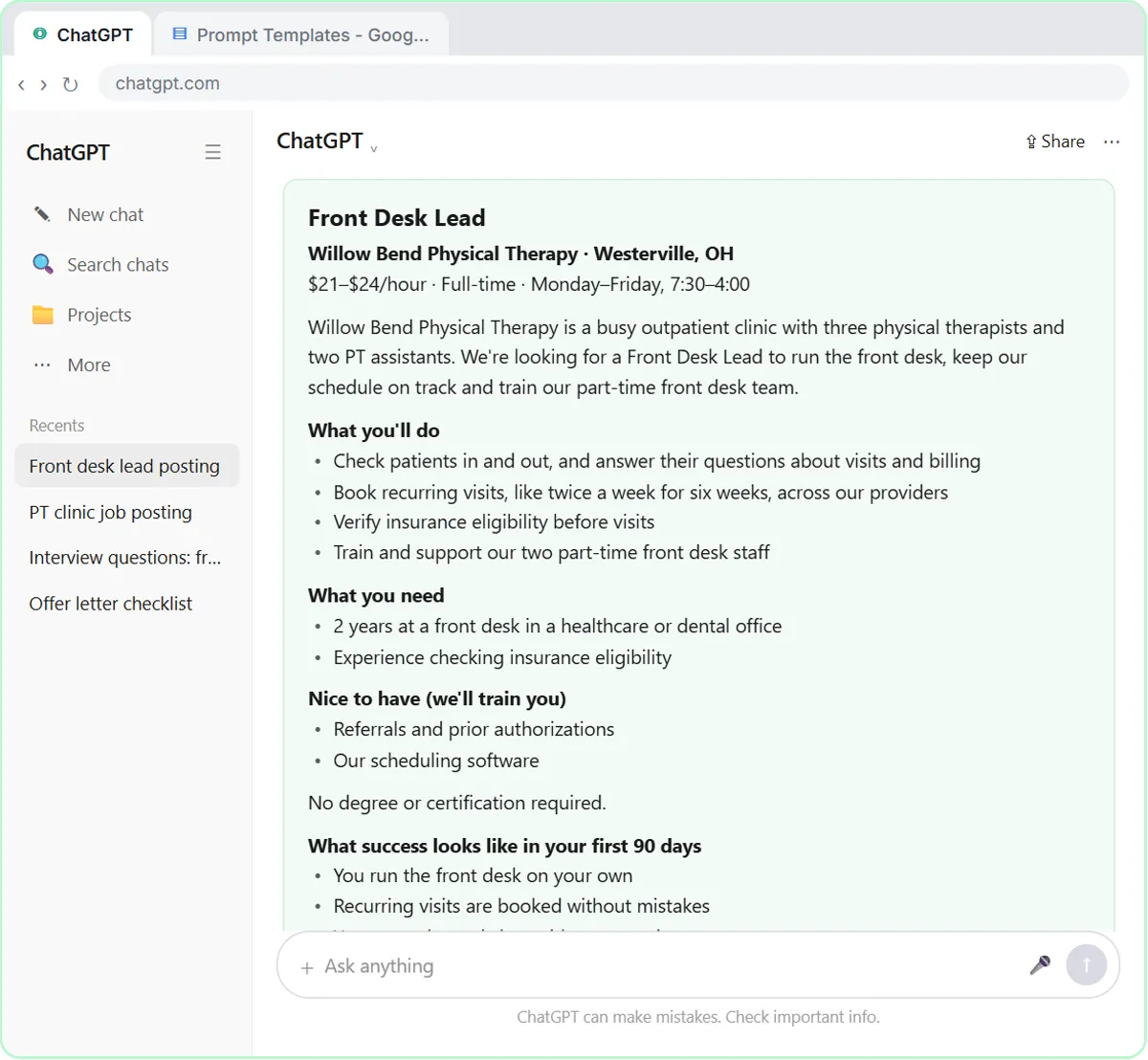
Only the job's must-haves, written down before you open the first resume. In the scorecard lesson, Hannah, the HR manager at Willow Bend Physical Therapy (a made-up practice), is hiring a Front Desk Lead with four must-haves:
- Two or more years running a front desk.
- Insurance verification.
- Calming upset patients.
- Training other staff.
Those four lines are the whole scoring rubric. The interview scorecard glossary entry gives the reason: the same requirements for every candidate, one rating each, with evidence, keeps the discussion on the job and makes candidates easier to compare fairly.
How do I write the screening prompt?
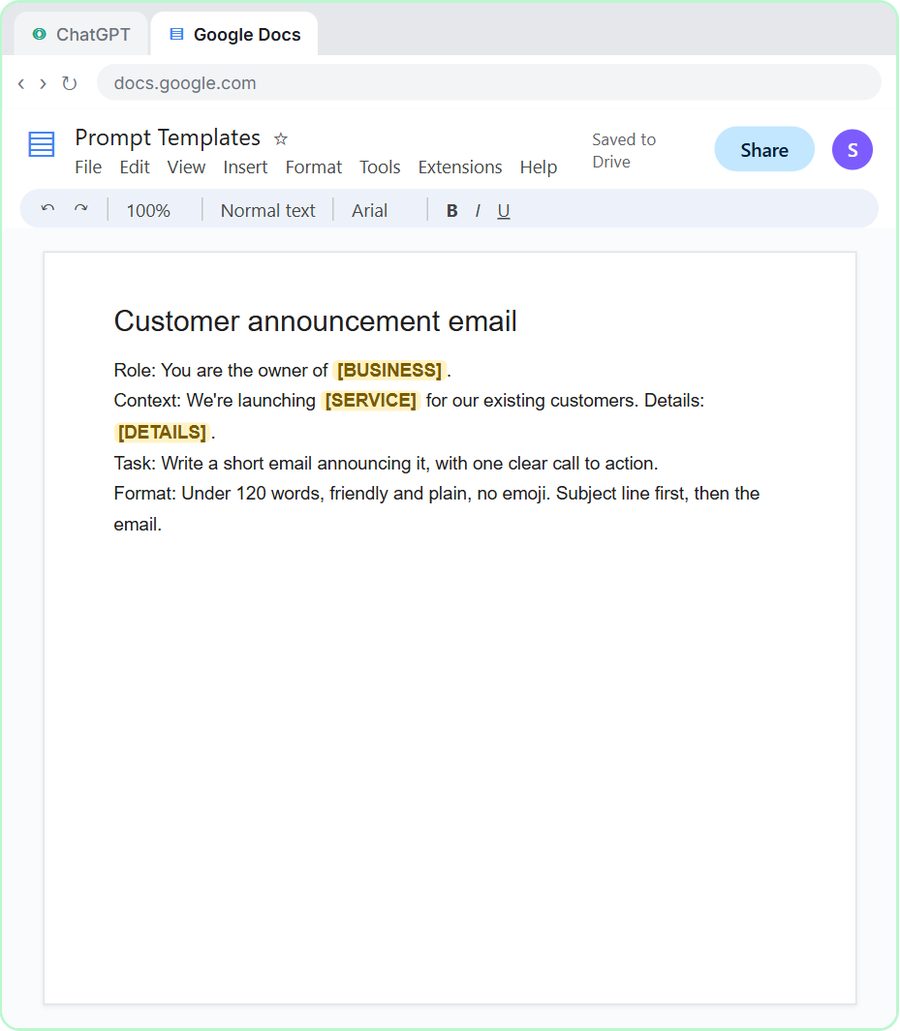
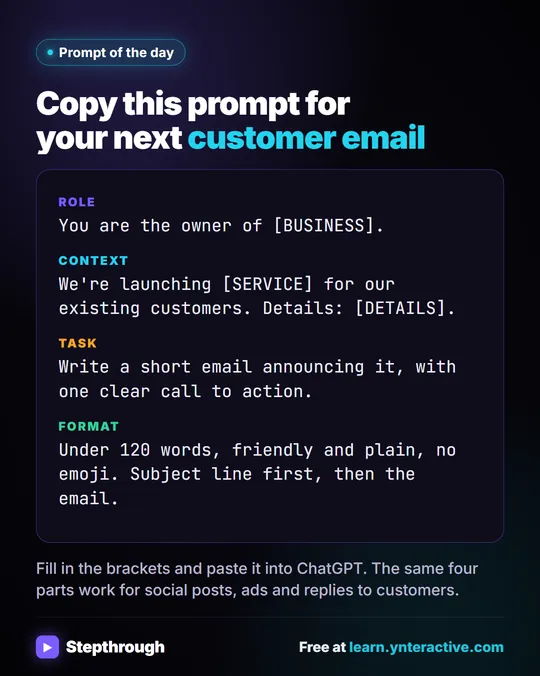
Borrow the lesson's request and swap the transcript for one resume at a time. Use the four parts from Prompt Writing 101 (Role, Context, Task, Format), and keep the lesson's rules word for word:
Role: You help an HR manager review applications for [JOB TITLE].
Context: The must-haves are: [MUST-HAVE 1], [MUST-HAVE 2], [MUST-HAVE 3], [MUST-HAVE 4]. The resume is below.
Task: Score each must-have as Strong, Partial or Not shown, with a short quote from the resume as evidence.
Format: A table with must-have, score and quote. Then one line on what to ask in a phone screen.
Only use what's in the resume, and only what's about the must-haves. Don't guess at age, family, health, religion or anything else that isn't job-related.
"Not shown" does the same job as the lesson's "Not discussed": it flags a gap instead of a failure. A resume that doesn't mention training other staff hasn't proved the person can't; it tells you what to ask next.
Try it free, step by step
Score Every Candidate Fairly After the Interview using ChatGPT. Turn the transcript of an interview panel's debrief into a scorecard against the role's must-haves, the decisions, action items with owners and dates, and a follow-up email to the candidate. You do every step yourself in a practice copy of ChatGPT, it checks your work as you go, and “Do it for me” finishes any step you get stuck on. Free, and nothing touches your real accounts.
Start the free lessonWhy does every score need a quote?
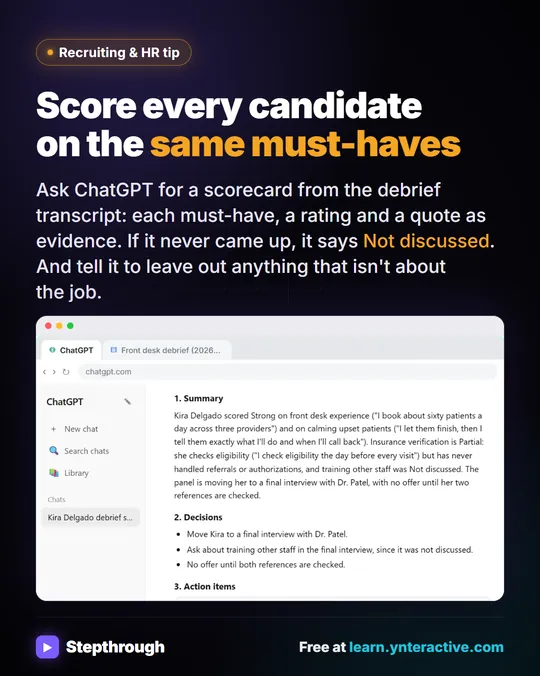
Because a score with no quote is a score you should question. In the lesson, the scorecard cites its source line by line: front desk experience is Strong, backed by "I book about sixty patients a day across three providers." Insurance verification is Partial, backed by "I check eligibility the day before every visit." Training other staff is Not discussed, because no quote exists for it.
Quotes make the check fast. Before a scorecard is used, open the resume, search for each quote and confirm it's there and means what the score claims. The AI citations glossary entry warns that a real-looking citation can still be misread or out of context, so the person reviewing is still doing the real work.
What should I keep out of the screen?
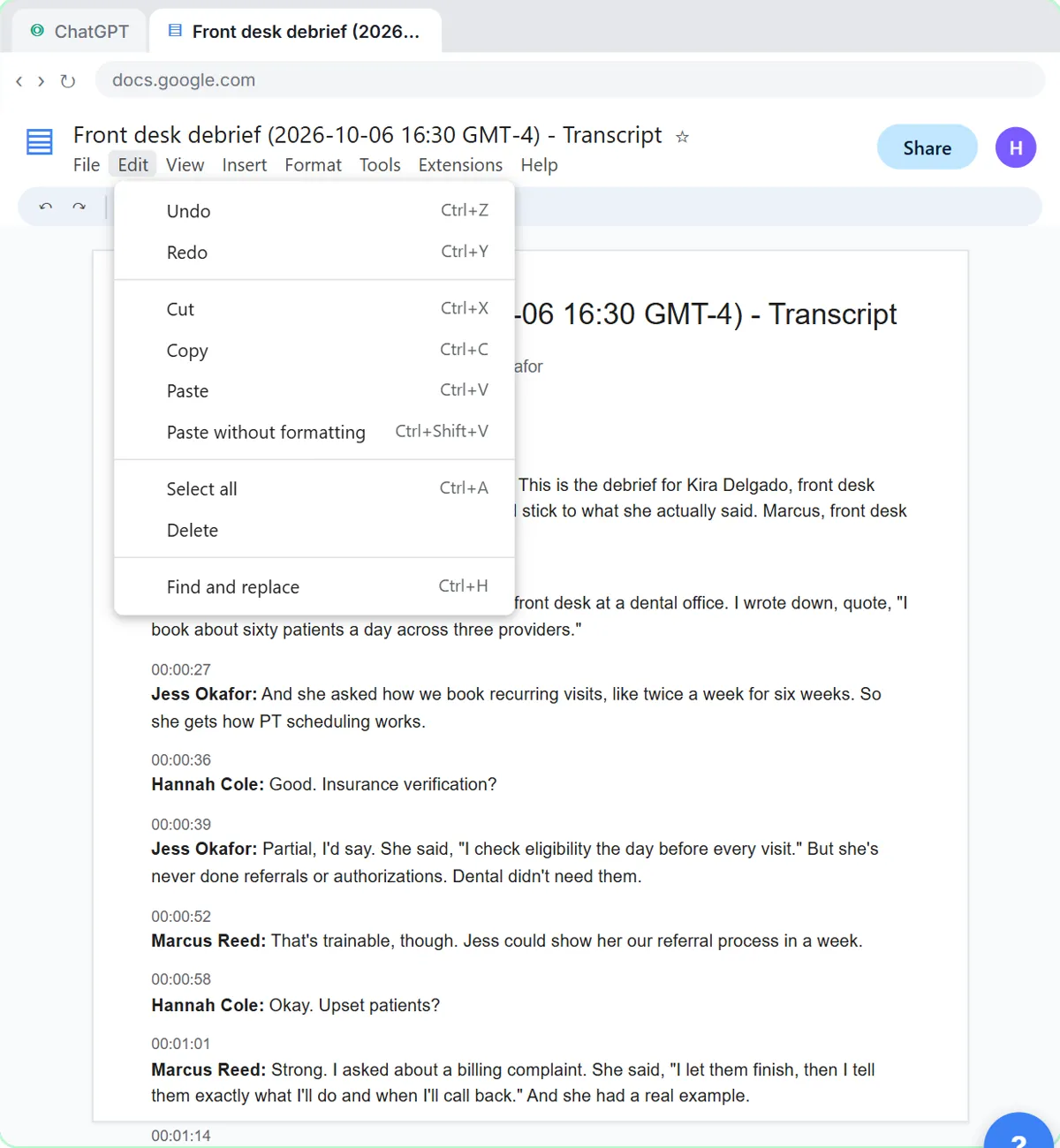
Anything that isn't about the job. During the lesson's debrief, one panelist mentions that the candidate has young kids, and Hannah stops it there: every candidate was asked whether the 7:30 start works, and family isn't part of the score. The request's rule keeps that comment out of the notes.
For resumes, go further and leave details out of the input where you can. The bias glossary entry notes that removing names helps but isn't enough, because bias can come through other details such as gaps in work history, schools or phrasing. Defining job-related criteria and requiring evidence for each score does more than hiding a name.
Is it safe to paste resumes into ChatGPT?
Only in line with your company's policy, and preferably on a business plan. Resumes are personal information. The scorecard lesson's privacy note recommends a business plan such as ChatGPT Business or Enterprise, which OpenAI doesn't use to train its models by default, and including only what the scorecard needs. Keep the results where your policy says, such as your applicant tracking system.
Be especially careful with automated filters. The ATS glossary entry is blunt: don't let software auto-reject people without a human check, and ask HR or an employment attorney before relying on automated screening, since rules vary by location and are changing.
Can I automate resume screening?
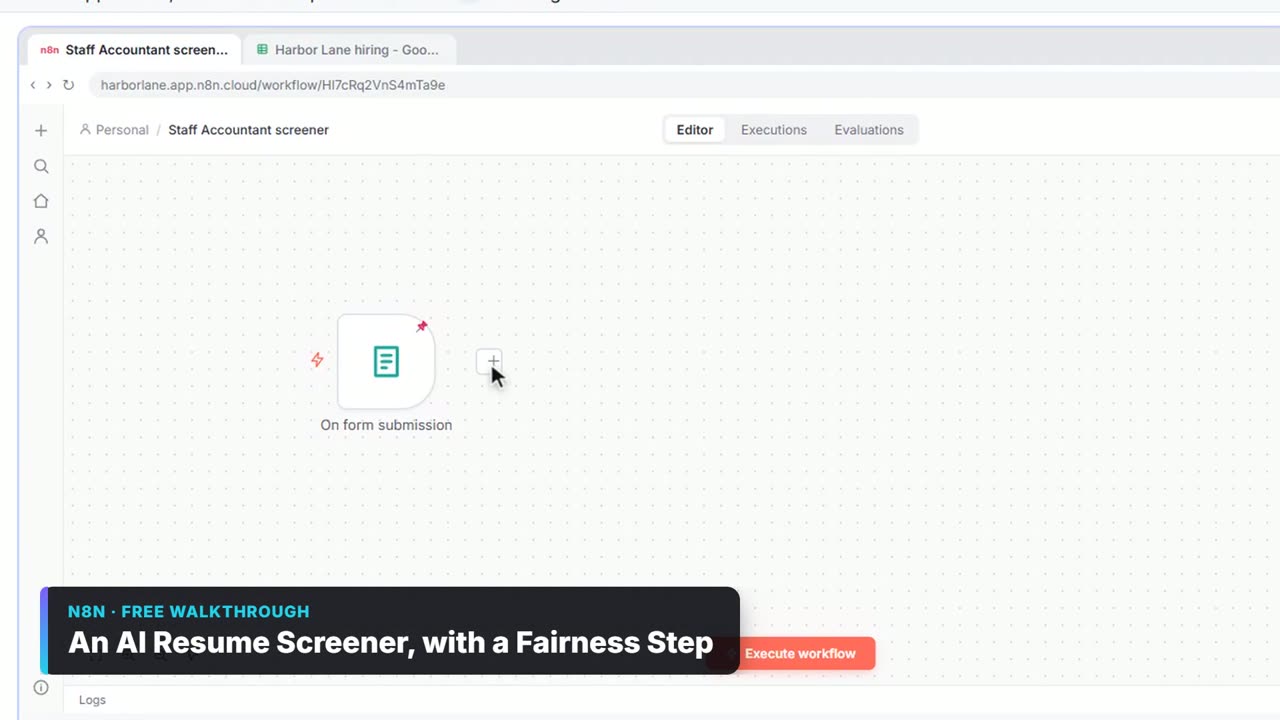
You can automate the sorting, but keep a person on every decision. Whatever tool you use, the design stays the same as in this post: written must-haves, a score and a quote per must-have, personal details left out, and a human in the loop who reads the evidence and decides who moves forward.
For the next stage of hiring, Interview Debrief Template: Run It Fair, Then Score It shows how to run the panel conversation, and How to Score Interview Candidates Consistently turns the same must-haves into an interview rubric.
Glossary terms used in this post: AI bias, interview scorecard and applicant tracking system.
Key takeaways
- AI should organize evidence against a job's written must-haves; the hiring decision stays with people.
- Write the must-haves before reading any resume, and score every candidate on the same list.
- Ask for a score of Strong, Partial or Not shown on each must-have, with a short quote from the resume as evidence.
- Tell the AI not to guess at age, family, health, religion or anything else that isn't job-related, and leave such details out of the input where you can.
- Don't let any tool auto-reject applicants without a human check, and follow your company's policy and local law.
Frequently asked questions
- Can ChatGPT screen resumes?
It can organize a resume against the requirements you give it and quote the evidence for each one. A person should read the scores, check the quotes and decide who moves to a phone screen.
- How do I keep AI resume screening fair?
Use the same written, job-related must-haves for every candidate, require a quote for every score, tell the AI to ignore personal details, and review a sample of results yourself. This is general guidance, not legal advice.
- Should I remove names from resumes before using AI?
It helps, but it isn't enough on its own, because bias can come through other details. Clear criteria and evidence for every score do more. Follow your company's policy on what to remove.
- What does "Not shown" mean on a resume score?
That the resume doesn't mention that requirement. It isn't a fail. It tells you what to ask about in the phone screen.