Updated . Built against the tool’s current screens and checked step by step. How we check this lesson
Use Paperguide's free RRL Finder to find real papers for your thesis, check each one against its abstract, cite them in APA 7, and draft a theoretical framework paragraph you can defend.
At a glance
| Question | Answer |
|---|---|
| What you build | Use Paperguide's free RRL Finder to find real papers for your thesis, check each one against its abstract, cite them in APA 7, and draft a theoretical framework paragraph you can defend. |
| Tools | Paperguide |
| Time | About 10 minutes, 26 steps in 6 parts |
| Level | Beginner, no coding needed |
| Cost | Free |
| Ways to learn it | Practice it step by step |
The 6 parts, in short
- Find the papers: Describe your thesis topic, Send it, Pick the scope, and watch your credits, It searches for you, and 1 more step.
- Read the RRL draft: An RRL in the usual Chapter 2 shape, Open a local study.
- Check every source: Match the line to the abstract, Now a line that sounds odd, Check what kind of source it is, Open a paper from the table.
- Cite it in APA 7: Get the APA citation, Fix it before you paste it, Copy it, Save it to your library, and 1 more step.
- Write the theoretical framework: Do not ask in the review chat, It tried to run a whole new review, Ask the Research Agent, Send it, with your last credits, and 3 more steps.
- Build your reference list: Pick the papers you used, Cite all three at once, Copy the reference list.
Start here first: Paperguide: Check a Vendor's Claim Against the Research Before You Buy (module 1 of Business Automations)
In the course: Part 9 · n8n Automation Toolkit (Module 122 of the full course)
Part of: AI Apps Worth Knowing (step 126 of 157)
What you'll build
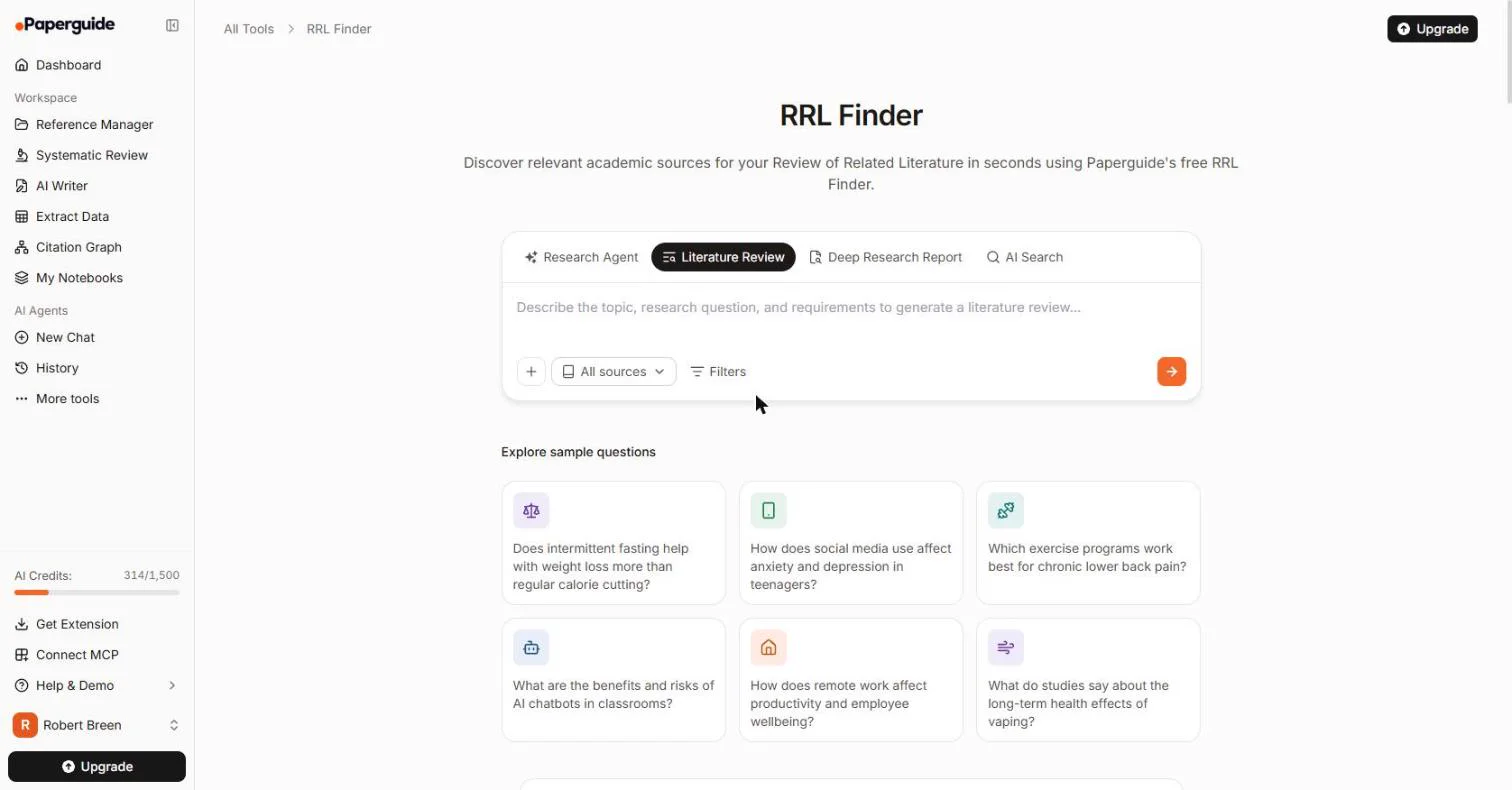
Bea is made up. She is in Grade 12, her thesis is on social media use and academic performance, and Chapter 2 is due. In this lesson you use Paperguide's RRL Finder to find and screen real papers, including Philippine studies. You open the papers to check the lines you plan to use, copy APA 7 citations and fix what they get wrong, then draft a theoretical framework paragraph in the Research Agent and check it against its sources. The papers are real. On the Free plan the review alone used 831 of the 1,500 credits a month, so this lesson shows you where the credits go.
You went from a thesis topic to a screened RRL draft, three saved sources, an APA 7 reference list and a framework paragraph. Paperguide found and sorted real papers, including several Philippine studies, in about four minutes. It also got one study's details wrong, cited a paper for a claim that paper rejects, and lower-cased proper nouns in its APA output. So write the RRL in your own words, check each line against the abstract, and fix every reference before you submit. Ask your adviser which theory and citation style your school wants.
- Tools: Paperguide
- Time: about 10 minutes, 26 steps in 6 chapters
- Level: beginner, no coding needed
- Price: free
Practice first, then build it for real
Practice copy built from real Paperguide screens (paperguide.ai), captured 12 November 2026 on a Free plan account. Nothing here touches a Paperguide account. The student and her thesis are made up; the papers are real published research. The answers are what Paperguide produced, and your answers will differ. To build it for real you need your own Paperguide account, and some services charge once you use them for real work, so check each tool's current pricing.
Try it yourself, free
Reading the steps is a start. Doing them is how it sticks. The interactive module walks you through every click in a practice copy of Paperguide, checks each step, and never touches your real accounts.
Start “Paperguide: Find and Cite Sources for Your Thesis Review of Related Literature (RRL)”Step by step: Paperguide: Find and Cite Sources for Your Thesis Review of Related Literature (RRL)
All 26 steps of the interactive module, in order. In the module you watch each one, then do it yourself in a practice copy that checks your work.
1. Find the papers
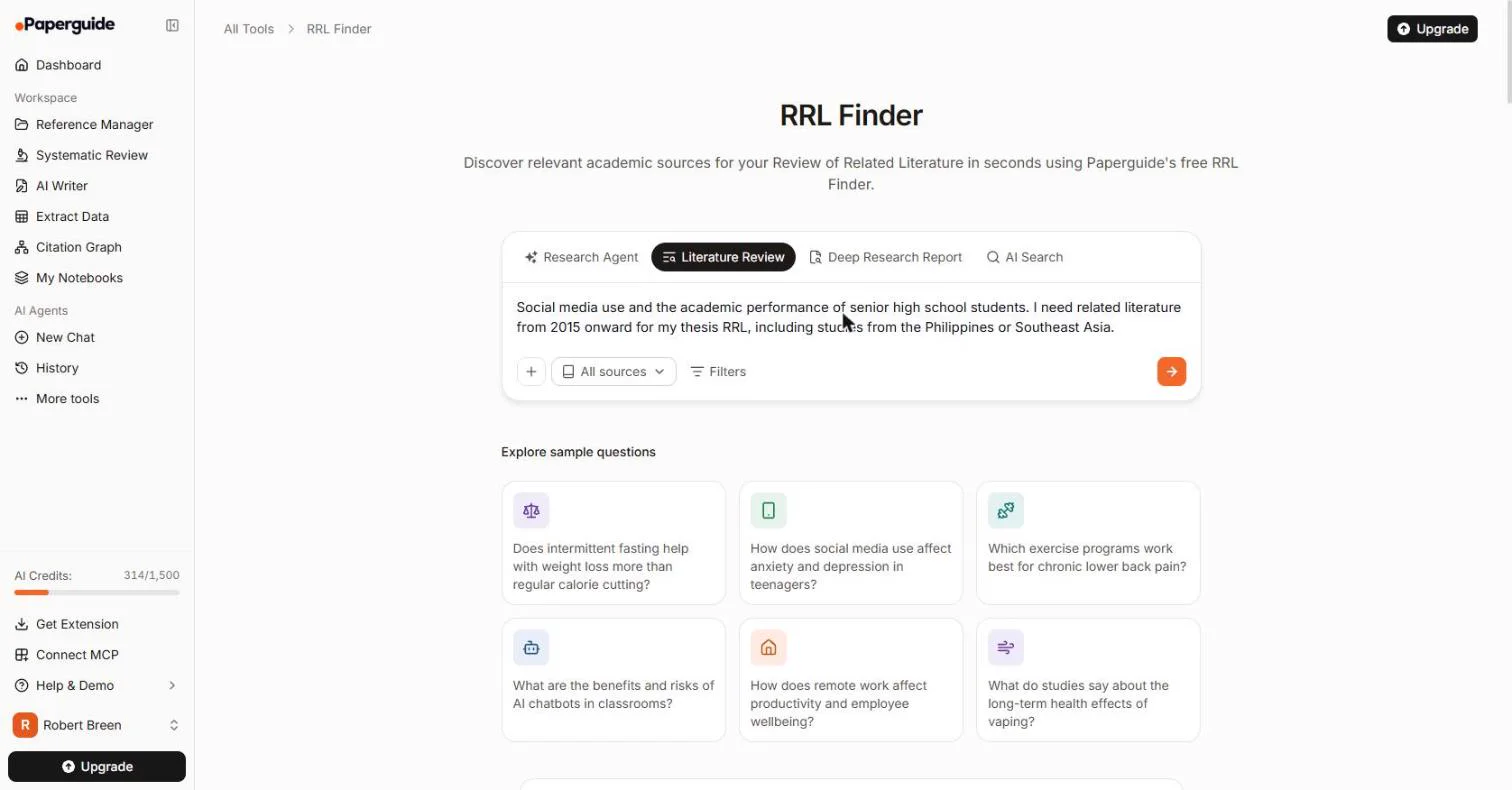
- Describe your thesis topic. You are Bea, a Grade 12 student writing a made-up thesis on social media use and academic performance. Chapter 2 needs a Review of Related Literature. Open Paperguide's RRL Finder, keep Literature Review selected, and describe your topic. Say the years you want and where the studies should come from, so it can screen for them.
You are writing a thesis on social media and grades. Say the years you want, and where the studies should come from.
Social media use and the academic performance of senior high school students. I need related literature from 2015 onward for my thesis RRL, including studies from the Philippines or Southeast Asia.
- Send it. Click the orange arrow.
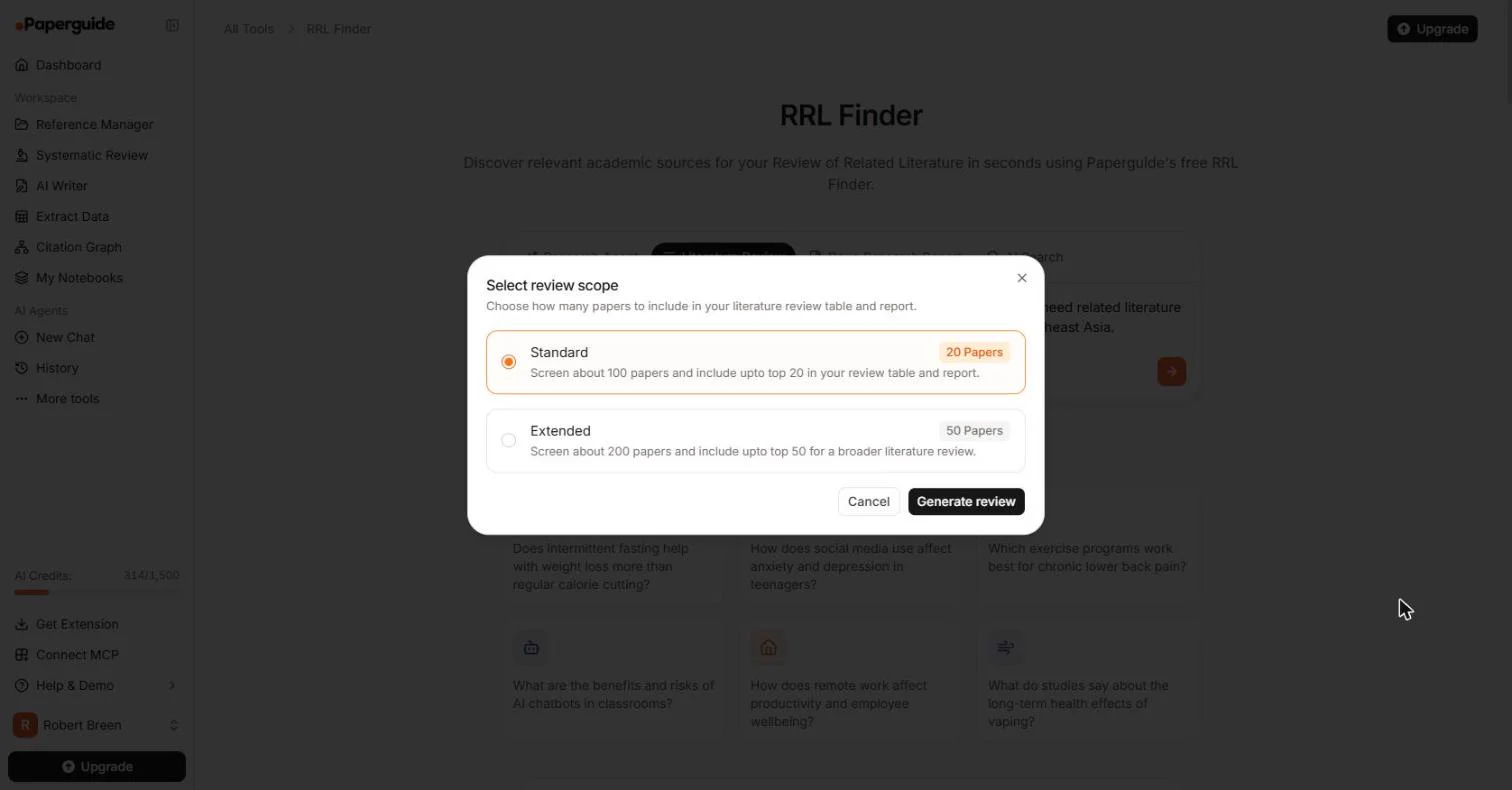
- Pick the scope, and watch your credits. Leave Standard selected: it screens about 100 papers and keeps the top 20. Click Generate review. Know the cost first: this one review took 831 of the 1,500 credits a month on the Free plan. Write a good topic, because you get about one review a month for free.
Leave Standard selected, and click Generate review. This one review used more than half of the free plan's monthly credits, so get the topic right first.
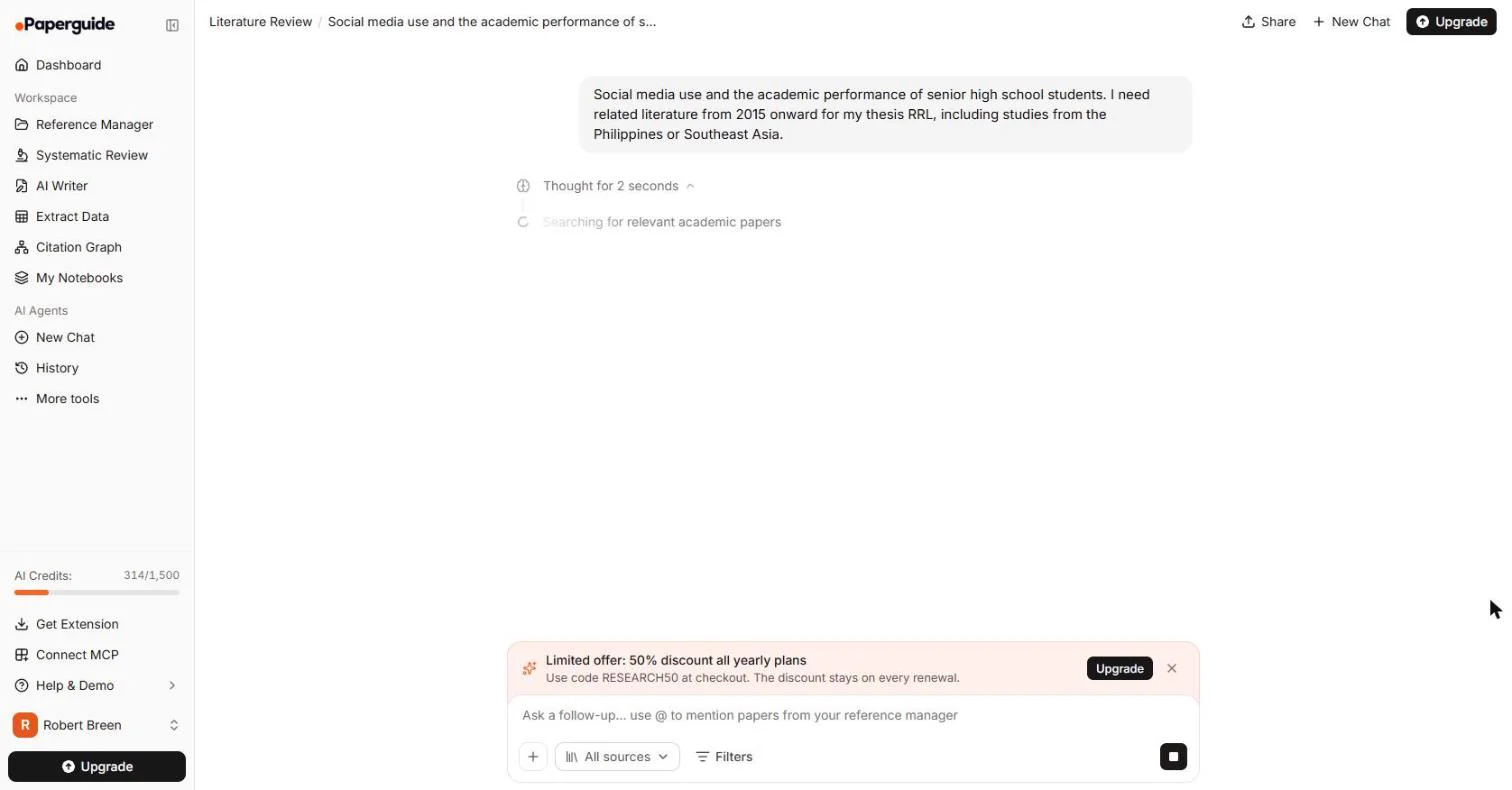
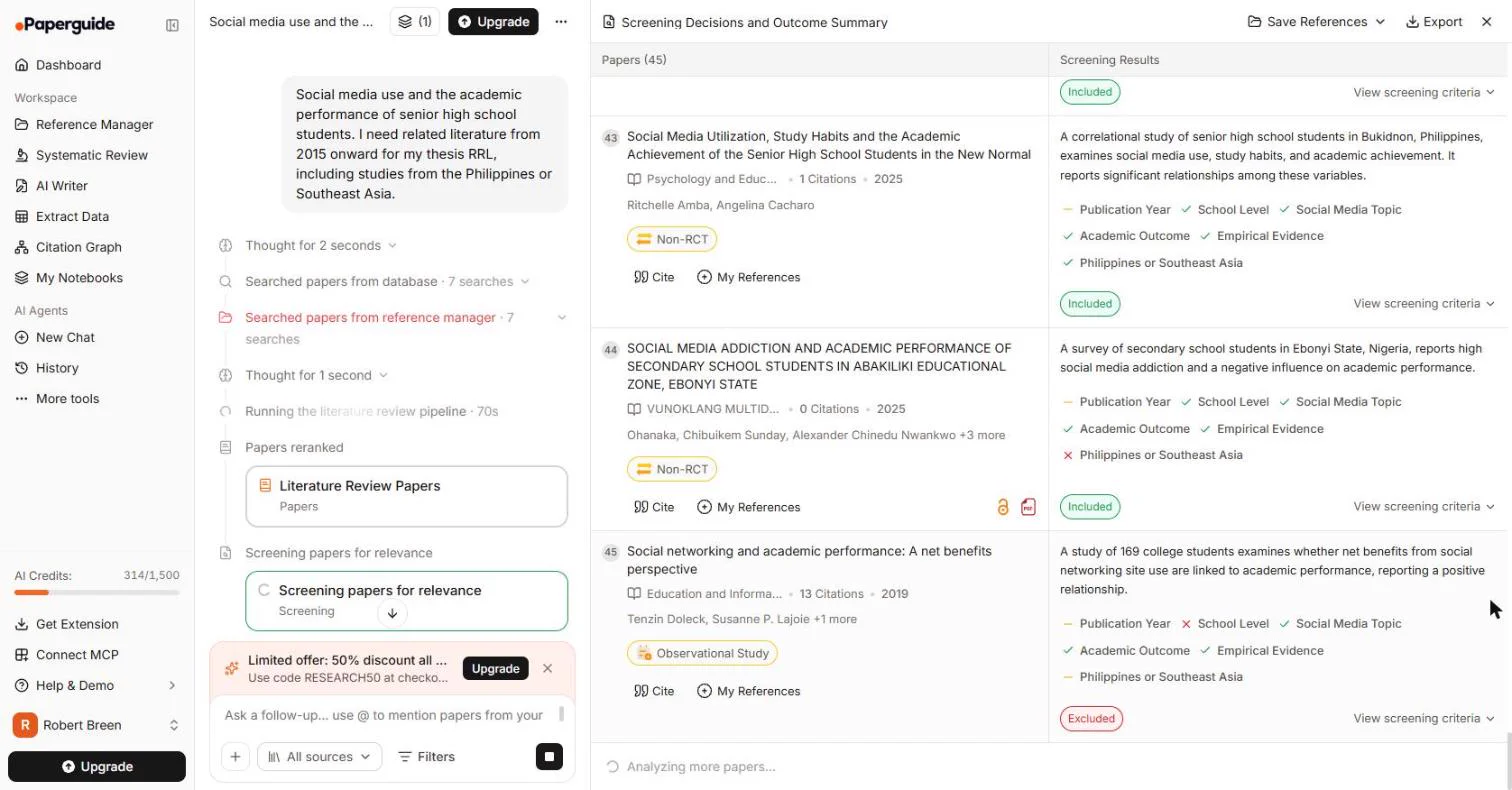
- It searches for you. It turns your topic into several searches of its paper database. Ours ran seven. The whole review took about four minutes. Click the search line.
It runs several searches for you. The whole review took about four minutes.
- See why each paper is in or out. Before it writes, it screens about 100 papers against criteria taken from your topic: publication year, school level, academic outcome, and Philippines or Southeast Asia. A green check means the paper meets it. A red X means it does not. This Bukidnon study meets them all. Click its Philippines or Southeast Asia check.
It screens each paper against your topic. Year, school level, and the Philippines or Southeast Asia. Green means it fits. Red means it does not.
2. Read the RRL draft
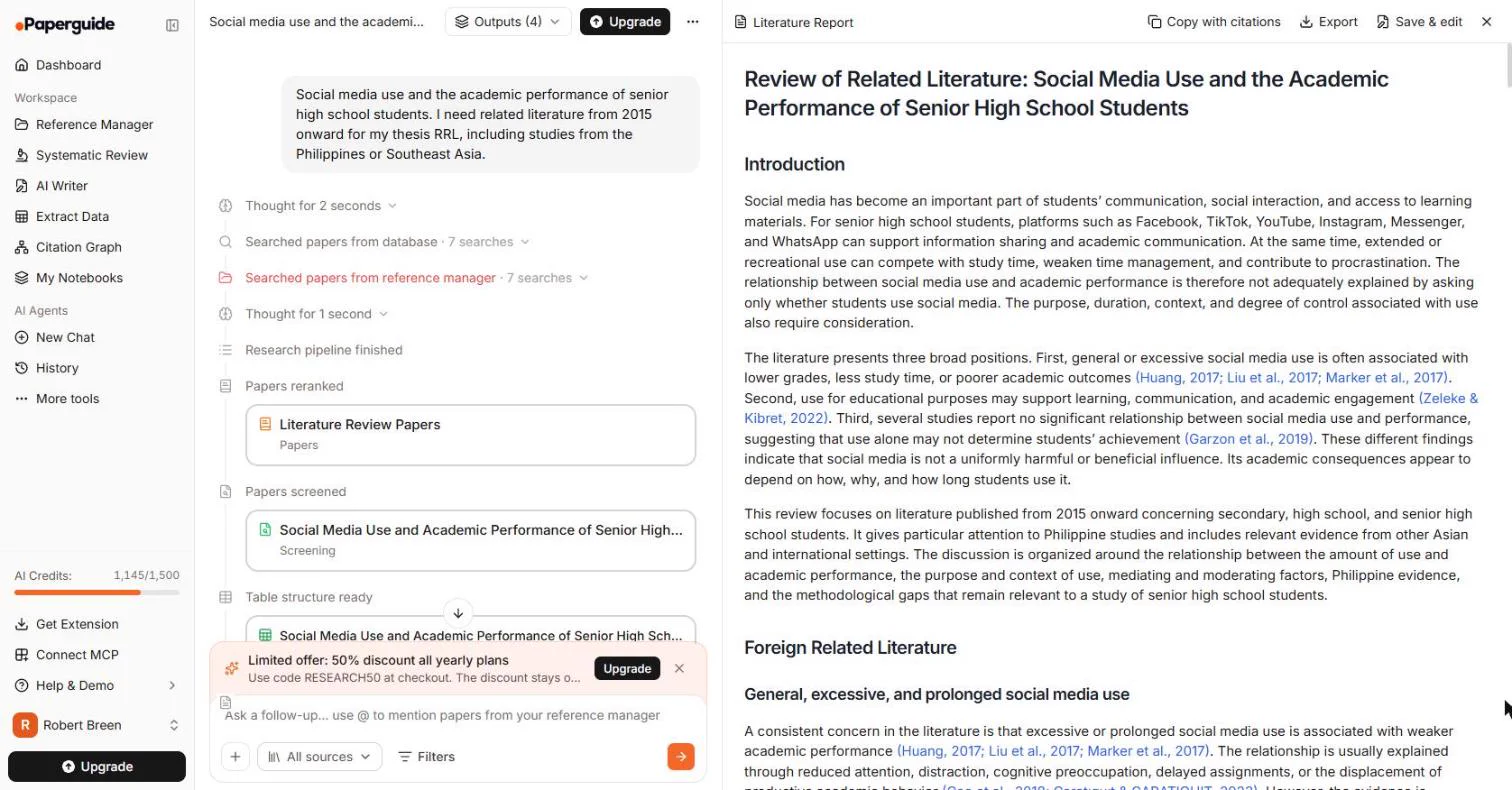
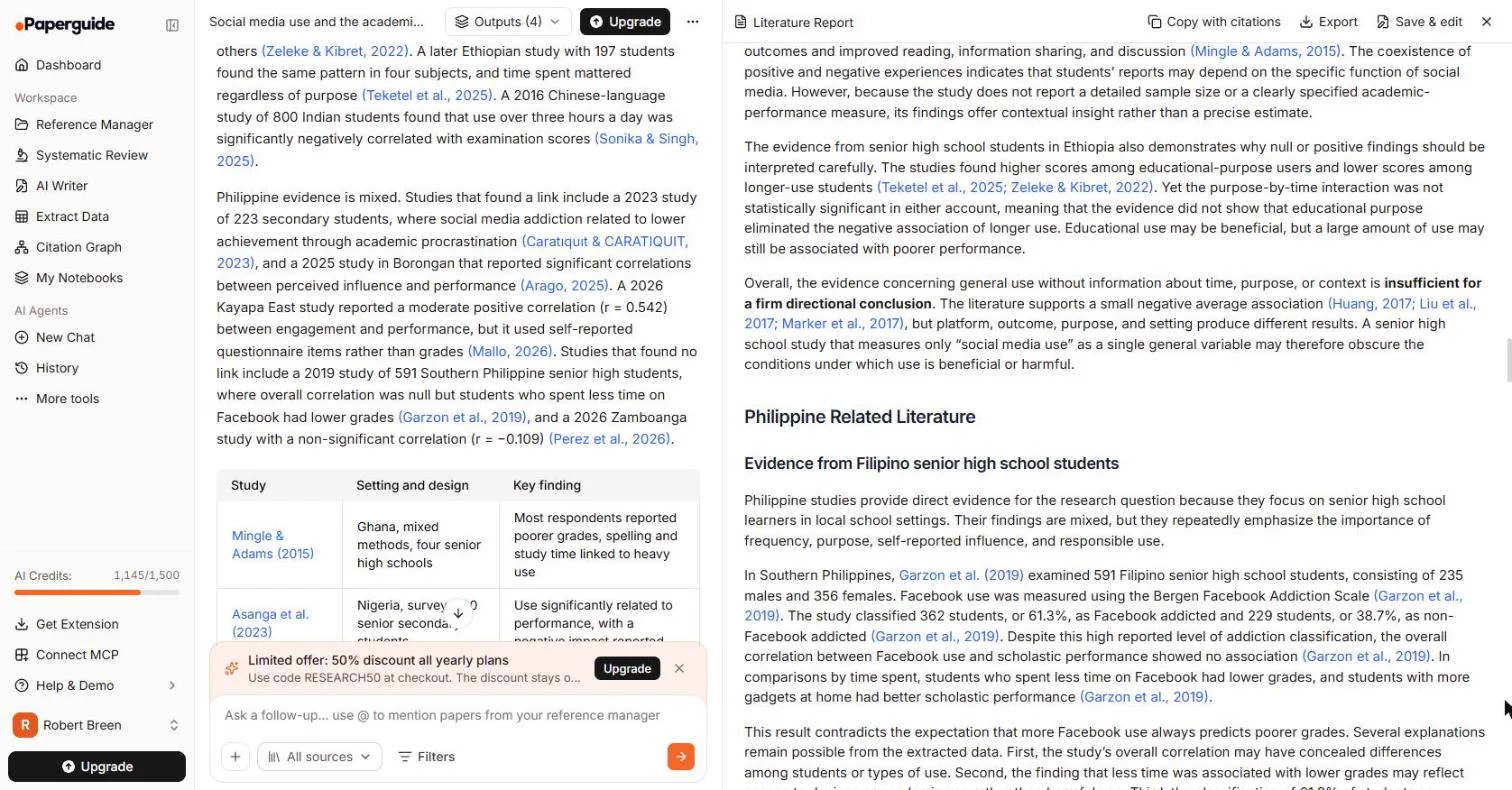
- An RRL in the usual Chapter 2 shape. The report is laid out the way many schools ask for Chapter 2: an Introduction, Foreign Related Literature, Philippine Related Literature, a synthesis, the gaps, and a summary. Every blue citation links to a real paper. Click Foreign Related Literature.
The report follows the usual chapter two shape: foreign literature, Philippine literature, a synthesis, and the gaps. Every blue citation links to a real paper.
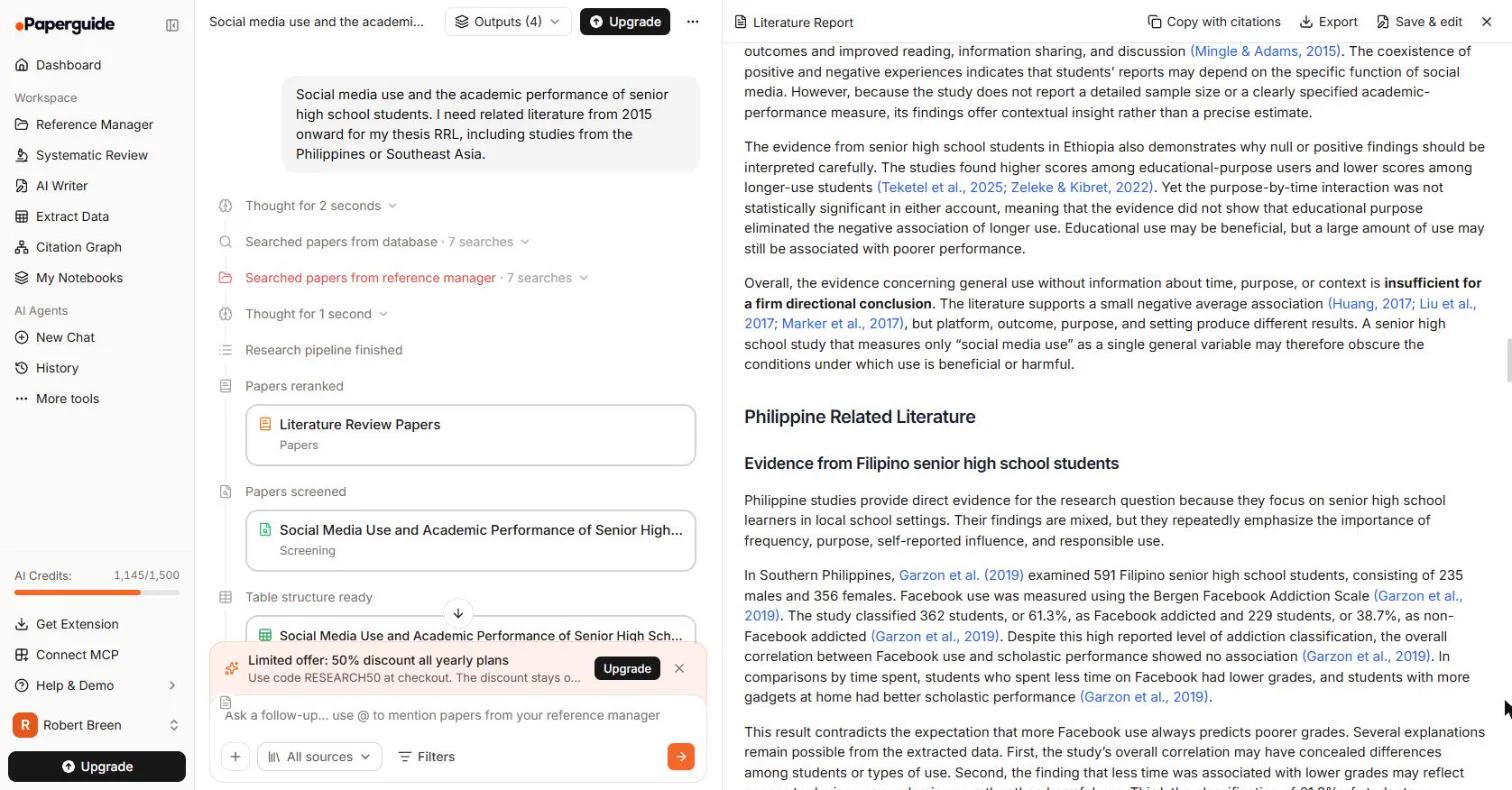
- Open a local study. Scroll to Philippine Related Literature. It describes a study of 591 Filipino senior high school students. Before you use that line, open the paper. Click Garzon et al. (2019).
Before you use a line, open the paper.
3. Check every source
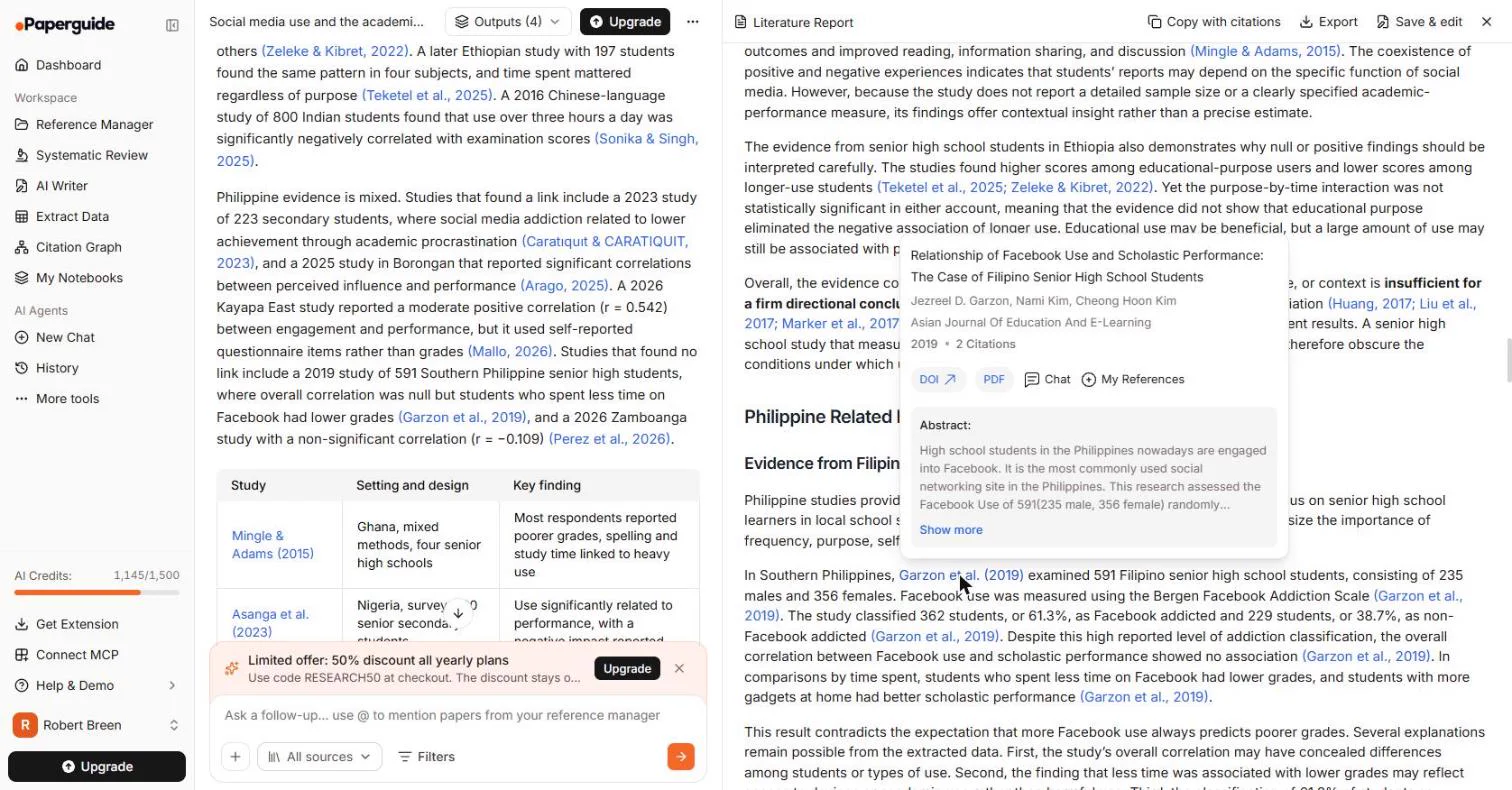
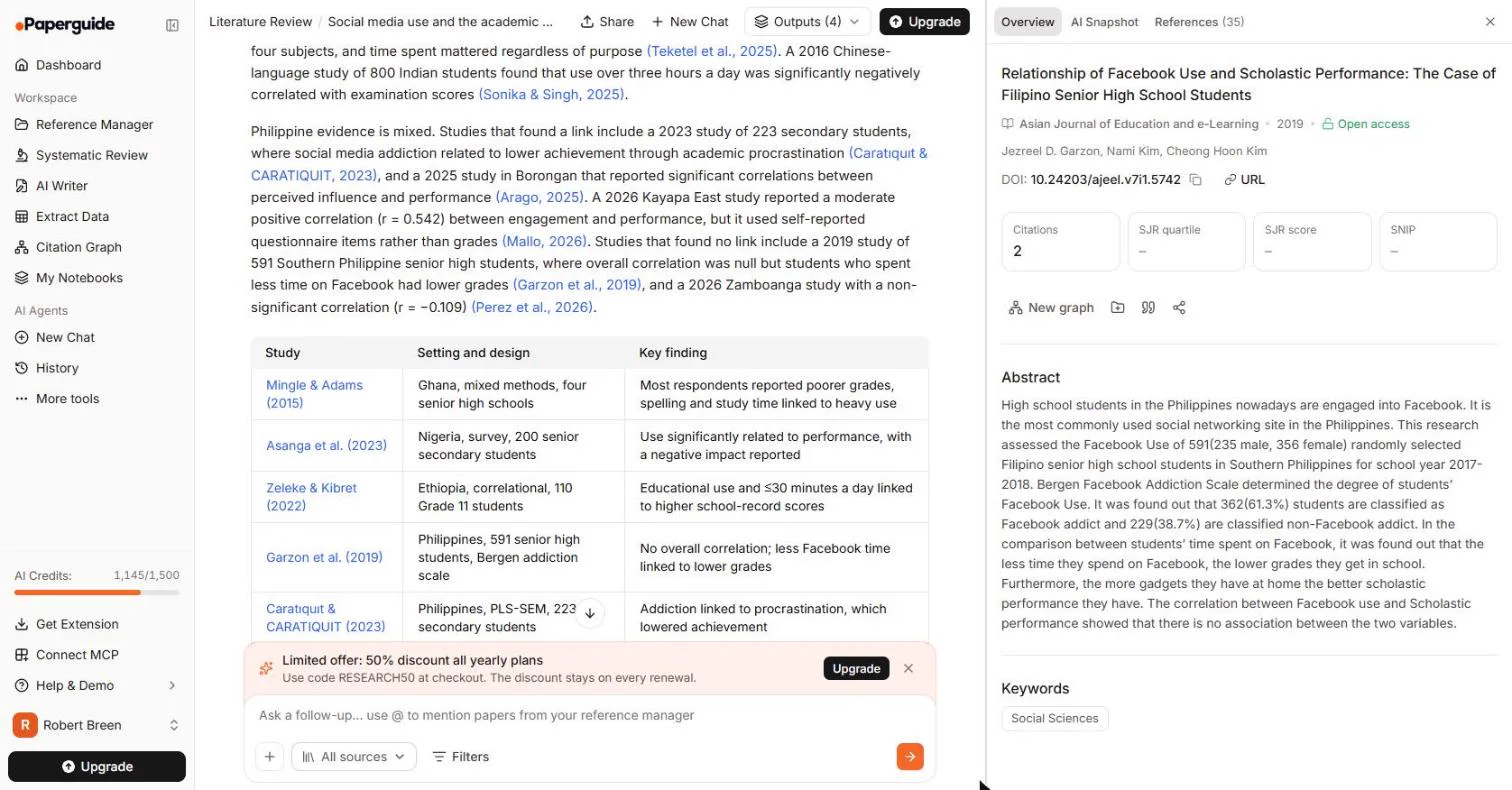
- Match the line to the abstract. A card opens with the journal, the year and the abstract. Click Show more, and read it. 591 students, 61.3% classed as Facebook addicted, and no association between Facebook use and grades. The report got this one right. Click the abstract.
Read the abstract. Five hundred ninety one students, and no link between Facebook use and grades. The report got this one right.
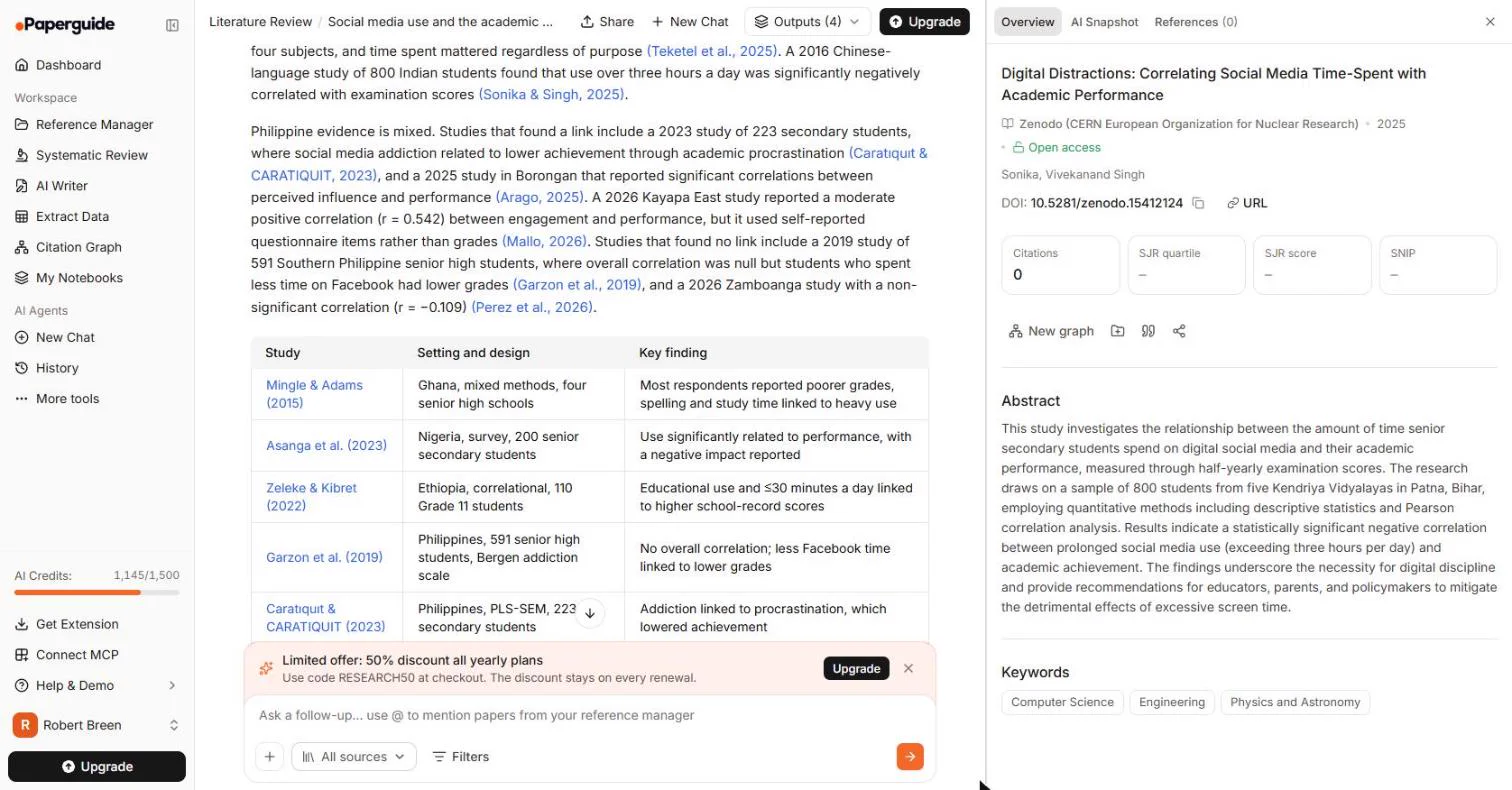
- Now a line that sounds odd. Press Escape to close the report and read the chat summary on the left. One line calls Sonika and Singh "a 2016 Chinese-language study of 800 Indian students", with a 2025 date beside it. That does not add up. Click Sonika & Singh, 2025.
Close the report, and read the chat summary. One line calls a 2025 study a 2016 Chinese language study of Indian students. That does not add up.
- Check what kind of source it is. The abstract says nothing about 2016 or Chinese. It is a 2025 upload to Zenodo, an open repository, not a journal: 0 citations and no journal ranking. You can still cite it, but say what it is, and lean on journal articles and the meta-analyses for your main claims. Click the source details.
The abstract says nothing about twenty sixteen or Chinese. It is an upload to an open repository, not a journal, with no citations. Lean on journal articles for your main claims.
- Open a paper from the table. The chat answer has a table of key studies. Each name opens that paper. Click Garzon et al. (2019).
The table under the answer opens each paper too.
4. Cite it in APA 7
- Get the APA citation. The paper panel shows the journal, the DOI and the citation count. Click the Cite button, the quote marks next to the folder icon.
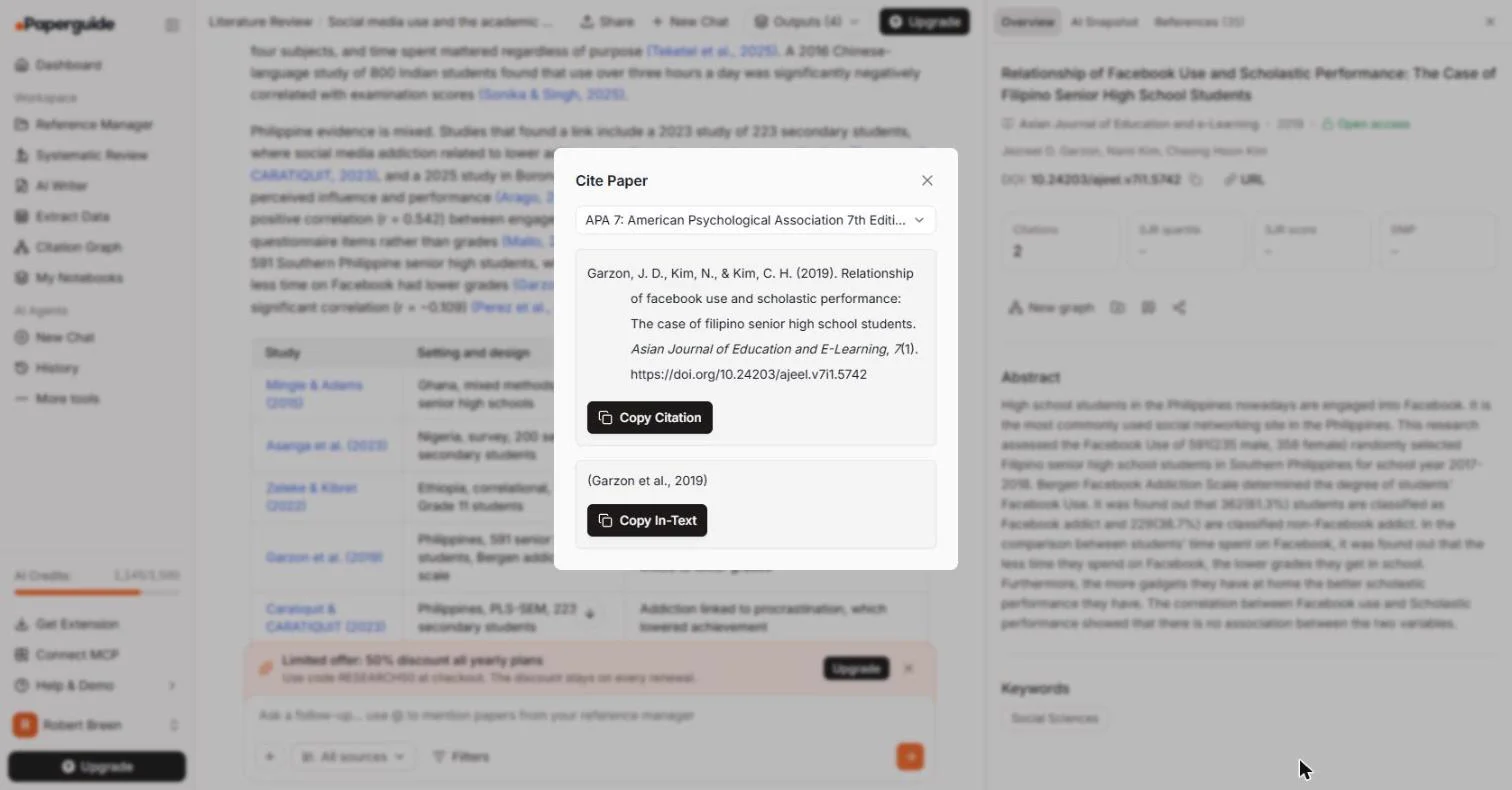
- Fix it before you paste it. It is already set to APA 7, with the full reference and the in-text citation. Read it like a teacher would. The title has "facebook" and "filipino" in lower case. APA keeps proper nouns capitalized, so you change them to Facebook and Filipino. Click the reference.
It is already set to A P A seven. Read it like a teacher would. Facebook and Filipino are in lower case. A P A keeps proper nouns capitalized, so fix them.
- Copy it. Click Copy Citation, paste it into your reference list, and make the fix. Copy In-Text gives you (Garzon et al., 2019) for your paragraphs.
Then make the fix.
- Save it to your library. Close the dialog. Click the folder icon to save the paper to your Reference Manager, so you can cite it again in later chapters.
Close the dialog.
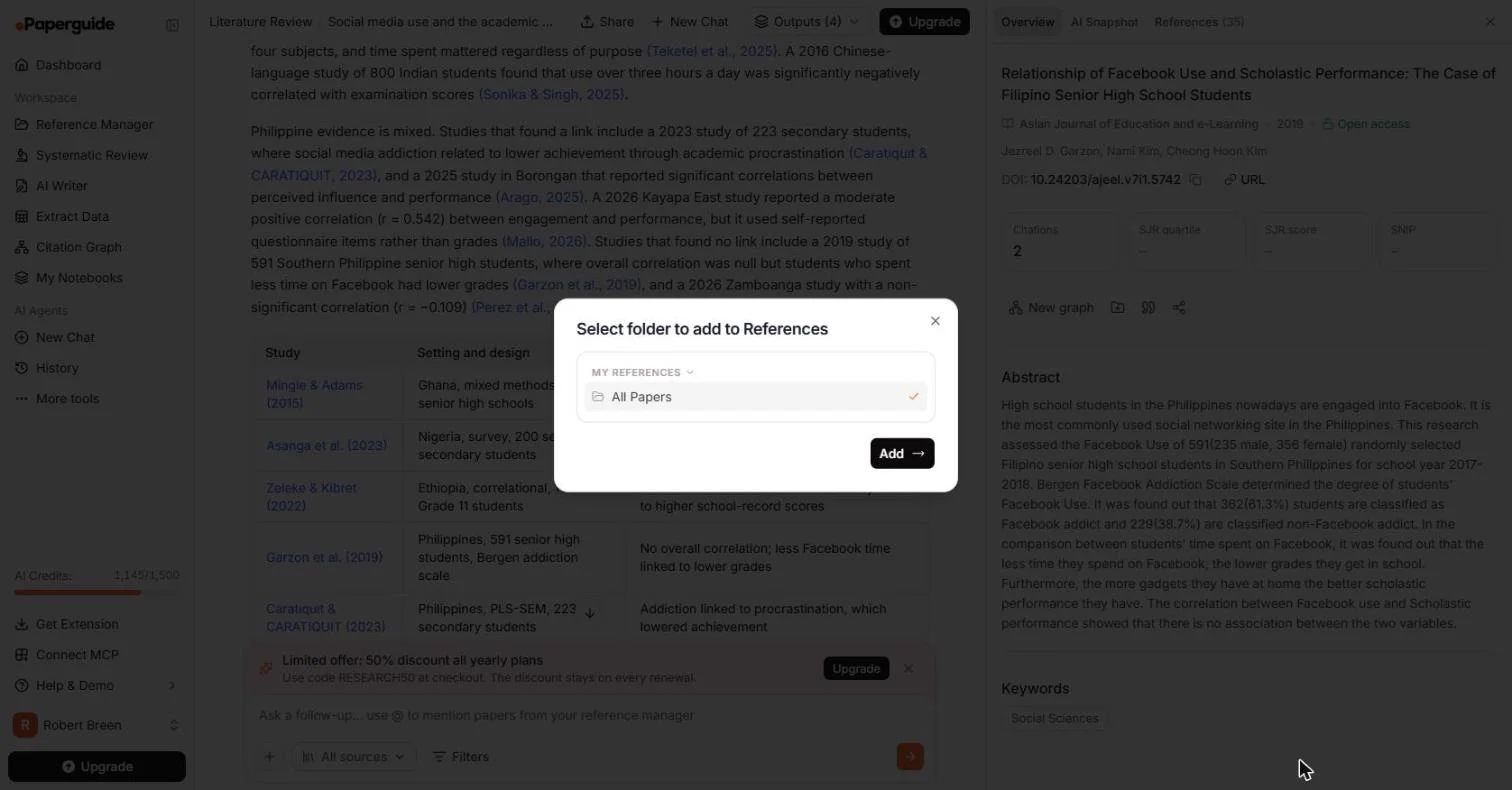
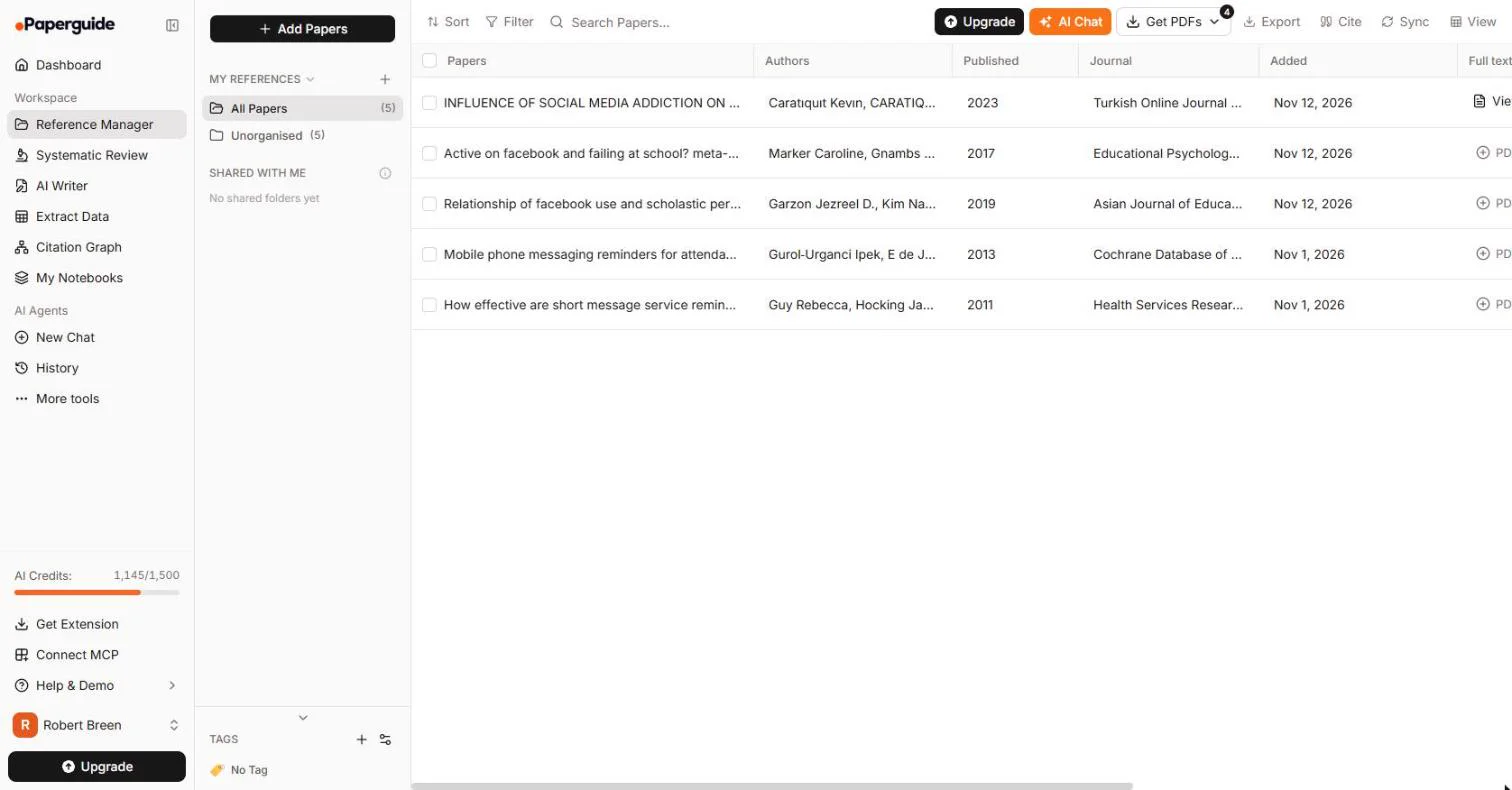
- Pick a folder. Our account had one folder, All Papers. Click Add. We saved two more the same way, from the My References button on each row of the Table output: Marker et al. (2017), a meta-analysis, and Caratiquit and Caratiquit (2023), a Philippine study.
We saved two more papers the same way.
5. Write the theoretical framework
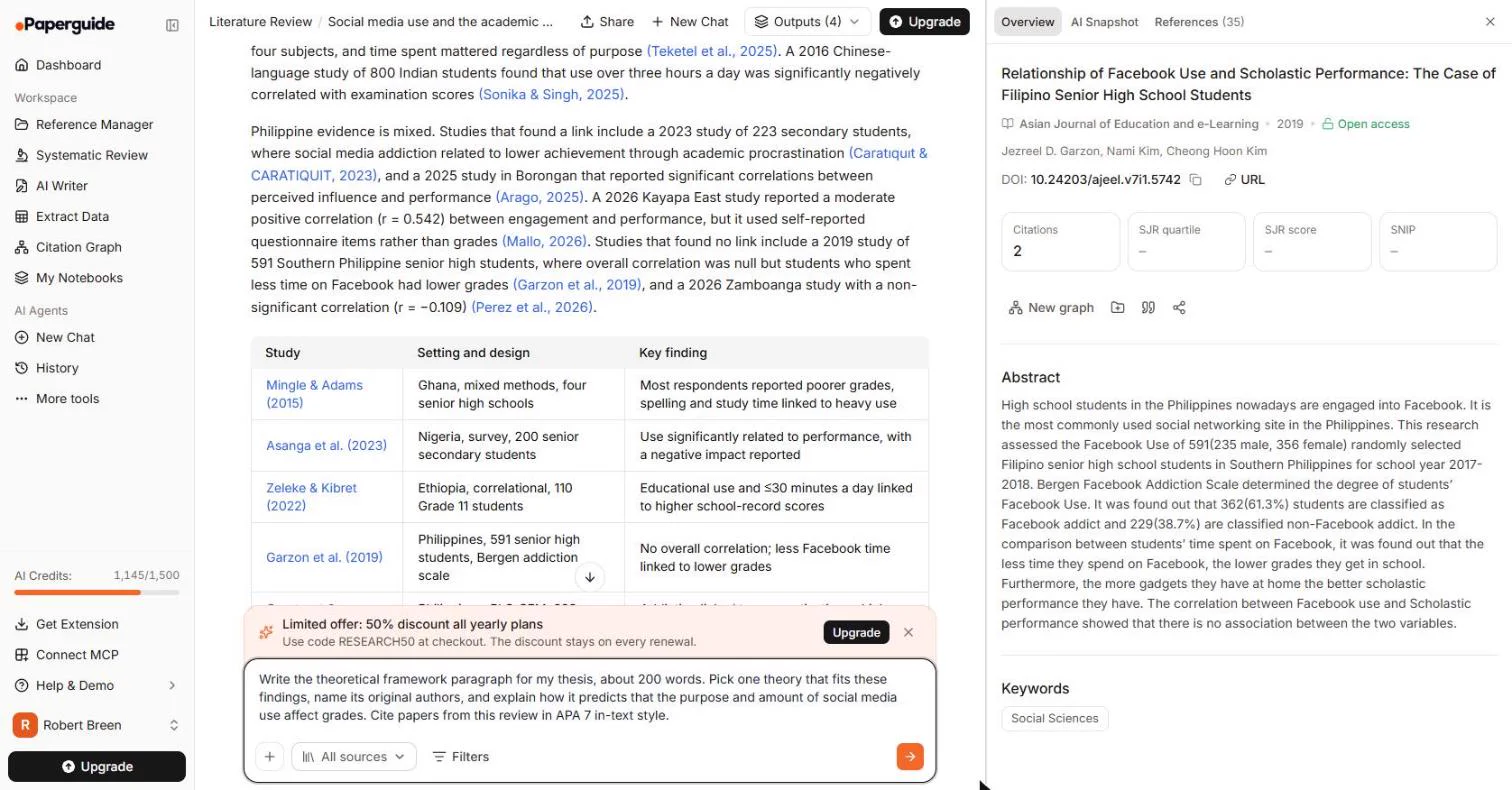
- Do not ask in the review chat. Next, the theoretical framework. We first asked for it right here, in the review chat. Click the arrow to see what happened. Nothing was charged.
Next, the theoretical framework. We first asked for it right here, in the review chat.
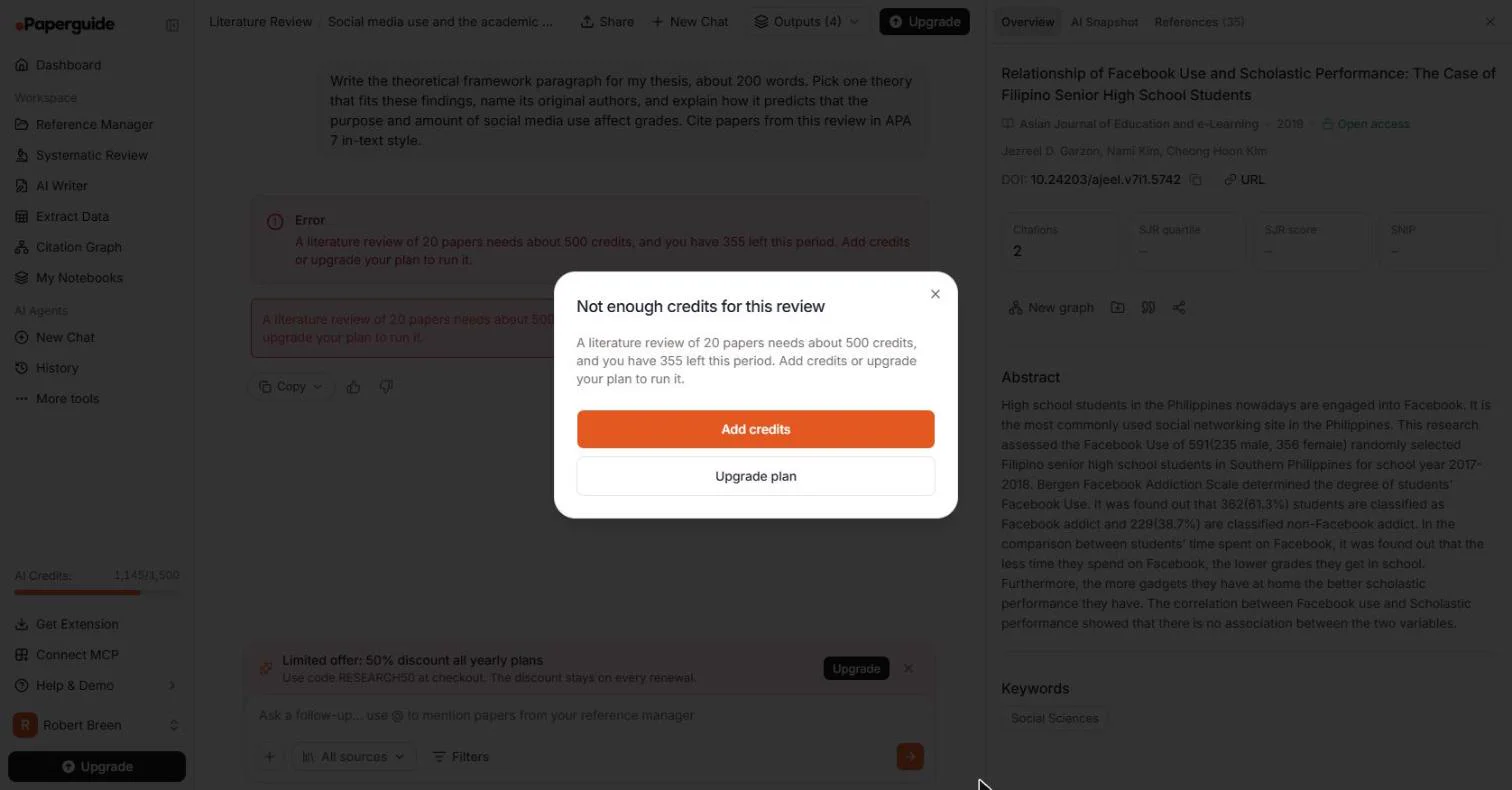
- It tried to run a whole new review. A follow-up in a Literature Review chat starts another review: "needs about 500 credits, and you have 355 left." Close it with the X. Ask writing questions in the Research Agent instead.
A follow up in a review chat starts a whole new review, about five hundred credits. Close it, and use the Research Agent instead.
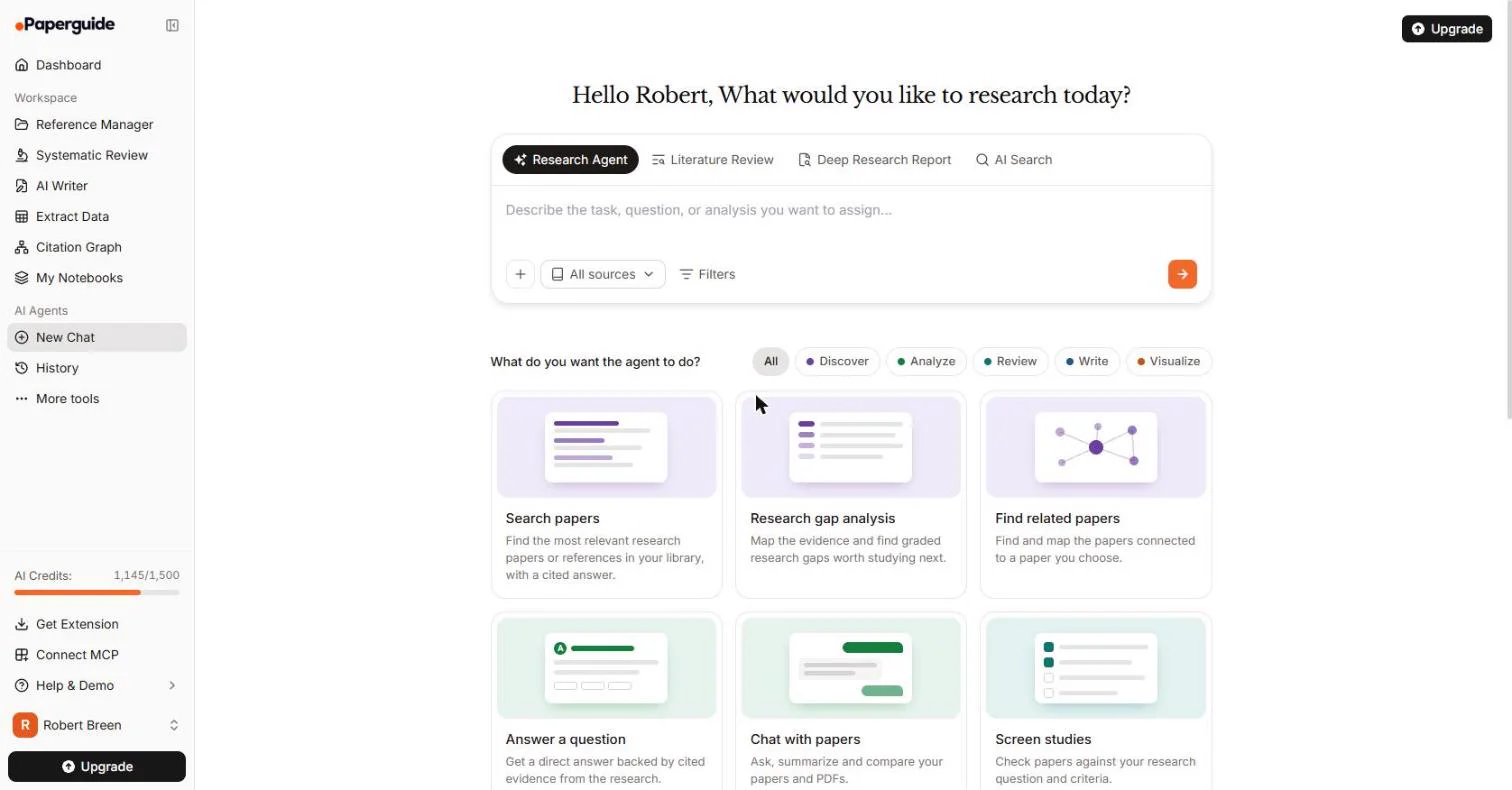
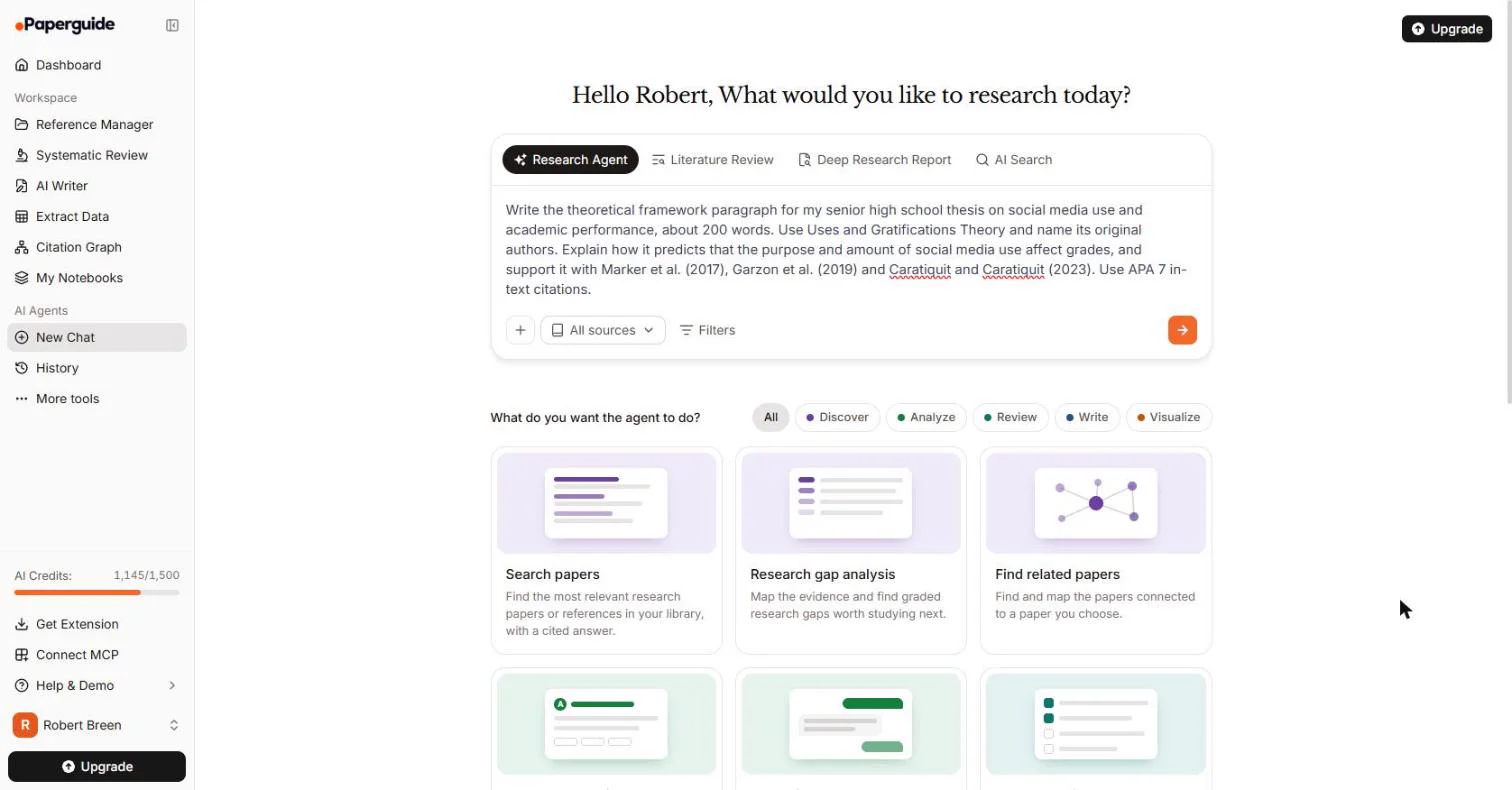
- Ask the Research Agent. Click New Chat. Research Agent is selected. Name the theory, ask for its original authors, and list the papers you saved, so it cites those. Your teacher may give you a different theory. Use theirs.
Name the theory, and list the papers you saved, so it cites those.
Write the theoretical framework paragraph for my senior high school thesis on social media use and academic performance, about 200 words. Use Uses and Gratifications Theory and name its original authors. Explain how it predicts that the purpose and amount of social media use affect grades, and support it with Marker et al. (2017), Garzon et al. (2019) and Caratiquit and Caratiquit (2023). Use APA 7 in-text citations.
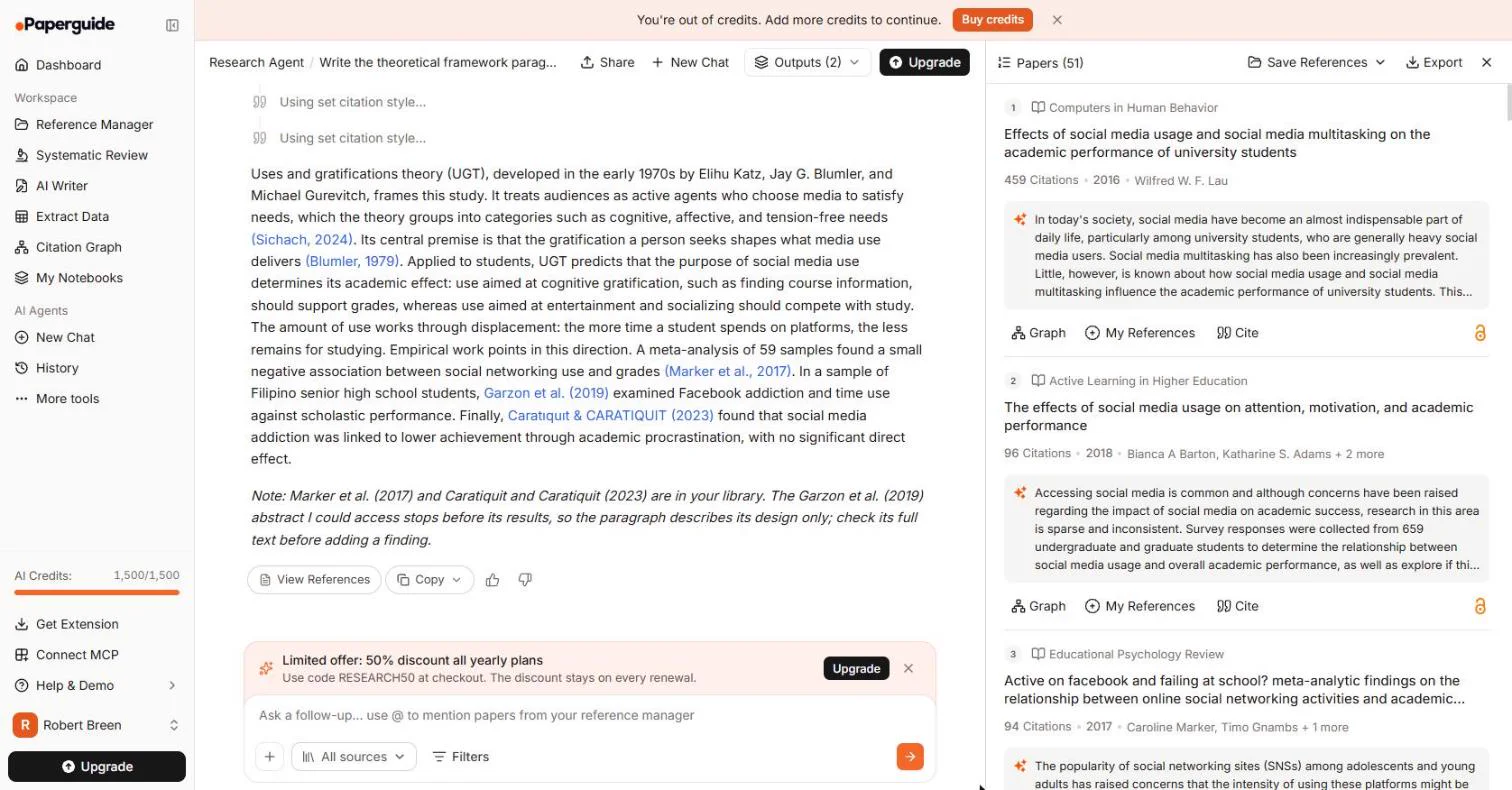
- Send it, with your last credits. Click the arrow. This one answer used the last 355 credits of our month, and the account showed "You're out of credits." A Free plan gets you about one review and one long answer, so plan the order.
This answer used the last of our monthly credits. On the free plan, plan the order.
- Read it against the papers. A good first draft. It names Katz, Blumler and Gurevitch, and links purpose of use to grades. Now check one sentence: "The amount of use works through displacement." It cites Marker et al. (2017) right after it. Click the sentence.
A good first draft. Now check one sentence. It says more time online means less time to study.
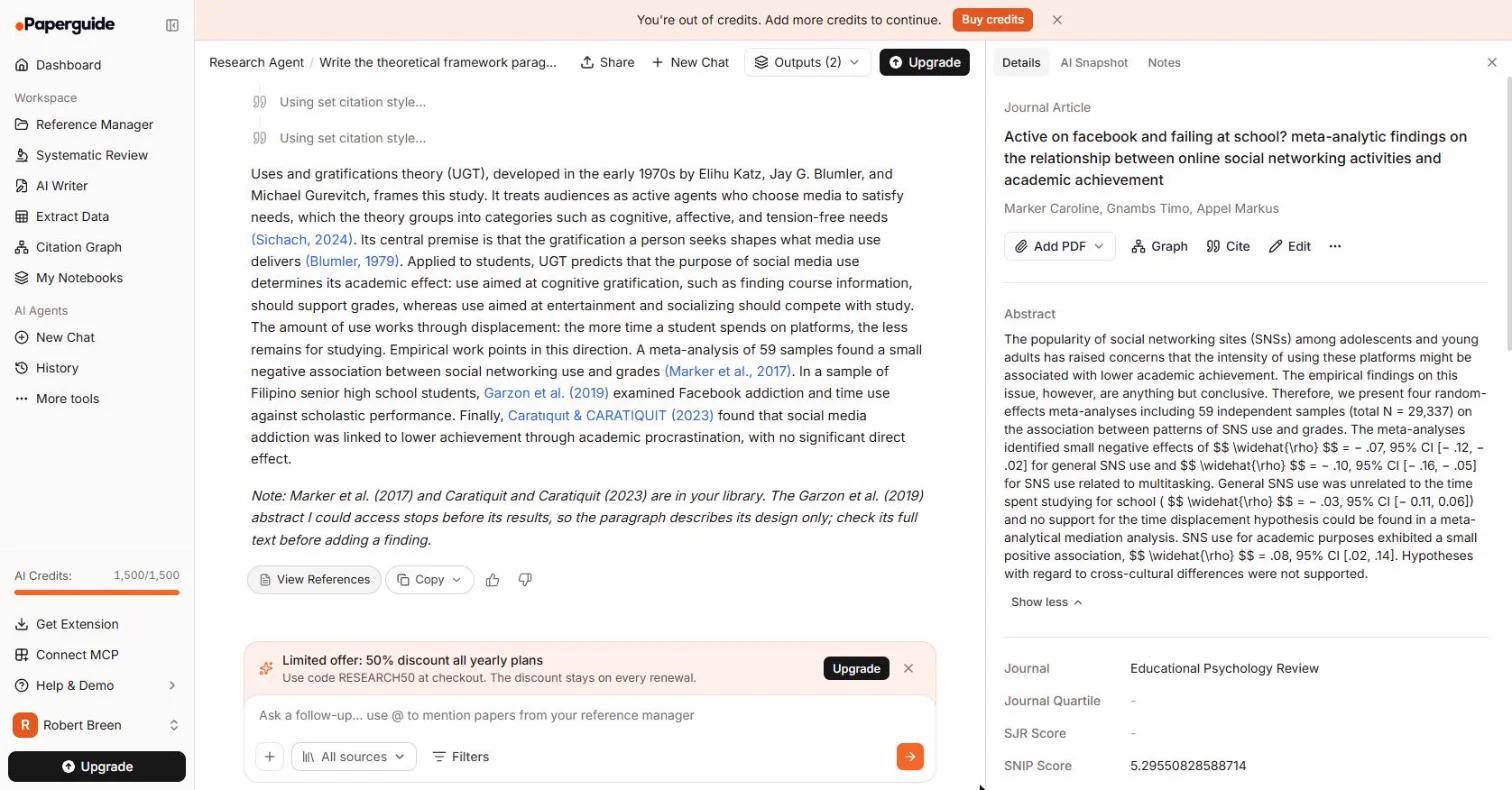
- The paper says the opposite. Open Marker et al., 2017, and read the abstract. It found "no support for the time displacement hypothesis." So rewrite that sentence: the meta-analysis found a small negative link with grades, and it did not come from less study time. Click the line.
The paper it cites found no support for that idea. So rewrite the sentence before it goes into your thesis.
- Fix what it could not see. Read its note. It says the Garzon abstract stops before its results. You read the whole abstract in step 8, so add the finding yourself: no association between Facebook use and grades. Also cite the theory's original source, Katz, Blumler and Gurevitch (1974), not only the summaries it linked. Click the note.
It says the Garzon abstract was cut off. You read the whole thing, so add the finding yourself. And cite the theory's original authors.
6. Build your reference list
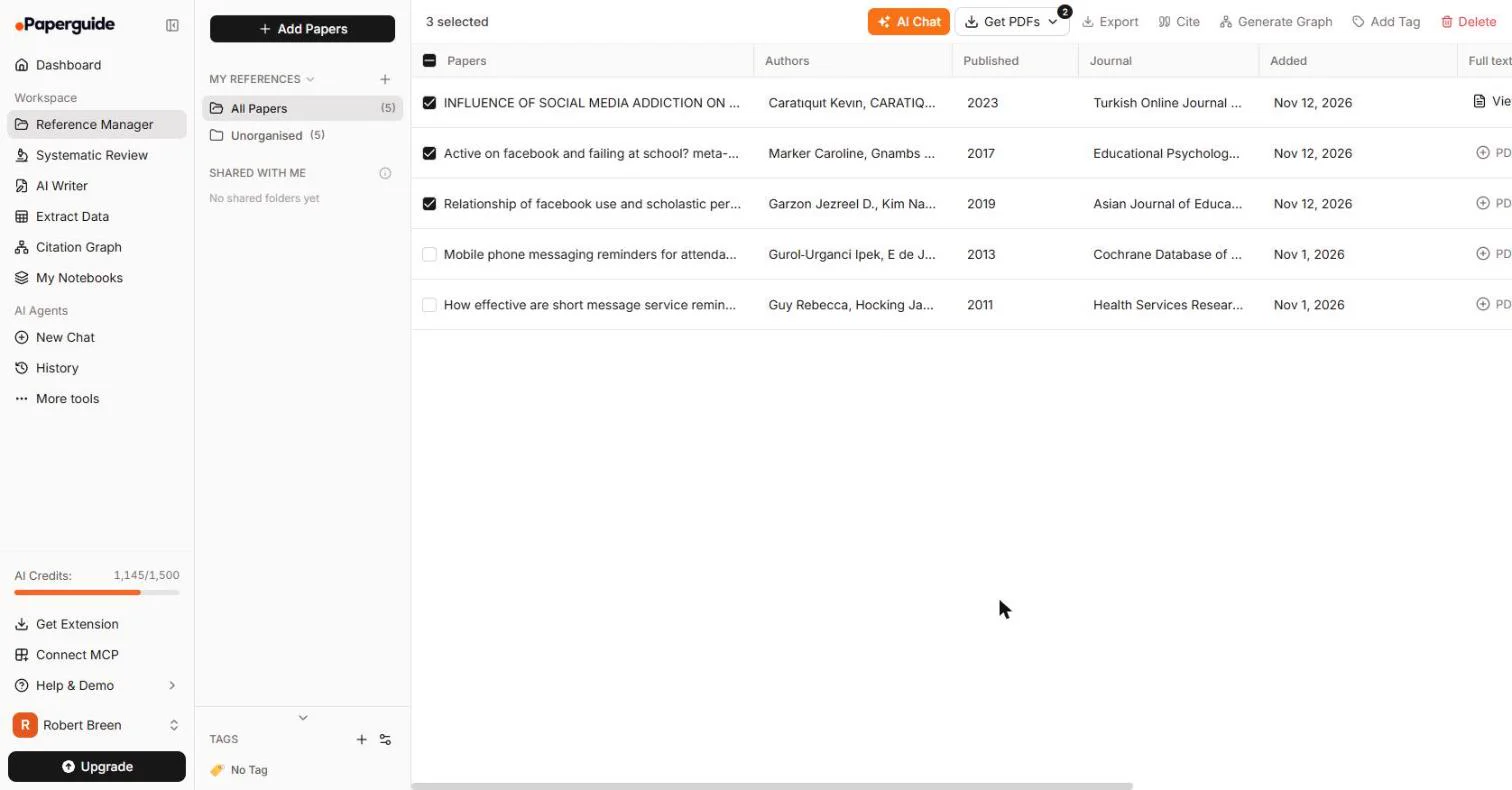
- Pick the papers you used. In the left menu, click Reference Manager. Your saved papers are in All Papers. Tick the three you used.
Tick the three papers you used.
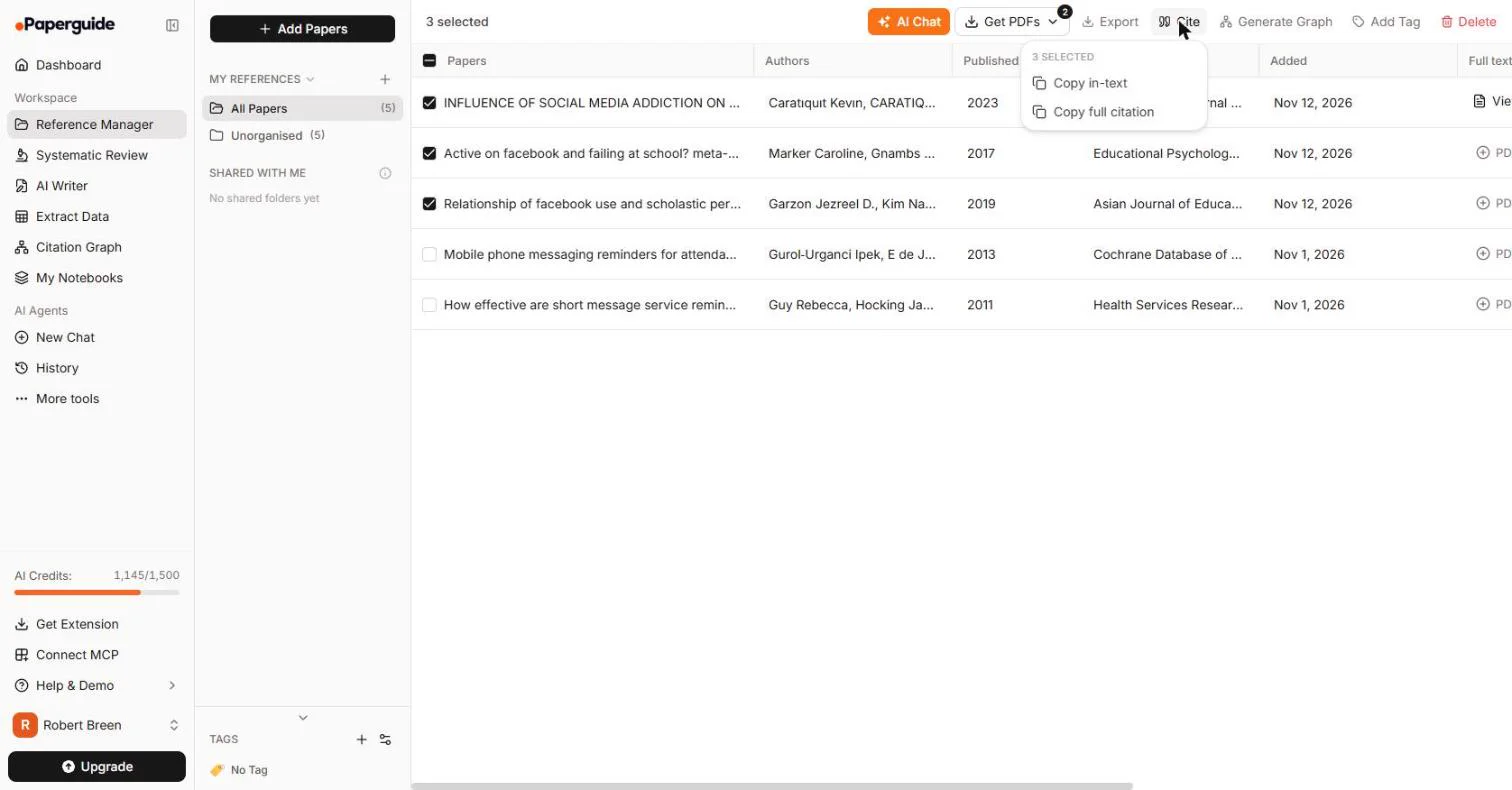
- Cite all three at once. It says 3 selected. Click Cite at the top.
- Copy the reference list. Click Copy full citation, and paste it into your References page. Then fix three things we found in ours: the Caratiquit title and second author came out in ALL CAPS, the first author had a Turkish dotless "ı" (Caratıquıt), and "facebook" was lower case again. Sort the list A to Z, and you are done.
Fix the all caps title, the odd letters in one name, and the lower case Facebook. Then you are done.
Screenshots
Terms in this lesson
Plain-English definitions, each with an example from a free lesson.