What is a data retention policy?
Quick answer
A data retention policy is a written rule that says which records your organization keeps, for how long and how they are destroyed afterward. It covers things like client files, emails, recordings and transcripts, so nothing is kept forever or thrown away too soon.
Last updated
Updated · By Robert Breen
Why it matters for a small business
Keeping everything feels safe until something goes wrong. Old files can be exposed in a breach, they cost money to store and they must be searched if someone requests them. Deleting too fast has its own risk, since you may need a record to settle a dispute or meet a legal or tax requirement. A policy sets the balance on purpose instead of by accident.
The right periods depend on your industry, location and the type of record, so ask your attorney, accountant or compliance contact before you write specific numbers. This glossary entry is general information, not legal advice. Whatever you decide, write it down, tell staff and follow it. Adding AI tools means new copies of data, so decide where those copies live and when they go.
In a real lesson: Turn a Client Meeting into Action Items and a Follow-Up Email (Accounting Firms)
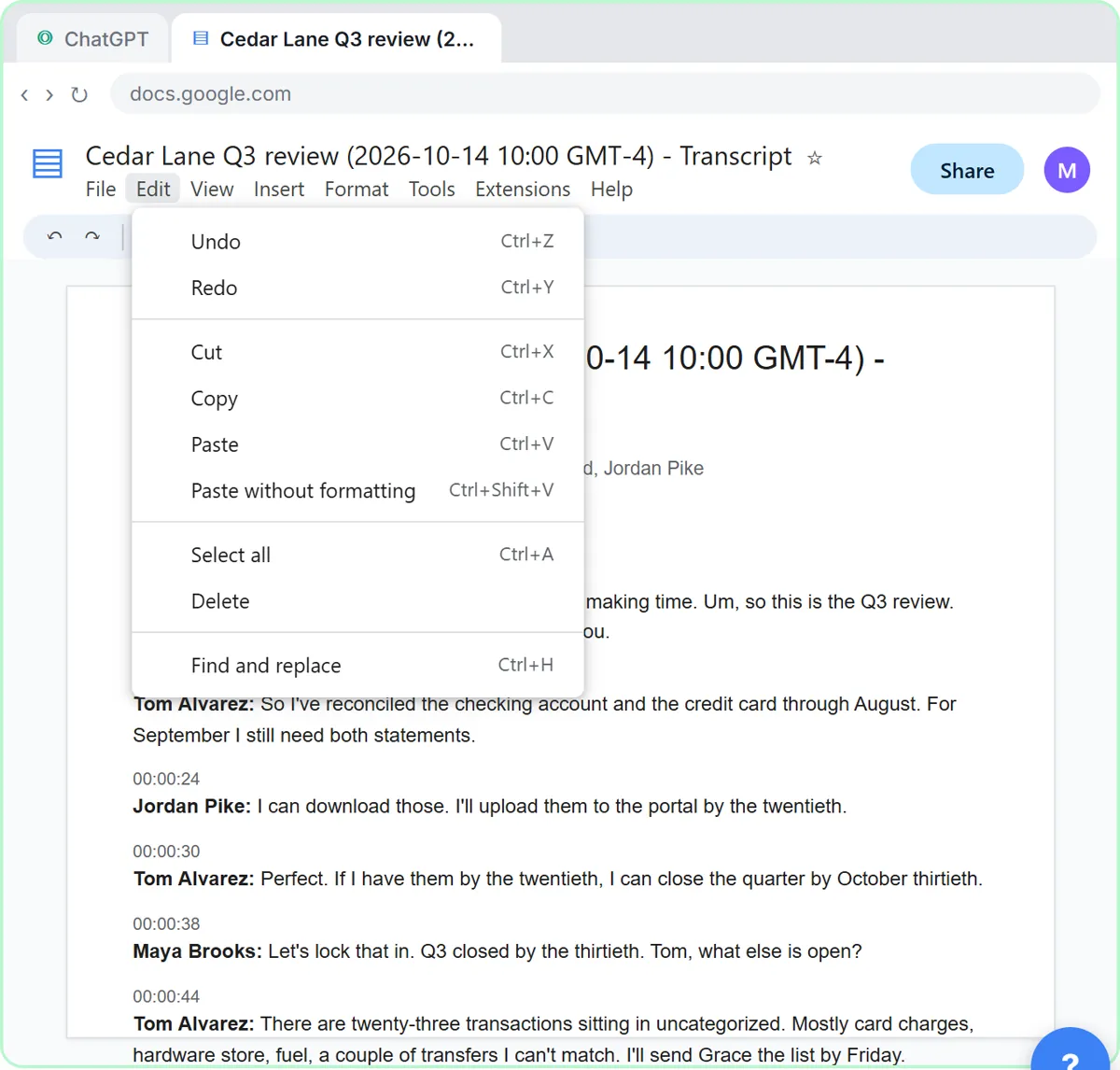
The Summarize a Client Meeting lesson turns the transcript of a quarterly review at Millbrook Accounting, a made-up accounting firm, into a summary, decisions, an action items table and a follow-up email. Along the way you copy the transcript, paste it into ChatGPT and later upload a file called "Cedar Lane Q3 review - Transcript.docx."
The finish of the lesson raises the retention question in plain words. It says client meetings are confidential, so follow your firm's policy on AI tools, use a business account that does not train on your data and leave out sensitive numbers. Every copy you make, in the transcript file, the chat and the email draft, is a record that a retention policy should cover.
The lesson does not set retention periods, and that is correct, because those depend on your firm and the rules that apply to it. What it shows is where copies appear. Ask your own policy owner how long transcripts and AI chats are kept, and who deletes them.
Try this lesson free or read the step-by-step guide.
Common confusions
Data retention vs backup
A backup is a safety copy for recovery after a failure. Retention is the rule for how long information is kept at all. A backup can quietly hold deleted data for longer than your policy says, so cover both.
Data retention vs privacy policy
A privacy policy tells customers what you collect and why. A retention policy is an internal rule for how long you keep it. The two should agree, since you cannot promise deletion that you do not perform.
Tips
- List your record types and put an owner and a keep-for period next to each, confirmed with a professional.
- Include AI tools in the list, such as chat histories, uploaded files and automation logs.
- Schedule a regular clean-up, for instance quarterly, and keep a simple note that it happened.
Related terms
More Business terms
Where you use it: free lessons
- Turn a Client Meeting into Action Items and a Follow-Up Email (Accounting Firms) (ChatGPT, 9 min)
- Summarize a Meeting Transcript with ChatGPT (ChatGPT, 9 min)
Frequently asked questions
- How long should I keep client records?
- It depends on your industry, location and the type of record, so ask your attorney or accountant. Do not copy another business's number, and write down the answer you are given.
- Do AI chats count as records?
- They can. A chat that holds client details is information your organization controls. Check your tool's data settings and your policy on whether to keep or delete it.