What is vendor onboarding?
Quick answer
Vendor onboarding is the process of setting up a new supplier before you buy from it or pay it. It usually means collecting the vendor's legal name and address, tax information such as a Form W-9 in the US, payment details, any required insurance certificates and the signed agreement, then adding the vendor to your accounting system.
Last updated
Updated · By Robert Breen
Why it matters for a small business
Paying a vendor is easy. Fixing a payment that went to the wrong place, or chasing a tax form at year end, is not. Doing the setup up front means every later bill can be paid without a scramble, and year-end tax reporting for contractors is far simpler when the forms are already on file. Your accountant can say which forms you need.
Onboarding is also a fraud control. Fake vendors and changed bank details are common ways money gets stolen. A good routine verifies a new vendor's bank details by calling a phone number you found independently, not one in the email, and keeps a record of who approved the setup. Keep the person who adds vendors separate from the person who pays them where you can.
In a real lesson: Turn a Client Meeting into Action Items and a Follow-Up Email (Accounting Firms)
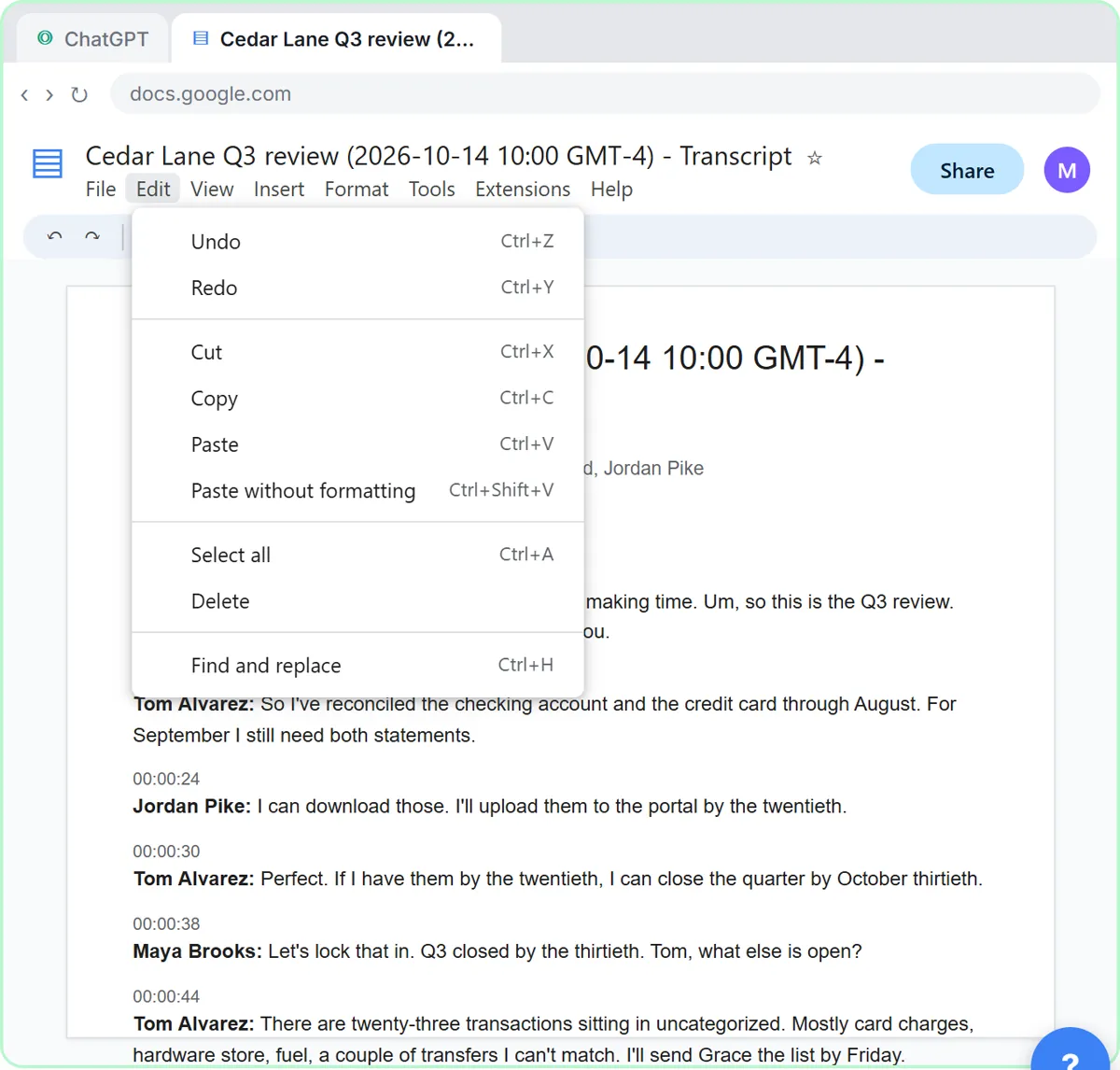
The Summarize a Client Meeting lesson includes a familiar onboarding gap. In the Q3 review at Millbrook Accounting, a made-up firm, Tom says three of the client's subcontractors "still have no W-9 on file. Last January we were chasing them for weeks." Maya asks the client to collect them now instead.
The action items table records it as "Collect W-9s from the three subcontractors missing one," owner Jordan, due End of October. That is the core onboarding rule: collect the paperwork when the relationship starts, not when a deadline forces it.
The Reply Faster: Client Refund Emails lesson adds the security half. At Northgate Tax & Bookkeeping, also made up, the facts list says, "never send account numbers by email," and points the client to the portal instead. Vendor bank details deserve the same care: collect them through a secure channel and confirm them by phone before the first payment.
Try this lesson free or read the step-by-step guide.
Common confusions
Vendor onboarding vs employee onboarding
Employee onboarding brings a new hire into the team. Vendor onboarding sets up an outside business you buy from. Both use checklists, but the forms and risks differ.
Vendor onboarding vs customer onboarding
Customer onboarding helps people who buy from you get started. Vendor onboarding is the reverse: setting up the businesses you buy from.
Tips
- Use one checklist for every new vendor so nothing depends on memory.
- Ask for the W-9 before the first payment. A W-9 request email can be drafted with AI and checked by you.
- Confirm any bank detail change by phone using a number already on file.
Related terms
More Business terms
Where you use it: free lessons
- Turn a Client Meeting into Action Items and a Follow-Up Email (Accounting Firms) (ChatGPT, 9 min)
- Reply Faster to Clients Chasing Their Refund: ChatGPT for Tax and Bookkeeping Firms (ChatGPT, 10 min)
Prompt templates that use it
Frequently asked questions
- What should a vendor onboarding checklist include?
- At minimum: legal name and address, contact person, tax form, payment details verified by phone, payment terms, and any contract or insurance documents you require. Your accountant can add what your situation needs.
- Can AI handle vendor onboarding?
- AI can draft request emails and track what is missing in a sheet, but verifying identities and bank details should stay with a person.