What is a structured interview?
Quick answer
A structured interview is a job interview in which every candidate for a role is asked the same planned, job-related questions, usually in the same order, and each answer is rated against the same written criteria. It makes candidates easier to compare and hiring decisions easier to explain.
Last updated
Updated · By Robert Breen
Why it matters for a small business
In a loose, conversational interview, two candidates for the same job can have two completely different conversations. One gets asked about software, the other about weekend plans, and the panel ends up comparing impressions instead of evidence. A structured interview fixes the questions before anyone walks in, so every person gets the same chance to show the same skills.
For a small business, the payoff is practical. Interviewers who rarely hire get a script to follow. Notes line up question by question, which makes the debrief and the interview scorecard quick to fill in. It also keeps conversations away from topics that have nothing to do with the job, which is fairer to candidates and easier to defend if a decision is ever questioned. Employment rules vary by state and country, so check yours with HR or counsel.
In a real lesson: Turn an Interview Debrief into a Scorecard and a Candidate Follow-Up (Recruiting & HR)
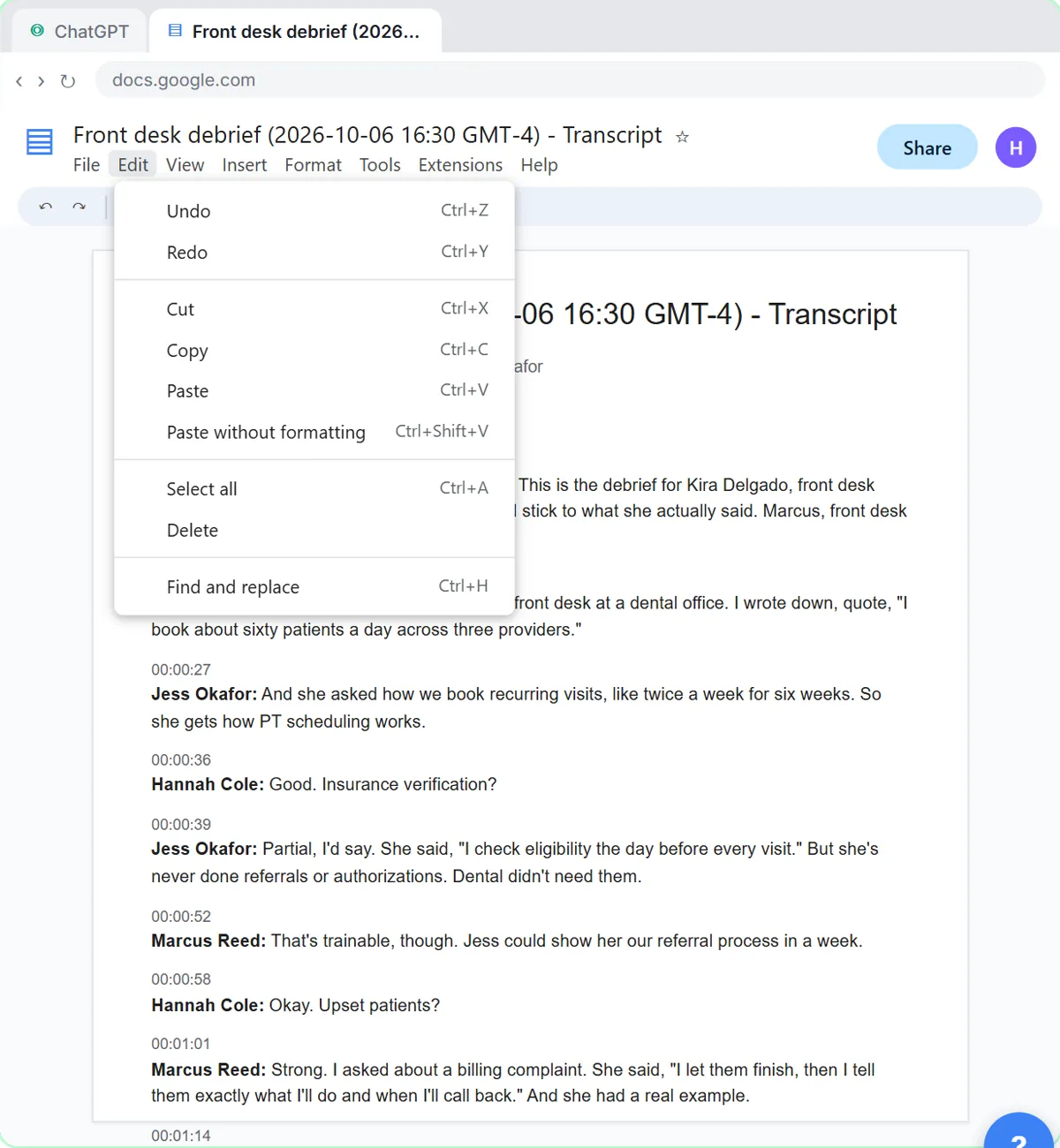
In Interview Debrief to Scorecard, Willow Bend Physical Therapy, a made-up practice, is hiring a Front Desk Lead. The role has four written must-haves: "two or more years running a front desk, insurance verification, calming upset patients, and training other staff." Those four lines are the backbone a structured interview is built on.
The debrief shows the method working and slipping. HR manager Hannah says the panel "asked every candidate if the seven thirty start works," which is structure at its best: one question, asked the same way to everyone. But nobody reached the last must-have, so ChatGPT scores training other staff as Not discussed, and the panel adds a final round with Dr. Patel to cover it.
The lesson doesn't write interview questions. It shows why they matter: a scorecard can only rate what the interview actually asked.
Try this lesson free or read the step-by-step guide.
Common confusions
Structured vs unstructured interview
An unstructured interview follows the conversation wherever it goes. A structured one fixes the questions and the rating scale in advance, so answers can be compared side by side.
Structured interview vs interview scorecard
The structured interview is the set of questions you ask. The scorecard is where interviewers record ratings and evidence against them afterward. Each works better with the other.
Behavioral vs situational questions
Behavioral questions ask what someone did before ("tell me about a time"). Situational questions ask what they would do. A structured interview can use either, as long as everyone gets the same ones.
Tips
- Write one or two questions for each must-have on the job description before you schedule anyone.
- Agree on what a strong, partial and weak answer sounds like for each question.
- Ask AI to draft questions from your must-haves, then cut any that drift from the job.
- Save follow-up chat for the end, after every planned question is covered.
Related terms
More Business terms
Where you use it: free lessons
- Turn an Interview Debrief into a Scorecard and a Candidate Follow-Up (Recruiting & HR) (ChatGPT, 9 min)
Frequently asked questions
- What are examples of structured interview questions?
- For a front desk role: "Tell me about a time a patient was upset about a bill. What did you do?" or "How do you check insurance eligibility before a visit?" Each ties to one must-have, and every candidate hears the same wording.
- Can you ask follow-up questions in a structured interview?
- Yes. Short, neutral follow-ups like "what happened next?" are normal. The core questions and the rating scale stay the same for everyone, so the follow-ups clarify answers rather than change the test.
- Can AI run a structured interview?
- AI can draft questions, build a rating guide and summarize notes against it. People should ask the questions and make the decision, and you should follow your company's hiring policy and local law on using AI in hiring.