What is a late fee?
Quick answer
A late fee is an extra charge a business adds when a customer pays an invoice after its due date. It is usually a flat amount or a percentage of the overdue balance. It should be agreed in advance, for example in a contract, engagement letter or the payment terms printed on the invoice.
Last updated
Updated · By Robert Breen
Why it matters for a small business
A late fee gives customers a reason to pay on time and covers some of the cost of chasing them. It only works if it is clear before the work starts. A fee that appears for the first time on a reminder feels like a penalty made up on the spot, and it can turn a slow payer into a dispute.
The wording matters too. Your payment terms should say how much the fee is, when it starts and whether it repeats. Some states and countries limit how much a business can charge, and some fees count as interest under the law, so ask your accountant or attorney before you set one. Many small firms also waive a first late fee for good clients, which only works if someone decides that on purpose.
In a real lesson: Build a Custom GPT That Writes Overdue Invoice Reminders
Build a Custom GPT That Writes Overdue Invoice Reminders has a rule written for exactly this. Under CONTENT RULES, the instructions for Maple Street Bookkeeping, a made-up firm, say: "Never invent fees or interest. Only mention a late fee if the client's engagement letter includes one."
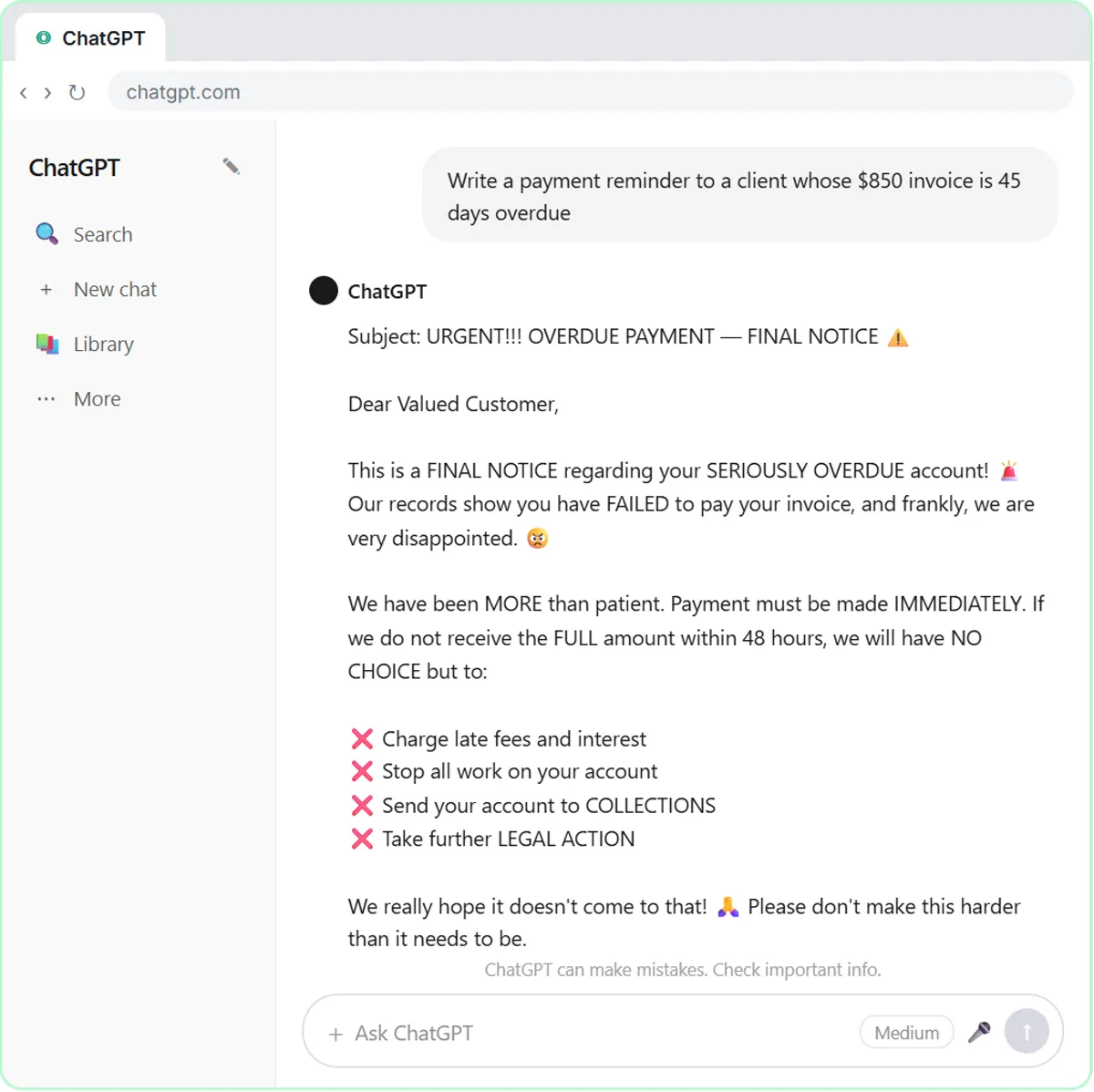
The reason is practical. Ask an AI tool for a firm reminder with no rules and it may add a fee because firm reminders often mention one. If that client never agreed to a fee, you now have an email you have to walk back.
In the lesson's test, a client's $850 invoice is 45 days overdue, and nothing in the request says the client agreed to a fee, so a correct reminder asks for $850. If a client's engagement letter did allow, say, a flat $25 fee (a made-up number), you would tell the GPT so, and the balance would be $875.
Try this lesson free or read the step-by-step guide.
Common confusions
Late fee vs interest
A late fee is usually a one-time charge when a payment is late. Interest, sometimes called a finance charge, builds over time on the unpaid balance. Your agreement should say which you use.
Late fee vs early payment discount
A late fee punishes paying after the due date. An early payment discount rewards paying before it. Some businesses use one, both or neither.
Tips
- Put the fee amount and when it starts on every invoice, not only in the contract.
- Tell your AI tool which clients have a fee, and forbid it from adding one otherwise.
- Decide in advance who can waive a fee, so the answer is the same for everyone.
Related terms
More Business terms
Where you use it: free lessons
- A Support Agent That Answers from Your Own Docs (n8n, 13 min)
More free tutorials
Frequently asked questions
- Can I charge a late fee if it wasn't in the contract?
- It is risky. Without prior agreement the customer can refuse, and adding one may damage the relationship. Put the fee in your terms for future work, and ask an attorney about existing customers.
- How much can a business charge as a late fee?
- It depends on where you and your customer are and what the agreement says. Some places cap late fees or treat them like interest. A flat amount or a small monthly percentage is common, but confirm limits with your accountant or attorney.
- Should a payment reminder mention the late fee?
- Yes, if the customer agreed to one. State the amount and when it applied, calmly and once. If they never agreed to one, leave it out.