What is lead scoring?
Quick answer
Lead scoring is a system that adds up points for each lead based on who they are and what they have done, such as company size, job title, pages visited or a demo request. The total ranks leads so the team works the most promising ones first.
Last updated
Updated · By Robert Breen
Why it matters for a small business
When a handful of inquiries arrive each week, a person can read them all and judge. When dozens arrive, judgment gets uneven. The Monday morning lead gets a careful look and the Friday afternoon one gets skimmed. A score applies the same rules to every lead, every time, and gives the team a sorted list instead of a pile.
Scores usually mix two kinds of signal. Fit asks whether this is the kind of customer you serve well, for example the right industry or team size. Interest asks how engaged they are, for example asking for pricing or booking a call. A lead that fits well but shows little interest needs patience. A lead with lots of interest but poor fit may need a polite redirect. Writing the points down also makes the rules easy to argue about and improve.
In a real lesson: Build an AI Demo Request Form That Qualifies Leads
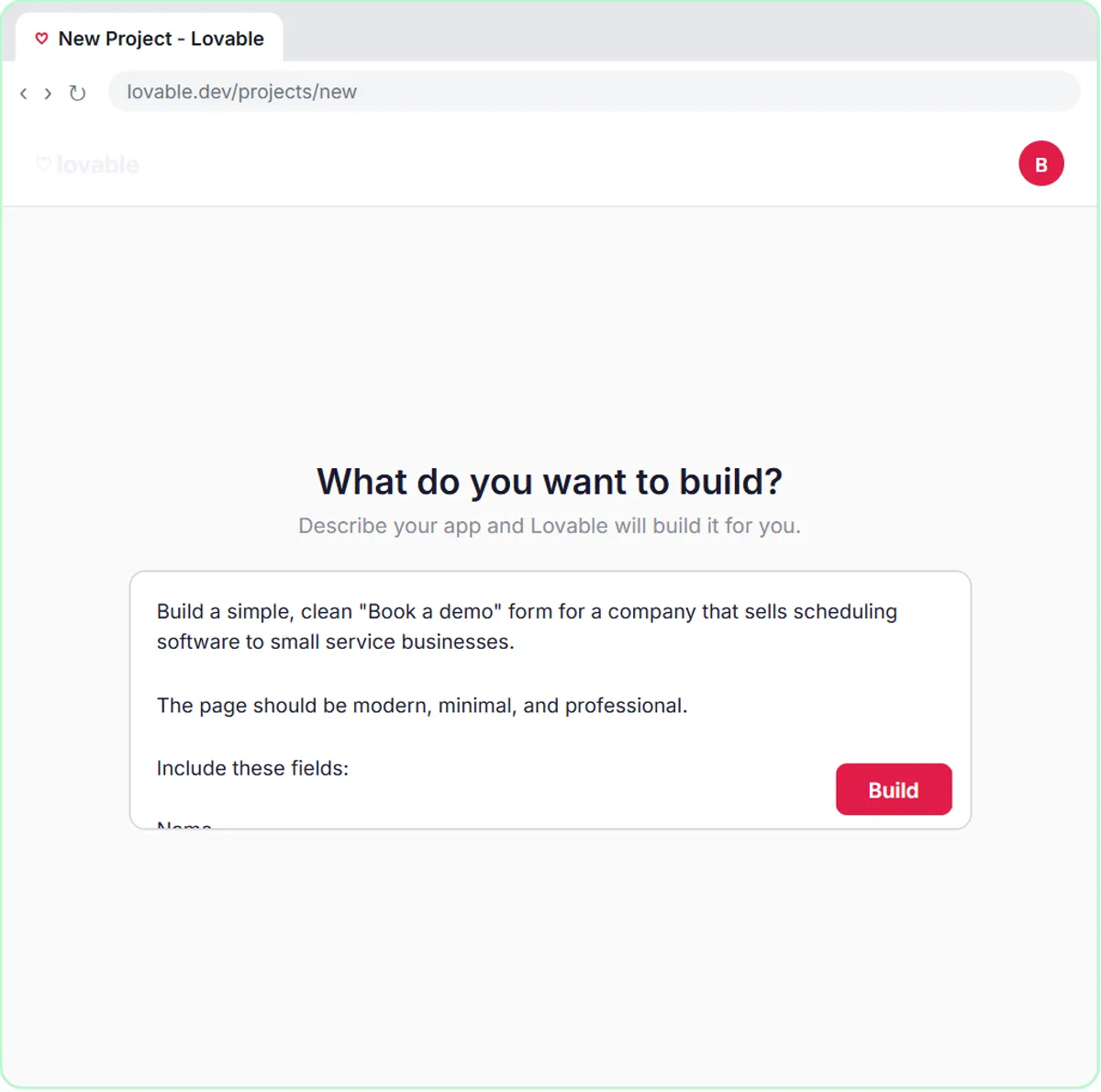
The AI Demo Request Form lesson uses a rating rather than a point score, which is the simplest version of the idea. Northwind Scheduling Software, a made-up company that sells scheduling software to small service businesses, collects Name, Email, What do you need help with? and Team size on a "Book a demo" form.
The AI Agent's system message turns two of those answers into a label: "Hot: 5 or more staff and wants to switch within a month." Team size is a fit signal and the switching timeline is an interest signal. Warm and Nurture cover the leads that have a need but no timeline, or are just looking. Each request is saved as a row in the Leads sheet.
If Northwind later wanted a real score, the same two signals could become points, say a few points for team size and a few more for a near deadline, with Hot meaning a total above a line the team picks. The lesson does not build that. It shows that the rules come first, and a score is just those rules written as numbers.
Try this lesson free or read the step-by-step guide.
Common confusions
Lead scoring vs lead qualification
A score is a ranking number built from signals. Lead qualification is the decision about what to do with a lead, which a score can feed. You can qualify without scoring, using a few clear buckets.
Lead score vs deal probability
A lead score ranks people before a real sales conversation. A deal probability, often set later in a CRM, estimates how likely an open deal is to close. They measure different moments.
Tips
- Start with three or four signals you already collect. A score built on data you never capture is empty.
- Check the scores against reality every month: did the high scorers actually buy more often?
- Let AI apply the rules and explain its rating in one line, so a person can see why a lead scored high.
- Once a lead becomes a real opportunity, stop scoring it and track its deal stage instead.
Related terms
More Business terms
Where you use it: free lessons
- Build an AI Demo Request Form That Qualifies Leads (Lovable and n8n, 15 min)
- Build an n8n AI Agent That Writes Deal Follow-Ups (n8n, 12 min)
Prompt templates that use it
Frequently asked questions
- Do small teams need lead scoring?
- Often not at first. Three named buckets with written rules, as in the lesson, do the same job with less upkeep. Points become useful when lead volume makes sorting by hand slow.
- Can AI score leads accurately?
- It can apply your rules consistently to free-text answers, which is hard to do with formulas alone. It can still misread a vague answer, so review a sample of ratings each week.