What is a request for proposal (RFP)?
Quick answer
A request for proposal, or RFP, is a document a buyer sends to several possible vendors describing a need, its requirements and how bids will be judged, and asking each vendor to answer in writing with an approach, timeline and price by a deadline.
Last updated
Updated · By Robert Breen
Why it matters for a small business
For buyers, an RFP makes vendors comparable. Everyone answers the same questions, so you can line the answers up instead of comparing sales pitches. Public agencies and larger companies often must use them for purchases above a set size, and many include a security questionnaire or ask for a SOC 2 report.
For sellers, an RFP is a lot of work with no promise of a win. Many teams decide quickly whether to bid at all, based on fit and the odds of winning. If you do respond, follow the format exactly, answer every requirement, and never claim a feature or result you cannot back up. Your answers can end up in the contract.
In a real lesson: Build an n8n AI Agent That Writes Deal Follow-Ups
The AI Deal Follow-Up Agent lesson is about follow-ups, not RFPs, but one line of its system prompt is the most important rule for RFP answers too. The agent writes messages for Northwind Scheduling Software, a made-up company selling online scheduling software to small service businesses, and the prompt ends: "Do not invent prices, discounts or results."
Imagine a bigger prospect, beyond the lesson's three deals, sent Northwind an RFP with fifty requirements. AI can help sort them into a list, draft first answers from approved product facts and flag anything unclear. That is useful. But an AI that fills gaps with plausible claims, such as a feature that does not exist or an uptime figure nobody measured, creates promises the company may have to honor.
The lesson's pattern carries over: give the AI the facts, set firm rules about what it may not invent, and have a person check every answer. In the lesson, the agent saves rows to a sheet called Deal Follow-Ups for a salesperson to review before anything goes out.
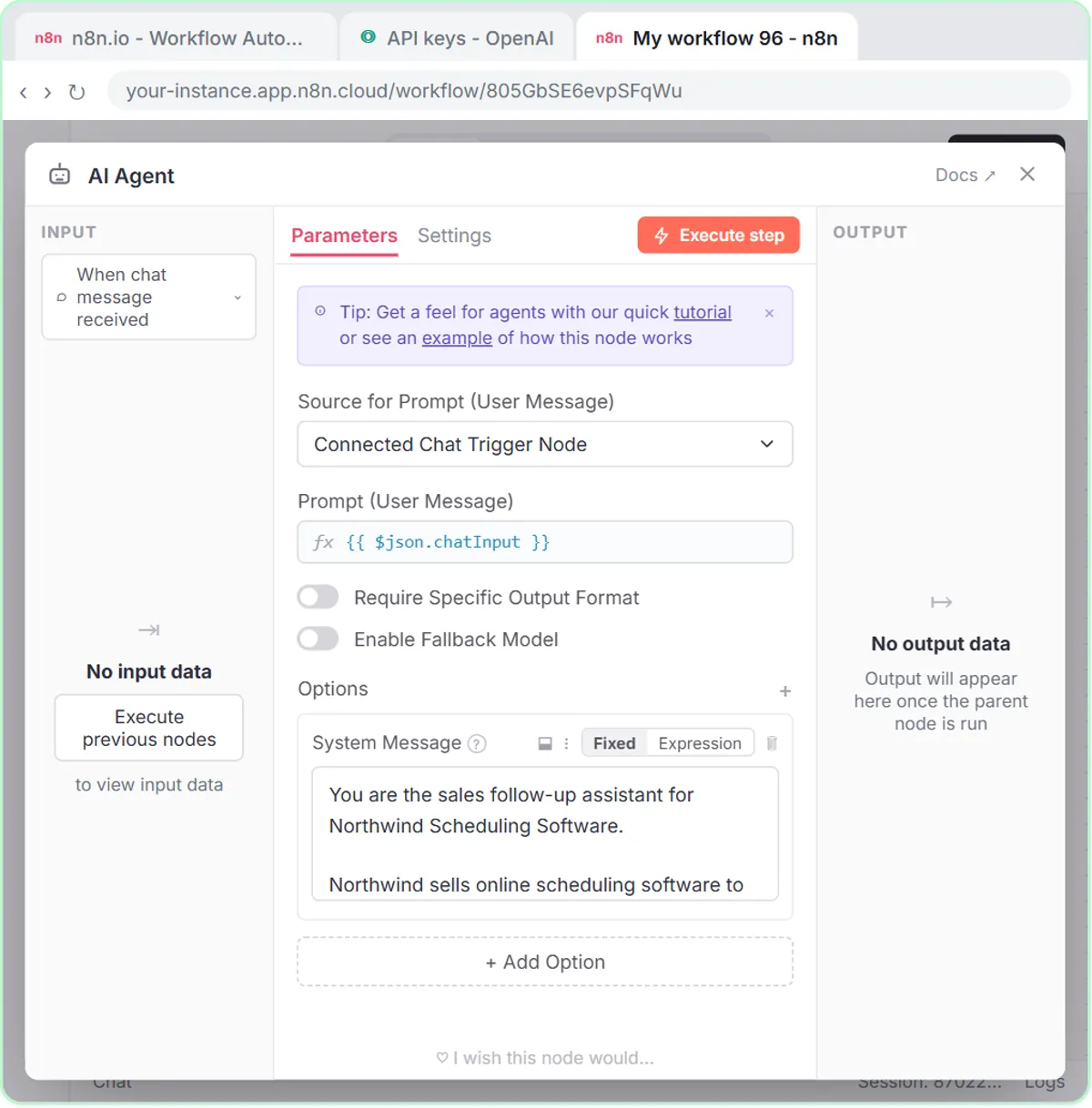
Try this lesson free or read the step-by-step guide.
Common confusions
RFP vs RFQ vs RFI
A request for information (RFI) gathers background before the buyer knows exactly what it wants. A request for quotation (RFQ) asks for prices on a clearly defined item. An RFP asks for a proposed approach and price when how the work is done matters.
RFP vs proposal
The RFP is the buyer's request. The proposal is the vendor's answer. If the vendor wins, parts of the proposal may become a statement of work.
Tips
- Make a requirements list from the RFP first, with one row per requirement and a column for where you answer it.
- Keep a library of approved answers about your company, security and product, and update it after each bid.
- Write down the deadline, the question cutoff date and the submission format the moment the RFP arrives.
Related terms
More Business terms
Where you use it: free lessons
- Build an n8n AI Agent That Writes Deal Follow-Ups (n8n, 12 min)
- Build an AI Demo Request Form That Qualifies Leads (Lovable and n8n, 15 min)
Prompt templates that use it
Frequently asked questions
- Can AI write an RFP response?
- It can draft from facts you provide and help organize requirements, which saves real time. Every answer still needs a person who knows the product to check it, because the response may become part of the deal.
- Should a small business answer every RFP it receives?
- Usually not. Bid when the work fits what you do well and you have a fair chance. A quick yes or no decision saves days of effort on bids you were unlikely to win.